Government Farm Loan Schemes Beyond KCC
KCC covers the crop season. For a solar pump, cold store or dairy unit, separate government loan schemes exist, each with its own terms.
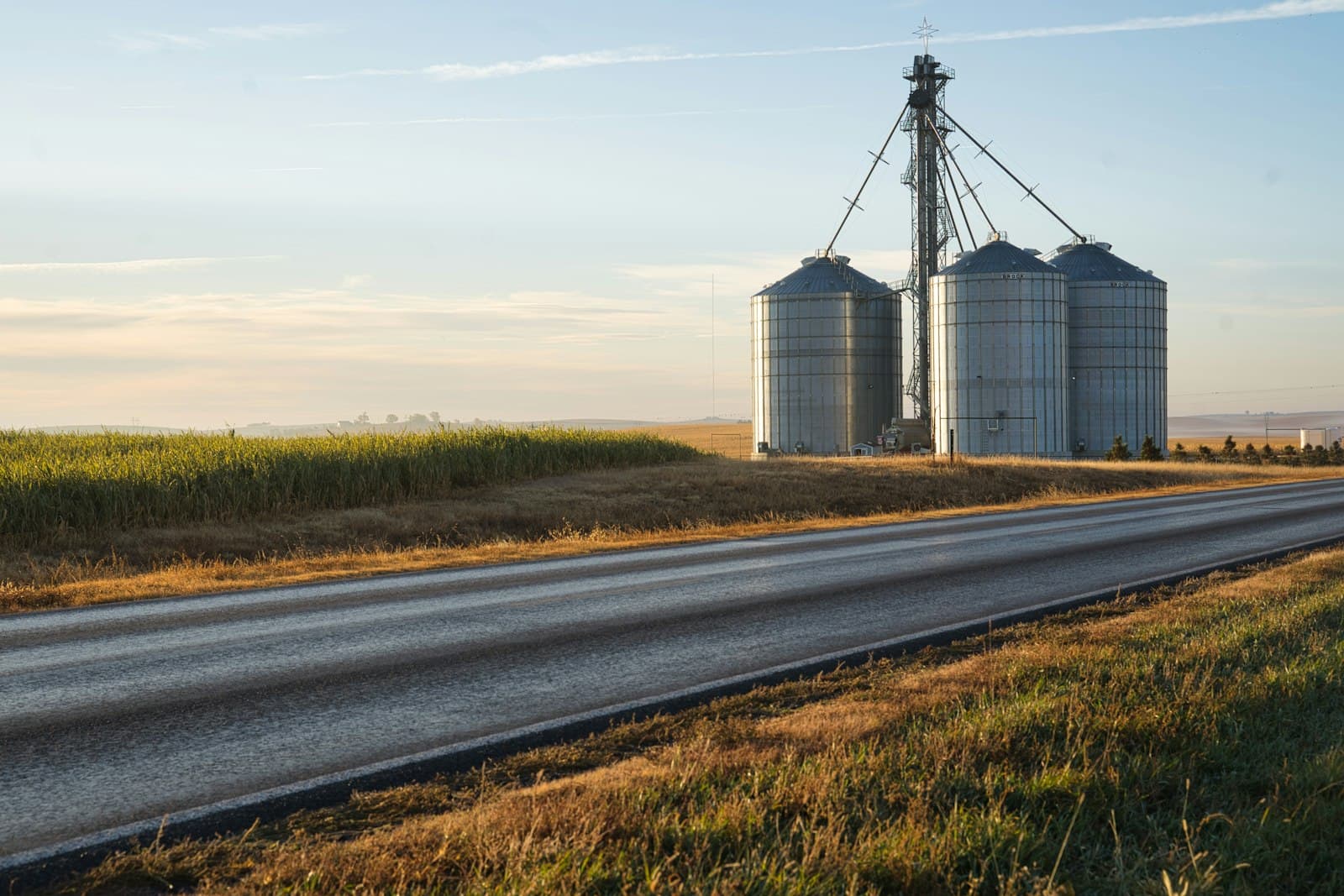
KCC is built for one job — funding a crop season. Everything that sits outside a season's input cost — a solar pump, a cold store, a dairy unit, a fish pond — is funded through a separate family of government-backed schemes, each aimed at a specific kind of farm investment.
Agri Infrastructure Fund (AIF): storage and processing
The Agri Infrastructure Fund finances post-harvest infrastructure — warehouses, cold chains, processing units, sorting and grading facilities — with a 3% interest subvention and a credit guarantee that reduces the collateral banks otherwise demand. It is aimed less at the individual smallholder and more at FPOs, cooperatives, and agri-entrepreneurs building shared infrastructure, though individual farmers can apply too. This is the scheme that answers the question a lot of MSP and mandi-price discussions eventually reach — that a farmer with storage can wait out a weak price, and one without it cannot.
PM-KUSUM: solar pump financing
PM-KUSUM funds solar-powered irrigation pumps and grid-connected solar installations on farmland, structured around both a capital subsidy and loan financing for the farmer's share of the cost. Beyond replacing diesel or grid-power irrigation cost, a grid-connected installation lets a farmer sell surplus power back — turning part of the farm into a modest second income stream, not just a cost saving.
AHIDF: dairy and meat processing infrastructure
The Animal Husbandry Infrastructure Development Fund finances processing and value-addition infrastructure for dairy, meat and animal feed — pasteurisation units, processing plants, feed manufacturing — again with an interest subvention layered on top of the loan. It sits alongside the National Livestock Mission, which finances the entrepreneurship and rearing side rather than the processing infrastructure side.
PMMSY: fisheries and aquaculture
PMMSY covers loan and subsidy support for fisheries and aquaculture infrastructure — ponds, hatcheries, cold storage for catch, and processing units — aimed at both inland aquaculture and marine fisheries.
How these schemes actually differ from KCC
| Feature | KCC | AIF / AHIDF / PM-KUSUM / PMMSY |
|---|---|---|
| Funds | Seasonal crop input cost | Fixed capital asset or infrastructure |
| Structure | Revolving credit limit | Term loan, often with capital subsidy |
| Typical applicant | Individual farmer | Individual, FPO, cooperative, or agri-entrepreneur |
| Renewal | Annual | One-time asset financing |
The one sentence version
Beyond the crop season KCC funds, a farmer's next investment — storage, solar, processing, aquaculture — almost always has a matching government-backed scheme with an interest subvention attached; the harder part is usually finding out which one, not qualifying for it.
Frequently asked questions
Can an individual farmer apply for an AIF loan, or does it need a group?
Individual farmers can apply, but AIF is structured to favour collective applicants — FPOs, cooperatives, self-help groups and agri-entrepreneurs — because the fund targets shared infrastructure like storage and processing that serves multiple farmers. An individual application is possible but a group application is usually the more natural fit for the scheme's intent.
Is the subsidy on these loans a loan write-off?
No. In almost every scheme here the subsidy is an interest subvention — the government pays down the interest rate you are charged — or a capital subsidy on the project cost, not a waiver of the principal you borrow. You still repay the loan amount; the subsidy makes the cost of borrowing cheaper.

Written by
Vaibhav Dhama
Founder, Technical Kisan
Vaibhav Dhama is the founder of Technical Kisan. He writes from Baghpat, Uttar Pradesh, and builds each guide on ICAR and state agricultural university guidance, official government scheme notifications, and live mandi-price data.
- Writes from Baghpat, Uttar Pradesh
- Software developer (BTech, 2021)
- Not a trained agronomist — confirm with your KVK
Discussion is coming soon
We are building a comments section where you can ask a question about this guide and see what other farmers in your district are doing.
For now, write to us at [email protected] — we read every message.