
Isabgol (Psyllium)
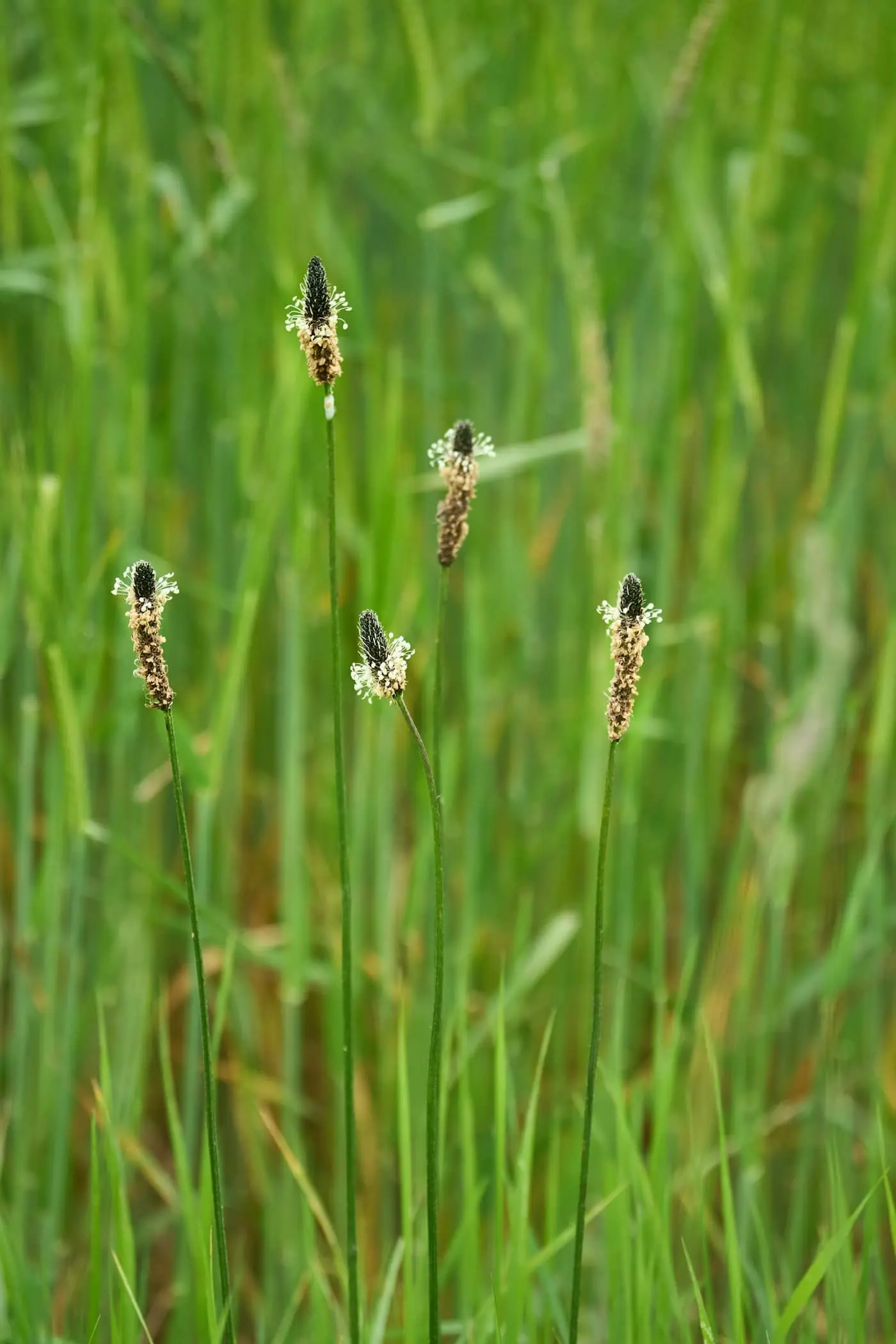
Plantago ovata
A rabi crop grown almost only in Gujarat's Banaskantha–Mehsana–Patan belt and Rajasthan's Jodhpur–Nagaur–Barmer tract, raised not for its seed but for the papery husk (bhusi) around it — the same isabgol husk sold in every Indian kirana shop and pharmacy, traditionally used in Ayurveda as a natural source of dietary fibre for digestion, with downy mildew in humid weather the single biggest threat to the crop in the field.
Quick Summary
The key points from this page in about two minutes — read it or have it read aloud.
Quick Summary
Isabgol, also called psyllium (Plantago ovata), is a small rabi crop grown almost entirely in two adjoining tracts: Gujarat's Banaskantha, Mehsana and Patan districts, and Rajasthan's Jodhpur, Nagaur and Barmer belt. Farmers grow it for its seed, but the seed itself is not the main product — the thin, papery husk (bhusi) that surrounds the seed is separated out by processors and sold as isabgol husk, the crop's real commercial value. Almost the whole country's harvest funnels through Unjha in Gujarat, India's largest isabgol trading centre.
This husk has a genuine, very high-volume second life beyond farming: it is one of India's best-known traditional Ayurvedic remedies, sold in nearly every kirana shop and pharmacy as a natural source of dietary fibre, traditionally used for digestive comfort and regularity. This everyday medicine-cabinet use, alongside export demand, is what gives isabgol a value most small rabi crops never reach — and it is worth understanding both sides, the farming and the reason people actually buy the husk, to see why the crop is grown at all.
India's named isabgol varieties come from two main breeding lines: Gujarat's GI and Vallabh Isabgol series (from Anand Agricultural University and ICAR-DMAPR), and Rajasthan's RI series bred at Jodhpur. The newer releases were bred specifically to resist downy mildew, the disease that decides most isabgol seasons — it can infect the flower itself and sterilise the plant, so a variety's tolerance to it matters as much as its yield. This page covers the real sowing, irrigation and disease-management steps behind that seed, alongside the mandi trade it feeds.
- Crop type
- Rabi medicinal/industrial seed-husk crop
- Season
- Rabi
- Suitable states
- Gujarat, Rajasthan
- Growing duration
- 100–145 days, variety-dependent
- Water requirement
- Low overall, but needs frequent light irrigation, never heavy watering
- Temperature
- Cool, dry rabi weather; humid conditions favour disease
- Soil type
- Light, well-drained sandy loam; cannot tolerate waterlogging
- Difficulty level
- Moderate (downy mildew risk, precise moisture management)
- Expected yield
- 800–1,500 kg/ha seed, variety-dependent
- Key risk
- Downy mildew, especially floral infection at flowering
Overview
Isabgol (Plantago ovata), also called psyllium, is a small rabi crop grown almost entirely in two adjoining tracts of western India: Gujarat's Banaskantha, Mehsana and Patan districts, and Rajasthan's Jodhpur, Nagaur and Barmer belt. It is a cool-season crop that dislikes both heat and excess humidity, which is exactly why its growing area sits where it does — a narrow window between too hot and too wet.
The seed itself is not really the point. Once harvested, the papery husk (bhusi) that coats each tiny seed is separated out by processors, mainly around Unjha in Gujarat — India's largest isabgol trading centre — and sold on as isabgol husk, which is where almost all the crop's value actually sits. This husk is one of India's best-known traditional Ayurvedic remedies: sold in nearly every kirana shop and pharmacy across the country, and traditionally used as a natural source of dietary fibre for digestive comfort, alongside a genuine export market for the same husk.
India's named varieties trace to two research lines: Gujarat's GI-series and newer Vallabh Isabgol releases from Anand Agricultural University and ICAR-DMAPR, and Rajasthan's RI-series bred at the Agricultural Research Station, Jodhpur. Downy mildew — which can infect the flower itself and sterilise the plant — is the disease that decides most seasons, which is why the newer releases are bred specifically for tolerance to it rather than yield alone.
Crop timeline, sowing to harvest
A quick visual map of the season — jump to any section below for the detail behind each stage.
- Day 0
Sowing
Fine seed broadcast shallow, mixed with sand or soil for even spread, into a fine, weed-free rabi seedbed in the first half of November — the single most yield-deciding date on this crop.
- Day 3–7
Emergence
Germination is quick under good moisture; seedlings are tiny and slow to establish, vulnerable to weed competition and to being buried by a rough seedbed.
- Day 20–25
Thinning
Seedlings are thinned to their final spacing and the first hand-weeding is usually combined with it.
- Day 30–60
Vegetative growth
The plant builds its low rosette of leaves; the first of several light irrigations through this stage keeps growth even.
- Day 60–90
Spike emergence & flowering
Slender flowering spikes emerge and flower; humid, cloudy weather now is the single highest-risk window for downy mildew, which can infect the flower itself.
- Day 90–120
Seed development
Seed forms and fills in the spike, turning from green to a light pinkish-brown as it matures.
- Day 110–145
Harvest
The whole plant is cut once spikes have dried and turned colour, then dried further and threshed to release the seed — variety-dependent, from around 100 days for the earliest releases to 140-plus for the longest.
Suitable states
States where this crop is grown at scale, highlighted below. Your local Krishi Vigyan Kendra is still the final word for your specific block.
- Jammu and Kashmir
- Himachal Pradesh
- Punjab
- Uttarakhand
- Haryana
- Delhi
- Uttar Pradesh
- Rajasthan
- Bihar
- Jharkhand
- West Bengal
- Sikkim
- Assam
- Arunachal Pradesh
- Meghalaya
- Nagaland
- Manipur
- Mizoram
- Tripura
- Gujarat
- Madhya Pradesh
- Chhattisgarh
- Maharashtra
- Odisha
- Goa
- Telangana
- Andhra Pradesh
- Karnataka
- Kerala
- Tamil Nadu
- Puducherry
- Ladakh
- Chandigarh
- Lakshadweep
- Andaman and Nicobar Islands
- Dadra and Nagar Haveli and Daman and Diu
Grown here
Climate requirements
Isabgol's entire Indian growing map sits in the narrow band between too hot for a winter crop and too humid for downy mildew — Gujarat's Banaskantha-Mehsana-Patan belt and Rajasthan's Jodhpur-Nagaur-Barmer tract are where that balance actually holds.
Ideal temperature
A cool-season crop that needs the dry, moderate cold of a normal rabi winter to perform; it has little tolerance for either summer heat or a genuinely cold snap at flowering
Rainfall
Grown under irrigation on residual and applied moisture rather than rainfall, since it is a winter-sown crop outside the monsoon season entirely
Humidity
Low humidity is essential — sustained humid, cloudy weather, especially around flowering, is what drives downy mildew, the crop's single biggest disease risk, and can infect the flower itself
Sunlight
Full sun for even growth and flowering
Soil requirements
Because the seed is so small and the seedling correspondingly delicate, soil preparation matters more for isabgol than the crop's modest fertiliser needs might suggest — a fine, well-drained seedbed does more for the final stand than any input applied later.
Suitable soil
Light, well-drained sandy loam soils suit it best; the crop does not tolerate waterlogging or heavy, poorly drained clay
pH range
Roughly neutral to mildly alkaline, in line with the light soils of its Gujarat and Rajasthan growing tracts
Drainage
Good drainage is essential — even short waterlogging after over-irrigation or unseasonal rain damages the crop, since it has a shallow root system with little tolerance for standing water
Organic matter
Responds to farmyard manure worked in at land preparation, though it is not a heavy feeder compared with a cereal crop
Land preparation
Same four steps whichever region you are in — only the timing shifts with the sowing window.
- 1
Fine, weed-free seedbed
Two to three ploughings and planking to a fine tilth, since the seed is tiny and sown shallow — a rough seedbed is one of the more common reasons for a poor stand.
- 2
Farmyard manure at preparation
Working in farmyard manure (roughly 6–8 tonnes per acre) ahead of sowing improves establishment on the light soils this crop is usually grown on.
- 3
Confirm the plot drains
Choose ground that does not hold water after irrigation or rain — waterlogging, not poor fertility, is what a shallow-rooted crop like isabgol cannot tolerate.
Seed information
How the main varieties compare, so you can pick by duration, yield, disease pressure or what you are growing for.
| Variety | Duration | Yield | Disease resistance | Best state | Suitable for |
|---|---|---|---|---|---|
Anand Agricultural University's first dedicated isabgol release (1976), selected from introduced material; dark-green leaf, medium 4.0–4.5 cm spike. | 110–115 days | 800–900 kg/ha | Not separately documented | Gujarat, Rajasthan | General cultivation, an older standard variety |
AAU Anand's second release (1983); medium-broad pale-green leaf, used as a trial-check variety alongside RI-1, where it showed the highest downy mildew severity among four genotypes compared. | 110–115 days | 900–1,000 kg/ha | Weaker downy mildew tolerance than newer releases (highest disease index among four compared genotypes in one trial) | Gujarat, Rajasthan | General cultivation where downy mildew pressure is manageable |
CCS Haryana Agricultural University, Hisar's 1989 release, a selection from GI-2; one of the few varieties with a documented husk-recovery figure. | 140–145 days (longer than most other releases) | 1,000–1,200 kg/ha; husk recovery about 25–30% of seed weight | Not separately documented | Haryana, Gujarat, Rajasthan | Areas where the longer duration and documented husk percentage suit the growing calendar |
A 1996 release from RVSKVV's College of Horticulture, Mandsaur, Madhya Pradesh; narrow, dense, hairy dark-green leaves and a boat-shaped, hard, light-pink seed with rosy-white husk. | Not separately documented | 1,300–1,500 kg/ha, among the higher figures documented for a named variety | Not separately documented | Madhya Pradesh, Gujarat, Rajasthan | Higher-yield-focused cultivation where seed is available |
Agricultural Research Station, Jodhpur's 2006 release, developed by gamma-ray mutation breeding of the earlier RI-89 line; the best-documented variety for downy mildew tolerance on this page. | 115 days | Pooled trial mean about 1,074 kg/ha across 14 site-years, up to 1,255 kg/ha in a farmer-field adaptive trial | Markedly better downy mildew tolerance than RI-89, GI-2 and HI-2 checks in peer-reviewed trials (lowest disease severity of the four) | Rajasthan (arid western plain) | Areas with a history of downy mildew pressure, where its documented tolerance is a real advantage |
A CSIR-Central Institute of Medicinal and Aromatic Plants Research (CIMAP), Lucknow release developed by mutation breeding — notably from CSIR rather than ICAR/a state agricultural university. | Not documented | 1,000–1,200 kg/ha | Reported to differ from other varieties in disease tolerance, not itemised in available sources | Not specified in available sources | General cultivation where seed is available |
ICAR-DMAPR, Boriavi, Anand's 2015 release; erect, compact plant with dark-green, moderately hairy leaves and a compact, long spike. | Not separately documented | 1,400 kg/ha | Not separately documented | Recommended for all isabgol-growing areas | General cultivation across Gujarat and Rajasthan |
ICAR-DMAPR's 2016 release, notably earlier-maturing than most other named varieties on this page. | 100–105 days | 916–1,360 kg/ha across trial locations | Not separately documented | Gujarat, Rajasthan, Madhya Pradesh, Delhi, Haryana, Uttar Pradesh | Growers wanting a shorter-duration crop cycle without a major yield penalty |
- Seed rate
- 4–5 kg/ha; the seed is tiny and is usually mixed with sand or fine soil before broadcasting for an even spread
- Certified seed
- Source certified seed of a named variety from Gujarat or Rajasthan's state agricultural universities or a Krishi Vigyan Kendra where possible — the newer downy-mildew-tolerant releases (RI-1 in particular) earn their real value from that bred-in tolerance, which an unclear seed source cannot guarantee.
- Spacing
- Rows about 25–30 cm apart, with plants thinned after germination to roughly 8–10 cm within the row; some research under Madhya Pradesh conditions found a wider 30 × 45 cm spacing gave a higher seed yield, so local recommendation is worth checking
- Seed treatment
- Treat seed with a fungicide before sowing to reduce early fungal disease pressure; since the seed is very small, mix it with sand or fine, dry soil to help spread it evenly during broadcasting.
Sowing guide
Because the seed is so small, a fine, weed-free seedbed and prompt thinning matter more for isabgol than they would for a larger-seeded rabi crop like wheat or gram.
- Best time
- The first half of November is repeatedly cited as giving the best yield; sowing in late October to early December still works but yield tends to fall the later it is delayed
- Row spacing
- 25–30 cm, sometimes wider at 30 × 45 cm per some regional research
- Plant spacing
- Thinned to roughly 8–10 cm within the row after germination
- Sowing depth
- Very shallow, at or just below the soil surface, since the seed is tiny
- Method
- Broadcast (mixed with sand or fine soil for even spread) into a fine, weed-free, moist seedbed; germination is quick under good moisture but the tiny seedlings need protection from weed competition and a rough seedbed early on
Fertilizer schedule
A split dose beats one large dose applied at sowing — nitrogen especially is lost to the air and to leaching if it all goes in on day one.
- 1
Basal (at sowing)
Day 0
A modest basal dose, commonly cited around 50 kg N : 25 kg P₂O₅ : 30 kg K₂O per hectare in one set of recommendations, applied with farmyard manure worked in during land preparation.
- 2
Top-dressing
~35 days after sowing
A nitrogen top-dressing of roughly 25 kg N/ha, applied with adequate soil moisture during vegetative growth.
- 3
Regional variation
Throughout
Fertiliser recommendations vary meaningfully by state and source — confirm the current dose with your local KVK rather than treating any single figure as universal for this crop.
Irrigation schedule
1. At sowing
Day 0
An irrigation immediately after sowing helps the tiny seed germinate evenly.
2. Vegetative growth
~20–30 days
A second light irrigation supports establishment; isabgol needs frequent, light watering rather than infrequent heavy irrigation given its shallow roots.
3. Spike formation & flowering
~60–90 days
Irrigation timed to spike formation and flowering supports seed set; this is also the highest-risk window for downy mildew, so avoid over-watering into humid weather.
Critical stages
- Germination
- Spike formation
- Flowering
Water-saving tips
- Sources vary on the total number of irrigations, from as few as 3–4 to as many as 6–7 through the season — the shared thread across all of them is frequent, light watering rather than infrequent heavy flooding, given the crop's shallow root system.
- Never let water stand on the field, even briefly — isabgol's intolerance of waterlogging matters as much as its need for moisture.
- Avoid heavy irrigation into a humid, cloudy spell around flowering, since that combination is exactly what favours downy mildew.
Weed management
Common weeds
Organic control
- Hand-weed at thinning time (around 20–25 days after sowing), since this is also when the crop is most vulnerable to being crowded out by faster-growing weeds.
- A fine, weed-free seedbed at sowing does more to prevent weed competition than any weeding done after the fact.
Chemical control
- Confirm any herbicide is specifically cleared for isabgol with your local KVK before spraying, since the crop's tiny seedlings are easily injured and this is a genuinely minor-area crop with less herbicide-label research behind it than a major cereal.
- Where a cleared product is not confirmed, hand weeding at thinning time is the more reliable default.
Nutrient deficiency identification
What a shortage of each nutrient actually looks like on the plant, so you can tell a deficiency apart from a disease before you spray the wrong thing.
Nitrogen
Visible symptom
Pale, small plants with reduced leaf growth and a thinner rosette than a well-nourished crop.
Phosphorus
Visible symptom
Stunted early growth and delayed spike emergence, most noticeable on light, low-fertility soils.
Potassium
Visible symptom
Weaker plants more prone to lodging, particularly under wind at the flowering and spike stage.
Diseases to watch for
Symptoms, likely cause and what actually treats it — not just a spray name.
Downy mildew
- Symptoms
- Pale, discoloured patches on leaves with a downy fungal growth on the underside in humid weather; when it infects the flower directly, spikes show malformed, half-opened florets and fail to set seed properly.
- Cause
- Peronospora plantaginis, an obligate oomycete favoured by humid, cloudy weather — isabgol's single most damaging disease, capable of both leaf infection and a distinct, more serious floral infection that induces male and female sterility in affected flowers.
- Treatment
- Spray Bordeaux mixture or a copper-based fungicide such as Dithane M-45 at roughly 2–2.5 g/litre at first sign of disease, and repeat through humid spells.
- Prevention
- Grow a documented downy-mildew-tolerant variety where available — RI-1 in particular showed markedly lower disease severity than older checks in peer-reviewed trials — use treated seed, avoid dense stands, and scout closely from spike emergence through flowering, since floral infection at this stage is what actually destroys yield.
Alternaria leaf blight
- Symptoms
- Dark, roughly circular leaf spots that enlarge and can merge, reducing the leaf area feeding the developing seed.
- Cause
- Alternaria alternata, a fungus favoured by humid conditions similar to downy mildew.
- Treatment
- Spray a recommended fungicide at first appearance.
- Prevention
- Use treated seed, avoid dense sowing, and rotate away from a field with a history of the disease.
Powdery mildew
- Symptoms
- A white, powdery coating on leaves and stems that yellows and dries affected tissue.
- Cause
- Erysiphe polygoni, a fungus that, unlike downy mildew, favours dry weather with cool nights.
- Treatment
- A recommended sulphur-based or systemic fungicide once symptoms appear.
- Prevention
- Avoid excessive nitrogen, which encourages the soft growth this disease favours.
Wilt
- Symptoms
- Plants wilt and collapse despite adequate soil moisture.
- Cause
- Soil-borne Fusarium and Pythium species entering through the roots.
- Treatment
- No cure for an already-wilting plant; remove affected plants where practical.
- Prevention
- Use treated seed, avoid waterlogging, and rotate away from land with a wilt history.
Pests to watch for
What to look for before the damage is visible, and organic options before you reach for a chemical.
Aphids
- Identification
- Small soft-bodied insects (Aphis gossypii) clustering on tender growth.
- Damage
- Sap loss weakens the plant and can affect flowering and seed set under heavy infestation.
- Organic control
- Neem oil sprays and conserving natural predators by avoiding unnecessary broad-spectrum spraying.
- Chemical control
- Dimethoate at about 0.2% is a commonly cited control; alternatively, two sprays of Oxydemeton methyl at about 0.025%, the first in the first fortnight of February and a second 15 days later, where locally recommended.
White grub and termites
- Identification
- Soil-dwelling pests that cut off roots underground, causing scattered plants to die with no visible pest above ground.
- Damage
- Root damage kills affected plants outright.
- Organic control
- Deep summer ploughing to expose grubs, and avoiding fresh undecomposed organic matter that attracts termites.
- Chemical control
- Broadcasting phorate 10G at about 10 kg/ha is a cited control where infestation is a recurring problem.
Common mistakes to avoid
The mistakes that cost growers the most, ranked by how often they show up in the field — not in the order you might expect.
- 1
Sowing later than the first half of November to fit around other rabi crops.
Why it hurts
Repeated recommendations point to early-November sowing giving the best yield — later sowing genuinely costs yield the longer it is delayed, unlike some crops where the sowing window is more forgiving.
- 2
Treating isabgol as a low-water crop that needs little irrigation attention.
Why it hurts
Isabgol is low-water only in total volume — it still needs frequent, light irrigation because of its shallow roots, and both under-watering and over-watering into humid weather cause real problems.
- 3
Ignoring the crop through flowering because the plant looks established.
Why it hurts
Downy mildew's most damaging form infects the flower itself at exactly this stage, sterilising florets and destroying seed set — this is the single highest-risk window on the whole calendar, not a stage to relax scouting.
- 4
Sowing an unclear or farm-saved seed source instead of a documented variety.
Why it hurts
The real value in a variety like RI-1 is its bred-in downy mildew tolerance — an unclear seed source cannot guarantee that protection, and downy mildew is the disease that decides most seasons.
- 5
Assuming the seed itself is the product to sell.
Why it hurts
The seed's husk (bhusi), not the seed alone, is where nearly all the crop's value and its Ayurvedic/consumer-fibre market sit — understanding this changes how a grower should think about grading and selling the harvest through Unjha or a similar processing-linked market.
Harvesting
Harvest once spikes have dried and turned from green to a light pinkish-brown, typically 110–145 days after sowing depending on variety; the whole plant is cut, dried further in the field, then threshed to release the seed.
Signs it is ready
- Spikes dried and changed colour from green to pinkish-brown
- Leaves largely yellowed
- Seed hard, not milky, when pressed
Tools
- Sickle to cut plants at ground level
- Tarpaulin for field drying and threshing
- A simple thresher or careful hand-beating, since the small seed is easily lost if handled roughly
Expected yield
Roughly 800–1,500 kg/ha seed, depending heavily on variety — from around 800–900 kg/ha for older GI-series releases to 1,300–1,500 kg/ha for higher-yielding named varieties like Jawahar Isabgol-4
Post-harvest & storage
Storage
Dry threshed seed to a safe moisture level before storage, then keep it clean and dry in a sealed container away from moisture, which the small seed and its husk coating are both sensitive to.
Packaging
Pack clean, well-dried seed in clean bags kept off the floor in a dry store ahead of sale.
Transportation
Almost the entire national crop moves to Unjha, Gujarat, India's largest isabgol trading and processing centre, where the seed is cleaned, graded and milled to separate the husk (bhusi) from the seed kernel — the processing step that turns the raw seed into the two separate commercial products (husk and de-husked seed/khal) actually sold onward, including into the Ayurvedic and dietary-fibre trade.
Shelf life
Well-dried seed keeps for many months in a dry, sealed store; note that the valuable husk fraction is separated by the processor after purchase, not by the farmer, so selling clean, well-dried, undamaged seed matters more than any on-farm processing.
Market prices
Today's mandi price near you, pulled live from the government's own Agmarknet data.
Live daily mandi prices from the government Agmarknet dataset.
Synced from data.gov.in (Agmarknet). Rates are ₹ per quintal.
Weather
Current conditions and a 5-day outlook for your selected location, with one line of stage-aware advice.
Pick your state for current conditions and a 5-day outlook.
Live data from Open-Meteo
Profit calculator
Your own cost sheet, expected yield and selling price — not ours.
Where the money goes
Share of the total cost per acre, using the calculator’s own default cost sheet below — adjust the numbers there to match your field and this picture will no longer apply to you exactly, but the ranking rarely changes.
- Land rent40% (₹6,000)
- Labour23% (₹3,500)
- Machinery10% (₹1,500)
- Irrigation8% (₹1,200)
- Pesticide & weedicide7% (₹1,000)
- Fertiliser6% (₹900)
- Seed3% (₹400)
- Interest3% (₹400)
Official downloads
Government and ICAR documents only — everything below is hosted on an official server.
ICAR-Directorate of Medicinal and Aromatic Plants Research (DMAPR), Anand
Source of the Vallabh Isabgol (VI) series and national isabgol research coordination
Sardarkrushinagar Dantiwada Agricultural University (SDAU), Gujarat
Home of the Gujarat Isabgol (GI) series releases
Kisan Call Centre — 1800-180-1551
Free crop advice in your language
Frequently asked questions
Is isabgol the seed, or the husk sold in shops?
Both, but they are different products with different value. Farmers grow and harvest the whole seed; processors — mainly around Unjha in Gujarat — then separate the papery husk (bhusi) coating each seed from the seed kernel itself. The husk is what is sold in nearly every kirana shop and pharmacy across India, and it carries almost all of the crop's real commercial value.
What is isabgol husk actually used for?
Isabgol husk (bhusi) is one of India's best-known traditional Ayurvedic remedies, sold nationwide as a natural source of dietary fibre and traditionally used for digestive comfort and regularity. It is also exported. This traditional, non-medical description reflects how it is genuinely used and sold — as a fibre supplement, not a prescribed cure for any disease.
Why does isabgol need such a specific climate?
It sits in a narrow window: too much heat or humidity favours downy mildew, its most damaging disease, while it also needs the cool, dry conditions of a normal rabi winter to grow and flower properly. Gujarat's Banaskantha-Mehsana-Patan belt and Rajasthan's Jodhpur-Nagaur-Barmer tract are essentially the only parts of India where that balance reliably holds.
Are there isabgol varieties bred to resist downy mildew?
Yes — Rajasthan Isabgol-1 (RI-1), bred at the Agricultural Research Station, Jodhpur, showed markedly better downy mildew tolerance than older check varieties (RI-89, GI-2, HI-2) in peer-reviewed field trials. Since downy mildew, especially the form that infects the flower directly, is the disease that decides most isabgol seasons, sourcing a documented tolerant variety is one of the most reliable single steps a grower can take.
How many times does isabgol need to be irrigated?
Sources vary, from as few as 3-4 to as many as 6-7 irrigations through the season, but the consistent principle is frequent, light watering rather than infrequent heavy flooding, since the crop has shallow roots and cannot tolerate standing water. An irrigation at sowing, another during vegetative growth, and one timed to spike formation and flowering cover the critical stages.
Does isabgol have an MSP or mandi trade in India?
No MSP — isabgol is not a CACP-notified crop. It does see genuine, concentrated mandi trade, overwhelmingly through Unjha APMC in Gujarat, India's largest isabgol market, alongside some trade at Nagaur and other Rajasthan markets. Confirm the current price with your buyer or nearest mandi before selling, since this is a genuinely concentrated, specialised trade rather than a crop sold widely across ordinary local mandis.
Still have questions?
The FAQs above cover the common ones. For anything specific to your field and soil, your nearest Krishi Vigyan Kendra is the authoritative answer.