
Complete Rotavator Guide for Indian Farmers
Match a rotavator to your tractor’s PTO, pick the right blade and drive for your soil, size the working width — and use it without building a hardpan. One pass where a cultivator needs three.
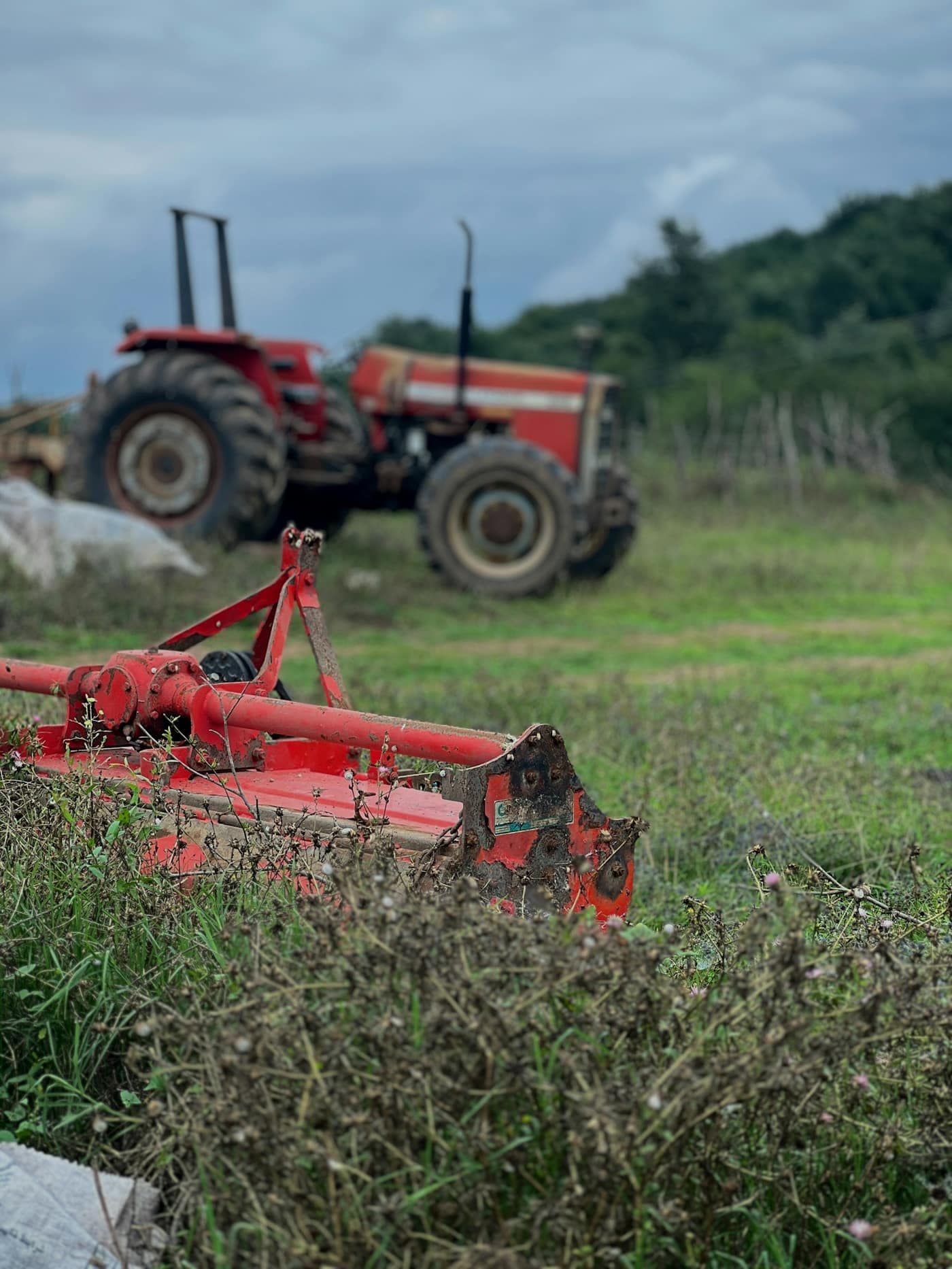
- Tractor needed
- 35 HP+ for a 5-foot unit
- Working width
- 5–7 ft (common)
- Field capacity
- 0.3–0.5 ha/hour
- Passes saved
- Does 2–3 cultivator passes
- Price band
- ₹55,000 – ₹1.5 lakh
- Subsidy
- 40–50% under SMAM (state-wise)
Overview
A rotavator (rotary tiller) is a PTO-driven implement whose L- or C-shaped blades chop and mix the soil into a fine, ready-to-sow seedbed in a single pass. It has quietly become the most-bought tillage implement in India because it collapses two or three cultivator runs — and a week of turnaround between crops — into one afternoon.
The catch is that the rotavator does its best work and its worst work with the same action. Run it shallow at high rotor speed, season after season, and it slices a smooth compaction layer — a hardpan — at 15–20 cm that roots cannot cross and water cannot drain through. The machine that saves you diesel this year can cost you yield in three.
This guide covers the decisions that actually matter — the tractor HP your width needs, which blade and drive suit your soil, how to keep the gearbox and blades alive, and how to use it in rotation with deeper tillage so the soil underneath stays open.
Why it earns its place
- One pass replaces two or three cultivator runs — real savings in diesel, labour and days.
- Leaves a fine, uniform tilth that improves seed-to-soil contact and germination.
- Mixes crop residue, green manure and FYM evenly into the topsoil rather than leaving it on top.
- Speeds up crop-to-crop turnaround, which is decisive in tight double- and triple-cropping.
- Works in both dry seedbed prep and wet paddy puddling with the right blades.
Common uses
- One-pass seedbed preparation after the previous harvest
- Incorporating crop residue, green manure and farmyard manure into the soil
- Puddling paddy fields ahead of transplanting
- Weed incorporation and inter-crop field preparation
- Preparing fine beds for vegetables and sugarcane
Types of rotavator
The choice is blade shape and drive, not power — match both to your soil and residue before comparing brands, because the wrong blade clogs or the wrong drive strains your tractor.
L-type blade rotavator
The everyday workhorse. Flanged L-shaped blades give a clean, fine tilth in normal loamy soils and are what most farmers buy without a second thought.
- Power range
- 35–50 HP tractor
- Suits
- General loamy soils
- Best for
- Routine seedbed preparation
C-type / J-type blade rotavator
Curved blades that cut and clear trash better, so they clog far less in fields carrying heavy crop residue or stubble after harvest.
- Power range
- 40–55 HP tractor
- Suits
- Residue-heavy fields
- Best for
- Working through stubble and trash
Straight blade rotavator
Straight blades give a very fine tilth and are favoured for puddling paddy and for the smooth beds vegetables need.
- Power range
- 35–50 HP tractor
- Suits
- Paddy puddling, fine beds
- Best for
- Puddling and fine seedbeds
Multi-speed rotavator
A multi-speed gearbox lets you change rotor rpm to suit the soil — slower for a coarse cut that spares structure, faster for a fine finish.
- Power range
- 45 HP+ tractor
- Suits
- Varied soil conditions
- Best for
- Farmers working mixed plots
Heavy-duty gear-drive
Side gear-drive (rather than chain) transfers power more durably and stands up to hard, dry soils and long contractor hours.
- Power range
- 50 HP+ tractor
- Suits
- Hard/dry soils, contracting
- Best for
- Heavy use and custom hiring
Mini rotavator
A narrow, light unit built for power tillers and mini tractors, for orchards, polyhouses and small vegetable plots a full-size rotavator cannot fit.
- Power range
- 15–25 HP tractor
- Suits
- Orchards, small plots
- Best for
- Mini tractors and power tillers
Popular brands compared
Trade-offs, not a ranking. No brand here is called the best, and nothing on this page is a paid placement.
Shaktiman (Tirth Agro)
Mid to premiumThe volume leader in Indian rotavators, with the widest range of widths and blade options and a deep dealer network.
- Known for
- Range, availability
- HP range
- For 20–90 HP tractors
Pros
- Widest choice of sizes and blades
- Parts and service easy to find
- Strong resale demand
Cons
- Premium lines priced above rivals
Fieldking (Beri Udyog)
Mid to premiumA large exporter known for rugged, heavy-duty gearboxes that suit hard soils and long working hours.
- Known for
- Heavy-duty build
- HP range
- For 30–90 HP tractors
Pros
- Robust for hard and dry soils
- Good for contractors
- Strong gearbox
Cons
- Heavier — needs adequate tractor HP
Maschio Gaspardo
PremiumItalian-origin implements built in India, at the precision-and-finish end of the market.
- Known for
- Precision, finish quality
- HP range
- For 35–110 HP tractors
Pros
- Excellent, even tilth
- Durable European engineering
Cons
- Highest price
- Spares can cost more
Sonalika / Landforce
Budget to midValue-focused implements, often bought alongside the same maker’s tractors as a matched package.
- Known for
- Value for money
- HP range
- For 30–75 HP tractors
Pros
- Competitive pricing
- Convenient with a matching tractor
Cons
- Fewer heavy-duty options
Mahindra (Gyrovator)
MidMahindra’s rotavator line, backed by the country’s largest tractor dealer and service network.
- Known for
- Service network, trust
- HP range
- For 30–60 HP tractors
Pros
- Service reach almost everywhere
- Trusted brand
- Good tractor pairing
Cons
- Narrower range than specialists
Universal
BudgetA long-established, budget-friendly brand widely used across the northern wheat belt.
- Known for
- Affordability
- HP range
- For 30–60 HP tractors
Pros
- Low purchase price
- Simple to repair
- Common in the north
Cons
- Fewer premium features
- Finish not as fine
Khedut / Soil Master
Budget to midRegional value brands offering dependable general-purpose rotavators at a lower price point.
- Known for
- Regional value
- HP range
- For 30–65 HP tractors
Pros
- Good value
- Adequate for routine tillage
Cons
- Service network thinner outside home states
Maintenance timeline
A rotavator lives in abrasive soil — worn blades, a dry gearbox and a slack drive are what send it to the workshop. This schedule keeps the rotor turning true.
Before each use
- Check all blade bolts are tight and no blades are bent or missing
- Check the gearbox oil level
- Grease the PTO shaft and the universal joint
- Confirm the PTO guard is in place and undamaged
Every ~50 hours
- Top up or change gearbox oil (EP90 grade) per the manual
- Check drive-chain tension on chain-drive models
- Re-tighten the flange and blade bolts
- Inspect oil seals and bearings for play or leaks
Seasonal / before storage
- Replace worn blades — always as a full matched set, not one at a time
- Change the gearbox oil at the end of the season
- Clean off soil and coat metal against rust
- Store under cover, resting on stands, not on the blades
Common problems & fixes
Symptoms, likely causes and what you can safely do before calling a mechanic.
Uneven tillage depth
- Symptoms
- Rotor cuts deeper on one side, or the finish is ridged rather than level.
- Likely causes
- The rear roller or skid shoes set unevenly, worn blades, or the top-link not adjusted so the machine sits level.
- What to do
- Level the machine on the three-point linkage, set the depth roller evenly both sides, and replace worn blades as a set.
Rapid blade wear
- Symptoms
- Blades wear thin or round off within a season and the tilth turns coarse.
- Likely causes
- Stony or very hard soil, the wrong blade type, or running shallow at high rpm.
- What to do
- Match blade type to soil, drop the rotor speed, and lift the machine over stony patches. Rotate to deeper tillage rather than forcing depth with the rotavator.
Gearbox noise or oil leak
- Symptoms
- Whining or grinding from the gearbox, or oil weeping around the seals.
- Likely causes
- Low gearbox oil, worn bearings, or a damaged oil seal.
- What to do
- Top up to the correct grade first; persistent noise means worn bearings and a workshop strip-down. Replace leaking seals promptly before the oil runs low.
Drive chain slipping (chain-drive)
- Symptoms
- Rotor stalls or slips under load on a chain-drive model.
- Likely causes
- A loose or stretched drive chain, or worn sprockets.
- What to do
- Adjust the chain tension; if the chain is stretched or the sprockets are hooked, replace them. Recurrent slipping on hard soil is a case for a gear-drive machine.
PTO shaft vibration
- Symptoms
- The PTO shaft shudders or knocks, especially when raised.
- Likely causes
- A worn or dry universal joint, a bent shaft, or the PTO shaft set at too steep an angle when lifted.
- What to do
- Grease and inspect the universal joints, never raise the implement fully with the PTO engaged, and replace a bent or worn shaft.
Hardpan (sub-surface compaction)
- Symptoms
- Water pools after rotavating; roots stop at a smooth layer 15–20 cm down.
- Likely causes
- Repeated shallow rotavation at the same depth, season after season.
- What to do
- Break the rotation with a deeper pass — an MB plough or a sub-soiler — every couple of seasons, and vary the working depth so a single glazed layer never forms.
Buying guide
A rotavator is cheap enough that the real question is width and build quality for your tractor’s PTO — not new versus used alone.
Buying new
Advantages
- Full warranty and a gearbox correctly matched to your tractor
- Fresh blades and no hidden wear
- Eligible for SMAM and state subsidy on the invoice
Disadvantages
- Highest upfront cost
- Only worth it if you till enough area each season
Buying used
Advantages
- Much lower price — sensible for low annual use
- Fine for light, occasional seedbed work
Disadvantages
- Blade, bearing and gearbox wear is easy to hide
- Usually not eligible for subsidy
- Check the chassis for cracked welds from hard use
Inspection checklist
- Blades — check for wear, bends and any missing; a full new set is costly
- Gearbox oil — no milky look (water ingress) and no metal particles
- Rotor bearings — spin the rotor and feel for play or roughness
- Drive — chain tension and sprocket wear, or gear-drive condition
- PTO shaft and guard — greased, straight, and the guard intact
- Match it to your tractor — width to HP, and 540 rpm PTO speed
Government subsidy & finance
The routes that bring the cost down — central, state and credit.
SMAM (Sub-Mission on Agricultural Mechanization)
Rotavators are a covered implement under SMAM, typically at 40–50% of cost, with a higher share for SC/ST, women and small/marginal farmers. Applied through your state agriculture department, usually on the OFMAS / agrimachinery portal.
Custom Hiring Centres (CHC)
If you till too little area each year to justify buying, a subsidised CHC or a village-shared rotavator is often the better economics — you pay only for the hours you use.
Farm-equipment finance
Where a subsidy is not available, a farm-implement loan spreads a rotavator’s cost over a few years. Check the SMAM subsidy first — it is usually the cheaper route.
Subsidy availability, percentage and eligibility vary by state and change every financial year. Always confirm the current rate and the open-application window with your state agriculture department or KVK before you buy. Nothing on this page is a paid placement.
Safety essentials
The rotor keeps spinning after you disengage the PTO, and blades throw stones. Treat a lifted, running rotavator as live.
Keep the PTO guard fitted at all times — the rotor blades are the most dangerous part of the machine.
Disengage the PTO fully before lifting the machine, clearing a jam or inspecting the blades.
Never clear trapped residue or stones by hand with the engine running.
Keep all bystanders well clear of the rear — a rotavator can throw stones and debris.
Run the PTO at its rated 540 rpm; over-speeding stresses the gearbox and can throw a blade.
When parked, lower the machine onto stands or blocks — never leave it resting on the blades.
Official downloads
Government portals only — everything below is hosted on an official server.
Frequently asked questions
How much HP tractor is needed to run a rotavator?
Budget roughly 8–10 HP for every foot of working width. A 5-foot rotavator wants about a 35 HP tractor, a 6-foot one around 45 HP, and a 7-foot one 50 HP or more. Running an over-wide rotavator on an under-powered tractor stalls the rotor and strains the clutch.
L-type or C-type blades — which should I choose?
L-type (flanged) blades are the all-round choice and give the finest tilth in normal soils. C-type or J-type curved blades cut and clear trash better, so they clog far less in fields with heavy crop residue or stubble. Straight blades are used mainly for puddling paddy.
Does a rotavator damage the soil?
Used sensibly, no. Used shallow at high rotor speed season after season, it can smear a hardpan at 15–20 cm that blocks roots and drainage, and its fine action can hurt soil structure and earthworm activity over time. Vary the depth and break the rotation with a deeper tillage pass every couple of seasons.
Rotavator or cultivator — which is better?
They do different jobs. A rotavator gives a finished seedbed in one pass but costs more and carries the hardpan risk; a cultivator is cheap secondary tillage that needs two or three passes for the same tilth. Many farms keep both and use the cultivator for routine work, the rotavator when turnaround time is tight.
How long do rotavator blades last?
Typically around 150–250 working hours, less in stony or very hard soil. Always replace them as a full matched set, not one or two at a time — mismatched blade heights give an uneven cut and unbalance the rotor.
Chain drive or gear drive — what is the difference?
Side gear-drive transfers power more durably and copes better with hard soil and long hours, but costs more. Chain-drive (central) is cheaper and lighter and is fine for lighter, occasional work. For contracting or hard, dry soils, a gear-drive machine is the more durable choice.
Still deciding?
The FAQs above cover the common questions. For a choice tuned to your exact soil, crop and acreage, your nearest Krishi Vigyan Kendra or a Custom Hiring Centre is the authoritative next step.