
Horse Gram (Kulthi)
Macrotyloma uniflorum
A tough, deeply rainfed pulse grown on the poorest, driest, most stony land in Karnataka, Andhra Pradesh, Tamil Nadu and Odisha, where almost no other crop gives a return, and doubling as dal, sprouts and fodder — the two things that decide the crop are Horsegram yellow mosaic virus, which can badly stunt a plant infected early, and the pod borer complex, capable of destroying most of the pod set in an unmanaged field.
Quick Summary
The key points from this page in about two minutes — read it or have it read aloud.
Quick Summary
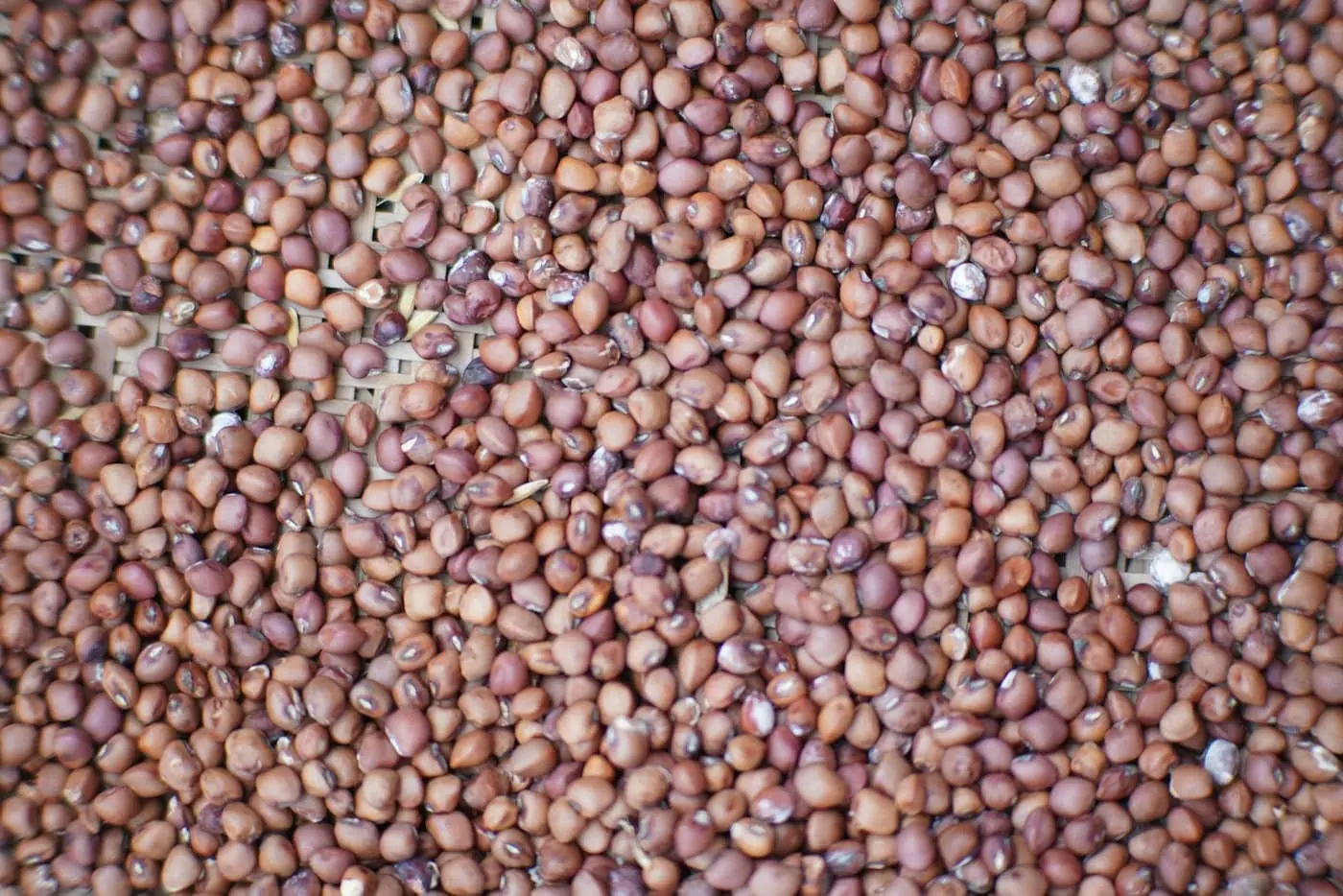
Horse gram (Macrotyloma uniflorum), known as kulthi in Hindi, is a short-duration kharif pulse grown almost entirely as a rainfed crop on marginal, low-fertility, often stony or gravelly land across Karnataka, Andhra Pradesh, Tamil Nadu, Odisha, Chhattisgarh and parts of Maharashtra — land where wetter, thirstier crops simply fail. It is unusual among Indian pulses in serving three separate markets at once: as human food, especially in South India (rasam, sprouted kulthi, whole dal), as livestock and poultry feed, and as a green manure or fodder legume grown for its nitrogen-fixing roots and biomass rather than its grain.
The crop's real varietal history runs through two research lines. Tamil Nadu Agricultural University released the country's earliest named horse gram varieties from its Paiyur research station — CO 1 in the 1950s and Paiyur 2, a gamma-ray-induced mutant of CO 1, in the late 1990s. More recently, ICAR's Central Research Institute for Dryland Agriculture (CRIDA), Hyderabad, has released a newer generation — CRHG-4, CRIDA-18R and CRHG-19 — bred specifically for higher yield and documented tolerance to horse gram's two worst problems, yellow mosaic virus and powdery mildew. Beyond these, a number of other named varieties (PHG-9, VL Gahat-19 and others) circulate through state seed programmes and Krishi Vigyan Kendras, with varying degrees of documentation.
Two things decide how well a horse gram crop actually performs. The first is Horsegram yellow mosaic virus (HgYMV), a whitefly-spread virus that can badly stunt a plant and cut pod set if infection happens early in the crop's short life. The second is the pod borer complex, which field surveys describe as capable of destroying most of a season's pod set where it goes unmanaged. Because horse gram is grown almost entirely without irrigation and with minimal fertiliser — its whole economic case rests on needing next to nothing from poor land — these two problems, not water or nutrition, are what a grower actually needs to watch.
- Crop type
- Rainfed kharif pulse / legume
- Season
- Kharif (rainfed)
- Suitable states
- Karnataka, Andhra Pradesh, Tamil Nadu, Odisha, Chhattisgarh
- Growing duration
- 90–120 days
- Water requirement
- Very low; among the most drought-tolerant Indian pulses
- Temperature
- Warm, 25–30°C; no frost tolerance
- Soil type
- Poor, marginal, well-drained soils, including stony/gravelly land
- Difficulty level
- Easy–moderate (yellow mosaic virus, pod borer)
- Expected yield
- 500–800 kg/ha rainfed; 700–1,300 kg/ha with improved varieties
- Key risk
- Horsegram yellow mosaic virus and the pod borer complex
Overview
Horse gram (Macrotyloma uniflorum), called kulthi in Hindi, is a short-duration kharif pulse grown almost entirely as a rainfed crop. It is deliberately placed on the poorest, driest, most marginal land a farmer has — stony, gravelly or low-fertility soils where wetter and hungrier crops give little or nothing — which is exactly why it remains important in Karnataka, Andhra Pradesh, Tamil Nadu, Odisha, Chhattisgarh and parts of Maharashtra.
It is also unusually versatile for a pulse: the same crop is eaten by people (as dal, rasam and sprouted kulthi, especially across South India), fed to livestock and poultry as grain, and grown as a green-manure or fodder legume purely for its nitrogen-fixing roots and biomass. This flexibility, more than any single high-value use, is what has kept horse gram in the cropping system on land nothing else would suit.
Karnataka alone accounts for roughly a quarter of India's horse gram area and production, with Odisha and Chhattisgarh also significant. Two research programmes carry most of the crop's named varieties: Tamil Nadu Agricultural University's older Paiyur-station releases (CO 1, Paiyur 1, Paiyur 2), and ICAR-CRIDA Hyderabad's newer, disease-tolerant releases (CRHG-4, CRIDA-18R, CRHG-19).
Crop timeline, sowing to harvest
A quick visual map of the season — jump to any section below for the detail behind each stage.
- Day 0
Sowing
Seed broadcast or line-sown 3–5 cm deep into a rainfed seedbed as soon as the monsoon gives a reliable first shower, typically June to August.
- Day 5–7
Emergence
Germination is fast under good monsoon moisture; seedlings establish quickly and are relatively tolerant of early dry spells once up.
- Day 20–25
First weeding
The first hand-weeding or hoeing removes early weed competition while the crop canopy is still open.
- Day 30–45
Branching
The plant branches and spreads, helped along by its own nitrogen-fixing root nodules once these establish.
- Day 40–60
Flowering
Small yellow flowers appear; this is also the period whitefly-spread yellow mosaic virus does the most damage if it strikes.
- Day 55–75
Pod formation
Pods form and fill; pod borers are the main threat to yield through this stage.
- Day 90–120
Maturity & harvest
Pods turn brown and dry down; the crop is uprooted or cut and threshed once most pods have matured.
Suitable states
States where this crop is grown at scale, highlighted below. Your local Krishi Vigyan Kendra is still the final word for your specific block.
- Jammu and Kashmir
- Himachal Pradesh
- Punjab
- Uttarakhand
- Haryana
- Delhi
- Uttar Pradesh
- Rajasthan
- Bihar
- Jharkhand
- West Bengal
- Sikkim
- Assam
- Arunachal Pradesh
- Meghalaya
- Nagaland
- Manipur
- Mizoram
- Tripura
- Gujarat
- Madhya Pradesh
- Chhattisgarh
- Maharashtra
- Odisha
- Goa
- Telangana
- Andhra Pradesh
- Karnataka
- Kerala
- Tamil Nadu
- Puducherry
- Ladakh
- Chandigarh
- Lakshadweep
- Andaman and Nicobar Islands
- Dadra and Nagar Haveli and Daman and Diu
Grown here
Climate requirements
Horse gram's entire place in Indian farming rests on tolerating conditions most pulses cannot — poor soil, low and erratic rainfall, minimal purchased inputs. That tolerance does not extend to its two real risks, yellow mosaic virus and pod borer, which need watching regardless of how little else the crop demands.
Ideal temperature
A warm-season crop, growing best around 25–30°C; it tolerates real heat well but has no meaningful frost tolerance, which is one reason it stays a kharif rather than a winter crop
Rainfall
Genuinely low-water — horse gram is one of the most drought-tolerant pulses grown in India and is deliberately sown on residual monsoon moisture with no supplemental irrigation across almost all of its area
Humidity
Moderate humidity suits the crop; sustained high humidity favours the whitefly buildup that spreads yellow mosaic virus and can also favour fungal leaf diseases
Sunlight
Full sun for normal branching, flowering and pod set
Soil requirements
Horse gram's real agronomic role in India is the marginal field other pulses would fail on, not a place on the best land in the rotation — choosing poor land for it is the point, not a compromise.
Suitable soil
Grows on poor, marginal and even stony or gravelly land, including red and lateritic soils, where most other pulses would give a poor return; still needs reasonable drainage, since it does not tolerate waterlogging despite its overall toughness
pH range
Wide tolerance, roughly 5.0–7.5, including mildly acidic soils
Drainage
Good drainage matters even on otherwise very tolerant land — standing water after heavy monsoon rain damages the crop far more than the poor fertility it is usually grown on
Organic matter
Low; the crop is specifically valued for performing on low-organic-matter, low-fertility land, and its own root nodules fix a meaningful share of the nitrogen it needs
Land preparation
Same four steps whichever region you are in — only the timing shifts with the sowing window.
- 1
Minimal, timely tillage
One or two ploughings ahead of the first reliable monsoon shower are usually enough; horse gram does not need the fine seedbed a small-seeded crop would.
- 2
Confirm the plot drains
Even on marginal or stony land, avoid the lowest-lying corner of a field where monsoon rain can pool, since waterlogging — not poor fertility — is what genuinely damages this otherwise tolerant crop.
- 3
Basal manure is optional, not essential
A light application of farmyard manure helps establishment on very poor land, but the crop's economics work precisely because it does not require a heavy basal dose the way a cereal would.
Seed information
How the main varieties compare, so you can pick by duration, yield, disease pressure or what you are growing for.
| Variety | Duration | Yield | Disease resistance | Best state | Suitable for |
|---|---|---|---|---|---|
Tamil Nadu Agricultural University's earliest named horse gram release, from 1953, and the parent line later used to breed Paiyur 2 through gamma-ray mutation. | Not separately documented | Superseded in yield by later TNAU releases | Not separately documented | Tamil Nadu | Historical reference; largely replaced by Paiyur 2 in current recommendation |
An older TNAU release (1988) from the Regional Research Station, Paiyur, that predates Paiyur 2 in the same breeding programme. | Not separately documented | Not separately documented | Not separately documented | Tamil Nadu | General cultivation in Tamil Nadu where recommended locally |
TNAU's 1998 release, developed by gamma-ray-induced mutation of CO 1; pale brown seed, a compact 40–45 cm plant with 2–3 branches, recommended across Tamil Nadu (outside the Nilgiris and Kanyakumari) for rainfed, November-sown cultivation. | 100–105 days | About 870 kg/ha rainfed | Not separately documented | Tamil Nadu | Standard rainfed cultivation across most of Tamil Nadu |
An ICAR-CRIDA, Hyderabad release (around 2009–2010) developed by induced mutation of the "Hyderabad Local" line; black-seeded with non-shattering pods, documented as tolerant to powdery mildew, yellow mosaic virus, anthracnose and mites. | Not separately documented | Roughly 700–1,100 kg/ha across trial locations, about 33% above the best local check | Tolerant to powdery mildew, yellow mosaic virus, anthracnose and mites | Andhra Pradesh, Telangana | South Indian rainfed cultivation where disease pressure is a concern |
An ICAR-CRIDA release notified for South India in 2009, derived from the "K-42" parent line; brown-seeded with non-shattering pods, tolerant to yellow mosaic virus, powdery mildew and mites. | Not separately documented | Roughly 750–1,150 kg/ha across trial locations, about 21% above the best local check | Tolerant to yellow mosaic virus, powdery mildew and mites | Andhra Pradesh, Telangana | South Indian rainfed cultivation, similar niche to CRHG-4 |
ICAR-CRIDA's 2014 release, also derived from the "K-42" line; brown-seeded, tolerant to shattering, with a reported 28.3% crude protein content and tolerance to powdery mildew, anthracnose and whiteflies. | Not separately documented | Roughly 760–1,300 kg/ha across trial locations, about 20% above the best local check | Tolerant to powdery mildew, anthracnose and whiteflies | Andhra Pradesh, Telangana | Higher-protein grain production alongside disease tolerance |
A variety grown in farmer fields across Andhra Pradesh and Karnataka and referenced in regional Krishi Vigyan Kendra programmes; its releasing institute and official notification year are not confirmed in publicly available sources, so treat its origin as unconfirmed even though the variety itself is real and in use. | 100–105 days | Farmer-reported 750–1,000 kg/ha under good management | Locally reported tolerance to yellow-mosaic-type symptoms, not independently confirmed by a scientific source | Andhra Pradesh, Karnataka | Farmer-scale cultivation where locally available |
A release from ICAR's Vivekananda Parvatiya Krishi Anusandhan Sansthan (VPKAS), Almora, for the North Zone — the main documented horse gram variety recommended for the northwestern Himalayan belt rather than the South Indian heartland. Its exact duration figure could not be confirmed from available sources. | Not reliably documented | Not separately documented | Reported multiple disease tolerance, not itemised in available sources | Uttarakhand and the North Zone | Hill and northwestern Himalayan cultivation, outside horse gram's main South Indian belt |
- Seed rate
- 25–30 kg/ha for line sowing as a grain crop; up to 40 kg/ha where broadcast or grown as a dual grain-and-fodder crop
- Certified seed
- Buy certified seed of a named variety from your state seed corporation or a Krishi Vigyan Kendra rather than saved farm seed where possible — the disease-tolerant CRIDA releases in particular are worth sourcing correctly, since their main value is the tolerance bred into them, which farm-saved seed of unclear origin cannot guarantee.
- Spacing
- 30 cm between rows with plants thinned to about 10 cm within the row for line sowing; kharif sowings sometimes use a wider 40–45 cm row spacing
- Seed treatment
- Treat seed with a fungicide such as carbendazim (about 2 g/kg seed) against soil-borne pathogens, and inoculate with Rhizobium and phosphate-solubilising bacteria (PSB) culture where the crop has not been grown recently on that land, to establish the nitrogen-fixing nodules that reduce the crop's own fertiliser need.
Sowing guide
Horse gram is rarely grown alone on the best land in a rotation — it is deliberately placed on the field a farmer would otherwise leave fallow or under-cropped, which is exactly where its low input needs pay off.
- Best time
- With the onset of a reliable monsoon shower, typically June to August across most of horse gram's growing area; parts of Tamil Nadu also grow a rainfed crop sown in October–November on the retreating northeast monsoon
- Row spacing
- 30 cm, sometimes wider at 40–45 cm in kharif broadcast sowing
- Plant spacing
- Thinned to roughly 10 cm within the row for line-sown grain crops
- Sowing depth
- 3–5 cm
- Method
- Broadcast or line-sown directly into the field with the first reliable rains; on truly marginal rainfed land, sowing promptly on that first good shower matters more than the exact spacing, since the crop's shallow root system needs to establish before the soil dries between rain events
Fertilizer schedule
A split dose beats one large dose applied at sowing — nitrogen especially is lost to the air and to leaching if it all goes in on day one.
- 1
Basal (at sowing)
Day 0
A modest basal dose of roughly 20 kg N and 30–40 kg P₂O₅ per hectare, well below what a cereal needs, since horse gram fixes a meaningful share of its own nitrogen once root nodules establish.
- 2
No routine top-dressing
Throughout
Most recommendations do not call for a nitrogen top-dressing on this short-duration legume; on genuinely very poor land, a soil test is worth more than adding fertiliser the crop was never expected to need.
Irrigation schedule
1. Germination
Day 0–7
Relies on the sowing-time monsoon shower for germination moisture; almost never separately irrigated at this stage.
2. Flowering to pod fill
40–75 days
Where irrigation is genuinely available, one or two life-saving waterings during a dry spell at flowering or pod fill can meaningfully lift yield, though the great majority of the crop is grown with no irrigation at all through this period.
Critical stages
- Flowering
- Pod filling
Water-saving tips
- Horse gram is grown specifically because it does not need irrigation — treating it as a crop that requires a watering schedule defeats the reason it is planted on marginal land in the first place.
- Where a farmer does have access to limited irrigation, saving it for a dry spell at flowering or pod fill, rather than watering routinely, gives the best return on that scarce water.
Weed management
Common weeds
Organic control
- One hand-weeding or hoeing at around 20–25 days after sowing handles most early competition, since the crop's canopy closes reasonably quickly once it branches.
- A second weeding around 35–40 days is sometimes done where weed pressure is heavy, though many rainfed plantings on very marginal land manage with a single weeding.
Chemical control
- A pre-emergence herbicide cleared for use on horse gram or pulses generally can be used where weed pressure is heavy, though most of the crop is managed with hand or mechanical weeding alone given its low-input economics.
- Confirm any herbicide with your local KVK before spraying, since horse gram's narrow margins make an off-label product a real financial risk for little gain.
Nutrient deficiency identification
What a shortage of each nutrient actually looks like on the plant, so you can tell a deficiency apart from a disease before you spray the wrong thing.
Nitrogen
Visible symptom
Pale, slow-growing plants, most often where Rhizobium nodulation has failed to establish on land new to the crop.
Phosphorus
Visible symptom
Weak early growth, poor nodulation and delayed flowering, especially on the very low-fertility soils this crop is typically grown on.
Potassium
Visible symptom
Weak stems more prone to lodging, though this is a secondary concern on a crop grown mainly for its ability to do without heavy nutrition.
Diseases to watch for
Symptoms, likely cause and what actually treats it — not just a spray name.
Horsegram yellow mosaic virus (HgYMV)
- Symptoms
- Scattered bright yellow patches on young leaves spreading into a yellow-and-green mosaic; badly affected leaves turn almost fully yellow, and plants infected early are visibly stunted with reduced pod set.
- Cause
- A begomovirus spread by the whitefly (Bemisia tabaci) — a distinct virus species from the yellow mosaic virus recorded on moong, urad and soybean, though managed the same way.
- Treatment
- No spray removes the virus from an already-infected plant; rogue out badly affected plants early and focus control on the whitefly vector.
- Prevention
- Grow a variety documented as HgYMV-tolerant (CRHG-4, CRIDA-18R and CRHG-19 all carry this trait), sow on time, manage whitefly numbers with yellow sticky traps and judicious insecticide, and remove volunteer plants and weed hosts between seasons. See the dedicated horsegram yellow mosaic virus guide for full detail.
Dry root rot
- Symptoms
- Sudden wilting and drying of plants, usually in hot, dry, stressed conditions; the root and stem base show shredded tissue with tiny black fungal specks.
- Cause
- Macrophomina phaseolina, a soil-borne fungus favoured by heat and moisture stress, affecting many pulses and other crops.
- Treatment
- No effective in-season cure once a plant has collapsed; remove and destroy affected plants to limit spread.
- Prevention
- Avoid moisture stress where any irrigation is available, use treated seed, and rotate away from a field with a history of the disease.
Wilt
- Symptoms
- Plants wilt and die despite adequate soil moisture, often starting on one side or one branch; splitting the stem shows discoloured tissue inside.
- Cause
- Soil-borne Fusarium species, entering through the roots and blocking the plant's water-conducting tissue.
- Treatment
- No cure for an already-wilting plant; remove affected plants where practical.
- Prevention
- Use disease-tolerant seed sources where documented, treat seed with a fungicide before sowing, and avoid repeated horse gram cultivation on land with a wilt history.
Pests to watch for
What to look for before the damage is visible, and organic options before you reach for a chemical.
Pod borer complex
- Identification
- Caterpillars boring into developing pods, most commonly Helicoverpa (gram pod borer) among several species that attack horse gram pods.
- Damage
- Field reports describe pod borers as capable of destroying the great majority of a season's pod set where they go unmanaged, making this one of the two problems that decide most horse gram yield outcomes.
- Organic control
- Regular field scouting from flowering onward, hand-picking where infestation is light, and conserving natural predators by avoiding unnecessary broad-spectrum spraying.
- Chemical control
- A CIB&RC-registered insecticide once populations cross a damaging threshold — trials have found indoxacarb notably effective against pod damage in related pulse crops; confirm the current recommendation with your local KVK.
Aphids
- Identification
- Small soft-bodied insects (Aphis species) clustering on tender shoots, flowers and developing pods.
- Damage
- Sap loss weakens the plant and can cause premature drying of flower buds and flowers under heavy infestation.
- Organic control
- Neem oil sprays and conserving natural predators like ladybird beetles by avoiding early broad-spectrum insecticide use.
- Chemical control
- A recommended insecticide once colonies cross a damaging threshold; some trials found spinosad-based and emamectin benzoate products effective in related legumes.
Whitefly
- Identification
- Tiny white moth-like insects that rise in a cloud when the plant is disturbed, feeding on the underside of leaves.
- Damage
- Direct sap-sucking damage is secondary to its real cost — spreading horsegram yellow mosaic virus between plants.
- Organic control
- Yellow sticky traps and conserving natural predators.
- Chemical control
- A CIB&RC-registered insecticide against whitefly, rotated between modes of action, used specifically to slow virus spread rather than for the sap-sucking damage alone.
White grub and termites
- Identification
- Soil-dwelling pests that attack roots underground, causing scattered plants to wilt and dry with no visible pest above ground.
- Damage
- Cut roots kill affected plants outright, most often on light or gravelly soils in dry conditions.
- Organic control
- Deep summer ploughing to expose grubs to birds and heat, and avoiding fresh, undecomposed organic matter that attracts termites.
- Chemical control
- A soil application of a registered granular insecticide such as phorate where infestation is a recurring problem on a field.
Pulse beetle (storage pest)
- Identification
- A small brown beetle whose grubs develop and feed inside stored grain, visible as small round exit holes in the seed.
- Damage
- Turns a healthy stored lot into holed, hollow, unsellable grain within a few months if left unmanaged.
- Organic control
- Store only well-dried grain in clean, sealed containers, and mix in neem leaf or edible oil at a light rate as a traditional storage protectant.
- Chemical control
- Fumigation of stored grain by a trained operator where infestation is already established; not something to attempt without proper training and safety equipment.
Common mistakes to avoid
The mistakes that cost growers the most, ranked by how often they show up in the field — not in the order you might expect.
- 1
Choosing the best available field for horse gram instead of the poorest.
Why it hurts
Horse gram's whole economic case is built on giving a usable return from marginal land other crops cannot use profitably — planting it on good land wastes that land's potential for a higher-value crop.
- 2
Assuming a tough, drought-tolerant crop needs no pest or disease management at all.
Why it hurts
Yellow mosaic virus and the pod borer complex are real, serious risks capable of destroying most of a season's pod set regardless of how little water and fertiliser the crop otherwise asks for.
- 3
Sowing farm-saved seed of unclear variety year after year instead of a documented, disease-tolerant release.
Why it hurts
The newer CRIDA releases (CRHG-4, CRIDA-18R, CRHG-19) earn their higher yield specifically through bred-in yellow mosaic virus and powdery mildew tolerance — an unclear farm-saved line cannot be relied on for that protection.
- 4
Delaying sowing well past the first reliable monsoon shower.
Why it hurts
The crop's shallow root system needs to establish while soil moisture is available; a late, poorly timed sowing loses the moisture advantage the entire rainfed system depends on.
- 5
Ignoring drainage on marginal or stony land because it looks unlikely to hold water.
Why it hurts
Even genuinely tough, poor-soil-tolerant horse gram cannot handle waterlogging after a heavy monsoon downpour — check that water actually moves off the plot.
- 6
Storing harvested grain without proper drying, expecting the crop's general hardiness to extend to storage.
Why it hurts
Pulse beetle infestation in storage has nothing to do with field toughness — poorly dried grain in an unsealed container is vulnerable regardless of how well the crop performed in the field.
Harvesting
Harvest once most pods have turned brown and dried down, typically 90–120 days after sowing depending on variety — plants are usually uprooted or cut at ground level rather than pods being picked individually, then dried further and threshed.
Signs it is ready
- Most pods turned brown and dry
- Leaves largely yellowed and dropped
- Seed rattles inside the pod when shaken
Tools
- Sickle for cutting, or hand-pulling on very light soils
- Tarpaulin for drying and threshing
- A simple thresher or bullock/tractor treading for larger quantities
Expected yield
Roughly 500–800 kg/ha under typical rainfed farmer management; the newer ICAR-CRIDA releases have shown 700–1,300 kg/ha in trial conditions, meaningfully above older local varieties
Post-harvest & storage
Storage
Dry threshed grain to a safe moisture level before storage, then keep it clean and dry in a sealed container — horse gram's field hardiness does not extend to storage, where the pulse beetle is a genuine risk to any pulse left in damp or unsealed conditions.
Packaging
Pack clean, well-dried grain in clean bags or containers kept off the floor in a dry store.
Transportation
Move dry grain protected from moisture; most horse gram moves through local mandis and traders rather than any organised contract-farming channel.
Shelf life
Several months to over a year for well-dried, properly stored, pulse-beetle-free grain; check stored lots periodically for the small exit holes that signal an active infestation.
Market prices
Today's mandi price near you, pulled live from the government's own Agmarknet data.
Live daily mandi prices from the government Agmarknet dataset.
Synced from data.gov.in (Agmarknet). Rates are ₹ per quintal.
Weather
Current conditions and a 5-day outlook for your selected location, with one line of stage-aware advice.
Pick your state for current conditions and a 5-day outlook.
Live data from Open-Meteo
Profit calculator
Your own cost sheet, expected yield and selling price — not ours.
Where the money goes
Share of the total cost per acre, using the calculator’s own default cost sheet below — adjust the numbers there to match your field and this picture will no longer apply to you exactly, but the ranking rarely changes.
- Land rent40% (₹5,000)
- Labour24% (₹3,000)
- Pesticide & weedicide10% (₹1,200)
- Machinery10% (₹1,200)
- Seed6% (₹800)
- Fertiliser6% (₹700)
- Irrigation2% (₹300)
- Interest2% (₹300)
Official downloads
Government and ICAR documents only — everything below is hosted on an official server.
Frequently asked questions
Why is horse gram grown on such poor land instead of better fields?
Because that is exactly where it earns its place — horse gram tolerates poor, marginal, even stony soil and needs very little water or fertiliser, so it gives a usable return from land that would give little or nothing under a more demanding crop. Planting it on good land instead wastes that land's potential for a higher-value crop.
Is horse gram only used as animal feed, or do people eat it too?
Both, genuinely. It is a real human food crop, especially in South India, where it is cooked as dal and rasam and eaten sprouted, alongside its long-standing use as livestock and poultry feed and as a green-manure or fodder legume. This dual role, more than any single high-value use, is what has kept it in the cropping system.
What is the single biggest threat to a horse gram crop?
Two problems decide most outcomes: Horsegram yellow mosaic virus (HgYMV), a whitefly-spread virus that badly stunts plants infected early, and the pod borer complex, which field reports describe as capable of destroying most of a season's pod set where it goes unmanaged. Everything else about the crop is comparatively forgiving.
Are there horse gram varieties bred to resist yellow mosaic virus?
Yes — ICAR-CRIDA's CRHG-4, CRIDA-18R and CRHG-19 are all documented as tolerant to yellow mosaic virus in trials, alongside other traits like powdery mildew or mite tolerance depending on the variety. Sourcing certified seed of one of these, rather than an unclear farm-saved line, is the most reliable single step against this disease.
Does horse gram need irrigation?
Almost never in practice — it is one of the most drought-tolerant pulses grown in India and is deliberately sown to run on monsoon soil moisture alone across nearly all of its growing area. Where a farmer does have limited irrigation available, saving it for a dry spell at flowering or pod fill gives the best return, rather than watering on a routine schedule.
Does horse gram have an MSP or mandi trade in India?
No MSP — horse gram is not a CACP-notified crop. It does see genuine mandi trade, listed as "Kulthi(Horse Gram)" at markets concentrated heavily in Karnataka, alongside sale through local traders elsewhere in its growing area. Confirm the current price at your nearest mandi before selling, since trade is real but thinner and more regional than for a major notified pulse.
Still have questions?
The FAQs above cover the common ones. For anything specific to your field and soil, your nearest Krishi Vigyan Kendra is the authoritative answer.