
Complete Laser Land Leveller Guide for Indian Farmers
A laser land leveller flattens a field to within a couple of centimetres, guided by a laser beam instead of the eye — and that flatness cuts irrigation water by a fifth to a third, spreads it evenly, and lifts yield. For most farmers it is a machine to hire, not own.
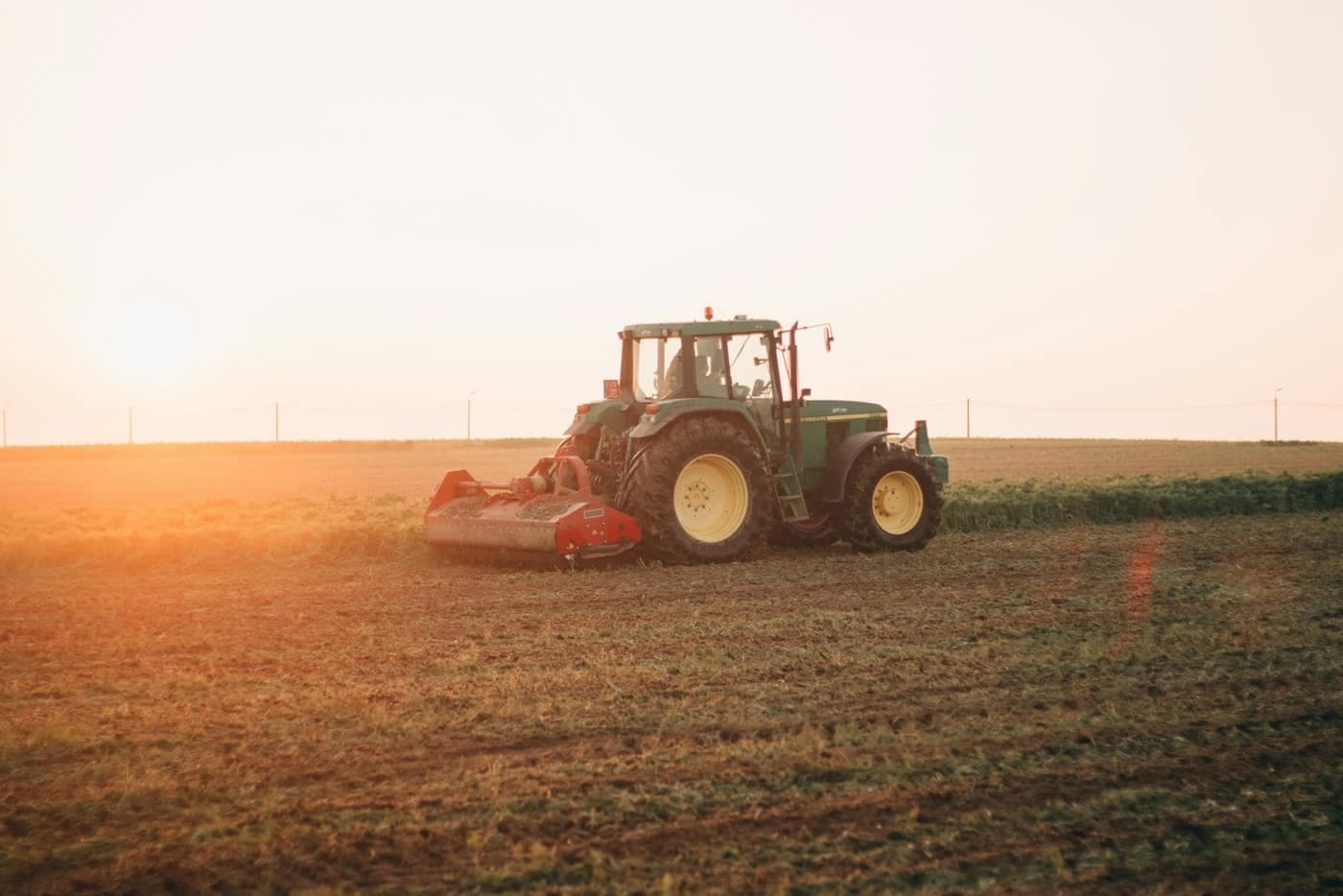
- What it does
- Levels a field to ±2 cm by laser
- Tractor needed
- 50 HP+ (heavy dragging)
- Field capacity
- ~0.4–0.5 ha/hour (first level slower)
- Price
- ₹3,00,000 – ₹3,50,000 with control system
- Water saving
- ~20–30% of irrigation water
- Subsidy
- Up to 50% under SMAM/water schemes
Overview
A laser land leveller uses a rotating laser transmitter on a tripod to define a perfectly flat reference plane across the field. A receiver on a mast above a hydraulic drag bucket reads that plane and automatically raises or lowers the bucket, cutting soil from the high spots and carrying it to the low ones. Over several passes the field is brought flat to within about ±2 cm — a precision no tractor-and-eye levelling can approach.
That flatness is not cosmetic. On an unlevel field, water pools in the hollows and starves the rises, so farmers over-irrigate to wet the whole field — wasting water, leaching nutrients and drowning patches. A laser-levelled field takes water evenly, which is why it typically cuts irrigation use by 20–30%, improves germination and fertiliser response, and lifts yield by a useful margin, especially in flood-irrigated wheat and paddy.
The catch is cost and use pattern. A leveller with its control system runs to around ₹3 lakh, yet a field only needs levelling once and then a light touch-up every few years. That makes it a classic machine to hire from a Custom Hiring Centre or contractor rather than own — which is exactly how most farmers should approach it. This guide covers the accuracy, the water maths, and the own-versus-hire decision.
Why it earns its place
- Levels a field to within ±2 cm — an accuracy manual or eye levelling cannot reach.
- Cuts irrigation water use by roughly 20–30% by letting water spread evenly instead of pooling.
- Improves germination, fertiliser response and yield by removing waterlogged hollows and dry rises.
- Reclaims usable area lost to bunds and uneven patches, and makes machine sowing and harvest easier.
Common uses
- One-time precision levelling of flood-irrigated wheat, paddy and sugarcane fields.
- Reshaping fields for even water distribution before adopting laser-levelled irrigation.
- Periodic touch-up levelling every few years as soil movement re-creates unevenness.
- Levelling new or consolidated plots and filling old bunds after land pooling.
Types of laser leveller
The units differ mainly in bucket size and laser range — a standard bucket for ordinary fields, a larger one and a longer-range or twin-mast system for big or long plots. The control system, not the frame, is where the real difference in accuracy lies.
Standard drag-bucket leveller
A single hydraulic drag bucket of about 1.8 m with a laser receiver mast — the common unit for ordinary field sizes, run behind a 50 HP-class tractor.
- Power range
- For 50–60 HP tractors
- Suits
- Ordinary fields, small–medium plots
- Best for
- Typical farm and CHC levelling work
Large drag-bucket leveller
A wider, heavier bucket of around 2.1 m or more for large fields and contractor work, moving more soil per pass but demanding more tractor power.
- Power range
- For 60 HP+ tractors
- Suits
- Large fields, contractor scale
- Best for
- Contractors and large holdings
Long-range / twin-mast system
A higher-specification laser and control set with longer range or twin masts, for very large or long fields where a single transmitter position must cover a wide area accurately.
- Power range
- For 60 HP+ tractors
- Suits
- Very large or long plots
- Best for
- Big estates and levelling contractors
Popular brands compared
Trade-offs, not a ranking. No brand here is called the best, and nothing on this page is a paid placement.
Trimble
PremiumA global maker of the laser transmitters, receivers and control boxes that many Indian levellers are built around, valued for accuracy and reliability.
- Known for
- Precision laser control systems
- HP range
- Control system (any leveller)
Pros
- High accuracy and reliability
- Widely serviced
- Strong resale of the control set
Cons
- Premium price for the control system
Spectra / Leica-class systems
Mid–premiumOther established survey-instrument makers whose rotating lasers and receivers are used on levellers where dependable calibration matters.
- Known for
- Survey-grade laser hardware
- HP range
- Control system (any leveller)
Pros
- Reliable calibration
- Good range options
- Serviceable hardware
Cons
- Higher cost than unbranded control sets
Indian frame & bucket makers
Budget–midDomestic implement makers and fabricators build the drag bucket, mast and hydraulics, usually paired with an imported control system, at a range of price points.
- Known for
- Bucket, mast and hydraulics
- HP range
- For 50–60 HP tractors
Pros
- Lower overall cost
- Locally repairable frame and hydraulics
- Matched to Indian tractors
Cons
- Accuracy depends on the control system fitted
- Build quality varies by maker
Maintenance timeline
A laser leveller is a precision instrument bolted to a heavy drag bucket — a mis-calibrated transmitter, a low battery or a sluggish hydraulic valve quietly ruins the accuracy you paid for. These checks keep it levelling to specification.
Before each job
- Check and calibrate the laser transmitter on level ground before starting
- Charge or replace the transmitter and receiver batteries
- Clean the transmitter and receiver lenses; check the tripod is stable
- Confirm the receiver mast is vertical and firmly mounted
During & between jobs
- Check hydraulic hoses, the valve and cylinder for leaks and quick response
- Inspect the bucket cutting edge for wear and replace when blunt
- Grease the bucket pivots and check all mounting bolts
- Re-verify calibration if the leveller has taken a heavy knock
Storage
- Store the laser transmitter, receiver and control box indoors, dry and cushioned
- Remove batteries for long storage
- Clean and oil the bucket and bright metal against rust
Common problems & fixes
Symptoms, likely causes and what you can safely do before calling a mechanic.
Field not levelling accurately
- Symptoms
- The field is still uneven after several passes, or low and high spots persist.
- Likely causes
- Transmitter out of calibration, tripod sinking or moving, or the mast not vertical.
- What to do
- Re-calibrate the transmitter, set the tripod on firm ground and check it has not sunk, and make sure the receiver mast is truly vertical. Re-survey the field grid before assuming the machine is at fault.
Bucket not raising or lowering
- Symptoms
- The bucket does not respond to the receiver, or moves slowly and erratically.
- Likely causes
- Hydraulic leak or low oil, a sticking control valve, or a wiring/receiver fault.
- What to do
- Check hydraulic oil and hoses, free or replace the control valve, and inspect the receiver-to-valve wiring and connectors. A sluggish valve is a common and fixable cause.
Laser signal lost or drifting
- Symptoms
- The receiver loses the beam or the reference plane seems to shift during work.
- Likely causes
- Low transmitter battery, the beam blocked by dust or crop, or the tripod knocked.
- What to do
- Replace the battery, keep the line between transmitter and receiver clear, and reset and re-level the tripod on stable ground if it has been disturbed.
Tractor struggling / driveline strain
- Symptoms
- The tractor labours, overheats or the driveline is stressed dragging the bucket.
- Likely causes
- A bucket too large for the tractor, or trying to move too much soil per pass.
- What to do
- Match the bucket size to the tractor HP, take lighter cuts on the early passes, and level in stages rather than forcing a full bucket. A leveller moves real tonnes of soil.
Buying guide
The honest question is own versus hire. At around ₹3 lakh and used only until a field is level, a laser leveller earns its keep as a contractor or CHC machine — most farmers should hire it, re-levelling every few years.
Owning (contractor or large farm)
Advantages
- Makes sense as a levelling-service business across many fields
- Level and touch up your own large holding on your own schedule
- Substantial SMAM/water-scheme subsidy on the purchase
Disadvantages
- Around ₹3 lakh for a machine each field needs only occasionally
- Needs a 50 HP-plus tractor and a trained operator
- The laser control system needs careful handling and calibration
Hiring / CHC (for most farmers)
Advantages
- Pay only for the one-time level and occasional touch-up you actually need
- No large capital tied up in a rarely-used machine
- Access to a calibrated unit and a skilled operator
Disadvantages
- Depends on a CHC or contractor being available in season
- Less control over exact timing
- Levelling quality depends on the operator’s skill
Inspection checklist
- A tractor of 50 HP or more to drag the bucket
- A reputable laser control system (transmitter, receiver, control box) that calibrates cleanly
- A sound drag bucket with a serviceable cutting edge and hydraulics
- Evidence of levelling accuracy on a test field, not just a spec sheet
- For hiring: a calibrated machine and an experienced operator
- SMAM/water-scheme subsidy eligibility confirmed if buying
Government subsidy & finance
The routes that bring the cost down — central, state and credit.
SMAM (Sub-Mission on Agricultural Mechanization)
Laser levellers are covered under the mechanization subsidy on the approved price, at higher rates for SC/ST, women and small/marginal farmers, applied through the state agriculture portal.
Water-saving & micro-irrigation schemes
Because laser levelling cuts irrigation water sharply, several states support it under water-conservation or micro-irrigation programmes, sometimes at a higher rate than general machinery.
Custom Hiring Centre (CHC)
CHCs are funded to own levellers precisely so farmers can hire this occasional-use, high-cost machine instead of buying — usually the sensible route for a single holding.
Subsidy rates, caps and eligibility vary by state and year and change each scheme cycle — some states support laser levellers more generously as a water-saving measure. Confirm the current figure with your block agriculture office or the official state portal before you buy.
Safety essentials
The laser is an eye hazard at close range, the drag bucket is very heavy, and moving several tonnes of soil strains the tractor and driveline. Respect the beam, the load and the slope.
Do not look directly into the laser beam at close range — treat the transmitter as an eye hazard.
Keep bystanders clear; the drag bucket is very heavy and moves tonnes of soil.
Set the tripod on firm, stable ground where the tractor and bucket will not knock it.
Match the bucket to the tractor and take lighter cuts on slopes to avoid driveline strain and tipping.
Secure the laser transmitter, receiver and control box carefully in transit — they are delicate and costly.
Switch off and lower the bucket before adjusting hydraulics or the cutting edge.
Official downloads
Government portals only — everything below is hosted on an official server.
Frequently asked questions
How much water does laser levelling actually save?
On flood-irrigated fields, precision laser levelling typically cuts irrigation water use by about 20–30%. An unlevel field forces farmers to over-irrigate so the high spots get wet while the hollows pool; a laser-levelled field takes water evenly, so far less is wasted. The saving is largest in water-heavy crops like paddy and wheat, and it comes with better germination and a modest yield gain.
Should I buy a laser leveller or hire one?
For almost every individual farmer, hire. A leveller with its control system costs around ₹3 lakh, but a field needs full levelling only once and then a light touch-up every few years — so an owned machine sits idle most of the time. It makes financial sense only as a contracting business or on a very large holding. Hiring from a Custom Hiring Centre or contractor gives you a calibrated machine and a trained operator for the few days you need it.
How often does a field need re-levelling?
A properly laser-levelled field holds its level for several years — often five or more — before normal tillage, water flow and soil movement create enough unevenness to matter. After that a light touch-up pass, rather than a full re-level, usually restores it. This long interval is another reason hiring makes more sense than owning for most farmers.
What tractor is needed to run a laser leveller?
Because the drag bucket moves real tonnes of soil, a laser leveller needs a tractor of about 50 HP or more, and a larger bucket wants 60 HP-plus. Under-powering it means the tractor labours and you can only take shallow cuts, which slows the job. The control system itself is independent of the tractor, but the levelling work is genuinely heavy dragging.
Still deciding?
The FAQs above cover the common questions. For a choice tuned to your exact soil, crop and acreage, your nearest Krishi Vigyan Kendra or a Custom Hiring Centre is the authoritative next step.