
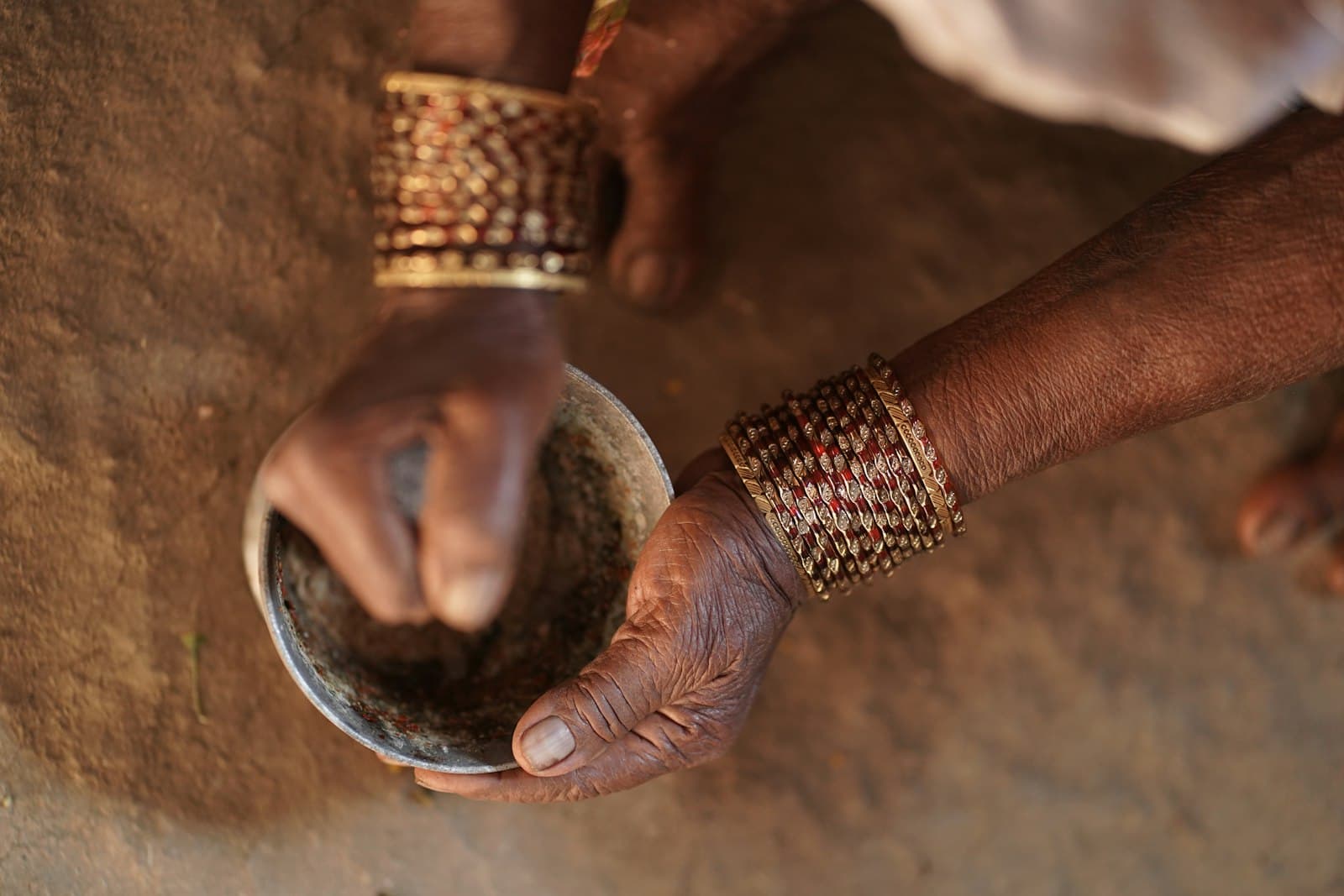
Seed Treatment: Rs 40 an Acre, Skipped
Forty rupees of fungicide protects an acre against soil-borne disease no later spray can fix - the highest return on an Indian farm.
Vaibhav Dhama4 min readEverything you need before sowing — from choosing the right variety to seed treatment, germination testing, storage and seed rate calculation.
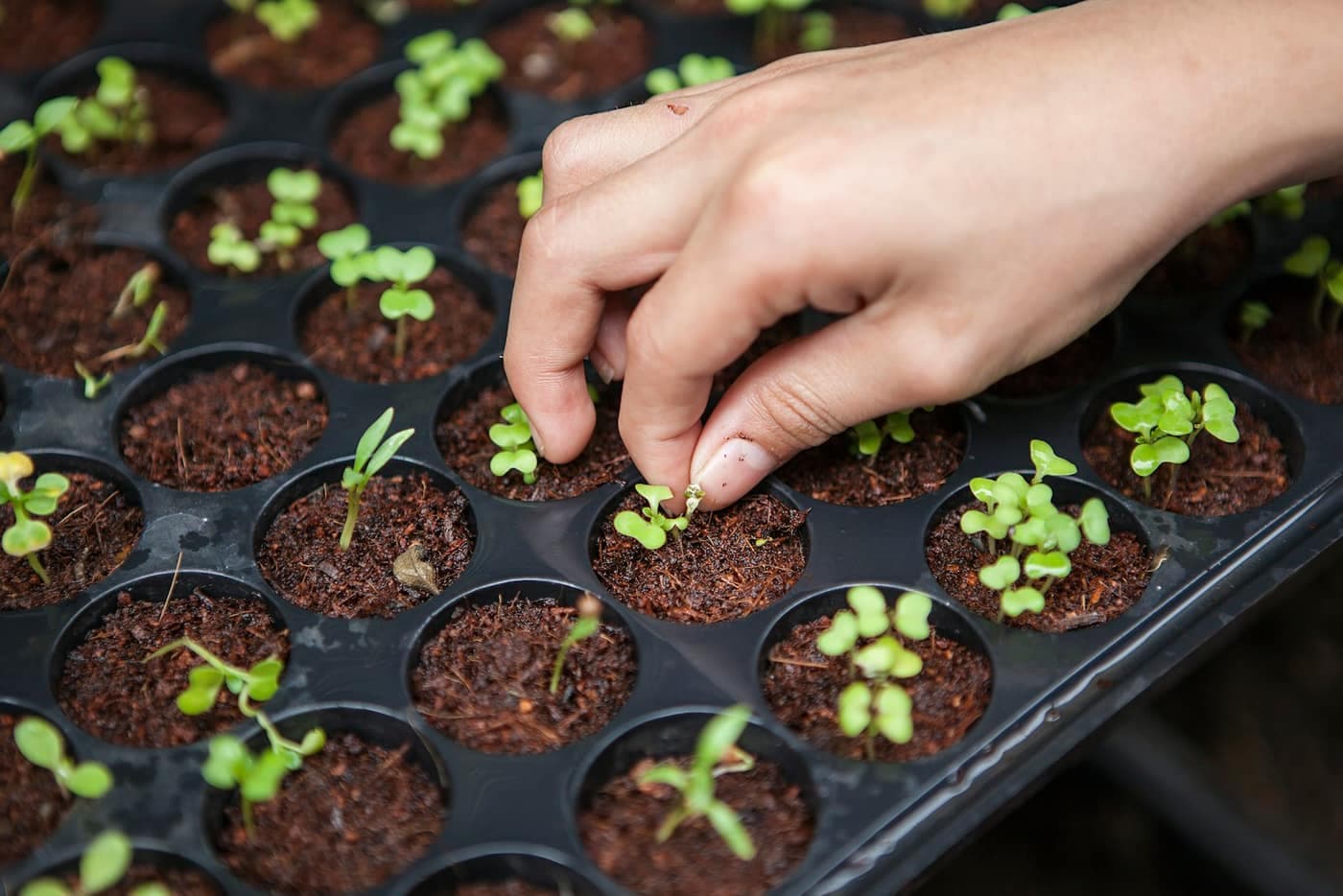
No input decides a season faster than the seed itself. A wrong variety, an expired lot, or seed that was never tested for germination shows up in the first three weeks — by which point fertiliser, irrigation and labour have already been spent chasing a crop that was compromised before it went in the ground.
This hub is built around the decisions a farmer actually makes before sowing: which variety fits this field, whether the extra cost of a hybrid is worth it here, how to read what is printed on a seed bag, whether a saved lot is still worth sowing, and how much to buy. Every crop below links to its full guide for the agronomy that follows sowing.
The things a farmer actually needs before sowing — pick the one you came for.
Six steps between deciding what to plant and seeing it come up. Skip one and the rest of the season inherits the risk.
Match duration and disease resistance to your soil, season and sowing window — not to what the neighbouring field grew last year.
From a licensed dealer, against a bill, with the bag and tag intact — the three things you need if the lot ever fails and you have to make a claim.
A 100-seed test, two weeks before your sowing window. Below 85%, raise the seed rate; below 60%, do not sow this lot.
Fungicide first, insecticide second, biological inoculant last — shade-dried between each step, never sown wet.
The book seed rate assumes 85% germination and good field conditions — adjust it up, never down, for a weaker lot or a rougher seedbed.
A uniform stand within the expected window confirms the whole chain worked — a patchy one means going back to whichever step was skipped.
Eight places to go deeper — treatment, germination, storage, and the choice between hybrid and open-pollinated seed.
Every certified bag carries a tag with seven facts on it. Most farmers never read past the crop name.
Certified seed carries a tag, not just a brand name — and the tag is where the actual guarantee lives. It is issued after a field inspection and a lab test by a state seed certification agency, under the Seeds Act, 1966 and the Seed (Control) Order, 1983.
Seven facts on that tag matter more than the crop name printed in large type. Read them before the bag is opened, not after the crop has come up thin.
Neither is "better" in general — the right choice depends on whether you plan to save seed, and how much you can spend upfront.
A hybrid is the first-generation cross of two inbred parent lines, bred for a specific combination of traits. An open-pollinated variety breeds true from its own seed. Neither is universally better — the honest comparison is below.
| Feature | Hybrid | Open-pollinated |
|---|---|---|
| Seed cost | Higher — often 3–8× an open-pollinated variety | Lower, and can be zero if you save your own |
| Yield ceiling | Higher, from hybrid vigour (heterosis) | Lower ceiling, but consistent year to year |
| Seed saving | Do not save — F2 seed segregates and loses the hybrid traits | Freely saveable, if isolated from cross-pollination |
| Disease resistance | Often bred in against named diseases (see variety notes) | Varies by release — some carry strong resistance, many do not |
| Best suited to | Farmers who can spend upfront and want the highest yield each season | Farmers on a tighter cash budget, or who want to save seed |
| Return on investment | Higher yield can outweigh the seed cost — but only if inputs match it | Lower but more predictable margin per rupee spent on seed |
Seed is a living thing on hold. Heat and moisture are what wake it up early and use up the vigour it needs at sowing.
Seed is not inert — it is a living embryo whose respiration never fully stops, only slows. Heat and moisture both speed that respiration up, which is exactly what uses up the vigour a seed needs to germinate and establish months later.
As a rule of thumb, every 1% rise in seed moisture roughly halves storage life, and so does every 5°C rise in storage temperature above the ideal range — the two effects compound rather than add.
Seven mistakes that show up on the same handful of farms, season after season.
Sowing the wrong variety for the field
A long-duration variety on a moisture-short field, or a rust-susceptible one where rust pressure is high, loses more yield than any input decision made afterward can recover.
Sowing expired or old-tag seed without a fresh check
A tag printed a year or more ago is a snapshot of germination on the day it was tested, not a promise about today — old seed sown untested is a bet, not a plan.
Skipping seed treatment to save ₹30–60 an acre
The single highest return on investment available on an Indian farm, skipped for a saving smaller than a day’s wage — soil-borne disease that shows up three weeks later costs far more to fix, if it can be fixed at all.
Never running a germination test
Sowing a saved lot at the book seed rate without checking its germination first can leave a field 20–30% short of plant stand — a gap that shows up as lost yield, not as an obvious sowing mistake.
Using the same seed rate regardless of germination or sowing date
A late-sown or low-germination lot needs more seed per acre, not the book figure — under-seeding a compromised lot is the single most common way a "normal" seed rate produces a thin stand.
Storing seed in an open sack in a hot shed
Heat and ambient moisture both accelerate loss of vigour — seed that tested well at harvest can fail a germination test just months later if it was stored badly in between.
Buying seed on price alone, from an unlicensed source
A bag without a bill, a tag or a licensed dealer’s name carries no route to a complaint if the lot fails — and it is the profile that spurious and fake seed sellers rely on to move volume.
Everything above, in one place — certification, seed law, fake-seed identification and the practices that tie it together.
Every other input on a farm — fertiliser, irrigation, labour, a spray schedule — works on the plant that is already there. Seed is the one input that decides which plant that is, and it is applied before any of the others, which means a mistake here compounds through every input spent afterward chasing a crop that was compromised from the start.
Field trials across ICAR and state agricultural university networks consistently attribute 15–20% of the yield gap between an average farmer’s field and a demonstration plot to seed quality alone — variety, germination and freedom from seed-borne disease — before soil, water or fertiliser are even considered. That is a bigger single lever than most farmers treat it as.
Certified seed has been through a field inspection during the growing season and a laboratory test afterward, run by a state seed certification agency under the Seeds Act, 1966. It carries a tag stating genetic and physical purity, germination percentage, moisture content, the testing date and a lot number that traces it back to the field it was grown on.
It is not a guarantee of the highest possible yield — an open-pollinated variety without hybrid vigour can be certified and still yield less than an uncertified hybrid. What certification guarantees is that the bag genuinely contains what the label says, at the purity and germination stated — the baseline every other seed decision on this page assumes you already have.
Not all legally sold seed is certified. "Truthfully labelled" seed skips the government field inspection but still carries a label the seller is legally required to make accurate — variety name, germination percentage and purity as tested by the seller, under the same Seeds Act framework.
Most private hybrid seed sold in India — cotton, maize, vegetable hybrids — moves as truthfully labelled seed rather than certified seed, since certification schemes are built around public varieties, not proprietary hybrids. This is completely legal and normal; the label is still the enforceable promise, so keep it exactly as you would a certification tag.
A hybrid is the first-generation cross (F1) of two genetically distinct, usually inbred parent lines, bred specifically for that cross to express hybrid vigour — a yield and uniformity boost that neither parent shows on its own. Cotton, maize and most vegetable hybrids sold in India work this way.
The one condition that makes or breaks the economics: never save F1 hybrid seed to sow again. The second generation (F2) segregates back toward the parent lines and loses the uniformity and much of the vigour that justified the price — which is exactly why hybrid seed has to be bought fresh, every season, from the company or a licensed dealer.
An open-pollinated (OP) variety reproduces true to type from its own seed, generation after generation, as long as it is kept reasonably isolated from cross-pollination with a different variety of the same crop. Most self-pollinated field crops — wheat, rice, gram, most pulses — are OP by nature and do not need isolation at all.
The trade-off for that seed-saving freedom is a lower yield ceiling than a well-matched hybrid, since there is no hybrid vigour to draw on. For a self-pollinated cereal or pulse crop, that gap is often small enough that certified OP seed, refreshed every 2–3 seasons, is the more economical choice than paying a hybrid premium every year.
A coat of fungicide, and sometimes insecticide, applied to the seed before sowing protects the germinating seed and young root against soil-borne fungal disease and early sucking pests — for roughly ₹30–60 an acre, depending on the crop and the product.
The order matters: fungicide first, then insecticide, and any biological inoculant (Rhizobium, Trichoderma, PSB) applied last and shade-dried before sowing — mixing a chemical fungicide directly with a biological inoculant simply kills the biological. See the seed treatment guide for the full order and the standard dose per kilogram.
A germination test is the only reliable way to know whether a lot — bought or saved — is worth sowing this season. Count 100 seeds onto a moist cloth or rolled paper towel, keep it warm and moist, and count how many have germinated after 7–8 days for most field crops.
Read the result against the same thresholds a certification agency uses: 85% or higher is normal and needs no adjustment; between 60% and 85%, raise the seed rate roughly in proportion to the shortfall; below 60%, do not sow the lot at all — replace it. Run the test about two weeks before your sowing window, which leaves enough time to source replacement seed if the result is poor.
Seed kept between harvest and next season’s sowing is a living embryo whose respiration never stops, only slows — heat and moisture both speed it back up, and that is what quietly uses up the vigour a seed needs to germinate strongly. A cool, dry, well-ventilated store beats an unshaded tin shed even with identical seed going in.
Dry seed to roughly 8–10% moisture before storing (lower for oilseed), keep it in a sealed metal bin or a thick polylined bag rather than an open jute sack, and keep the store below 20°C where at all possible. See the full seed storage guidance above for the shelf-life expectations by crop group.
Moisture content at the time of storage is the single biggest lever on how long a seed lot stays viable — more than temperature, more than the container, because moisture is what allows the fungal and insect activity that ruins stored seed in the first place.
A rough field check without a moisture meter: seed dry enough to store should shatter cleanly when bitten, not bend or squash. A more reliable check uses ordinary salt — dry, coarse salt in a sealed jar with the seed for a few hours; if the salt clumps or feels damp afterward, the seed is still too wet to store safely.
Quality seed is more than a good germination percentage on the day of the test. Genetic purity — the share of seed that is truly the labelled variety and not an off-type — decides whether the crop that comes up is actually the variety you paid for. Physical purity is freedom from weed seed, inert matter and other crop seed mixed in.
Seed vigour is the property germination percentage alone does not capture: two lots can test at the same 85% germination, but the more vigorous one emerges faster, more uniformly, and tolerates a rougher seedbed or a cooler soil better. There is no simple home test for vigour the way there is for germination — buying fresh certified seed each season is the practical substitute.
The recommended seed rate for a crop already assumes reasonably good germination — typically the 85% baseline certified seed is tested against — and reasonably good field conditions at sowing. Sow a lot that germinates lower than that, or into a rougher seedbed, at the same book rate, and the plant stand comes up short.
The correction is simple: scale the seed rate up in roughly the same proportion the germination falls short of 85%, using the seed rate calculator above rather than guessing. Never scale it down for a lot that tests above 85% — the book rate already has other field losses built in, not just the seed’s own germination.
Buy from a licensed dealer, ideally 3–4 weeks ahead of your sowing window — early enough to run a germination test and still have time to source a replacement lot if it fails, but not so early that the seed sits in poor storage at your end for months before it is sown.
Always take a bill with the dealer’s licence number, the variety name, and the batch/lot number on it — not just a verbal assurance. That paper trail is what makes a complaint to the state seed certification agency or consumer forum possible if the lot underperforms; without it, there is no route to a claim at all.
Spurious seed is sold as one variety while actually being another, uncertified, or simply old stock repackaged with a fresh-looking tag. The warning signs cluster around the same few things: a price noticeably below the market rate for that variety, a loose or resealed tag rather than one stitched into the bag seam, no bill or a bill with no batch number, and a seller who cannot show a valid dealer’s licence on request.
The most reliable check is not visual at all — it is running your own germination test on a small sample before sowing the rest of the bag. A lot that fails to germinate anywhere close to its printed percentage, regardless of how convincing the packaging looked, has already told you what you needed to know.
The Seeds Act, 1966 and the Seeds Rules, 1968 set up the certification system and the minimum standards seed sold in India must meet. The Seed (Control) Order, 1983 gives state governments the power to license seed dealers, regulate seed prices and prosecute the sale of spurious seed — which is what makes a dealer’s licence number worth checking for.
A newer Seeds Bill has been debated in Parliament for years to modernise this framework — including bringing truthfully labelled seed under tighter registration — but has not yet been enacted as of this writing; the 1966 Act and its rules remain the operative law. None of this is legal advice — for a specific dispute, the state agriculture department or a consumer forum is the right first call.
Beyond the seven common mistakes listed above, two quieter patterns cost farmers money every year: choosing a variety because the neighbouring field grew it last year rather than because it fits this field’s soil and moisture, and judging seed quality by eye — colour, size, how "healthy" a sample looks — when neither correlates reliably with germination or genetic purity.
A third: treating the seed bill as the place to economise when the total cost of cultivation is dominated by fertiliser, labour and irrigation. Seed is typically 5–10% of total input cost for most field crops but decides 100% of what every other input is spent growing — a false economy that shows up as a worse crop, not as an obvious line-item saving.
Choose the variety for the field, not the field for the variety — duration, disease pressure and soil first, yield potential second. Buy certified or truthfully labelled seed from a licensed dealer, with a bill. Run a germination test two weeks before sowing, every season, even on seed you saved yourself.
Treat the seed in the right order, sow at a seed rate corrected for the actual germination result, and store any carried-over seed dry, cool and sealed rather than in an open sack. None of these individually feels decisive — together, they are the difference between a season that starts even and one that is already behind before the first irrigation.
Open your crop for its full sowing window, seed rate and variety guidance.
Long-form writing on seed treatment, seed rate and the methods above, with the numbers included.
Forty rupees of fungicide protects an acre against soil-borne disease no later spray can fix - the highest return on an Indian farm.
Vaibhav Dhama4 min read
Beejamrit coats seed in cow dung, urine and lime to block soil- and seed-borne disease. The recipe, method, and its real limits.
Vaibhav Dhama3 min read
Sowing date is the single biggest lever on wheat yield in North India - bigger than variety or fertiliser. What late sowing costs you.
Vaibhav Dhama4 min readSeed that has passed a field inspection during the growing season and a laboratory test afterward, run by a state seed certification agency under the Seeds Act, 1966. It carries a tag stating genetic and physical purity, germination percentage, moisture content, the testing date and a lot number.
The first-generation (F1) cross of two genetically distinct, usually inbred parent lines, bred to express hybrid vigour — higher yield and more uniformity than either parent alone. It must be bought fresh every season; saved F1 seed segregates in the next generation and loses those traits.
A variety that reproduces true to type from its own seed, generation after generation, as long as it stays reasonably isolated from cross-pollination with a different variety of the same crop. Most self-pollinated crops — wheat, rice, gram, most pulses — are open-pollinated by nature.
Count 100 seeds onto a moist cloth or rolled paper towel, keep it warm and consistently moist, and count how many have germinated after 7–8 days for most field crops. 85% or higher is normal; between 60–85%, raise the seed rate proportionally; below 60%, do not sow the lot.
A coat of fungicide (and sometimes insecticide) protects the germinating seed and young root against soil-borne fungal disease and early sucking pests, for roughly ₹30–60 an acre — the highest return on investment available anywhere on an Indian farm.
It depends on the crop — wheat is around 40 kg/acre, paddy about 8 kg/acre of nursery seed, mustard under 2 kg/acre. Use the seed rate calculator above for your specific crop, area and the actual germination percentage of your lot, since a low-germination lot needs more, not the book figure.
No. The second generation (F2) grown from saved hybrid seed segregates back toward the original parent lines, loses hybrid vigour and comes up uneven in height, maturity and yield. Buy fresh F1 seed every season for a hybrid crop.
Dry to roughly 8–10% moisture (lower for oilseed), store in a sealed metal bin or a thick polylined bag rather than an open sack, and keep the store cool, shaded and below 20°C where possible. Both heat and moisture accelerate the loss of germination and vigour.
Watch for a price noticeably below the market rate, a loose or resealed tag instead of one stitched into the bag, no bill or a bill with no batch/lot number, and a seller who cannot show a valid dealer’s licence. The most reliable check is running your own germination test on a small sample before sowing the rest.
Genetic purity is the share of seed that is truly the labelled variety, not an off-type. Physical purity is freedom from weed seed, inert matter and other crop seed mixed in. Certified seed states a minimum for both — typically 98% or higher.
A property germination percentage alone does not capture: how fast, how uniformly, and how well a seed lot emerges under a rougher seedbed or cooler soil. Two lots can share the same germination percentage and still differ in vigour — there is no simple home test for it, which is why buying fresh certified seed each season is the practical substitute.
Usually a well-matched hybrid, where one exists for the crop, because of hybrid vigour — but only if the field can support the input level the hybrid was bred for. On a tighter budget or a marginal field, a good open-pollinated variety chosen for that field’s conditions often out-yields a hybrid grown under-fed.
Seed sold without the government field inspection certification requires, but still carrying a label the seller is legally required to make accurate — variety name, germination percentage and purity as tested by the seller, under the same Seeds Act framework. Most private hybrid seed in India is sold this way.
About 3–4 weeks ahead of your sowing window — early enough to run a germination test and still source a replacement lot if it fails, but not so early that it sits in poor storage at your end for months before sowing.
Most cereal and pulse seed holds a usable germination for 8–12 months under good, cool, dry storage; oilseed and vegetable seed is generally shorter. A germination test before sowing is a better answer than any printed shelf-life figure, since storage conditions matter as much as elapsed time.