
Horticulture
From orchard to nursery bed — fruit, vegetable, flower, spice, plantation and medicinal crops, protected cultivation, and the growing practices that tie them together.
- 8 branches of horticulture, mapped in one place
- Shared orchard, nursery and protected-cultivation practices
- Direct links to every fruit, vegetable, spice and plantation crop guide
- MIDH — the government scheme that actually funds horticulture
What is horticulture?
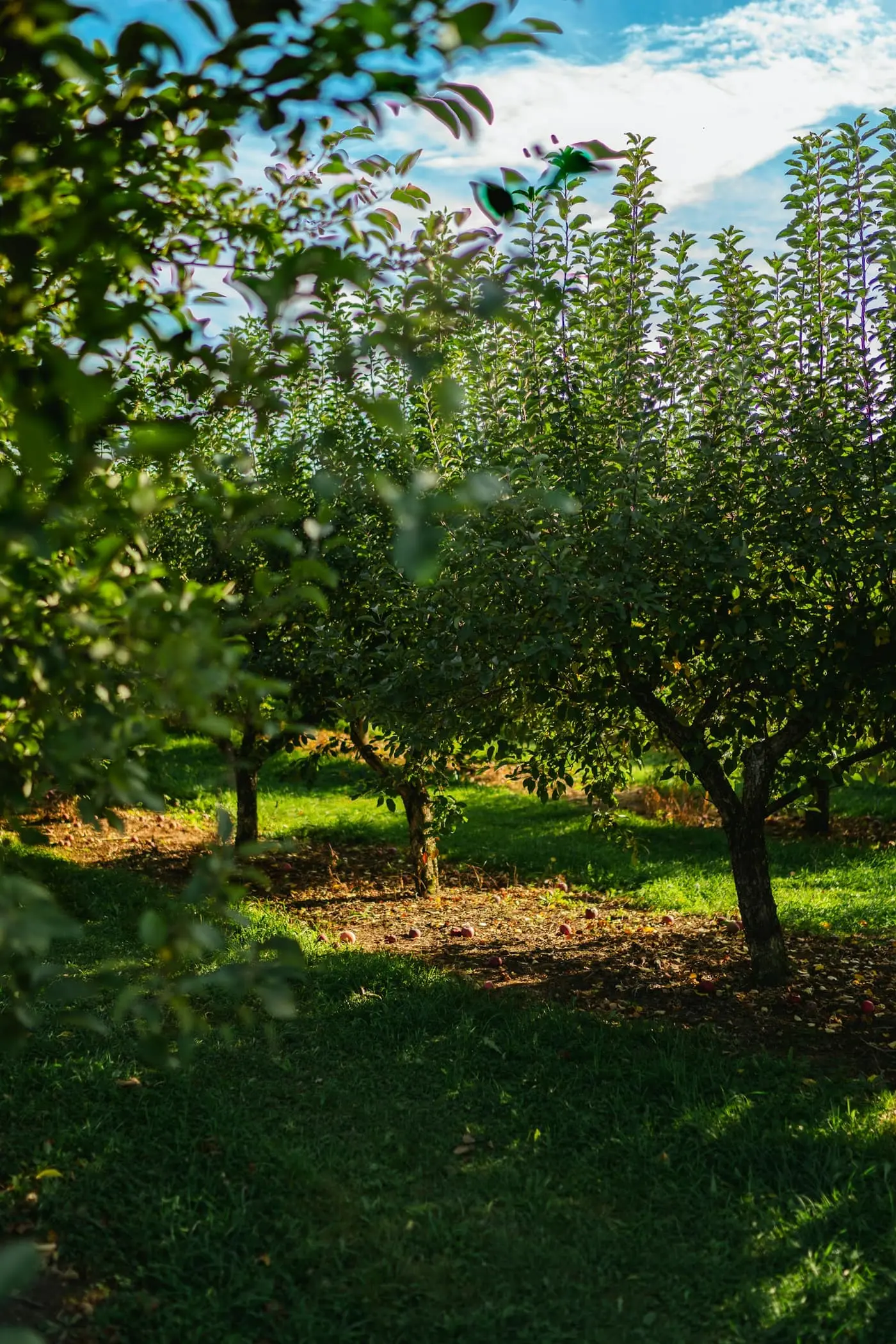
Horticulture is the branch of agriculture that grows fruits, vegetables, flowers, spices, plantation crops, and medicinal and aromatic plants — intensively, on comparatively small plots, mostly for direct market sale rather than long storage. It sits alongside field-crop farming (cereals, pulses, oilseeds) as the other half of Indian cropping, and in most states it earns a farmer more per acre than a grain crop does, at the cost of more daily attention, more perishability risk, and a much shorter window between harvest and sale.
Horticulture is not one crop practice repeated eight times over — a mango orchard, a tomato field, a rose nursery and a polyhouse capsicum unit run on different timelines with different tools. But they share a common backbone: healthy planting material, the right site and spacing, disciplined water and nutrient management, and careful post-harvest handling, since a horticultural crop loses value every day it waits after harvest in a way stored grain does not. This hub lays out that shared backbone, then points to the crop-specific guides already on the site for the exact numbers on any one crop.
Branches of horticulture
Eight categories that make up Indian horticulture — open any one for its crop-specific guides.
Fruit Crops
Tree and vine crops grown for their fruit — mango, banana, citrus, guava and more — mostly on a multi-year orchard cycle.
Vegetable Crops
Short-duration crops grown for the pod, fruit, root, bulb or leaf — replanted every season, often two or three times a year.
Flower Crops
Cut flowers, loose flowers and ornamental plants grown for market and festival demand — a smaller, more localised trade than fruit and vegetables.
Plantation Crops
Long-duration tree and palm crops — coconut, tea, coffee, rubber — planted once and harvested for decades.
Spice Crops
Turmeric, ginger, chilli, pepper and more — high-value crops grown for their aromatic root, fruit or bark rather than as a staple food.
Medicinal & Aromatic Plants
Plants grown for a pharmaceutical, cosmetic or aromatic-oil market rather than as food — ashwagandha and similar crops already on the site.
Nursery & Plant Propagation
How planting material — seedlings, grafts, cuttings — is actually raised before it reaches a farmer's field.
See belowProtected Cultivation
Greenhouses, polyhouses, shade nets and tunnels — growing inside a structure that moderates heat, light, rain and pests.
See below
Fruit & vegetable farming — the shared basics
These eleven concepts apply across nearly every fruit and vegetable crop grown in India, whether it's a kitchen-garden plot or a multi-acre commercial field. Get them right and a crop-specific guide's exact numbers — spacing, dose, spray schedule — mostly just work; skip one and no amount of fertiliser fixes a bad foundation later.
Fruit & vegetable farming — the shared basics
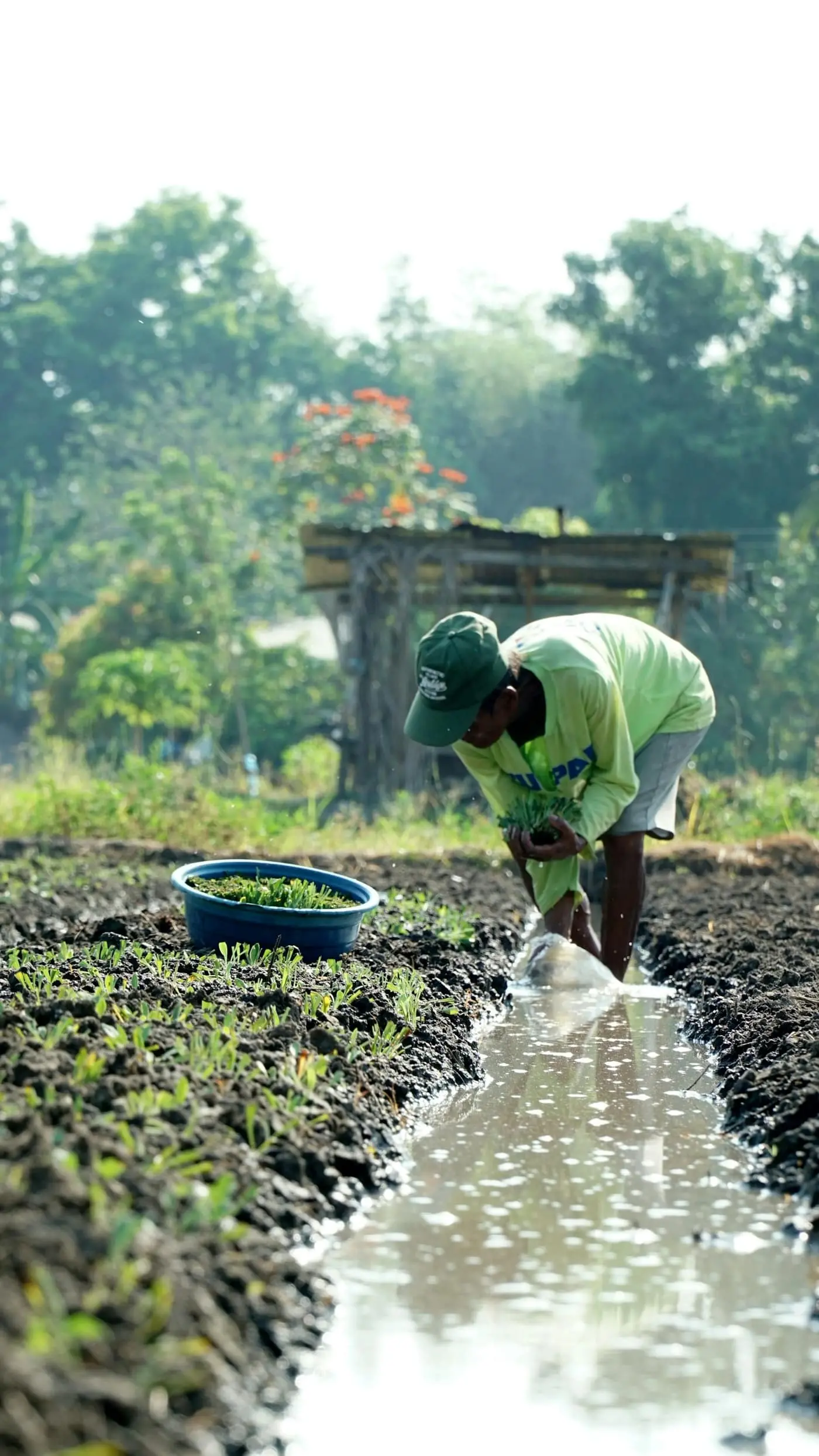
A farmer channels irrigation water down a furrow to young vegetable seedlings — simple furrow irrigation is still the most common method on Indian farms, even as drip becomes the recommended standard.
- 1
Site & soil selection
Pick well-drained land — waterlogged roots rot fast, especially for fruit trees. Get the soil tested before you plant; fixing it after is much harder.
- 2
Climate requirements
Every crop needs a certain temperature and rainfall range to do well. Check your crop's needs against your area's climate before you plant, not after.
- 3
Planting material
A certified sapling from a known nursery costs more, but it decides your yield and disease risk for the plant's whole life. A weak sapling never becomes a strong tree.
- 4
Spacing
Leave enough room between plants for them to reach full size. Too close, and plants fight for light and food; too far apart, and land goes to waste.
- 5
Irrigation
Water matters most while flowers and fruit are forming. Drip irrigation — a thin pipe that drips water at each plant — is now the standard choice for orchards and vegetable rows alike.
- 6
Fertilization
Fruit and vegetable crops need more feeding than grain crops. A young tree, a tree just starting to bear, and a full-grown tree each need a different amount.
- 7
Mulching
Cover the soil around the plant with straw, dry leaves or plastic sheet. This keeps moisture in, stops weeds, and keeps fruit off wet ground.
- 8
Pruning & training
Cut back extra growth and shape the plant — tie up a tomato vine, train a grapevine, open up a mango tree's crown. This lets light in and makes spraying and picking easier.
- 9
Pest & disease management
Walk your field regularly and look closely at leaves, stems and fruit. Catching a problem early and spraying only when needed saves more crop than a fixed spray schedule.
- 10
Harvesting
Pick at the right time — not a day too early or too late. Each crop shows its own signs of ripeness; too early loses taste, too late loses shelf life.
- 11
Post-harvest handling
Sort, clean and cool the produce right after picking, then pack it carefully. Most of the money lost in fruit and vegetable farming is lost after harvest, not in the field.
Orchard management
Once trees are in the ground, an orchard is managed on a multi-year cycle, not a single-season one — a tree planted this year is still being shaped, fed and pruned a decade from now. A layout or spacing decision made at planting is one of the hardest and most expensive things to undo later, so these ten practices run end to end: from that first-year layout call to keeping a mature orchard's yield steady, year after year.
- 1
Orchard planning
Decide the site, variety and layout before you plant even one tree. A mistake here is not fixed in a season — it stays for decades.
- 2
Plant spacing
Space trees so their full-grown branches don't crowd each other. A vigorous variety needs more room; a dwarf variety can be planted closer.
- 3
High-density planting
Plant more, smaller trees per acre using dwarf rootstock. The orchard bears fruit sooner and gives more fruit per acre early on — but needs more careful pruning.
- 4
Pruning & training
Shape young trees in their first few years, then keep the crown open as they grow. An open crown means fruit all through the tree, not just on the outside.
- 5
Pollination
Many fruit trees need a second, compatible variety nearby, or bees visiting during flowering, to set fruit properly. Plan for this when you plant, not after.
- 6
Flowering & fruit-set
This stage is easily upset by water shortage, poor feeding or bad weather. Flowers and small fruit falling off the tree is the most common reason for a poor harvest.
- 7
Nutrient management
Feed the orchard differently at each stage — a young tree, a tree just starting to bear, and a mature tree in full production all need different amounts.
- 8
Irrigation management
Water at the roots on a schedule that follows the tree's actual growth, not a fixed calendar. Drip irrigation is now standard for most commercial orchards.
- 9
Yield management
Remove some young fruit so the tree doesn't overload itself, and manage crops that bear heavily only every other year. The goal is steady yield every year, not one bumper year followed by a poor one.
- 10
Orchard renovation
An old or declining orchard can often be revived with hard pruning or by grafting a better variety onto the existing trees — before you decide to replant from scratch.
Nursery & propagation
Healthy planting material is the single biggest factor in a horticultural crop's success — a weak sapling never becomes a strong, productive tree, no matter how well it's fed afterward. These seven methods are how a nursery actually turns one parent plant into hundreds of true-to-type saplings, cuttings or seedlings ready for the field.
Nursery & propagation
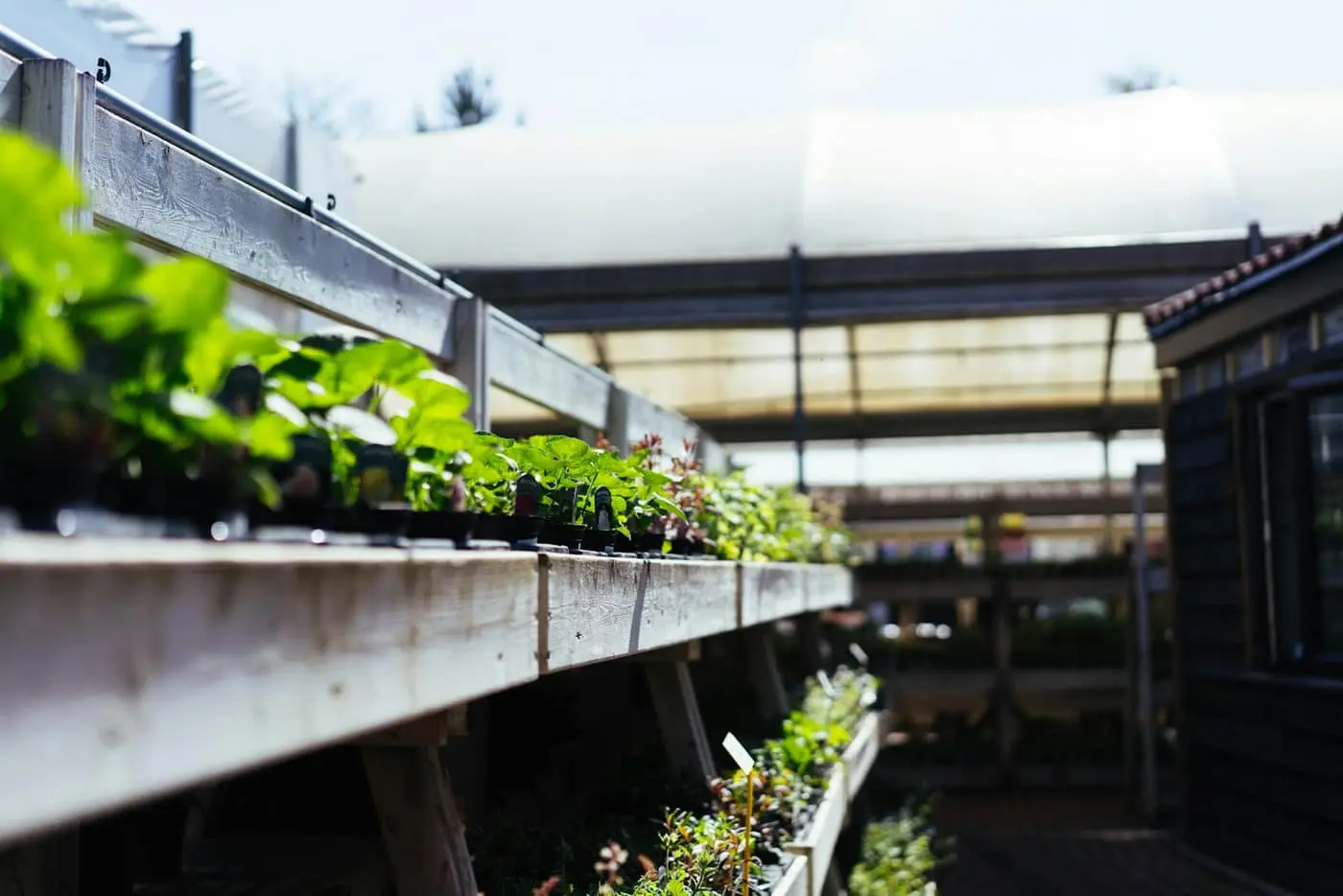
Trays of young seedlings lined up on a nursery bench, each batch kept separate — this is what raising planting material actually looks like, long before a single seedling reaches the field.
- 1
Seed propagation
The cheapest method — but for most fruit crops, the new plant won't be identical to its parent. It's mainly used to grow rootstock, not the final variety.
- 2
Cuttings
A piece of stem, root or leaf is made to grow its own roots. Quick and cheap — works well for grapes, pomegranate and many flowering plants.
- 3
Layering
A stem is made to root while still attached to the parent plant, then cut free once rooted. Used for plants like guava and litchi, where cuttings don't root easily.
- 4
Grafting
A shoot from the variety you want is joined onto an already-growing rootstock. This is the standard way nurseries multiply true-to-type fruit trees at scale.
- 5
Budding
Like grafting, but using a single bud instead of a shoot. Faster and needs less material — widely used for citrus and other fruit saplings.
- 6
Nursery management
A good nursery gives young plants shade, regular water, clean soil and a hardening-off period before sale. This is what separates a strong sapling from a weak one.
- 7
Healthy planting material
Buy certified, disease-free saplings from a known source. It costs a little more now, but protects years of harvest later.
Protected cultivation
Growing inside a structure that moderates climate — heat, light, rain, wind, pests — so a crop can be raised out of its normal season or in conditions the open field could never support. It ranges from a simple net over a row of seedlings to a fully climate-controlled glasshouse; the five structures below run cheapest to most expensive, roughly in the order most farms actually adopt them.
Protected cultivation
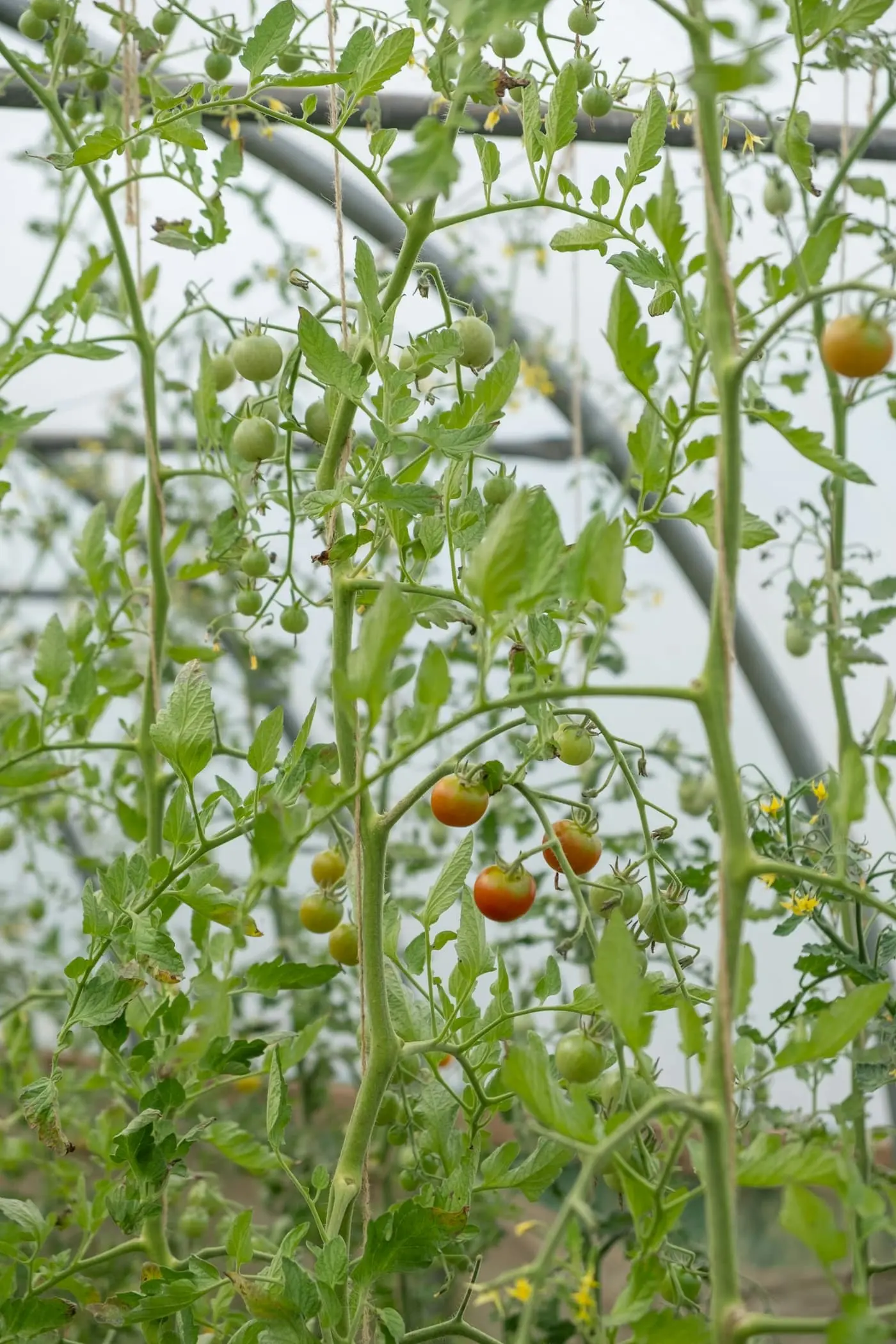
Tomato vines tied up support strings inside a polytunnel — trellising like this keeps fruit off the ground and makes spraying and picking far easier than a crop left sprawling on open soil.
- 1
Greenhouses
A fully closed structure where temperature, humidity and light are all controlled. It costs the most to build, but gives the most control over the growing environment.
- 2
Polyhouses
A structure covered in plastic sheet instead of glass — cheaper than a greenhouse. Used across India to grow off-season vegetables, flowers and nursery plants.
- 3
Shade nets
A net cover that cuts sunlight and heat without fully enclosing the crop. Cheaper than a polyhouse — common for raising nursery plants and shade-loving crops.
- 4
Low tunnels
A short plastic or net cover placed right over a row of young plants. Protects an early crop from cold or insects at a fraction of a polyhouse's cost.
- 5
Basic climate management
Simple controls — vents, shade cloth, misting and drip irrigation — keep temperature and humidity where the crop needs them, inside any of these structures.
Advantages
- Off-season and out-of-season production, which usually earns a premium price
- Far higher yield per unit area than the same crop grown in the open field
- Protection from hail, heavy rain, extreme heat and many insect pests
- More consistent quality — size, colour and shelf life vary less between plants
Limitations
- High initial investment — the structure, climate-control equipment and planting material all cost more than open-field farming
- Needs a reliable power and water supply, and more day-to-day technical skill than open-field cultivation
- A structure failure — a torn net, a power cut during a heatwave — can damage an entire crop at once, unlike a spread-out open field
- Government subsidy, largely through MIDH, covers only part of the cost — the rest is the farmer's own capital
Frequently asked questions
What is horticulture in agriculture?
Horticulture is the branch of agriculture focused on fruits, vegetables, flowers, spices, plantation crops, and medicinal and aromatic plants — grown intensively, usually on smaller plots and for direct market sale. Field crops like wheat, rice or pulses, by contrast, are grown extensively for storage and staple food.
What are the main branches of horticulture?
The commonly recognised branches are pomology (fruit crops), olericulture (vegetable crops), floriculture (flower and ornamental crops), plantation crops, spice crops, medicinal and aromatic plants, and the supporting practices of nursery/propagation and protected cultivation — see the categories above for what each one covers.
How is horticulture different from field-crop farming?
Field crops like cereals and pulses are grown extensively, harvested once a season, and can usually be stored for months. Horticultural crops need more intensive day-to-day management, are often perishable within days, and many — orchard and plantation crops especially — are a multi-year or multi-decade commitment rather than a single-season decision.
Why is horticulture important in Indian agriculture?
India is among the largest producers of fruits and vegetables in the world, and horticulture now contributes a larger share of agricultural output value than food grains on a smaller cropped area — mainly because per-acre returns are typically higher, even though the labour, water and market-timing demands are higher too.
What government support is available for horticulture?
The Mission for Integrated Development of Horticulture (MIDH), run through each state's Horticulture Mission, is the main scheme — it funds nurseries, new orchard planting, poly-houses and shade nets, organic certification, mechanisation and cold storage, commonly up to about half the project cost. See the MIDH scheme page for eligibility and how to apply.
Where do I find growing instructions for a specific fruit or vegetable?
This hub covers the concepts shared across horticulture — the specific variety, spacing, sowing date, nutrient dose and yield for an individual crop live on that crop's own page under Crops, linked throughout the categories section above.