
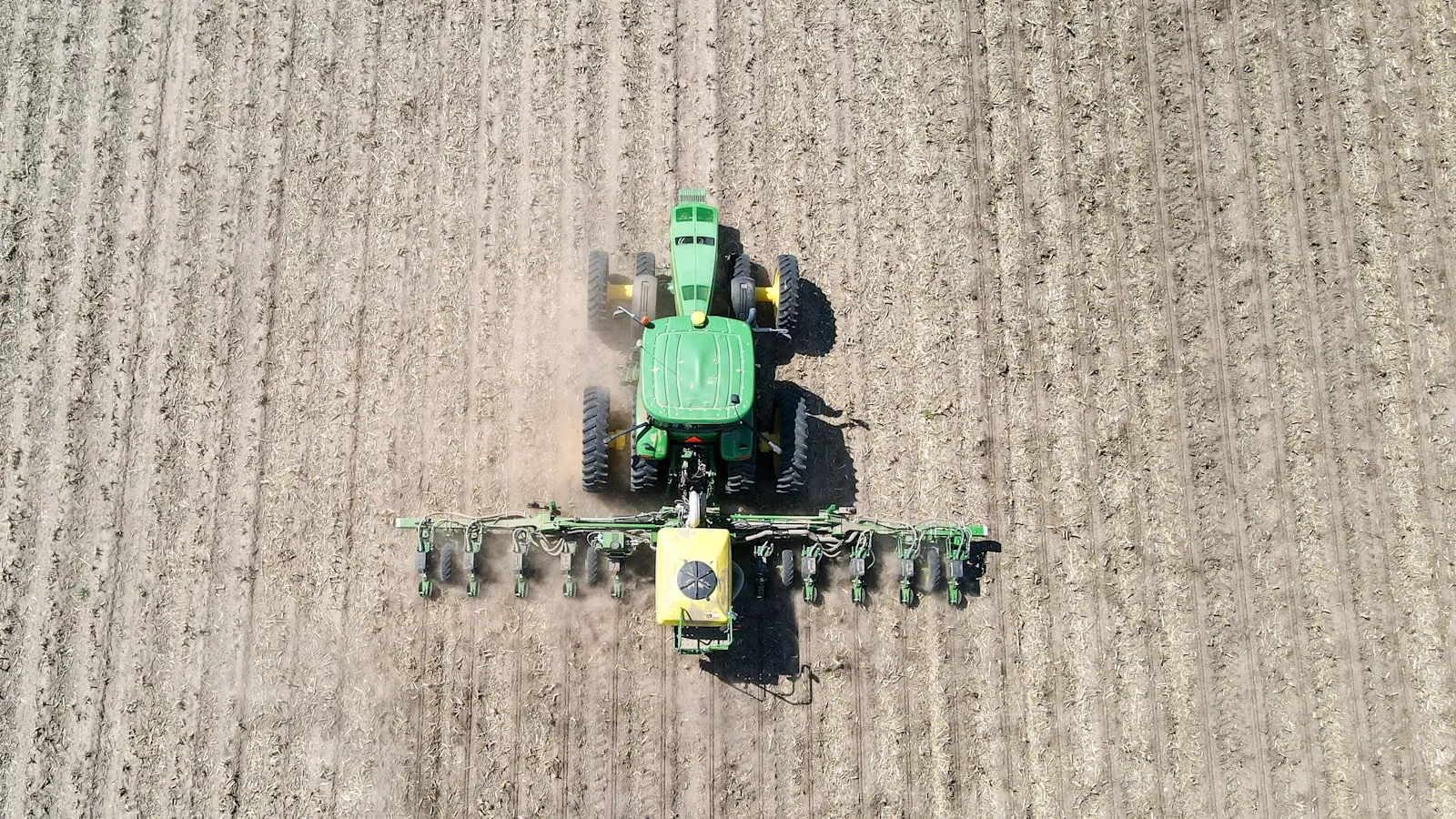
Zero Tillage: Sow Wheat Without Burning Paddy Straw
A zero-till drill saves Rs 3,000/hectare, 50 litres of diesel and lets you sow 7-10 days earlier. The one thing it demands: stop ploughing. Learn the method.
Vaibhav Dhama3 min readEnter your holding size and implements — rotavator, Happy Seeder, laser leveller, trailer — and get the minimum tractor HP that actually handles them.
The calculator above turns your holding size, soil type and the implements you run into two numbers and an implement-wise breakdown. Here is what each one means.
The highest horsepower any single selected implement demands, after adjusting for your holding size and soil type. This is a floor, not a ceiling — a tractor at or above this figure will handle every implement you ticked.
Indian tractor manufacturers sell in fixed HP brackets — 20, 25, 30, 35, 40, 45, 50 and so on. This is the smallest standard bracket that covers your minimum HP, so you buy exactly the bracket that fits rather than jumping to the next one for no reason.
Every implement you selected, with the HP it needs after soil and area adjustment, sorted from heaviest to lightest. The one at the top — marked "decides the tractor" — is the implement that sets your minimum HP; every other implement is already covered by it.
If any of your selected implements are covered by the SMAM (Sub-Mission on Agricultural Mechanisation) subsidy, the calculator flags it. The exact subsidy percentage varies by state, implement and farmer category, so it points you to your state portal rather than quoting a figure.
Three factors together decide the minimum HP — soil type, holding size and the implement itself. The calculator handles all three in one pass.
Every implement has a manufacturer-specified minimum tractor HP — the threshold below which the tractor stalls, overheats or simply cannot pull the implement at working depth. This is the starting number.
Larger holdings tend to run wider implements or need to cover the same field in fewer passes, which demands more power. The calculator adds a small HP increment per acre above 5 acres for implements where that matters.
Heavy soil (clay, black cotton) resists tillage far more than light sandy soil. For tillage implements, the calculator adds the full heavy-soil premium on heavy soil, half of it on medium (loam) soil, and nothing on light soil.
Once every implement is adjusted, the one that demands the highest HP sets the tractor. A 35 HP cultivator does not save you if you also need a 50 HP laser leveller — the tractor must handle the heaviest implement, or it cannot handle the set.
If any of these sounds like your situation, this is the tool that answers the question for you.
You are buying your first tractor and the dealer is quoting HP without asking which implements you will run. This calculator tells you the HP you actually need, so you do not overpay for power you will never use or underbuy and find out on the field.
You already have a tractor and want to know if it can handle a rotavator, Happy Seeder or laser leveller. Tick your current implements plus the new one, and see whether your tractor’s HP covers it or falls short.
Your 30 HP tractor is stalling on heavy implements and you need to know how high to go. The implement-wise breakdown shows exactly which implement is pushing the HP, so you buy the right upgrade rather than jumping to the biggest one available.
You are applying for the SMAM machinery subsidy and the form asks for the tractor HP that goes with the implement. This calculator gives you the official-range answer, and flags when the HP exceeds the 35 HP small-tractor subsidy tier.
Five things worth knowing before you walk into a dealership.
The implement that demands the most HP is the one that decides the tractor. A farmer who buys a 35 HP tractor for a rotavator and then adds a laser leveller at 50 HP has to buy a second tractor or sell the first.
A 5-acre plot in sandy soil and a 5-acre plot in black cotton soil are not the same tractor. Heavy soil can add 5–8 HP to the minimum requirement for a tillage implement — and a tractor that barely scrapes through on one field may stall on the other.
A 50 HP tractor burns roughly 4–5 litres of diesel per hour; a 35 HP tractor about 3–3.5 litres. Over a season of tillage, sowing and transport, the fuel difference adds up to thousands of rupees — so buying more HP than you need is a running cost, not just a capital one.
The Sub-Mission on Agricultural Mechanisation covers implements and, in some states, the tractor that goes with them. Subsidy rates are 40–80% depending on farmer category and state. Check your state’s e-Krishi Yantra portal before committing to a purchase.
A tractor brand with no service centre within 50 km will cost you more in downtime than it saves in sticker price. Before choosing a brand, ask three farmers in your block who they call when the tractor breaks, and how fast help arrives.
Each one costs real money, and each one is avoidable.
Many first-time buyers are told that "bigger is better" and buy a 50 HP tractor when their implements need only 35 HP. The extra capital cost, fuel burn and loan EMI add up for years — for power that is never used.
Do this instead: List every implement you will run in the next 3–5 years, enter them here, and buy the bracket the calculator recommends.
A farmer who buys a tractor sized for sandy soil and then uses it in heavy clay finds the engine straining, the clutch wearing out and the fuel bill climbing. Soil resistance is not marginal — on a rotavator, heavy soil can demand 7–8 HP more than light soil.
Do this instead: Select your actual soil type in the calculator, and size the tractor for the heaviest field you will work, not the lightest.
A Happy Seeder, super seeder or laser leveller bought on subsidy is a wasted subsidy if the tractor cannot pull it. The implement sits in the yard, the tractor overheats when it tries, and neither has served its purpose.
Do this instead: Before applying for an implement subsidy, check that your current tractor covers the HP this calculator shows for that implement.
Some tractor brands and HP ranges have strong resale markets, others do not. A 35–45 HP tractor from a major brand may hold 50–60% of its value after 5 years; a niche brand at the same HP may hold 30%.
Do this instead: Ask the dealer what a 5-year-old unit of the same model sells for in your area, and compare across at least two brands before signing.
The questions farmers ask most while choosing a tractor.
A 5 ft rotavator needs at least 35 HP on light soil and 42–43 HP on heavy soil; a 7 ft rotavator starts at 45 HP and goes up to 53 HP on heavy clay. The calculator adjusts this for your exact holding size and soil type.
No. A Happy Seeder needs at least 45 HP because it has to cut standing stubble, open a furrow and drop seed — all in one pass through tough residue. A 35 HP tractor will stall or overheat within minutes.
A laser land leveller needs at least 50 HP on light soil. On heavy soil, the drag bucket demands more drawbar pull and the minimum rises to 55 HP. This is one of the implements that almost always pushes a farmer into the 50+ HP bracket.
Yes. Larger holdings typically run wider implements or need to cover the same field faster, both of which demand more power. The calculator adds a small increment per acre above 5 acres for implements where width or speed scales with area.
Heavy soil (clay, black cotton) resists the blade, disc or tyne far more than sandy or loamy soil. For a rotavator, the difference can be 7–8 HP; for an MB plough, about 5 HP. The calculator adjusts for three soil categories: light, medium and heavy.
The Sub-Mission on Agricultural Mechanisation (SMAM) is a central government scheme that subsidises the purchase of farm machinery. Subsidy rates range from 40% to 80% depending on the implement, farmer category and state. Applications are filed online at the state e-Krishi Yantra portal.
The HP figures here refer to engine HP, which is the standard measure Indian tractor manufacturers use. PTO (power take-off) HP is typically 80–85% of engine HP. Implements that are PTO-driven, like rotavators and threshers, draw their power through the PTO shaft, so the engine HP must be enough to deliver the required PTO HP after drivetrain losses.
4WD delivers more of the engine’s power to the ground, especially in wet or heavy soil, so a 40 HP 4WD tractor can often match a 45 HP 2WD in the field. If your soil is heavy or your land is wet during the working season, 4WD is worth the extra cost. On light, dry soil, 2WD is fine.
No. Tractor drawbar pull is rated for one implement at a time. If you need to combine operations — for example, tillage and sowing in one pass — use a combination implement like a super seeder, which is designed for the purpose and whose HP requirement is already in this calculator.
The base HP and soil adjustments are drawn from ICAR, manufacturer and extension data for each implement. Individual field conditions — elevation, moisture, implement age, tyre condition — can shift the real requirement by a few HP either way, so the calculator is a reliable sizing guide, not a substitute for a field trial with the actual tractor.
Longer reads on farm machinery, tractor maintenance, and mechanisation subsidies.