

Beejamrit: Natural Seed Treatment Guide
Beejamrit coats seed in cow dung, urine and lime to block soil- and seed-borne disease. The recipe, method, and its real limits.
Vaibhav Dhama3 min readProtect your crop before it reaches the field. Proper seed treatment prevents fungal disease, improves germination, protects young seedlings, and costs only a fraction of the total cost of cultivation.
The six numbers a farmer actually needs before deciding whether to treat.
Enter your crop, how much seed you are treating, and the route you want — chemical, biological or organic — for the exact quantity, cost, mixing order and waiting time.
Estimated cost
₹100
Total waiting time
40 minutes
Mixing order
For this crop: This dose also covers loose smut and Karnal bunt, the two seed-borne diseases wheat is most exposed to.
Warnings
Eight steps from a sack of raw seed to seed that is ready to go into the ground.
Sort out broken, shrivelled, discoloured or visibly diseased seed, and any chaff or stone, before doing anything else. Treating waste that was never going to become a plant wastes the chemical along with it.
Winnow or hand-pick on a clean sheet, in good light.
Do not skip this on farm-saved seed — it carries far more admixture than a certified bag.
Weigh the exact quantity you are about to treat and sow — not an estimate. Every dose that follows scales directly off this number.
A spring or bathroom scale is accurate enough; round to the nearest kilogram.
Make a thin slurry with a little water, add the fungicide (or Trichoderma for a biological route), and turn the seed until every grain is coated evenly.
Turn it in a drum or on a tarpaulin — a few extra minutes of turning beats an uneven coat.
Never mix a chemical fungicide and a biological product in the same slurry.
Spread the coated seed thinly in the shade for 20–30 minutes, until it is dry enough to handle and flows loosely again.
A covered veranda or under a tree works — anywhere out of direct sun.
Direct sunlight during this step kills a biological inoculant and can scorch a chemical seed coat.
Where sucking pests or termites are a known risk — maize, cotton, pulses — coat the same seed with an insecticide at this stage, after the fungicide has fully dried.
Skip this step on land with no termite or early-pest history; it is not mandatory every season.
Any biological inoculant — Rhizobium for pulses, Azotobacter or Azospirillum for cereals, PSB for phosphorus — goes on last, once every chemical step has fully dried.
Mix with a little jaggery-water so the culture sticks to the seed evenly.
This is the step most farmers get wrong. Added early, a biological is killed by whatever chemical follows it.
Shade-dry once more until the seed flows loose through your fingers and is no longer tacky to the touch.
A final coat that is still damp when sown clumps in the seed drill and comes up patchy.
Sow the same day. Treated seed is not built to be stored — the protection is for the days right after it goes into the ground, not for next season.
If you cannot sow the same day, treat only as much seed as you can sow within 24 hours.
Match your situation to a starting recommendation, then open the full guide it links to.
Carbendazim or Trichoderma at the standard fungicide dose, and rotate away from the same crop where the field has a known history.
Root rot guideA wilt-tolerant variety first, then Carboxin+Thiram or Carbendazim seed treatment — chemical alone does not fix a susceptible variety.
Wilt guideImidacloprid or Chlorpyriphos seed treatment at sowing — the only point in the season this pest is fully addressable in one pass.
Termite guideBeejamrit or Trichoderma alone — both are compatible with organic certification; a synthetic chemical fungicide is not.
Beejamrit guideTreat it, without exception. Farm-saved seed carries more seed-borne infection forward than a certified bag, which often arrives pre-treated at source.
Seed saving & storageEight diseases and pests that a correctly timed seed treatment addresses — and nothing sprayed later can.
Five standard products, compared on use, rate, cost and organic compatibility.
| Product | Best use | Rate | Advantages | Disadvantages | Organic | Approx. cost | Suitable crops |
|---|---|---|---|---|---|---|---|
| Carbendazim 50% WPChemical | Broad-spectrum fungicide for smuts, bunts, root rot and wilt | 2 g/kg seed | Cheap, widely available, works on the widest range of fungal disease | Kills biological inoculants on contact; some pathogens show resistance with repeated use | ≈ ₹40 per acre of wheat-equivalent seed | Wheat, barley, paddy, pulses, oilseeds | |
| Thiram 75% WPChemical | General-purpose seed protectant, gentler on germination than some alternatives | 2.5–3 g/kg seed | Good against damping-off and seed rot; low phytotoxicity | Narrower disease spectrum than Carbendazim; still not compatible with biologicals | ≈ ₹35–50 per acre | Wheat, vegetables, pulses | |
| Captan 50% WPChemical | Seed and seedling protection for vegetable nurseries and pulses | 2.5–3 g/kg seed | Gentle on seed and seedlings; a common vegetable-nursery standard | Weaker on deep-seated fungal disease than Carbendazim; needs fresh stock each season | ≈ ₹40–55 per acre | Tomato, chilli, onion, pulses | |
| Trichoderma viride / harzianumBiological | Chemical-free protection against soil fungi; can precede Rhizobium if applied first and dried | 5–10 g/kg seed | Compatible with organic certification; also improves root establishment | Needs a live culture within shelf life; less effective than a chemical against a heavy existing infestation | ≈ ₹45–75 per acre | Nearly all field and vegetable crops | |
| Pseudomonas fluorescensBiological | Biological control of soil-borne fungal disease plus a mild plant-growth boost | 10 g/kg seed | Dual role — disease suppression and root-growth promotion; organic-compatible | Same shelf-life sensitivity as Trichoderma; response is more variable across soils | ≈ ₹50–80 per acre | Rice, pulses, vegetables |
Seven ways the money and the twenty minutes get wasted anyway.
Mixing Rhizobium with a chemical fungicide
The fungicide kills the biological culture on contact — you pay for both and lose one of them, and the crop gets neither the disease protection nor the nitrogen fixation it was treated for.
Using expired chemicals or biologicals
An expired chemical has lost potency, so the label dose no longer applies; an expired biological culture is simply dead and protects nothing at all, however carefully it is applied.
Drying treated seed in direct sunlight
Heat kills a biological inoculant outright and can scorch the seed coat of a chemically treated lot — cutting germination in the very batch you just paid to protect.
Guessing the dosage instead of weighing the seed
Under-dosing leaves part of the lot effectively unprotected; over-dosing wastes money and, on a sensitive crop, can suppress germination — both come from skipping the one-minute step of weighing first.
Treating wet or damp seed
A chemical or biological coat does not stick evenly to damp seed, leaving patches under- or over-treated, and the extra moisture shortens how long the lot can safely wait before sowing.
Treating cracked or damaged seed
A cracked seed coat lets the chemical reach the embryo directly instead of sitting on the surface — which can kill the seed rather than protect it.
Sowing untreated farm-saved seed
Seed saved from your own harvest carries forward whatever seed-borne infection was already in that field, at a higher load than a certified bag — the exact seed most in need of treatment is the seed most often skipped.
Twelve major crops, the treatment priority for each, and the guide it links to.
Fungicide seed treatment against loose smut and Karnal bunt
Carbendazim or Tebuconazole @ 2 g/kg
Fungicide or Trichoderma before sowing the nursery, against blast and bakanae
Carbendazim @ 2 g/kg, or Trichoderma @ 6–10 g/kg
Fungicide plus insecticide — exposed to both root/stalk rot and early shoot fly
Thiram @ 2.5 g/kg + Imidacloprid @ 5 ml/kg
Fungicide seed treatment against Alternaria blight and white rust
Carbendazim or Thiram @ 2–3 g/kg
Usually pre-treated by the seed company — check the dye colour before treating again
Imidacloprid, applied at source on most Bt hybrid seed
A dip, not a coating — cut seed tubers are treated separately from true-seed crops
Mancozeb or boric acid dip, plus 24–48 hours of wound curing before planting
Nursery-stage fungicide or Trichoderma against damping-off, plus a hot-water soak for bacterial disease
Trichoderma @ 6–10 g/kg, or hot water at 50°C for 25 minutes
Fungicide seed treatment against purple blotch and basal rot
Thiram or Carbendazim @ 2–3 g/kg
Fungicide first, Rhizobium and PSB last — never in the same slurry
Carboxin+Thiram @ 2 g/kg, then Rhizobium @ 25 g/kg
Fungicide against collar rot, followed by Rhizobium for nodulation
Carbendazim @ 2 g/kg, then Rhizobium @ 25 g/kg
Fungicide against Fusarium wilt — the single highest-value step on land with a wilt history
Carbendazim or Thiabendazole @ 2 g/kg, then Rhizobium last
Fungicide seed treatment against covered smut, the same protocol as wheat
Carbendazim or Thiram @ 2 g/kg
These are pesticides, handled directly by hand — treat them like it.
The tools that sit either side of this one in the sowing decision.
What it is, why it matters, every treatment type explained, dosage, sequence, cost and the mistakes to avoid — everything above, in reading order.
Seed treatment is the application of a fungicide, insecticide, or a biological or organic product directly onto seed before it is sown — a thin protective coat, not a spray on the growing crop later. The idea is to place the defence exactly where the earliest attack happens: on the seed coat and the first root, in the days between sowing and emergence.
It sits at the very start of the input chain that grows a crop, before seed rate, before fertiliser, before the first irrigation. Every input applied later works on the plant that treatment either protected or failed to protect — which is why it is worth getting right before anything else is spent.
Soil-borne and seed-borne pathogens attack at the exact moment a seed is most vulnerable — the days after it has taken up moisture and before it has pushed a root or shoot through the surface. Nothing sprayed on a growing crop later can reach a seedling that never came up, which makes this the one point in the entire crop cycle where these diseases are addressable at all.
Skipping it is not a decision to treat later — by the time thin, patchy emergence shows up in the field, the infection happened one to two weeks earlier, and the plants that were going to die already have. Field comparisons across ICAR and state agricultural university trials consistently show treated seed establishing a fuller, more even stand than untreated seed from the very same lot, under the same field conditions.
Four things happen when seed is treated correctly: fungal disease that would otherwise rot the seed or kill the seedling is suppressed before it starts; germination and early vigour improve because the young root is not fighting infection while it establishes; early sucking pests and soil insects like termites are kept off the most vulnerable growth stage; and the crop reaches a full, even plant stand — the foundation every later input is spent building on.
None of this shows up as a dramatic, single-day result the way a fertiliser response sometimes does. It shows up as the absence of a problem — a stand that does not carry the gaps a neighbouring untreated field does, three weeks after sowing.
There are three broad routes, and none is universally "correct" — the right one depends on the field’s disease history, whether the land is under organic management, and what is available locally. Chemical treatment uses a synthetic fungicide or insecticide; biological treatment uses a living microbial culture such as Trichoderma; organic treatment uses a traditional, farm-made preparation such as beejamrit.
They are not always interchangeable in what they protect against — a chemical fungicide acts faster and more broadly against an already-present disease, while a biological product works by colonising the seed and root zone ahead of the pathogen, which favours prevention over cure. The calculator above prices out all three for whichever crop and quantity you enter.
Chemical seed treatment covers two separate jobs: a fungicide against fungal disease, and an insecticide against early sucking pests and soil insects. Carbendazim and Thiram, both applied at roughly 2 grams per kilogram of seed, are the most widely used fungicides across Indian field crops; Captan is a gentler alternative common in vegetable nurseries.
Imidacloprid, typically at 5 millilitres per kilogram, is the standard insecticide seed treatment where termites or early sucking pests are a known risk — this matters most in maize, cotton and pulses. The two are always applied fungicide first, dried, then insecticide — never combined into a single slurry, since the two products do not always coat evenly together.
Biological seed treatment uses a living microbial culture instead of a synthetic chemical. Trichoderma viride or harzianum, at 5–10 grams per kilogram, is the most common — it works as a biofungicide against soil-borne fungal disease, and it is compatible with organic certification. Pseudomonas fluorescens plays a similar disease-suppressing role, with an added plant-growth-promoting effect.
A separate class of biologicals — Rhizobium for pulses, Azotobacter or Azospirillum for cereals, PSB for phosphorus — are not disease protectants at all, but nitrogen-fixing or nutrient-mobilising inoculants, applied at 20–25 grams per kilogram as the very last step, after every chemical or biofungicide coat has fully dried. See organic farming for the certification angle on all of these.
Organic and natural-farming systems treat seed with farm-made preparations rather than a manufactured product. Beejamrit — a living culture of local cow dung, cow urine, a little lime and a handful of field soil — is the most widely used, coating the seed in a protective microbial film for the vulnerable window between sowing and root emergence. The full recipe and method is in the beejamrit seed treatment guide.
It is a protectant, not a certified disinfectant, and it should be made fresh and used within a day — its protective effect fades as the culture ages. On land with a serious, established seed-borne disease, it works best alongside clean, healthy seed and good field hygiene, not as the only line of defence.
A seed-borne disease travels inside or on the surface of the seed itself, carried forward from an infected mother plant in a previous season. Loose smut and Karnal bunt in wheat, and bakanae in rice, are classic examples — the pathogen is already present in the seed lot before it ever touches the soil, which is exactly why a fungicide applied at sowing, not a spray applied later, is the only effective control.
Farm-saved seed carries a higher seed-borne disease load than certified seed, since certification includes a field inspection specifically to screen these diseases out. This is one of the strongest arguments for treating farm-saved seed without exception, even when the parent crop looked healthy at harvest.
A soil-borne disease lives in the soil itself, independent of the seed, and infects the germinating seed or young root from the surrounding earth. Damping-off, root rot and collar rot are the most common examples across Indian field crops — all three attack in the first weeks after sowing, in soil that is often too wet, too warm, or already carrying the pathogen from a previous susceptible crop. Damping-off in a crowded tomato or chilli nursery bed is one of the most common seedling losses local nurseries report.
Because the infection comes from the soil rather than the seed, treatment does not eliminate the risk the way it can for a purely seed-borne disease — but a coated seed and root still meet the pathogen with an active chemical or microbial defence already in place, which is the difference between a plant that establishes and one that does not.
Carbendazim 50% WP at 2 g/kg is the closest thing to a default recommendation across Indian field crops — broad-spectrum, cheap, and effective against the smuts, bunts and root rots most crops are exposed to. Thiram 75% WP at 2.5–3 g/kg is a common alternative, gentler on germination and a standard choice for damping-off and seed rot.
Captan 50% WP, also at 2.5–3 g/kg, is favoured in vegetable nurseries — tomato, chilli, onion — where seedling sensitivity matters more than broad-spectrum strength. For wheat and barley specifically, Vitavax Power (carboxin + thiram) or Tebuconazole are worth checking against loose smut and Karnal bunt where either has shown up before; confirm the exact product with your local Krishi Vigyan Kendra.
Trichoderma viride and Trichoderma harzianum, at 5–10 g/kg, are the standard biofungicides — live spores that colonise the seed and root zone ahead of soil pathogens, giving genuine disease suppression without a synthetic chemical. Pseudomonas fluorescens, at 10 g/kg, does a similar job with an added growth-promoting effect on the root system.
For nitrogen and phosphorus rather than disease control, Rhizobium (pulses), Azotobacter or Azospirillum (cereals) and PSB (phosphorus solubilisation) are the standard biofertiliser inoculants, at 20–25 g/kg, always applied last. None of these biologicals survive contact with a chemical fungicide, which is the single fact that governs the whole mixing order below.
Fungicide first. Insecticide second. Biological inoculant last — shade-dried for 20–30 minutes between every step, never in direct sun. This order is not a convention; it follows directly from the chemistry: a fungicide applied after a biological kills the culture it was just paid for, and heat or direct sunlight during drying does the same thing by a different route.
The most common seed-treatment mistake in the country is throwing a fungicide and Rhizobium into the same bucket to save a step — it destroys the biological instantly and leaves the seed with only the chemical’s protection, at the cost of both. Where a biological route is preferred over a chemical one entirely, use Trichoderma alone and skip the chemical fungicide, rather than trying to combine them.
Every dose on this page is stated per kilogram of seed, not per acre — which is why the seed treatment calculator above asks for seed quantity directly rather than area. As a rule of thumb: fungicide at 2 g/kg, insecticide at 5 ml/kg, and a biological inoculant at 20–25 g/kg, though the exact figure always depends on the specific product and its formulation strength, printed on the label.
Under-dosing leaves part of the seed lot effectively untreated — a thin or uneven coat protects only the seed it actually reached. Over-dosing wastes money and, on a sensitive crop or a fine-seeded vegetable, can suppress germination outright. Weighing the seed before mixing, rather than estimating, is the single easiest way to avoid both.
A fungicide-only chemical treatment runs roughly ₹30–₹60 an acre; a full fungicide-plus-insecticide programme runs closer to ₹100. Against a crop worth ₹40,000–₹80,000 an acre by the time it is harvested, this is a fraction of a percent of the crop’s value spent to protect the establishment everything else depends on.
There is effectively no scenario where the input cost of seed treatment outweighs the downside risk of skipping it — a patchy, disease-thinned stand costs far more in lost yield than the treatment would ever have cost, and unlike most later-season problems, it cannot be fixed once it has happened. See the profit calculator to see where a cost this small sits against your full cost of cultivation.
The right product and dose vary by crop mainly in which disease is the priority, not in the basic method. Wheat and barley are treated primarily against loose smut and Karnal bunt; paddy nursery seed against blast and bakanae; maize against both root rot and early shoot fly, which is why it is one of the few crops routinely getting both a fungicide and an insecticide.
Mustard and onion both need fungicide protection against Alternaria blight and purple blotch respectively; pulses like soybean, groundnut and gram need the fungicide-then-Rhizobium sequence above all else; and cotton and potato are special cases — cotton usually arrives pre-treated from the company, and potato is dipped as a cut tuber rather than coated as true seed. The full grid further down this page has the exact product for all twelve.
Beyond mixing chemical and biological products together, the mistakes that repeat most are procedural rather than a wrong choice of product: drying in direct sun instead of shade, guessing the dose instead of weighing the seed, and treating seed that is still wet or was cracked during shelling or threshing — all of which reduce or destroy the protection the product itself was capable of giving.
The quieter mistake is skipping the step altogether on farm-saved seed, on the reasoning that a small saving of ₹30–100 is not worth twenty minutes with a tarpaulin — exactly the seed most likely to be carrying a seed-borne disease forward, since it never went through certification’s disease screening.
Every chemical and most biological products used in seed treatment are still agricultural inputs handled directly by hand — gloves, a well-ventilated space, and washing up afterward are not optional extras. Store the product in its original, labelled container, well away from food grain and animal feed, and out of reach of children.
Treated seed is dyed a distinct colour for exactly this reason — pink, green or blue — so it is never mistaken for grain or fodder. Dispose of empty containers by triple-rinsing, puncturing and returning them through your dealer rather than reusing them for anything else.
Long-form writing on seed treatment and the methods above, with the numbers included.
Beejamrit coats seed in cow dung, urine and lime to block soil- and seed-borne disease. The recipe, method, and its real limits.
Vaibhav Dhama3 min read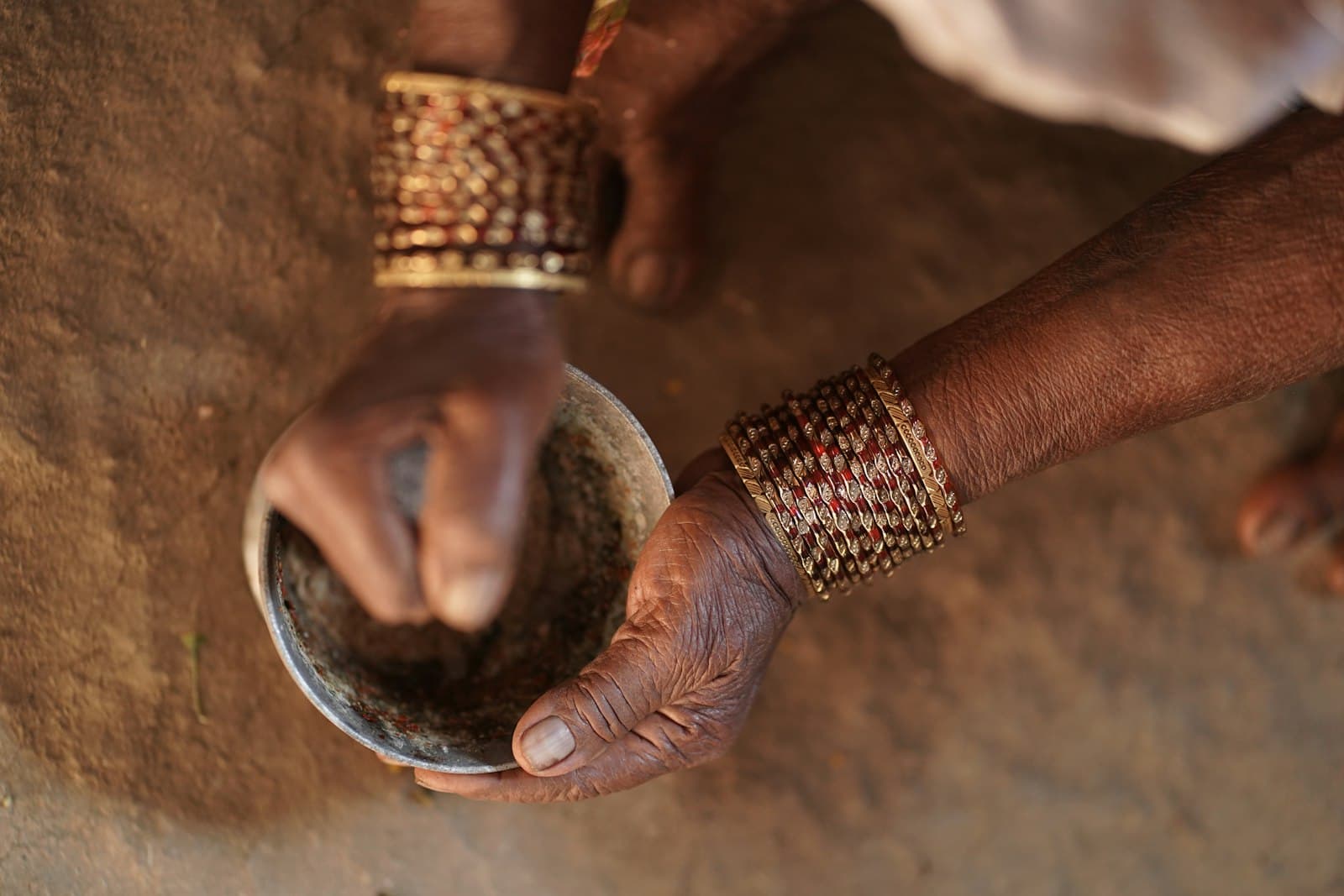
Forty rupees of fungicide protects an acre against soil-borne disease no later spray can fix - the highest return on an Indian farm.
Vaibhav Dhama4 min readA protective coating of fungicide, insecticide, or a biological or organic product applied to seed before sowing, to guard the germinating seed and young root against seed- and soil-borne disease and early pests.
Soil-borne disease attacks in the days after sowing, before a seedling breaks the surface — the one window in the crop cycle no later spray can reach. Treatment is the only point at which these diseases are addressable at all.
Carbendazim and Thiram are the two most widely used, both at roughly 2–3 g per kilogram of seed; Captan is gentler and common in vegetable nurseries. The right choice depends on which disease you are protecting against — see the comparison table above.
Not for long. Treated seed should be sown the same day; it is not built to be carried over to the next season, and re-treating an already-treated bag can push the total dose too high.
No — never in the same slurry. The fungicide kills the Rhizobium culture on contact. Apply the fungicide first, let it dry completely, then apply Rhizobium as the very last step.
20–30 minutes in the shade after each product, never in direct sun. If more than one product is applied, the seed is dried after every step, not just once at the end.
Not legally, for a farmer treating seed on their own land — but many certified lots arrive pre-treated at source (check the dye colour on the tag), and where it has not been done, it is standard, strongly recommended package-of-practice.
Yes, the same way as any other seed — but check first whether the company has already treated it, since hybrid seed (cotton, maize, vegetable hybrids) is very often sold pre-treated.
Indirectly and substantially, by protecting germination and early stand establishment — the base most other yield decisions are built on. It is not a yield booster by itself; it protects the yield potential the variety and field already have.
Every field crop grown from true seed benefits — cereals, pulses, oilseeds and vegetable nurseries alike. Root and tuber crops such as potato use a different method (a tuber dip), not the same per-kilogram coating.
On clean seed in a field with no serious disease history, yes — Trichoderma alone is a common, effective standalone choice. Where a specific disease is already established in the soil, a chemical fungicide is usually the more reliable first line.
As a rule of thumb: fungicide at 2 g/kg of seed, insecticide at 5 ml/kg, and a biological inoculant at 20–25 g/kg — always confirm the exact figure against the product label, since formulation strength varies by brand.
No. An expired product has lost potency, so the label dose no longer applies, and using it wastes both the chemical and the time spent applying it without giving the seed real protection.
Just before sowing — the same day, never days in advance. Treating early and then storing the seed defeats the purpose and can reduce germination.
Roughly ₹30–₹60 an acre for fungicide alone, or up to about ₹100 an acre for a full fungicide-plus-insecticide chemical programme — against a crop worth tens of thousands of rupees an acre, among the cheapest inputs on the farm.
Fungicide first, insecticide second, biological inoculant last — shade-dried between every step. Reversing this order, or mixing steps together to save time, is the single most common seed-treatment mistake.
Products and doses are general, ICAR/state agricultural university package-of-practice guidance, not a specific recommendation — confirm the product label and your local Krishi Vigyan Kendra before buying. Read more at /editorial-policy.