
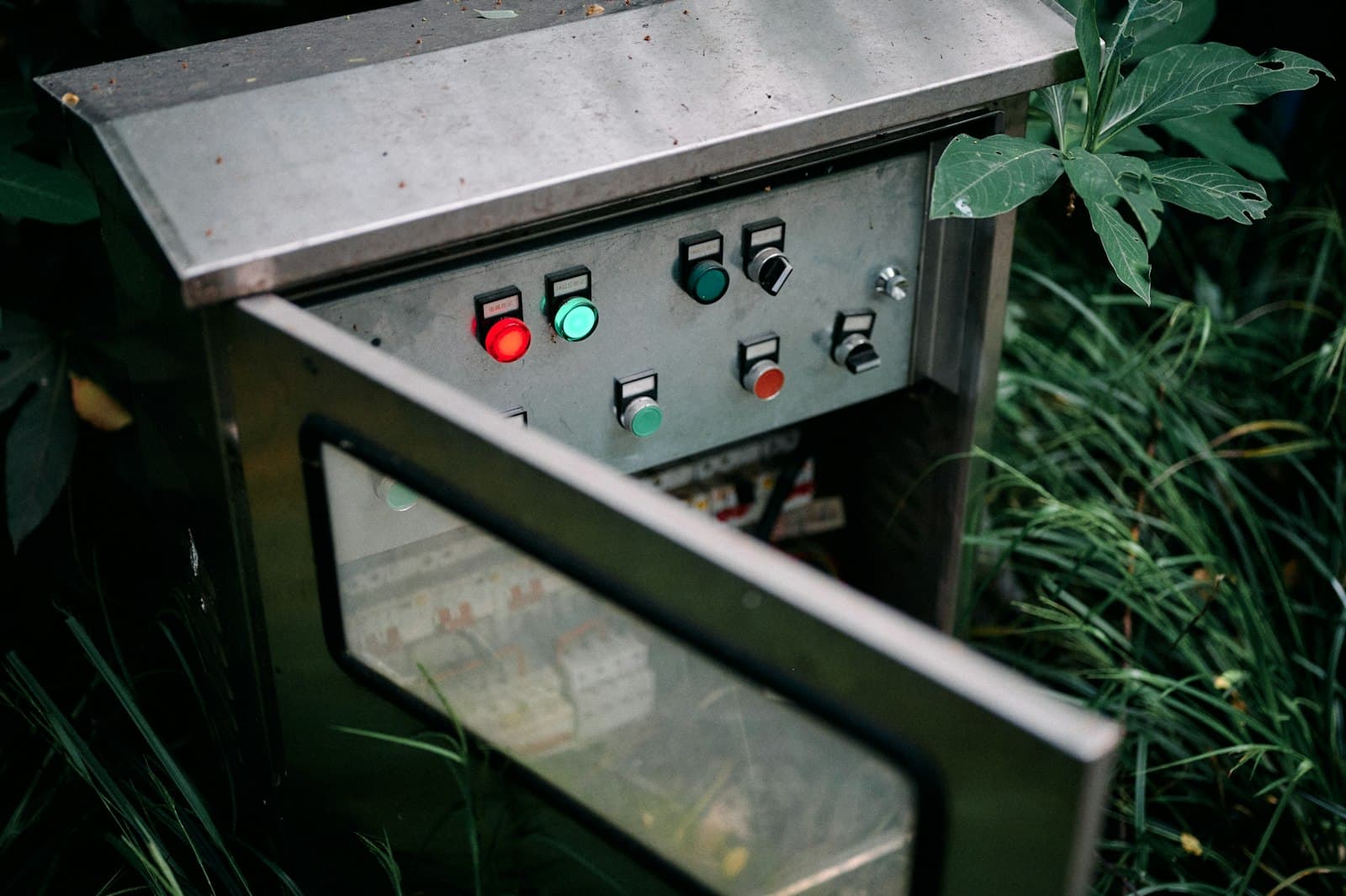
Kisan Raja Samrat Motor Controller Review
One of the oldest GSM motor controllers in India - call your pump on or off from anywhere. What it does, its price, and what to check.
Vaibhav Dhama4 min readIncrease yield while saving water — calculate what your crop actually needs, find the system that fits your field, and see the PMKSY subsidy before you spend a rupee.
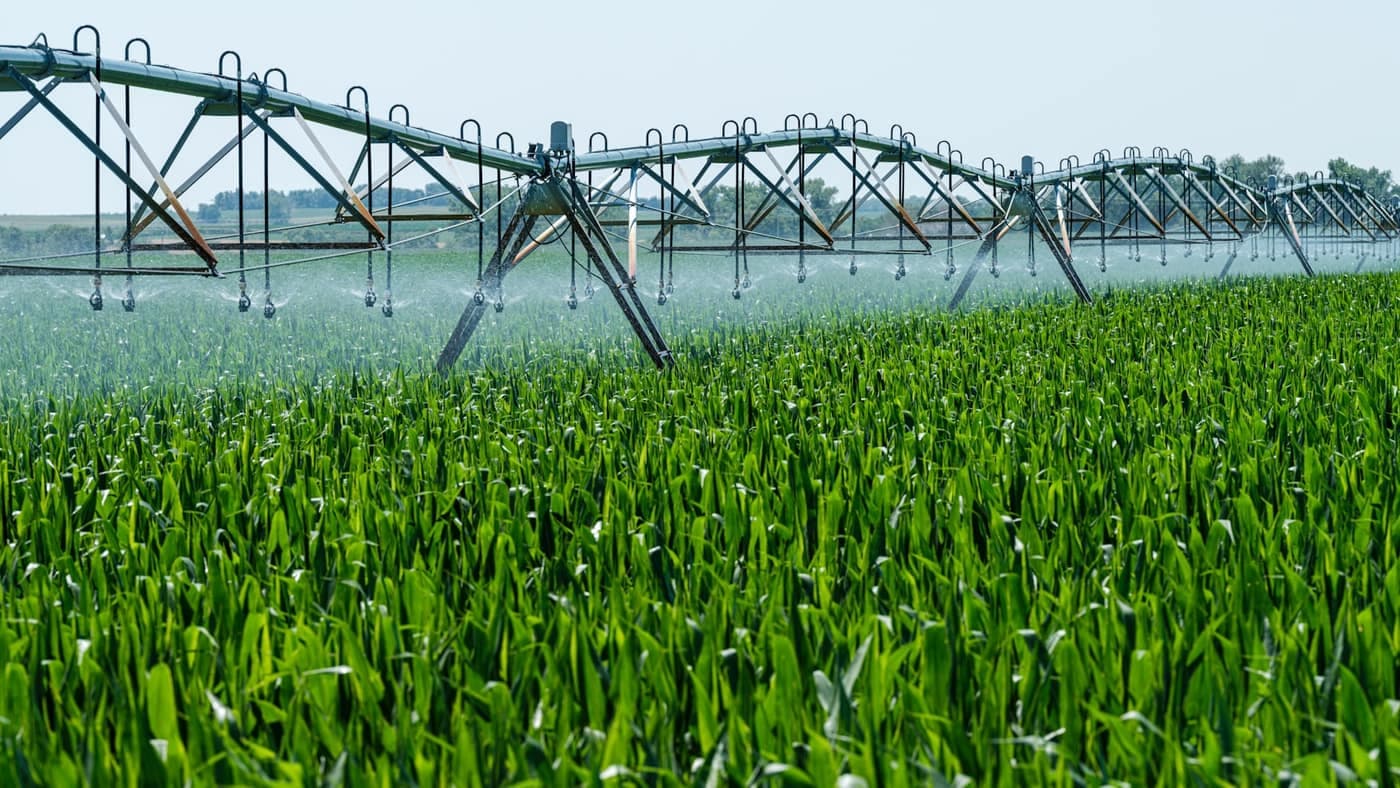
Irrigation is the one input that decides whether every other input pays off. A well-fed, well-protected crop still fails on a missed critical irrigation — and an over-watered one drowns its roots and invites disease no fertiliser dose can fix. Most Indian farms still irrigate by habit and by what the neighbouring field is doing, not by what the crop and the soil in front of them actually need.
This hub is built around the decisions that come before and during a season: how much water this crop needs and when, whether drip or sprinkler or plain flood is the right call for this soil, water source and budget, what PMKSY actually pays for, and how to fix the handful of problems — clogging, waterlogging, uneven wetting — that account for most of the water and yield lost to bad irrigation. Every crop below links to its full guide for the agronomy that surrounds the irrigation schedule.
The things a farmer actually needs this season — pick the one you came for.
Pick a crop, area and soil — get the season’s total water requirement, the daily average, and how often to irrigate.
Total season water
22,25,773 L
Daily average
15,350 L
Irrigate every
18 days
Water per irrigation
2,76,303 L
Recommended method: Border/flood on level, heavier land; sprinkler on light or undulating land
Critical stages — never skip these
Crop, farm size, soil, water source and budget in — a recommended system, its cost after PMKSY subsidy, water saving and payback period out.
Recommended system
Sprinkler Irrigation
Water saving
30–50% versus flood
Installation cost
₹36,000
PMKSY subsidy
₹19,800 (55%)
Net cost after subsidy
₹16,200
Payback period: 2–4 seasons
Advantages
Disadvantages
Also consider: Flood / Border Irrigation
A four-way comparison on the things that actually decide a purchase — cost, water saving, labour, maintenance and fertigation.
Drip and sprinkler are themselves classified as "micro-irrigation" under PMKSY. Here, "micro-sprinkler" means the low-pressure micro-sprinklers and foggers used in orchards, nurseries and close-spaced high-value crops — a genuinely different tool from the larger, portable rotary sprinklers field crops like wheat and groundnut use, which is the "Sprinkler" column below.
| Feature | Flood | Drip | Sprinkler | Micro-sprinkler |
|---|---|---|---|---|
| Water saving vs flood | Baseline — 30–50% of water lost to runoff and deep percolation | 40–60% | 30–50% | 35–55% |
| Installation cost (per acre) | ₹2,000–5,000 (channels and bunding only) | ₹30,000–48,000 | ₹15,000–22,000 | ₹25,000–35,000 |
| Field application efficiency | ~40% | ~90% | ~75% | ~85% |
| Labour | High — bunding, channel watching | Low, once installed | Medium — moving pipes between sets | Low — fixed layout |
| Maintenance | Low — no equipment | Medium — filter cleaning, seasonal acid-flush | Low to medium — nozzles and couplings | Medium — filter and nozzle checks |
| Suitable crops | Paddy; any crop where cost rules everything else out | Wide-spaced row crops — cotton, sugarcane, vegetables, orchards | Closely sown or broadcast crops — wheat, groundnut, pulses | Orchards, nurseries, close-spaced high-value crops |
| Fertigation | Not practical — fertiliser washes unevenly | Excellent — the main reason many farmers upgrade | Possible, but less precise than drip | Good, similar to drip at a smaller scale |
| PMKSY subsidy | Not covered | 55% (small/marginal) · 45% (others) | 55% (small/marginal) · 45% (others) | 55% (small/marginal) · 45% (others) |
| ROI / payback period | Not applicable — lowest upfront cost, highest recurring cost | 2–3 seasons on a cash crop; longer on cereals | 2–4 seasons | 2–3 seasons on orchard/nursery crops |
Typical seasonal water need, the stages that cannot be skipped, and the method that suits each crop best.
These are typical seasonal figures for normal, timely-sown Indian field conditions — a real field’s requirement moves with the weather and the soil’s water-holding capacity, which is exactly what the calculator above lets you adjust for.
Six stages from land preparation to harvest — what each one needs, why it matters, and the mistake that shows up most often.
A pre-sowing irrigation (palewa) brings the soil to the right moisture for tillage and even germination, and lets weeds germinate ahead of a pre-plant weeding pass.
Laser-level the field first if you can — every centimetre of unevenness means part of the field floods while another part stays dry, whichever method you use later.
Sowing into soil that is too wet compacts it under the drill and hurts root development for the rest of the season.
Light, frequent watering keeps the top few centimetres of soil moist without waterlogging the seed — this is the single most water-sensitive stage of the whole crop.
A light sprinkler or a shallow flood is gentler on emerging seedlings than a single heavy flood irrigation.
Letting the seed zone dry out even once during germination causes patchy, uneven emergence that no amount of water later can fully correct.
Roots and canopy are building — irrigation shifts to a steady, wider interval that encourages deep rooting rather than keeping the surface constantly wet.
Let the top layer dry slightly between irrigations here — it pushes roots downward, which pays off if a dry spell hits later.
The single most water-sensitive stage for most crops — a moisture stress here cuts flower and pod/grain number directly, and the loss cannot be recovered later in the season.
If you can only afford one perfectly-timed irrigation all season on a rainfed crop, this is the stage to spend it on.
Skipping or delaying irrigation at flowering is the single most common reason a crop under-yields despite good fertiliser and pest management.
Consistent moisture now determines grain weight and fruit size — this stage decides the tonnage, not just whether the crop survives.
Keep moisture steady rather than alternating flood and drought — swings between the two are worse for grain/fruit development than a slightly lower but consistent moisture level.
Irrigation is deliberately stopped one to three weeks before harvest for most crops, to firm up grain, ripen fruit evenly, or let the field dry enough for machinery and cutting.
Irrigating too close to harvest lodges cereals, delays ripening, and — for bulb and tuber crops — softens the produce and shortens its storage life.
Seven practices, what each one saves, what it costs, and where it earns its keep.
Drip irrigation
Delivers water directly to the root zone, cutting both evaporation and deep percolation loss.
40–60% versus flood
Mulching
A plastic or crop-residue layer over the soil cuts evaporation from the surface between irrigations.
25–50% on evaporation loss
Laser land levelling
Flattens the field to within ±2 cm, so flood or border irrigation wets evenly instead of pooling in low spots and missing high ones.
20–30% of irrigation water, plus a real yield gain from even wetting
Rainwater harvesting
A farm pond or check dam captures monsoon runoff that would otherwise leave the farm, for use as a protective irrigation later.
Turns "no source" into one supplementary irrigation for a whole plot
Soil moisture monitoring
A simple tensiometer or moisture meter replaces guesswork with an actual reading, so irrigation happens when the crop needs it, not on a fixed calendar.
15–25%, mostly by cutting irrigations that were not actually needed yet
Alternate furrow irrigation
Water only every second furrow instead of every furrow — roots still reach moisture from the wetted side, and the dry furrow is not wasted.
30–50% versus irrigating every furrow, with little to no yield penalty
Night or early-morning irrigation
Lower temperature and wind speed at night and early morning cut evaporation losses that happen in full daytime heat.
10–20% on evaporation, at zero equipment cost
Eligibility, the subsidy rate, covered systems, documents and how to apply, in one place.
Per Drop More Crop (PDMC) is the drip/sprinkler subsidy that matters to an individual farmer deciding whether to install drip or sprinkler — it pays a capital subsidy on the equipment itself. PDMC ran as a component of Pradhan Mantri Krishi Sinchai Yojana (PMKSY) until 2021-22; since 2022-23 it has been funded through Rashtriya Krishi Vikas Yojana, and since October 2024 it has been a component of the renamed Pradhan Mantri Rashtriya Krishi Vikas Yojana (PM-RKVY).
The subsidy is paid as Direct Benefit Transfer after installation is verified — not upfront, and not to the dealer — so budgeting for the full cost first and receiving the subsidy afterward is the realistic way to plan the purchase.
Eight problems that account for most of the water and yield an Indian farm loses to irrigation, not weather.
Overwatering
Underwatering
Poor drainage
Drip clogging
Low water pressure
Uneven irrigation
Waterlogging
Salinity
Three calculators every new irrigation set-up needs, built on the same engineering formulas an irrigation dealer uses.
Calculated requirement
6.8 HP
Recommended pump
7.5 HP
Open your crop for its full sowing, nutrient and irrigation guidance.
The other numbers a season depends on, worked out the same way.
Everything above, in one place — what irrigation is, every method compared, fertigation, water-use efficiency, and where irrigation is headed.
Irrigation is the artificial application of water to soil to support crop growth where rainfall alone is not enough, is not on time, or is not reliable — which describes most of India’s cropped area for at least part of the year. It is not a backup for rain; for a rabi crop like wheat or mustard sown in a season with almost no rainfall at all, irrigation is the entire water supply.
The reason irrigation decides more of the season than any other single input is timing. A nutrient deficiency can often be corrected with a top-dressing days later. A missed irrigation at a genuinely critical stage — flowering, grain filling, tuber bulking — cannot be undone by irrigating twice as much the following week. The crop has already made its yield decision by then.
A little under half of India’s net sown area is irrigated; the rest depends on the monsoon arriving on time and in the right amount, which it does less reliably than farm planning would like. Every hectare added to assured irrigation raises average yield and, just as importantly, lowers the year-to-year swing in it — the difference between a bad monsoon costing a farmer half a crop and costing almost nothing.
Assured irrigation also changes what a farmer can afford to grow. A rainfed field is usually locked into low-water, low-value crops almost by definition — gram, bajra, rainfed soybean. The same land under assured irrigation opens up higher-value options like potato, tomato or sugarcane, which is the real economic case for investing in a well, a borewell, or a farm pond even before spending on drip or sprinkler equipment.
Surface irrigation moves water across the field by gravity alone — no pump running while the water spreads, which is exactly why it remains the cheapest method to set up. Flood irrigation floods the whole plot; border irrigation channels water down long, level strips bounded by low ridges; furrow irrigation runs water down channels between crop rows, wetting the root zone from the side rather than the whole surface.
The trade-off is efficiency: surface methods typically apply water at only 35–45% efficiency, the rest lost to deep percolation past the root zone and to runoff at the field’s low end. On a genuinely level field with heavy, water-retentive soil — the exact conditions paddy is grown under — that inefficiency matters less, which is why flood/border irrigation remains the standard method for puddled rice even on many otherwise well-equipped farms.
Drip irrigation delivers water in slow, precise drops directly at the base of each plant through a network of laterals and emitters, run off a filtered, often pressurised line. Because water goes only where the plant’s roots actually are, evaporation from bare soil between rows and deep percolation past the root zone both fall sharply — the 40–60% water saving quoted for drip against flood is not a marketing number, it is what direct root-zone delivery does mechanically.
Drip earns its cost back fastest on wide-spaced row crops with a real cash value — cotton, sugarcane, onion, tomato — where fertigation (see below) adds a second saving on top of the water one. It is a poor fit for closely sown or broadcast crops like wheat or gram, where laying enough laterals to cover every row costs more than the crop can return.
Sprinkler irrigation sprays water through the air under pressure, mimicking rainfall over the whole field rather than delivering it at the root alone. This makes it the practical choice for crops sown too closely or too broadcast for drip laterals to be worth laying — wheat, groundnut, most pulses — and its portability means one pump and one set of pipes can serve several plots in rotation rather than each field needing its own fixed installation.
The same overhead delivery is its weak point: wind drift wastes water and wets foliage in the process, which raises the risk of fungal disease on crops already prone to it. On heavy clay, sprinkler’s water-per-hour can outpace the soil’s infiltration rate, causing runoff exactly like flood irrigation would.
PMKSY groups drip and sprinkler together under the umbrella term "micro-irrigation" because both deliver water in small, frequent, precisely controlled amounts rather than one large event — the opposite philosophy from flood irrigation. Within that umbrella, micro-sprinklers and foggers are a distinct sub-type: low-pressure, low-throw devices built for orchards, nurseries and closely spaced high-value crops, wetting a small area gently rather than throwing water across a whole field like a rotary sprinkler does.
The practical reason to choose a micro-sprinkler over a full-size drip system is canopy and humidity control — a nursery raising seedlings, for instance, needs gentle, even wetting that a drip emitter’s point-source delivery does not provide as well.
Subsurface drip irrigation buries the lateral lines a few centimetres to a foot below the surface instead of laying them on top of it — the same drip principle, delivered where evaporation from the soil surface cannot touch it at all. It pushes efficiency higher still than surface drip, at a materially higher installation cost and the added complication of a buried line being harder to inspect for clogging or damage.
In India it remains a niche choice, mostly on high-value orchard and plantation crops where the extra cost is justified over a multi-year planting, rather than an annual field crop replanted every season.
A crop’s water requirement is the total depth of water — measured in millimetres, the same unit rainfall is measured in — it needs across its full growing season to reach its yield potential. It is not a single number for every crop: a short-duration vegetable like tomato needs 400–600 mm across roughly 100 days, while sugarcane, in the ground for a full year, needs 1,500–2,500 mm — nearly four times the total, spread over more than three times the duration.
The water requirement calculator above turns that seasonal figure into something a farmer can act on: a daily average and, combined with the soil’s water-holding capacity, how many days can safely pass between one irrigation and the next.
Every crop has one or two growth stages where a moisture shortfall costs yield permanently, not just temporarily — commonly flowering and grain filling or fruit development, though the exact stage varies by crop. For wheat, the crown root initiation stage around 20–25 days after sowing is critical because it is when the plant is establishing the root system the rest of the season depends on; for mustard, flowering is the one irrigation that matters most on an otherwise largely rainfed crop.
The practical rule most extension advice converges on: if water is short and a farmer can only irrigate once, irrigate at the critical stage, not on the usual calendar. A skipped routine irrigation before or after the critical window costs far less yield than a skipped irrigation during it.
Water-use efficiency is the yield produced per unit of water applied — kilograms of grain per cubic metre of water, in the units agronomists actually use. It is the number that makes "how much water a crop needs" and "how much water a system wastes" comparable across very different crops and irrigation methods.
Two levers raise it: applying water more precisely (drip and sprinkler over flood), and reducing the water lost to anything other than the crop’s own use — evaporation, deep percolation, runoff — through mulching, land levelling and correctly timed irrigation. Both matter; a drip system installed on an unlevelled, badly mulched field captures only part of its potential efficiency gain.
Fertigation is the practice of dissolving water-soluble fertiliser into the irrigation water and applying both together, most commonly through a drip system’s existing network. Because the nutrient arrives exactly where the water does — at the root zone, in small frequent doses rather than one broadcast application — fertiliser-use efficiency typically rises by around 30% compared with a single soil-applied dose, since less nitrogen is lost to volatilisation or leaching past the root zone.
Fertigation needs water-soluble grades (not standard urea or DAP, which do not dissolve cleanly enough for emitters) and a venturi injector or fertigation pump to meter the dose into the line — a modest extra cost on top of the drip system itself, usually justified quickly on a crop already paying for fertigation-suitable inputs like NPK 19:19:19 or calcium nitrate.
The subsidy explained in full in the PDMC section above changes the arithmetic of switching from flood to drip or sprinkler more than most farmers realise before checking: a 55% capital subsidy on a ₹36,000-per-acre drip system brings the farmer’s actual outlay down to roughly ₹16,200 — often recoverable within two to three seasons on a cash crop through water, labour and fertiliser savings alone, before counting any yield gain.
The scheme also intersects with Government Schemes more broadly — a farmer applying for the PDMC micro-irrigation subsidy is often, in the same visit to the agriculture office, also eligible to ask about Kisan Credit Card financing for the farmer’s share of the cost.
A farm pond, check dam or percolation tank captures monsoon runoff that would otherwise leave the farm — turning an unpredictable, seasonal rainfall pattern into a stored, controllable source for at least one or two protective irrigations later in the season. For a genuinely rainfed farm with no canal or reliable borewell, this is very often the highest-return investment available, ahead of any drip or sprinkler purchase, because a system delivers water more efficiently only if there is water to deliver in the first place.
Most state governments subsidise farm-pond construction heavily under watershed development and PMKSY’s "Watershed Development" component — worth checking alongside the micro-irrigation subsidy rather than instead of it.
The common problems section above covers the specific symptoms and fixes; the pattern underneath most of them is irrigating on a fixed habit rather than on what the soil and crop are actually showing. Watering by the calendar regardless of recent rainfall, skipping the flowering-stage irrigation to save water at exactly the wrong moment, and running flood irrigation on an unlevelled field are the three mistakes that show up on the widest range of farms, across every crop.
A second, quieter mistake is buying an irrigation system before checking the water source can actually supply it — a drip system sized for one acre needs a pump and source that can sustain its design discharge for the several hours a full irrigation round takes, not just a burst of pressure at the start.
The system advisor above works through the same five questions an irrigation consultant would ask in person — crop, farm size, soil type, water source and budget — and returns a recommendation with its cost, subsidy and payback period. As a general rule: paddy stays on flood; wide-spaced cash crops on sandy or loam soil with a borewell or well justify drip; closely sown field crops on a tighter budget do well on sprinkler; and orchards or nurseries are the natural fit for micro-sprinklers.
Budget is not just the system cost — it includes whether the farmer can bridge the gap between paying the dealer in full and receiving the PMKSY subsidy as DBT afterward, which for many small farmers is the real constraint, not the net cost after subsidy.
A drip system that is not acid-flushed every season loses efficiency to clogging within two to three years, at which point it performs little better than a poorly maintained sprinkler — the water saving quoted for drip assumes basic maintenance is actually done, not just that the system is installed. Filters need cleaning on a schedule, not only when flow visibly drops; by the time flow drops, some emitters have likely already clogged silently.
Sprinkler nozzles wear and widen over years of use, which quietly raises the actual discharge above what the system was designed for — worth checking every few seasons against the pump and pipe sizing the equipment calculators above were built around.
Soil-moisture sensors, weather-linked automatic scheduling, and solar-powered pumps are moving from pilot projects to mainstream availability as component costs fall — a basic tensiometer already costs a few hundred rupees, and IoT-connected sensor kits that trigger irrigation automatically are increasingly sold alongside standard drip kits by the same dealers.
The direction all of this points in is the same one this hub is built around: irrigation driven by what the crop and soil actually need at that moment, not by a fixed calendar or by copying the neighbouring field — smart irrigation is really just that principle, automated.
Long-form writing on irrigation, water saving and the methods above, with the numbers included.
One of the oldest GSM motor controllers in India - call your pump on or off from anywhere. What it does, its price, and what to check.
Vaibhav Dhama4 min read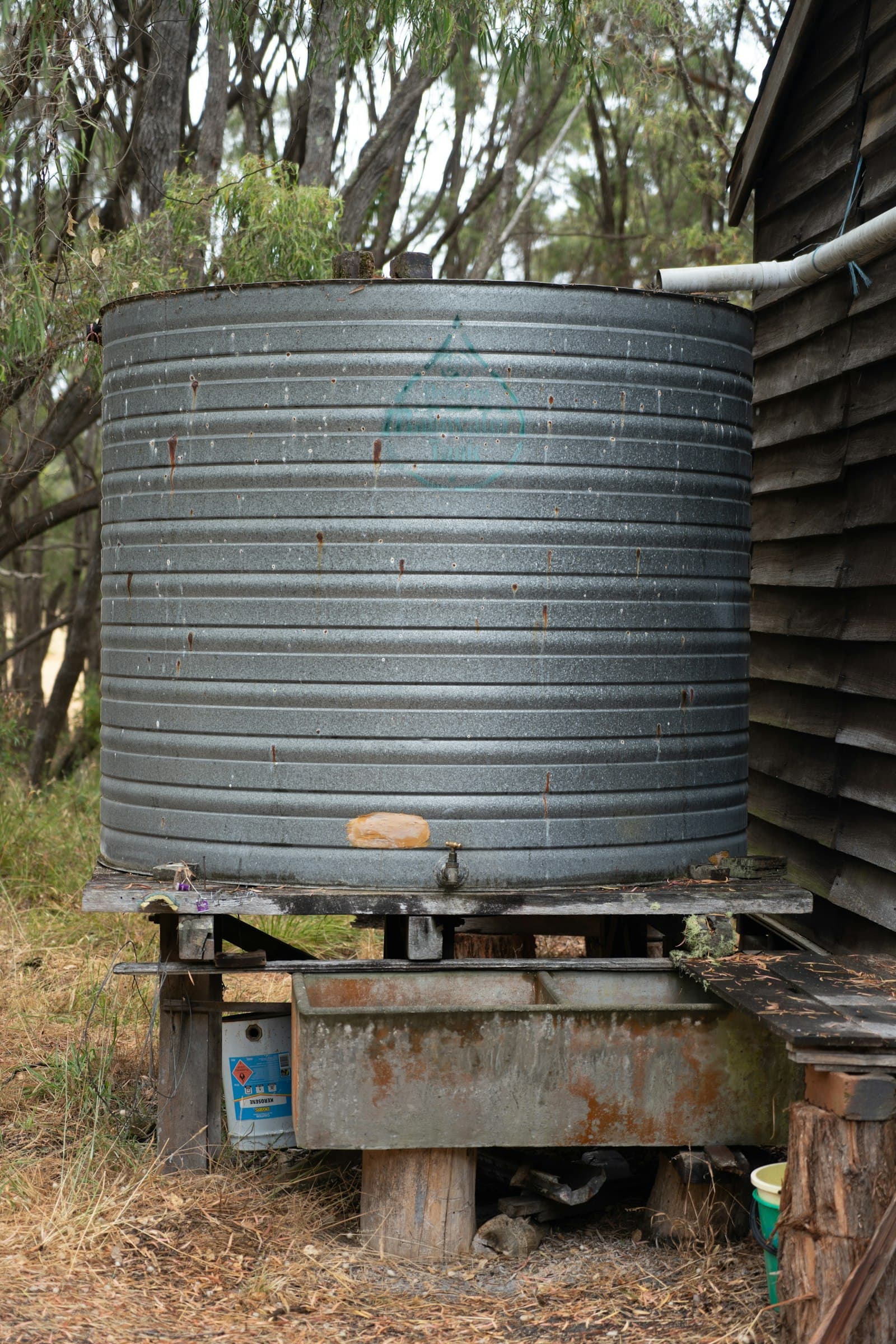
Most farms already get enough rain to cut irrigation costs sharply - it's simply not captured. A farm pond, bunding and mulching fix that.
Vaibhav Dhama2 min read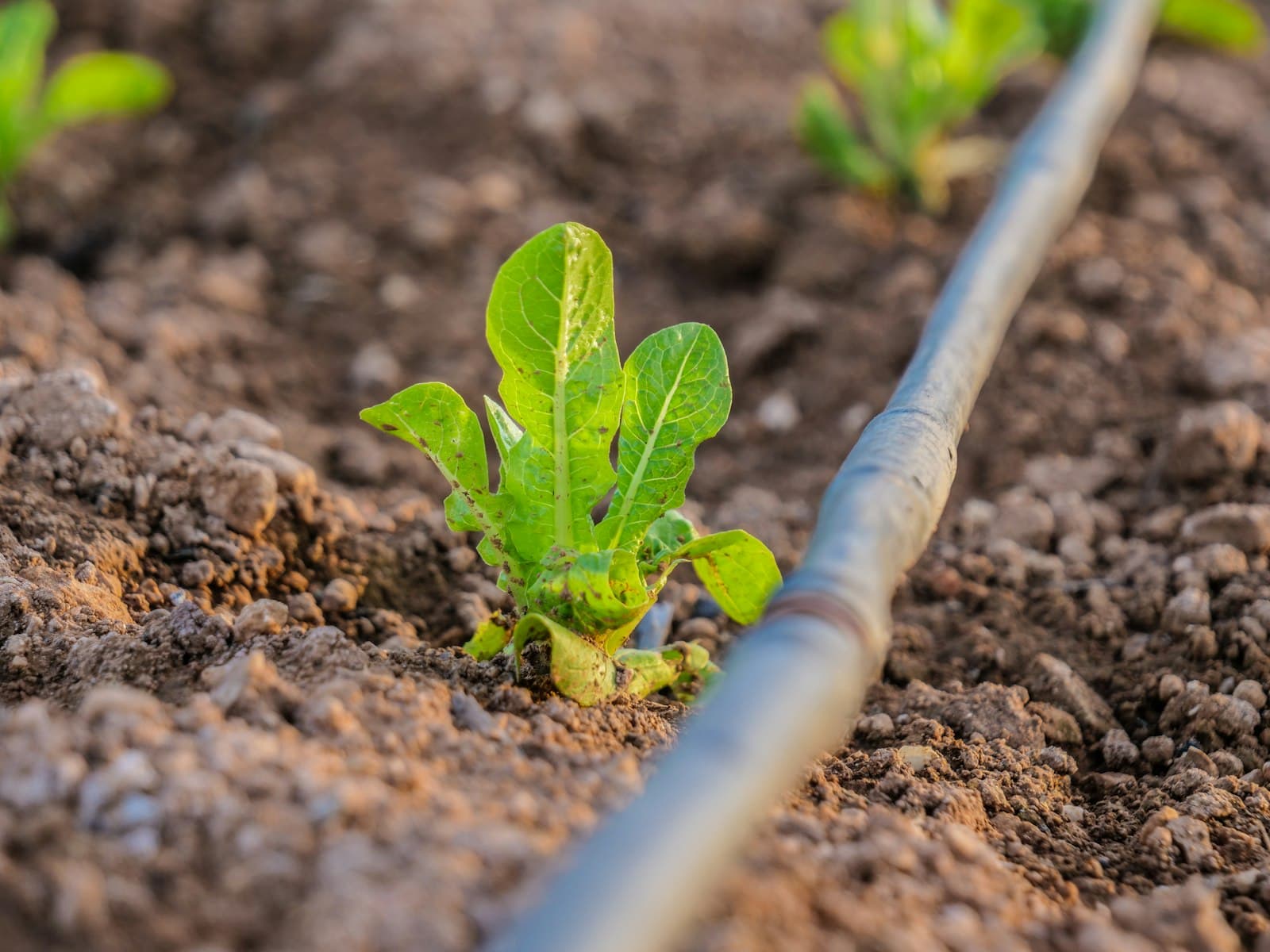
Drip cuts water use 40-60% and lifts yield 20-50%. With PMKSY subsidy at 55%, the real question is which crops pay it back fastest.
Vaibhav Dhama4 min readDrip irrigation delivers water in slow, precise drops directly at the base of each plant through a network of laterals and emitters, instead of flooding or spraying the whole field. Because water goes only where roots actually are, it cuts water use by 40–60% compared with flood irrigation and, since fertiliser can travel through the same line (fertigation), raises fertiliser-use efficiency by roughly 30% as well.
Drip irrigation saves the most, typically 40–60% versus flood, because it delivers water directly to the root zone with almost no runoff and minimal evaporation. Micro-sprinklers save nearly as much (35–55%) on orchard and nursery crops, and field sprinklers save 30–50% on closely sown crops where drip laterals are not practical.
On loam soil, roughly every 18 days; sandy soil needs a shorter gap (around 12 days) since it drains faster, while clay can stretch to around 24 days since it holds moisture longer. The [water requirement calculator](#water-calculator) above gives an exact interval for your soil type, but the crown root initiation stage (20–25 days after sowing) and flowering must never be skipped regardless of the general schedule.
Tomato needs roughly 400–600 mm of water across its ~100-day cycle from transplanting to harvest, with flowering, fruit set and fruit development being the stages where a shortfall costs yield most directly. Drip irrigation with plastic mulching is the standard recommendation, since it keeps foliage dry and reduces fruit-cracking from irregular watering.
Wide-spaced row crops with real cash value get the most out of drip — cotton, sugarcane, onion, tomato, potato and groundnut are the classic fits, along with orchard and plantation crops. Closely sown or broadcast crops like wheat, gram and mustard are usually left on sprinkler or flood, since laying enough drip laterals to cover every row costs more than those crops can return.
Fertigation is dissolving water-soluble fertiliser into the irrigation water and applying both together, almost always through a drip system’s existing network. It needs water-soluble grades rather than standard urea or DAP, plus a venturi injector or fertigation pump to meter the dose — the payoff is nutrient delivered exactly where the roots are, which typically raises fertiliser-use efficiency by around 30%.
The "Per Drop More Crop" component of PMKSY pays 55% of the system cost for small and marginal farmers (holdings up to 2 hectares) and 45% for other farmers, on drip and sprinkler systems, capped at 5 hectares per beneficiary. The subsidy is paid as Direct Benefit Transfer after installation is verified, not upfront.
Traditionally no — puddled, transplanted paddy is grown under continuous shallow flooding, and a sprinkler cannot maintain the standing water layer the crop and its weed-suppression depend on. Direct-seeded rice (DSR) grown without puddling is the exception, where sprinkler or even drip is increasingly used specifically to cut the very high water use of conventional flooded paddy.
Flood/border irrigation is cheapest to install, at roughly ₹2,000–5,000 an acre for channels and bunding since it needs no pump, pipes or emitters. It is also the least water-efficient and carries no PMKSY subsidy, so its low upfront cost trades off against the highest recurring water and pumping cost over time.
CRI stands for Crown Root Initiation, the stage around 20–25 days after sowing when wheat’s crown roots — the root system the rest of the season’s growth depends on — begin developing. It is the single most critical irrigation of the wheat season; a moisture shortfall here cannot be fully corrected by irrigating more at a later stage.
Yes — the steady root-zone moisture drip provides, without the wet-dry swings flood irrigation causes, typically lifts yield 20–50% on row crops, on top of the water and fertiliser savings. The gain comes from the crop never experiencing the moisture stress that a longer flood-irrigation gap allows between waterings.
Laser-level the field first if still on flood/border irrigation — it alone saves 20–30% of water for a one-time cost. Beyond that, switch to drip or sprinkler where the crop and budget justify it (claiming the PMKSY subsidy), irrigate by actual soil moisture rather than a fixed calendar, and size the pump and pipe correctly so power is not wasted overcoming avoidable friction losses.
Drip is usually the best fit — sandy soil drains fast and loses the most water to deep percolation under flood irrigation, which is exactly what drip’s direct root-zone delivery avoids. Where budget rules out drip, sprinkler is the next best choice; flood irrigation is the least suited option on sandy soil of the three.
Most vegetables need a shorter interval than field crops — commonly every 4–9 days depending on soil type, since their root systems are shallower and less drought-tolerant. Tomato and onion typically need the shortest gaps on sandy soil; the [water requirement calculator](#water-calculator) above gives an exact figure for the crop and soil in question.
Irrigating on a fixed calendar regardless of actual soil moisture or recent rainfall, skipping the flowering-stage irrigation to save water at exactly the wrong moment, running flood irrigation on an unlevelled field, and buying a drip or sprinkler system before confirming the water source can actually sustain its design discharge are the four mistakes that show up most often, across almost every crop.
Typically ₹30,000–48,000 per acre before subsidy; after the PMKSY subsidy (55% for small/marginal farmers, 45% for others), the net cost usually falls to roughly ₹16,000–26,000 per acre. On a cash crop like cotton, sugarcane or vegetables, that cost is commonly recovered within two to three seasons through water, labour and fertiliser savings — longer on lower-value cereal crops.