
Safed Musli
Chlorophytum borivilianum
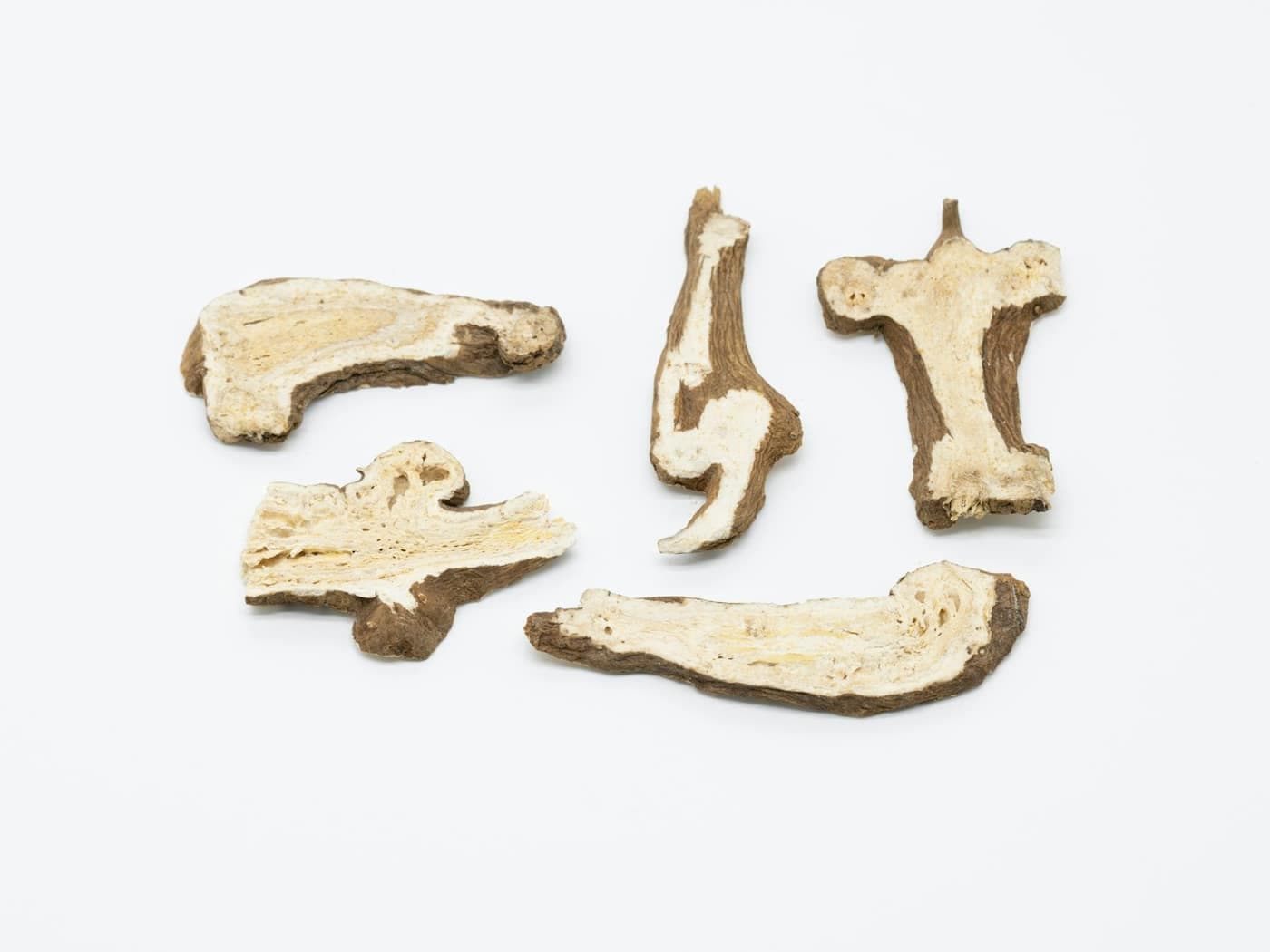
A medicinal tuber-root herb, not a food crop — grown for its pale, finger-shaped roots that are peeled, shade-dried and sold into the Ayurvedic drug market at ₹1,400–1,800 a kilo of dry root. Unlike most crops on this site it has almost no serious pest or disease, but two things decide the whole harvest: clean, disease-free planting roots (the biggest single cost) and nipping off every flower the plant tries to put out, which alone can lift root yield by a third.
Quick Summary
The key points from this page in about two minutes — read it or have it read aloud.
Quick Summary
Safed Musli is a medicinal herb, not a food crop. It is grown for its pale, finger-shaped roots, which are peeled, shade-dried and sold as raw drug material into the Ayurvedic and Unani trade. There is no MSP — the price is set entirely by drug-market demand — and it is one of the AYUSH ministry’s priority herbs for protection and promotion. It is grown mainly in the hilly tracts of Gujarat, Rajasthan, Madhya Pradesh and Maharashtra, planted with the monsoon on ridges or raised beds.
By the standards of most crops here it is agronomically easy: it needs only modest water, tolerates some shade, and — in ICAR’s own words — has no serious pests or diseases reported so far. What decides the harvest is a different pair of things. The first is the planting material: the roots themselves are the seed, so clean, disease-free root pieces are the biggest single cost, and a thin stand almost always traces back to old or diseased ones. The second is flowering — every white flower spike the plant throws up should be nipped off as it appears, because leaving them cuts root yield by roughly a third.
Beyond two or three weedings and earthing-up, the main decision left is timing. Roots are dug from November to January for sale once the top growth has dried down, or left in the ground until March or April if they are being kept back as the next season’s planting stock instead of sold. The page below carries the planting-root grade and rate, the ridge layout, the weeding and flower-nipping schedule, both harvest windows, and dry-root yields and the going price range.
- Crop type
- Medicinal tuber-root herb
- Season
- Kharif (monsoon-planted)
- Suitable states
- Gujarat, Rajasthan, MP, Maharashtra
- Growing duration
- Leaves wither ~4–4.5 months; roots dug Nov–Jan (or Mar–Apr for planting stock)
- Water requirement
- Low; 6–8 irrigations only if monsoon fails
- Temperature
- 30–35°C by day
- Soil type
- Well-drained sandy loam / loam
- Difficulty level
- Hard
- Expected yield
- 2–3 t/ha fresh root → 400–600 kg/ha dry
- No MSP
- NMPB priority herb; price set by drug-market demand
Overview
Safed Musli (Chlorophytum borivilianum) is not a food crop — it is a medicinal herb grown for its pale, tuberous roots, which are peeled, dried and sold as a raw drug into the Ayurvedic and Unani medicine trade. The National Medicinal Plants Board (NMPB), under the Ministry of AYUSH, has named it one of its priority herbs for protection and promotion, and it has no Minimum Support Price — its price is set entirely by drug-market demand.
Compared with most crops on this site it is agronomically forgiving: it needs modest water, tolerates some shade, and — in the words of ICAR’s own production-technology note — "no serious diseases and pests have so far been reported." What actually decides a Safed Musli crop is different from a food crop: the health of the planting-root pieces you start with (a large, costly input, since the roots themselves are the seed), and whether every flower spike is nipped off as it appears through the season, which alone can raise root yield by around a third.
It is grown mainly in the hilly tracts of Gujarat, Rajasthan, Madhya Pradesh and Maharashtra, planted with the monsoon on ridges or raised beds, and dug for market from November to January — or left in the ground until March–April if the roots are being kept back as the next season’s planting stock instead of sold.
Crop timeline, sowing to harvest
A quick visual map of the season — jump to any section below for the detail behind each stage.
- Day 0
Planting
Sprouted fasciculated root pieces (fingers with a bud-bearing disc, at least 5 g each) planted on ridges with the first or second good monsoon rain.
- Day 15–25
Sprouting
Shoots emerge from the planted root pieces; a poor stand here usually traces back to old or diseased planting material.
- Day 25–90
Vegetative growth
Narrow, grass-like leaves fill out and the fasciculated roots begin forming underground; 2–3 hand weedings and earthing-up happen through this stage.
- Day 90–120
Flowering
The plant throws up small white flower spikes. Every one of these should be nipped off as it appears — leaving them cuts root yield by roughly a third.
- Day 120–135
Leaves start withering
About four to four-and-a-half months after planting, the leaves begin to yellow and dry — the first sign the roots are heading towards maturity.
- Day 150–210
Root harvest (Nov–Jan)
Roots are dug from November through January for sale as raw drug material, once fully matured and the top growth has dried down.
- Day 270–300
Held for planting stock (Mar–Apr)
If the roots are being kept as next season’s planting material instead of sold, they are left in the ground and dug in March–April.
Suitable states
States where this crop is grown at scale, highlighted below. Your local Krishi Vigyan Kendra is still the final word for your specific block.
- Jammu and Kashmir
- Himachal Pradesh
- Punjab
- Uttarakhand
- Haryana
- Delhi
- Uttar Pradesh
- Rajasthan
- Bihar
- Jharkhand
- West Bengal
- Sikkim
- Assam
- Arunachal Pradesh
- Meghalaya
- Nagaland
- Manipur
- Mizoram
- Tripura
- Gujarat
- Madhya Pradesh
- Chhattisgarh
- Maharashtra
- Odisha
- Goa
- Telangana
- Andhra Pradesh
- Karnataka
- Kerala
- Tamil Nadu
- Puducherry
- Ladakh
- Chandigarh
- Lakshadweep
Grown here
Climate requirements
Safed Musli is not a fussy crop climatically — it is planted to catch the monsoon and largely grows on the rain that falls through the season. The one climate risk is standing water: heavy, continuous rain on badly drained land damages the tubers, so drainage matters more than rainfall total.
Ideal temperature
30–35°C day temperature suits it best; it grows in tropical and sub-tropical conditions up to about 1,500 m altitude
Rainfall
500–1,500 mm — it is planted with the monsoon and grows through the rains
Humidity
Tolerates the humid monsoon well, but continuous heavy rain can rot the leaves and, if drainage is poor, the tubers too
Sunlight
Grows in the open or in partial shade — it is naturally found under some canopy, so light shading is tolerated, unlike most row crops
Soil requirements
Thorough land preparation before planting matters more for Safed Musli than for most crops, because the harvested product is the root itself: the soil needs to be porous and weed-free so the fasciculated roots can bulk up cleanly, and it must never sit wet.
Suitable soil
Well-drained sandy loam or loam, rich in organic matter and porous enough for the fasciculated roots to expand freely
pH range
6.0–8.0
Drainage
Must drain well — waterlogging damages the tubers, which is why raised beds or ridges (10–15 cm high) are used in higher-rainfall areas
Organic matter
High — the crop responds to well-decomposed FYM and green manuring worked in before planting
Land preparation
Same four steps whichever region you are in — only the timing shifts with the sowing window.
- 1
Deep ploughing to a fine, porous tilth
Loosen the soil well and clear perennial and seasonal weeds before planting — compacted soil restricts how well the fasciculated roots can expand.
- 2
Ridges or raised beds in wetter areas
Where rainfall is heavy or drainage is naturally poor, form ridges or raised beds 10–15 cm high so excess monsoon water runs off instead of standing around the roots.
- 3
Work in FYM before planting
Apply 10–15 t/ha of well-rotted cow dung manure at land preparation, along with green manure (sesbania, cowpea, sunnhemp or lablab) where possible — this also helps head off iron deficiency in the crop.
Seed information
How the main varieties compare, so you can pick by duration, yield, disease pressure or what you are growing for.
| Variety | Duration | Yield | Disease resistance | Best state | Suitable for |
|---|---|---|---|---|---|
JS 405 (Jawahar Safed Musli 405) Released by RVSKVV’s research station at Mandsaur (Madhya Pradesh) in 2004 — the one Safed Musli variety carried on ICAR-DMAPR’s own official released-varieties list. Traits beyond the release record are not documented on that list; the duration and yield below are the species-level ICAR figure, not a variety-specific measurement. | ~4–4.5 months to leaf-wither; roots dug Nov–Jan | 2–3 t/ha fresh root → 400–600 kg/ha dry | Not stated in the official release record | Madhya Pradesh | General cultivation |
RC-2 is a Safed Musli germplasm selection at Rajasthan Agricultural University, Udaipur — good yield and saponin, but not formally released like JS 405. | Leaves wither ~4–4.5 months after planting; roots dug Nov–Jan — the species-level figure; no separate duration is documented for this selection | 2–3 t/ha fresh root → 400–600 kg/ha dry — the species-level ICAR figure; a Safed Musli variety review reports RC-2 among the Rajasthan Agricultural University (RAU), Udaipur selections found good for yield and saponin content, but gives no separate measured number | Not documented in available sources | Rajasthan | — |
RC-16 is a Safed Musli germplasm selection at Rajasthan Agricultural University, Udaipur — good yield and saponin, but not formally released like JS 405. | Leaves wither ~4–4.5 months after planting; roots dug Nov–Jan — the species-level figure; no separate duration is documented for this selection | 2–3 t/ha fresh root → 400–600 kg/ha dry — the species-level ICAR figure; a Safed Musli variety review reports RC-16 among the Rajasthan Agricultural University (RAU), Udaipur selections found good for yield and saponin content, but gives no separate measured number | Not documented in available sources | Rajasthan | — |
RC-36 is a Safed Musli germplasm selection at Rajasthan Agricultural University, Udaipur — good yield and saponin, but not formally released like JS 405. | Leaves wither ~4–4.5 months after planting; roots dug Nov–Jan — the species-level figure; no separate duration is documented for this selection | 2–3 t/ha fresh root → 400–600 kg/ha dry — the species-level ICAR figure; a Safed Musli variety review reports RC-36 among the Rajasthan Agricultural University (RAU), Udaipur selections found good for yield and saponin content, but gives no separate measured number | Not documented in available sources | Rajasthan | — |
RC-20 is a Safed Musli germplasm selection at Rajasthan Agricultural University, Udaipur — good yield and saponin, but not formally released like JS 405. | Leaves wither ~4–4.5 months after planting; roots dug Nov–Jan — the species-level figure; no separate duration is documented for this selection | 2–3 t/ha fresh root → 400–600 kg/ha dry — the species-level ICAR figure; a Safed Musli variety review reports RC-20 among the Rajasthan Agricultural University (RAU), Udaipur selections found good for yield and saponin content, but gives no separate measured number | Not documented in available sources | Rajasthan | — |
MDB-13 is a farm-developed Safed Musli line from Maa Danteshwari Herbal Farm & Research Centre, Chhattisgarh — a private company, with unverified yield claims. | Leaves wither ~4–4.5 months after planting; roots dug Nov–Jan — the species-level figure; no independently verified duration is documented for this line | 2–3 t/ha fresh root → 400–600 kg/ha dry is the species-level ICAR figure; the developing centre describes MDB-13 itself as high-yielding, but that is the private developer's own claim, not an independently verified measurement | Described by the developing centre as disease/fungal-resistant, but this is the private developer's own claim, not an ICAR- or university-verified rating | Chhattisgarh | — |
MDB-14 is a farm-developed Safed Musli line from Maa Danteshwari Herbal Farm & Research Centre, Chhattisgarh — a private company, with unverified yield claims. | Leaves wither ~4–4.5 months after planting; roots dug Nov–Jan — the species-level figure; no independently verified duration is documented for this line | 2–3 t/ha fresh root → 400–600 kg/ha dry is the species-level ICAR figure; the developing centre describes MDB-14 itself as high-yielding, but that is the private developer's own claim, not an independently verified measurement | Described by the developing centre as disease/fungal-resistant, but this is the private developer's own claim, not an ICAR- or university-verified rating | Chhattisgarh | — |
- Seed rate
- 600–1,000 kg/ha of fasciculated root pieces — the rate depends on the spacing used, and this is the single biggest cost in the crop
- Certified seed
- There is no widely available improved variety beyond JS 405, so most growers plant root pieces saved from a previous healthy crop or bought from a known grower. Because the root piece IS the seed, planting old, shrivelled or disease-carrying roots is the single most common reason for a poor stand — always start with plump, healthy, recently-stored roots.
- Spacing
- 30 cm row-to-row × 10–15 cm plant-to-plant on ridges or raised beds — about 3.33 lakh plants/ha at this spacing
- Seed treatment
- Before planting, split the stored root clump with a sharp blade so each piece carries 1–3 fasciculated roots and at least 5 g of the bud-bearing disc, then let it sprout for a few days at room temperature. Treating the pieces with a Trichoderma-based bio-fungicide before planting helps guard against root and collar rot.
Sowing guide
Getting the timing right matters more than almost anything else in this crop: planting on the first or second rain of the monsoon, rather than waiting, measurably improves how many pieces survive and establish.
- Best time
- The first or second good rain of the monsoon (typically June–July) — planting on a rainy day itself improves survival
- Row spacing
- 30 cm
- Plant spacing
- 10–15 cm
- Sowing depth
- Shallow — the bud-bearing disc sits just below the ridge surface
- Method
- Plant sprouted root pieces on ridges or raised beds, single or double per position depending on the spacing used
Fertilizer schedule
A split dose beats one large dose applied at sowing — nitrogen especially is lost to the air and to leaching if it all goes in on day one.
- 1
Basal (land preparation)
Before planting
10–15 t/ha of well-rotted FYM, plus green manure where available, worked into the soil.
- 2
Basal NPK
At or soon after planting
An overall dose of 50:40:40 kg N:P:K per hectare is the level ICAR cites for a good musli yield.
- 3
Micronutrients (as needed)
Vegetative growth
On soils prone to iron deficiency, green manuring at land preparation is the main safeguard rather than a foliar spray.
Irrigation schedule
1. Establishment
Planting to sprouting
Usually no irrigation is needed if the monsoon is on schedule — the crop is planted specifically to use the rains.
2. Dry spells / monsoon gaps
Through the growing season
If the monsoon fails or there is a long gap between showers, irrigate — about 6–8 irrigations at 10–15 day intervals cover a season with a weak monsoon.
3. After leaf-fall
Around root maturation
The crop still needs a regular water supply even after the leaves begin to fall, so do not stop irrigation the moment the canopy starts to look done.
Critical stages
- Establishment (first rains)
- Root bulking
Water-saving tips
- Drip irrigation on raised beds has been found economical and effective for commercial Safed Musli, since the crop's water need is modest to begin with.
- Because this is fundamentally a rain-fed, monsoon-planted crop, irrigation is a top-up for a weak monsoon, not the crop's main water source — over-watering only invites tuber rot.
Weed management
Common weeds
Organic control
- Two to three hand weedings combined with hoeing through the growing season keep the beds clean.
- Earthing-up during the rains, done at the same time as weeding, also stops the fasciculated roots from being exposed on raised beds or ridges.
Chemical control
- No standard herbicide programme is documented for Safed Musli — it is grown on ridges at wide spacing and weeded by hand rather than sprayed.
Nutrient deficiency identification
What a shortage of each nutrient actually looks like on the plant, so you can tell a deficiency apart from a disease before you spray the wrong thing.
Iron
Visible symptom
Interveinal yellowing of young leaves on soils prone to iron deficiency — ICAR notes green manuring (sesbania, cowpea, sunnhemp, lablab) at land preparation as the main safeguard, rather than a foliar spray.
Nitrogen
Visible symptom
Pale, weak leaf growth and slow vegetative bulking on soils that did not get the recommended FYM and basal nitrogen.
Potassium
Visible symptom
Poorly developed, thin fasciculated roots despite normal leaf growth — potash is part of the 50:40:40 NPK dose ICAR recommends specifically for root yield.
Diseases to watch for
Symptoms, likely cause and what actually treats it — not just a spray name.
Leaf blight / anthracnose (Colletotrichum capsici)
- Symptoms
- Spots and blighted patches on the leaves that expand in humid weather, reducing the leaf area feeding the roots below.
- Cause
- Colletotrichum capsici, first reported on this crop in northern India; favoured by continuous heavy rain and humid conditions.
- Treatment
- Remove badly affected leaves and apply a recommended fungicide if the blight is spreading fast.
- Prevention
- Avoid overcrowded, poorly-drained plantings; good field drainage limits the humid conditions the fungus needs.
Root / collar rot (Sclerotium rolfsii, Rhizoctonia bataticola)
- Symptoms
- Rotting at the collar and fasciculated roots in waterlogged patches; plants wilt and roots turn unmarketable.
- Cause
- Soil-borne fungi favoured by poor drainage and waterlogging — the same reason ridges and raised beds are recommended for this crop.
- Treatment
- Improve drainage in the affected patch immediately; ICAR recommends managing this mainly through Trichoderma-based bio-fungicide applied at sowing or during intercultural operations.
- Prevention
- Plant only healthy, treated root pieces on well-drained ridges or raised beds, and never let water stand around the crop.
Pests to watch for
What to look for before the damage is visible, and organic options before you reach for a chemical.
Common mistakes to avoid
The mistakes that cost growers the most, ranked by how often they show up in the field — not in the order you might expect.
- 1
Planting old, shrivelled or disease-carrying root pieces instead of healthy stock.
Why it hurts
Because the root piece is the seed, poor planting material is the single biggest cause of a weak stand and low yield — always start with plump, recently-stored, healthy roots.
- 2
Planting before the monsoon is properly established.
Why it hurts
Survival is measurably better when planting is done on the first or second good rain of the monsoon rather than on dry soil beforehand.
- 3
Skipping the regular nipping of flower spikes.
Why it hurts
Leaving the plant to flower diverts its energy away from the roots — nipping every inflorescence as it appears can raise fasciculated-root yield by around a third.
- 4
Growing on flat, poorly-drained land in a high-rainfall area.
Why it hurts
Standing water rots the tubers and encourages collar and root rot — ridges or raised beds 10–15 cm high are the standard fix.
- 5
Harvesting before the leaves have withered.
Why it hurts
Roots dug too early are immature and lighter — wait for the leaf-withering stage (about 4–4.5 months after planting) before digging for market.
- 6
Leaving mature roots in wet soil too long after they are ready.
Why it hurts
Delayed digging in wet conditions invites rotting in roots that are otherwise ready for a good price — dig promptly once the crop has matured.
- 7
Sun-drying the peeled roots in harsh direct sun instead of partial shade.
Why it hurts
The roots darken and lose the clean white colour that fetches a premium price — ICAR recommends drying at 35–40°C in partial shade for 3–4 days with occasional turning.
- 8
Delaying washing and peeling after harvest.
Why it hurts
Peeling should be done immediately after digging, by mechanically scraping with a knife — waiting lets the roots lose quality before processing.
- 9
Storing planting-material roots in a humid, unventilated place.
Why it hurts
ICAR specifies storage at under 60% humidity, mixed with dry sand in a ventilated container or pit — a damp store rots or sprouts the roots before the next planting season.
- 10
Growing the crop without first checking who will actually buy it.
Why it hurts
Safed Musli has no MSP and no mandi-style open market the way food crops do — it is traded on quality and grade directly with drug-market buyers, so a grower without a buyer lined up in advance carries real price risk.
Harvesting
For sale as raw drug material, dig the roots from November to January, once the leaves have withered and the tubers are mature — apply a light irrigation before digging to make lifting easier. If the roots are instead being kept as the next season's planting material, they can be left in the ground and dug in March–April.
Signs it is ready
- Leaves yellowing and withering (from about 4–4.5 months after planting)
- Fasciculated roots plump and fully formed
- Root skin firmed up rather than soft
Tools
- Spade or digging fork to lift the root clump without breaking it
- Sharp knife for peeling
- Shaded drying area or racks
Expected yield
2–3 tonnes/ha of fresh fasciculated root under good management, reducing to about 400–600 kg/ha of dry, peeled root after processing
Post-harvest & storage
Storage
Fresh-dug roots are kept in the shade for about a week to lose excess moisture. Roots being held as planting material are then mixed with dry sand and kept in a ventilated container, perforated bag or a shaded pit, at under 60% humidity to stop them rotting or sprouting early.
Packaging
Roots meant for sale are washed, peeled by scraping with a knife, and shade-dried at 35–40°C for 3–4 days with occasional turning to keep the white colour, then packed in poly bags to keep out moisture.
Transportation
Move dried root carefully to avoid breakage, which lowers grade — buyers pay a premium for clean, unbroken, well-coloured dry root.
Shelf life
Properly dried and packed root stores for a reasonably long period in a dry, moisture-proof store; planting-material roots should be replanted the following season rather than kept indefinitely.
Market prices
Today's mandi price near you, pulled live from the government's own Agmarknet data.
Live daily mandi prices from the government Agmarknet dataset.
Synced from data.gov.in (Agmarknet). Rates are ₹ per quintal.
Weather
Current conditions and a 5-day outlook for your selected location, with one line of stage-aware advice.
Pick your state for current conditions and a 5-day outlook.
Live data from Open-Meteo
Profit calculator
Your own cost sheet, expected yield and selling price — not ours.
Where the money goes
Share of the total cost per acre, using the calculator’s own default cost sheet below — adjust the numbers there to match your field and this picture will no longer apply to you exactly, but the ranking rarely changes.
- Seed54% (₹65,000)
- Labour21% (₹25,000)
- Fertiliser7% (₹8,000)
- Land rent7% (₹8,000)
- Interest4% (₹5,000)
- Irrigation3% (₹4,000)
- Pesticide & weedicide3% (₹3,000)
- Machinery2% (₹2,000)
Official downloads
Government and ICAR documents only — everything below is hosted on an official server.
ICAR-DMAPR, Boriavi (Anand)
ICAR Directorate of Medicinal & Aromatic Plants Research — crop production and variety information
National Medicinal Plants Board (NMPB)
Ministry of AYUSH — species information and cultivation subsidy support for medicinal plants
Kisan Call Centre — 1800-180-1551
Free crop advice in your language
Frequently asked questions
Does Safed Musli have an MSP?
No. Safed Musli is not on the government's list of MSP-notified crops at all — that list covers cereals, pulses, oilseeds and a few commercial crops, not medicinal plants. Instead, the National Medicinal Plants Board (NMPB), under the Ministry of AYUSH, recognises Safed Musli as one of its priority herbs and offers cultivation subsidy support through its schemes — but there is no price floor, and the crop is sold entirely on negotiated price and grade to drug-market buyers.
Why does the planting material matter so much for this crop?
Because Safed Musli is grown from root pieces, not true seed, the root piece you plant IS next year's crop quality. A shrivelled, old or disease-carrying root piece sprouts poorly and can carry rot into your field, while a plump, healthy, recently-stored piece establishes reliably. This is also the crop's biggest single cost — 600–1,000 kg of planting roots are needed per hectare — so poor planting material wastes real money, not just yield.
Why is nipping the flowers so important?
Safed Musli puts up small white flower spikes through its growing season, and letting them bloom and set seed pulls the plant's energy away from the fasciculated roots underground — which are the entire economic product. Regularly nipping off every flower spike as it appears redirects that energy back into the roots, and can raise root yield by roughly a third. It is one of the few active jobs this otherwise low-maintenance crop asks of a grower.
When should I harvest Safed Musli?
It depends on what the roots are for. For sale as raw drug material, dig from November to January, once the leaves have withered and the roots have fully matured — a light irrigation before digging makes lifting easier. If you are keeping roots back as next season's planting stock instead of selling them, you can leave them in the ground longer and dig in March–April.
How is Safed Musli dried, and why does it affect the price?
Right after digging, the roots are washed and peeled by scraping with a knife, then dried in partial shade — not harsh direct sun — at 35–40°C for 3–4 days with occasional turning. This keeps the roots' clean white colour, which is exactly what drug-market buyers pay a premium for. Roots dried carelessly in strong sun darken and fetch a lower grade and price, even if the underlying root quality was good.
Is Safed Musli prone to diseases and pests?
Less than most crops. ICAR's own production note states that no serious diseases or pests have so far been reported on Safed Musli — the main issues are an occasional leaf-eating caterpillar and leaf blight in continuously wet weather, plus root or collar rot if the land does not drain well. Good drainage (ridges or raised beds) and healthy planting material prevent most of the trouble this crop sees.
Still have questions?
The FAQs above cover the common ones. For anything specific to your field and soil, your nearest Krishi Vigyan Kendra is the authoritative answer.