
Spinach (Palak)
Beta vulgaris var. bengalensis
A quick, cool-season leafy crop that is cut and comes again — the first cut in about a month and then a fresh cut every 15–25 days for two to three months — where the whole game is keeping the leaves soft, dark green and fast-growing with steady water and light, frequent nitrogen, and getting each cut to market the same day because the leaf wilts within hours of picking.
Quick Summary
The key points from this page in about two minutes — read it or have it read aloud.
Quick Summary
Palak is the everyday Indian spinach — mostly the thick-leaved spinach-beet type (Beta vulgaris), with true spinach (Spinacia oleracea, "vilayati palak") grown alongside it in the cold months. It is a short, cool-season leafy vegetable grown in almost every state, sown from about September to February in the plains and nearly year-round in the hills and near cities.
It is a cut-and-come-again crop. The first cut comes about 30 days after sowing, and if the plant is kept well fed and watered a new flush of leaves is ready every two to three weeks, for a total of four to six cuts over two to three months. Because of this, the crop lives or dies on two things: keeping the soil evenly moist so the leaf stays tender and does not turn stringy, and giving a small dose of nitrogen after every cut so the next flush comes fast and dark green.
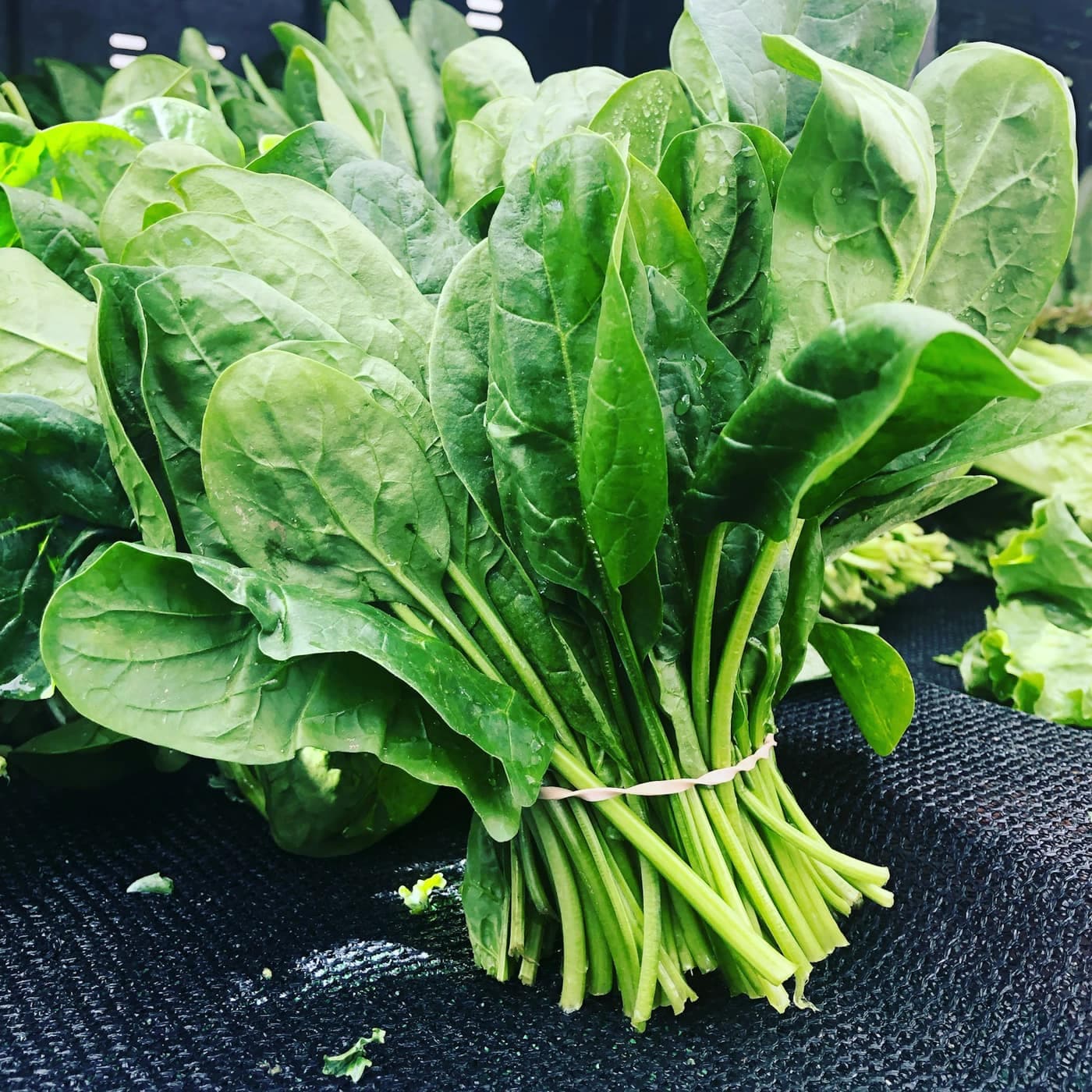
The leaf is very perishable. A cut bunch starts to wilt and yellow within a few hours in the sun, so palak is almost always cut in the cool of the early morning, tied into bunches in the field, kept in the shade, and sold the same day. It does not store.
The main problems are leaf-eating caterpillars and aphids (aphids also foul the leaf with honeydew and sooty mould), leaf spot and downy mildew in damp weather, and — the one that costs the most — the plant bolting (running up to a flower stalk) when it is sown too late and caught by warm days, after which the leaves turn bitter and hard and the crop is finished.
- Crop type
- Short-duration cool-season leafy vegetable, cut-and-come-again
- Season
- Plains: September–February; hills and coast: much of the year
- Suitable states
- Uttar Pradesh, Bihar, West Bengal, Punjab, Haryana, Maharashtra, Karnataka, Andhra Pradesh
- Growing duration
- First cut 25–35 days; total crop 2–3 months over 4–6 cuts
- Water requirement
- Low to moderate, but steady — light irrigation every 4–8 days
- Temperature
- Cool, 15–25°C; leaf hardens and the plant bolts above about 30°C
- Soil type
- Well-drained loam or sandy loam rich in organic matter, pH 6.0–7.5; tolerates mildly alkaline and saline soil
- Difficulty level
- Easy — one of the simplest market crops, but very perishable
- Expected yield
- 8–15 t/ha of leaf over all cuts (spinach-beet type); less for true spinach
- Key risk
- Late sowing → warm weather → the plant bolts, leaf turns bitter, crop ends early
Overview
Palak is India's common spinach. Most of what is grown and sold as palak is the spinach-beet or "Indian spinach" type (Beta vulgaris var. bengalensis) — a beet relative grown only for its thick, soft, dark green leaves, cut several times over. True spinach (Spinacia oleracea), sold as "vilayati palak", is grown alongside it mainly in the cold months and for the retail and export trade. Both are handled the same way in the field.
It is a short, cool-season leafy vegetable grown in almost every state — Uttar Pradesh, Bihar, West Bengal, Punjab, Haryana, Maharashtra, Karnataka, Andhra Pradesh, Telangana and the peri-urban belts around every big city. The plains crop is sown from about September to February; in the hills and under mild coastal weather it can be sown for much of the year.
It is a cut-and-come-again crop: the first cut is about 30 days after sowing, and a fresh flush follows every 15–25 days for four to six cuts in all. Steady soil moisture and a small nitrogen dose after each cut keep the leaf soft, dark and quick — and a crop sown late and caught by warm weather bolts to seed, turns bitter, and is over.
Crop timeline, sowing to harvest
A quick visual map of the season — jump to any section below for the detail behind each stage.
- Day 0
Sowing
Seed sown thickly in lines 20–25 cm apart, or broadcast on well-prepared beds, 2–3 cm deep, into moist soil with plenty of well-rotted manure.
- Day 5–10
Germination
Seedlings emerge; the seed is slow if the bed dries out, so light frequent watering keeps the surface moist through this stage.
- Day 12–20
Leaf growth
Plants put out rosettes of leaves; a light thinning and one hand-weeding is done, and the first nitrogen top-dressing goes on.
- Day 25–35
First cut
Leaves reach 15–25 cm and the crop is cut for the first time — either whole plants pulled, or leaves cut about 3–5 cm above the crown so the plant re-sprouts.
- Day 35–110
Repeat cuts
A fresh flush every 15–25 days, each followed by a light irrigation and a small nitrogen dose. Four to six cuts in all before the plants tire or bolt.
- Day 60–120
Bolting / end of crop
As days warm and lengthen the plants send up a flower stalk; the leaves turn small, hard and bitter, and the crop is pulled out.
Suitable states
States where this crop is grown at scale, highlighted below. Your local Krishi Vigyan Kendra is still the final word for your specific block.
- Jammu and Kashmir
- Himachal Pradesh
- Punjab
- Uttarakhand
- Haryana
- Delhi
- Uttar Pradesh
- Rajasthan
- Bihar
- Jharkhand
- West Bengal
- Sikkim
- Assam
- Arunachal Pradesh
- Meghalaya
- Nagaland
- Manipur
- Mizoram
- Tripura
- Gujarat
- Madhya Pradesh
- Chhattisgarh
- Maharashtra
- Odisha
- Goa
- Telangana
- Andhra Pradesh
- Karnataka
- Kerala
- Tamil Nadu
- Puducherry
- Ladakh
- Chandigarh
- Lakshadweep
Grown here
Climate requirements
The single climate rule for palak in the plains: sow early enough that all the cuts are taken in cool weather. A crop that is still standing when the warm days arrive will bolt no matter how well it is fed and watered.
Ideal temperature
A cool-season crop. Leaves grow softest and darkest at 15–25°C. Germination is good from about 10°C upward. Above roughly 30°C the leaf turns small, thick and bitter and the plant runs up to seed (bolts), which is why the plains crop is a winter crop and late-sown plots fail as the weather warms.
Rainfall
Grown almost entirely on irrigation in the dry winter. Heavy rain is a problem, not a help — it splashes soil onto the low leaves, spreads leaf spot and downy mildew, and can rot a dense stand.
Humidity
Moderate humidity suits it. Long damp, overcast spells bring on downy mildew and Cercospora/Alternaria leaf spot, which spot and yellow the very leaves being sold.
Sunlight
Full sun in winter gives the best growth. Light afternoon shade helps a late crop hold on a little longer as the weather warms, but shade in cool weather just makes the plants thin and pale.
Soil requirements
Because the leaf is eaten directly and often, and because the crop is cut so many times, use only well-rotted manure and clean irrigation water — fresh manure or sewage water on a leaf crop is a food-safety problem, not just an agronomy one.
Suitable soil
A well-drained loam or sandy loam rich in organic matter is ideal, but palak is not fussy — the spinach-beet type in particular grows on heavier soils and tolerates mildly alkaline and saline patches better than most vegetables, which is one reason it is grown so widely.
pH range
Best at pH 6.0–7.5. True spinach is more sensitive to acidity and does poorly below about pH 6.0; the spinach-beet type is more forgiving and some varieties (Jobner Green, Pusa Harit) are grown specifically on acid hill soils.
Drainage
Free drainage is needed — the crop is shallow-rooted and a waterlogged bed rots the crown and roots and brings on damping-off in the young stand. Sow on slightly raised, flat beds so surplus water runs off.
Organic matter
Responds strongly to well-rotted farmyard manure or compost — 15–25 t/ha worked into the bed before sowing. A leaf crop cut again and again lives on nitrogen and organic matter; a bed short of both gives pale, slow, thin flushes.
Land preparation
Same four steps whichever region you are in — only the timing shifts with the sowing window.
- 1
Plough to a fine tilth and form beds
Two or three ploughings and a planking to a fine, level tilth, then lay out flat beds about 1–1.5 m wide with irrigation channels between them. A fine tilth matters because the seed is sown shallow and germination is uneven on cloddy ground.
- 2
Mix in organic manure and basal fertiliser
Work 15–25 t/ha of well-rotted FYM or compost into the top 15 cm, along with a basal dose of phosphorus and potash and about a quarter to a third of the nitrogen.
- 3
Pre-sowing irrigation
Irrigate the bed a day or two before sowing so it is moist but workable; sow into moisture and give only a very light watering after, or the seed and fine soil wash together.
Seed information
How the main varieties compare, so you can pick by duration, yield, disease pressure or what you are growing for.
| Variety | Duration | Yield | Disease resistance | Best state | Suitable for |
|---|---|---|---|---|---|
The most widely grown spinach-beet palak in India. Large, flat, smooth, dark green leaves that bunch and sell well; vigorous cut-and-come-again regrowth with the first cut around 28–32 days. A dependable, all-India winter market variety. | First cut ~28–32 days | 10–15 t/ha over all cuts | No special resistance; watch leaf spot and aphids | All India (plains winter crop) | Bunched fresh market, succession sowing |
An IARI spinach-beet variety with medium-large, slightly crinkled, dark green leaves and strong regrowth after cutting. Wide adaptation and a reliable performer for the main rabi crop; a common recommended variety in the south and north alike. | First cut ~30–35 days | 12–18 t/ha over all cuts | Field-tolerant of leaf spot | Karnataka, Uttar Pradesh, Maharashtra, Punjab | Main-season market crop, many cuts |
An IARI spinach-beet variety selected for very soft, fibre-free, tender leaves and quick early growth, giving a higher first-cut yield. Numerous close-spaced cuts possible; leaves are less coarse than All Green. | First cut ~25–30 days | 12–20 t/ha over all cuts | No special resistance claimed | North Indian plains | Tender-leaf market, frequent cutting |
An IARI variety bred from a sugar-beet × local-palak cross, upright growing with large, dark green leaves. Its main value is that it can be grown on acid hill soils and over a longer part of the year, so it suits mid-hill and year-round growers. | First cut ~30–35 days | 10–16 t/ha over all cuts | No special resistance claimed | Himachal Pradesh, Uttarakhand, hill and peri-urban belts | Acid soils, hills, near year-round sowing |
A spinach-beet selection (SKN Agriculture University, Jobner) that arose as a spontaneous mutant from a local collection. Uniformly green, thick, soft, juicy leaves; notable for growing well even on acid soils. Popular in Rajasthan and the north-west. | First cut ~30 days | 10–15 t/ha over all cuts | No special resistance claimed | Rajasthan, Haryana, Punjab | Acid and problem soils, market bunching |
A short-duration spinach-beet selection from CCS HAU, Hisar, with large, dark green, thick, juicy, soft leaves. Quick to the first cut, which suits growers who want an early flush and a fast turnaround between crops. | First cut ~25–28 days | 10–15 t/ha over all cuts | No special resistance claimed | Haryana, Punjab, Uttar Pradesh | Early market, short-window growers |
A PAU (Ludhiana) spinach-beet variety with erect, dark bluish-green, thick leaves and a low tendency to produce a coarse mid-rib. Steady regrowth over the Punjab winter; sold as Punjab Green and the related Punjab Selection. | First cut ~30 days | 10–16 t/ha over all cuts | Field-tolerant of leaf spot | Punjab, Haryana, western Uttar Pradesh | North-west winter market crop |
- Seed rate
- 25–30 kg/ha sown in lines for the spinach-beet type (the seed is a corky cluster of several seeds), or up to 35–40 kg/ha broadcast. True spinach needs less, about 15–20 kg/ha. On an acre that is roughly 10–12 kg of spinach-beet seed in lines.
- Certified seed
- Buy fresh seed of a named variety each season — old palak seed loses vigour fast and comes up thin. Both the spinach-beet and true-spinach types are open-pollinated, so seed can be saved from a healthy, non-bolted plot, but market growers usually buy fresh for even germination.
- Spacing
- Rows 20–25 cm apart; thin or sow so plants stand 5–10 cm apart in the row. Closer for a pure leaf crop, wider where whole plants are pulled.
- Seed treatment
- Soak the seed in water for 12–24 hours to speed and even up germination. Treat with a fungicide such as thiram or captan, or with Trichoderma, against damping-off in the young stand.
Sowing guide
Do not sow the plains crop late (after mid-February). A late crop is caught by warm days before it has given more than one or two cuts, bolts to seed, and the leaf turns bitter and hard.
- Best time
- Northern plains: mid-September through February, in a series of small sowings 15–20 days apart so there is always a young plot coming on. The best-quality crop is from October–December sowings that take all their cuts in cool weather. Hills: March–September. Coast and south: most of the year except the hottest months.
- Row spacing
- 20–25 cm between lines
- Plant spacing
- 5–10 cm between plants in the line
- Sowing depth
- 2–3 cm
- Method
- Sow in shallow lines drawn across the bed, or broadcast evenly and rake in lightly. Sow into a moist bed and firm the soil gently over the seed. Succession sowing every 15–20 days spreads the harvest and income.
Fertilizer schedule
A split dose beats one large dose applied at sowing — nitrogen especially is lost to the air and to leaching if it all goes in on day one.
- 1
Basal (at sowing)
Day 0
Well-rotted FYM worked into the bed, plus a basal dose of about 20–25 kg N, 40–50 kg P₂O₅ and 40–50 kg K₂O per hectare.
- 2
After thinning / first weeding
15–20 days
The first nitrogen top-dressing, about 20–25 kg N/ha, broadcast beside the lines and watered in as the leaf rosettes build.
- 3
After every cut
From ~30 days, repeating
A small nitrogen dose (roughly 20 kg N/ha, or a light urea or dilute liquid feed) immediately after each cut, followed by a light irrigation, so the next flush comes fast and dark green. This after-cut feeding is what keeps a many-cut crop paying.
Irrigation schedule
1. Sowing to germination
Day 0–10
Very light, frequent watering to keep the surface moist — the seed germinates poorly if the bed crusts or dries out. In winter this may be every 3–4 days.
2. Leaf growth
Day 10–30
Irrigate every 5–8 days in winter to keep the soil evenly moist. Steady moisture here is what makes the leaf soft and large; a dry check makes it small and stringy.
3. Between cuts
Day 30 onward
A light irrigation right after each cut (with the nitrogen dose), then every 5–8 days until the next cut. Never let the crop wilt between cuts — a wilted flush is small and bitter.
Critical stages
- Germination and stand establishment
- The days just before and after each cut
Water-saving tips
- Drip or a fine sprinkler on the flat bed keeps steady shallow moisture on this shallow-rooted crop and uses far less water than flooding channels.
- A light mulch of straw between the lines holds moisture and keeps rain-splashed soil off the low leaves, which cuts leaf spot.
- Sow on level, well-graded beds so each light irrigation wets the whole bed evenly — an uneven bed means dry, stringy leaf at the high end and rot at the low end.
Weed management
Common weeds
Organic control
- One or two hand-weedings in the first three weeks, before the crop closes over and shades most weeds. A densely sown, well-fed crop is largely self-weeding after the first cut.
- Take extra care to pull out bathua early — it looks almost identical to young spinach-beet and will otherwise be cut and bunched in with the crop.
- A stale-seedbed flush (irrigate, let weeds germinate, hoe them off, then sow) before sowing greatly reduces early weeding.
Chemical control
- Herbicides are rarely used on palak — it is a short, densely sown, frequently cut leaf crop eaten directly, so the pre-harvest interval is almost never long enough to be safe.
- If a pre-emergence herbicide is used on a large area, it must be one specifically cleared for spinach/leafy vegetables and applied only at sowing; confirm the product and interval with the local KVK.
Nutrient deficiency identification
What a shortage of each nutrient actually looks like on the plant, so you can tell a deficiency apart from a disease before you spray the wrong thing.
Nitrogen
Visible symptom
Pale, small, slow leaves and weak regrowth after cutting — the commonest problem on a many-cut crop that is not fed after each cut. The oldest leaves yellow first.
Iron
Visible symptom
Yellowing between the veins of the youngest leaves while the veins stay green, on alkaline, over-limed or waterlogged soil. Common on the alkaline soils palak is often pushed onto.
Magnesium
Visible symptom
Yellowing between the veins of the older leaves, veins staying green, spreading upward — on light sandy soils and after heavy potash use.
Manganese
Visible symptom
Pale mottling and small brown flecks between the veins of younger leaves on alkaline soil, easy to confuse with iron deficiency.
Diseases to watch for
Symptoms, likely cause and what actually treats it — not just a spray name.
Downy mildew
- Symptoms
- Pale yellow patches on the upper leaf surface with a grey-violet fuzzy mould on the underside in damp, cool weather; patches brown and the leaves become unsaleable.
- Cause
- The oomycete Peronospora farinosa (P. effusa on true spinach), favoured by cool nights, dew and long leaf wetness.
- Treatment
- A protective spray of a copper fungicide or mancozeb from the first spots, repeated in wet weather, observing the short pre-harvest interval — or simply bring the next cut forward and clear the affected flush.
- Prevention
- Wider rows for airflow, drip instead of overhead water, avoid dense overgrown stands, and sow the next succession plot away from an infected one.
Cercospora / Alternaria leaf spot
- Symptoms
- Small round to angular grey-brown spots with a darker margin on the leaves, sometimes with a pale halo; spots run together and the leaf yellows and dries. It directly spots the marketable leaf.
- Cause
- The fungi Cercospora beticola and Alternaria species, spread by wind-blown spores and rain splash, worse in warm humid spells and on old, over-mature flushes.
- Treatment
- A protective fungicide (mancozeb or a copper product) at the first spots with the pre-harvest interval observed; cut and remove badly spotted flushes rather than trying to save them.
- Prevention
- Rotate away from beet and spinach for a season, clear crop debris, avoid overhead irrigation late in the day, and do not let flushes get old and tired.
Damping-off
- Symptoms
- Patches of young seedlings that fail to emerge or topple over with a water-soaked, pinched, brown stem at soil level; the stand comes up thin and gappy.
- Cause
- Soil fungi (Pythium, Rhizoctonia), worst in cold, wet, poorly drained beds and where the seed is sown too thick and deep.
- Treatment
- No cure for a collapsed patch; drench the surrounding area with a recommended fungicide or Trichoderma and re-sow the gaps once the bed has dried a little.
- Prevention
- Sow on raised, well-drained beds, do not over-water the young stand, treat the seed with thiram/captan or Trichoderma, and avoid sowing into cold, waterlogged soil.
White rust
- Symptoms
- Shiny white, blister-like pustules on the underside of leaves, with pale patches and sometimes thickening or distortion on the upper side; the leaf is disfigured and unsaleable.
- Cause
- The oomycete Albugo occidentalis (on spinach) / Albugo species, favoured by cool, moist, humid weather and dew.
- Treatment
- A protective spray of metalaxyl-mancozeb or a copper fungicide at first appearance, pre-harvest interval observed; remove and destroy affected leaves.
- Prevention
- Avoid dense stands and overhead watering in cool damp weather, rotate away from spinach and its relatives, and clear infected debris after the crop.
Pests to watch for
What to look for before the damage is visible, and organic options before you reach for a chemical.
Leaf-eating caterpillars (Spodoptera, semiloopers, leaf webber)
- Identification
- Ragged holes and window-pane feeding on the leaves, green or brown caterpillars on the undersides, rolled or webbed leaves, and dark frass pellets among the foliage.
- Damage
- The main pest of palak — caterpillars can shred a flush overnight, and the holed, frass-marked leaf that is left cannot be bunched or sold.
- Organic control
- Handpick caterpillars and egg masses, spray neem or a Bt (Bacillus thuringiensis) product in the evening, set up a few light or pheromone traps for Spodoptera, and encourage birds. Bt and neem both have very short pre-harvest intervals, which matters on a crop cut every 2–3 weeks.
- Chemical control
- Only a CIB&RC-registered insecticide for leafy vegetables, at the label rate, with the pre-harvest interval strictly kept — usually meaning the current flush is cut first and the spray goes on the stubble. Bait and biological options are strongly preferred here.
Aphids
- Identification
- Colonies of small green or black soft-bodied insects on the undersides of leaves and on the growing points, with sticky honeydew, black sooty mould and ants running among them.
- Damage
- Sap loss curls and stunts the leaves, but the bigger problem is that the honeydew and sooty mould foul the very leaf that is sold, and aphids spread mosaic-type viruses. A fouled flush is a write-off.
- Organic control
- Strong water jets on hotspots, neem sprays, yellow sticky traps, a reflective mulch to deter landing, and conserving ladybird beetles and lacewings, which usually control aphids on a leaf crop if broad-spectrum sprays are avoided.
- Chemical control
- A recommended insecticide only when colonies are heavy, using a product cleared for leafy vegetables and keeping the pre-harvest interval; spraying the stubble right after a cut is the safest timing.
Leaf miner
- Identification
- Pale, winding, snake-like tunnels inside the leaf, and small blotchy mines, with tiny black-and-yellow flies around the plants.
- Damage
- The mines disfigure the leaf and open the way for rot; a heavy attack makes a flush unmarketable even though the plant is not killed.
- Organic control
- Remove and destroy mined leaves at each cut, use yellow sticky traps, spray neem, and avoid the broad-spectrum sprays that kill the tiny wasps which normally keep leaf miner down.
- Chemical control
- Rarely justified on palak; if used, only a leafy-vegetable-cleared product with the pre-harvest interval kept.
Cutworm at the seedling stage
- Identification
- Young seedlings cut off at ground level and lying on the soil in the morning; fat, greasy, grey-brown caterpillars curled up just under the surface near the damage.
- Damage
- Thins the young stand in patches, sometimes badly enough to need re-sowing, before the crop has even reached the first cut.
- Organic control
- Flood the bed to bring the caterpillars up, handpick in the evening, keep the field edges free of weeds where moths lay, and use a bran-and-neem bait along the rows.
- Chemical control
- A soil-directed recommended insecticide or bait along the rows at the seedling stage only, well before the first cut so the pre-harvest interval is not an issue.
Common mistakes to avoid
The mistakes that cost growers the most, ranked by how often they show up in the field — not in the order you might expect.
- 1
Sowing the plains crop too late in the season.
Why it hurts
The crop is caught by warm, lengthening days before it has given more than one or two cuts; it bolts to seed and the leaves turn small, hard and bitter. Sow the last plains crop by mid-February at the latest.
- 2
Not feeding nitrogen after each cut.
Why it hurts
Each successive flush comes slower, smaller and paler; a crop that should give five or six good cuts gives two and then quits. A small nitrogen dose plus a light irrigation after every cut is the core of the system.
- 3
Letting the crop wilt between cuts.
Why it hurts
A moisture check makes the next flush small, thick and stringy instead of large and tender, and pushes the plant toward bolting. Keep the soil evenly moist throughout.
- 4
Cutting in the heat of the day and holding the leaf.
Why it hurts
Cut palak wilts and yellows within a few hours in the sun. Cut in the cool early morning, bunch and shade it at once, and move it to market the same day — it does not store.
- 5
Using fresh manure or dirty irrigation water on the leaf crop.
Why it hurts
Palak leaf is eaten directly and cut many times, often eaten lightly cooked or raw. Fresh manure and sewage-tainted water are a food-safety hazard on a leaf crop, not just an agronomy issue — use only well-rotted manure and clean water.
- 6
Letting bathua weed grow with the crop.
Why it hurts
Young bathua (Chenopodium album) looks almost identical to spinach-beet palak and gets cut and bunched in with it, which buyers reject. Pull bathua out early while the difference can still be seen.
Harvesting
Take the first cut 25–35 days after sowing, when the leaves are 15–25 cm long, soft and dark green and before any of them coarsen. Either pull whole young plants, or — for a cut-and-come-again crop — cut the leaves with a sharp knife or sickle about 3–5 cm above the crown so the growing point is left to re-sprout. Repeat every 15–25 days for four to six cuts. Always cut in the cool of the early morning.
Signs it is ready
- Leaves 15–25 cm, soft, flexible and dark green
- No flower stalk starting from the centre of the plant
- Leaf snaps crisply, not tough and fibrous
- For repeat cutting: enough small leaves left at the crown to drive the next flush
Tools
- A sharp knife, sickle or scissors for a clean cut above the crown
- Twine for tying field bunches
- Flat baskets or crates — never a deep sack, which crushes and heats the leaf
- Shade and, if possible, a splash of clean water at the field edge to hold the leaf cool and turgid
Expected yield
About 8–15 t/ha of leaf over all cuts for the spinach-beet type on a well-fed crop (12–20 t/ha for the best varieties with 5–6 cuts); true spinach yields less per cut and over fewer cuts. On an acre that is very roughly 30–80 quintals of leaf over the season.
Post-harvest & storage
Storage
Palak is extremely perishable — a cut bunch wilts within 2–4 hours in the sun and yellows within a day at room temperature. If a cool room is available, hydro-cool or sprinkle the bunches, then hold at 0–4°C with very high humidity, where the leaf keeps 8–12 days. Without cooling, it must be sold the same day.
Packaging
Tie into loose bunches of a market-standard weight, stand them upright in shallow ventilated crates lined with a damp cloth, and keep them out of the sun and wind. Do not pack tight or deep — the leaf bruises, heats and rots.
Transportation
Move in the cool of the early morning or evening, covered with a damp cloth against sun and drying wind, in shallow layers. A covered load reaching the market by dawn fetches the best price.
Shelf life
Under 1 day at room temperature in warm weather; 8–12 days at 0–4°C and 95% humidity. For palak, speed to market matters far more than any storage trick.
Market prices
Today's mandi price near you, pulled live from the government's own Agmarknet data.
Live daily mandi prices from the government Agmarknet dataset.
Synced from data.gov.in (Agmarknet). Rates are ₹ per quintal.
Weather
Current conditions and a 5-day outlook for your selected location, with one line of stage-aware advice.
Pick your state for current conditions and a 5-day outlook.
Live data from Open-Meteo
Profit calculator
Your own cost sheet, expected yield and selling price — not ours.
Where the money goes
Share of the total cost per acre, using the calculator’s own default cost sheet below — adjust the numbers there to match your field and this picture will no longer apply to you exactly, but the ranking rarely changes.
- Labour40% (₹12,000)
- Land rent20% (₹6,000)
- Seed8% (₹2,500)
- Fertiliser8% (₹2,500)
- Machinery7% (₹2,000)
- Irrigation7% (₹2,000)
- Pesticide & weedicide5% (₹1,500)
- Interest4% (₹1,200)
Official downloads
Government and ICAR documents only — everything below is hosted on an official server.
ICAR-IARI, New Delhi — Division of Vegetable Science
All Green, Pusa Bharati, Pusa Jyoti, Pusa Harit and the palak package of practices
ICAR-IIHR, Bengaluru — Palak varieties and advisories
Variety choice and leafy-vegetable crop management for the south
ICAR-IIVR, Varanasi
Leafy vegetable production technology and integrated pest management
Kisan Call Centre — 1800-180-1551
Free crop advice in your language
Frequently asked questions
Is palak the same as English spinach?
Not quite. Most Indian palak is the spinach-beet or "Indian spinach" type (Beta vulgaris), a beet relative grown only for its thick, soft leaves and cut many times over. True spinach (Spinacia oleracea), sold as "vilayati palak", is a different plant grown mainly in the cold months and for the retail and export trade. In the field they are managed almost the same way; the spinach-beet type is hardier, gives more cuts, and tolerates heat, alkalinity and salinity better.
How many times can I cut one palak crop?
Four to six good cuts over two to three months, if you cut about 3–5 cm above the crown so the growing point is left, and if you give a small nitrogen dose and a light irrigation immediately after every cut. Without that after-cut feeding each flush comes slower and smaller and you will get only two or three worthwhile cuts.
Why did my palak run up to flower so fast?
That is bolting, and it is almost always caused by sowing too late so the crop meets warm, lengthening days. Once the plant starts a flower stalk the leaves turn small, hard and bitter and the crop is finished. Sow the plains crop between September and mid-February, take all the cuts in cool weather, and pull the crop out as soon as it starts to bolt.
Which variety should I grow?
For a general winter market crop anywhere in the plains, All Green or Pusa Bharati are the safe choices. For very tender, fibre-free leaf, Pusa Jyoti. For acid hill soils or near year-round growing, Pusa Harit or Jobner Green. For the earliest possible first cut, Hisar Selection-23. In the north-west, Punjab Green.
How do I keep the leaf from wilting before it reaches the market?
Cut only in the cool early morning, tie the bunches and get them into the shade immediately, sprinkle or dip them in clean water, carry them in shallow crates (never a deep sack), cover the load with a damp cloth, and sell the same day. Cut palak has a shelf life measured in hours unless you can cool it.
Does palak have an MSP or a mandi price?
There is no MSP for palak. It is traded as "Spinach" (and sometimes "Palak") on Agmarknet, with daily price and arrival data from APMC markets, though a lot of the trade is local and does not pass through a mandi at all. Price is best for the early crop and in the warm months when supply is short, and lowest at the peak of the winter flush.
Still have questions?
The FAQs above cover the common ones. For anything specific to your field and soil, your nearest Krishi Vigyan Kendra is the authoritative answer.