Skip to content
Technical Kisanखेती, तकनीक के साथ
Organic Farming

Organic Certification

PGS-India is free, for smallholders selling locally. NPOP paid certification is worth it only if exporting or supplying big retail.

  • PGS-India: free, peer-reviewed, built for local sale
  • NPOP: paid, third-party, required for export or big retail
  • 2–3 year conversion period applies under both systems
  • A packet can't say "organic" without a separate FSSAI registration too
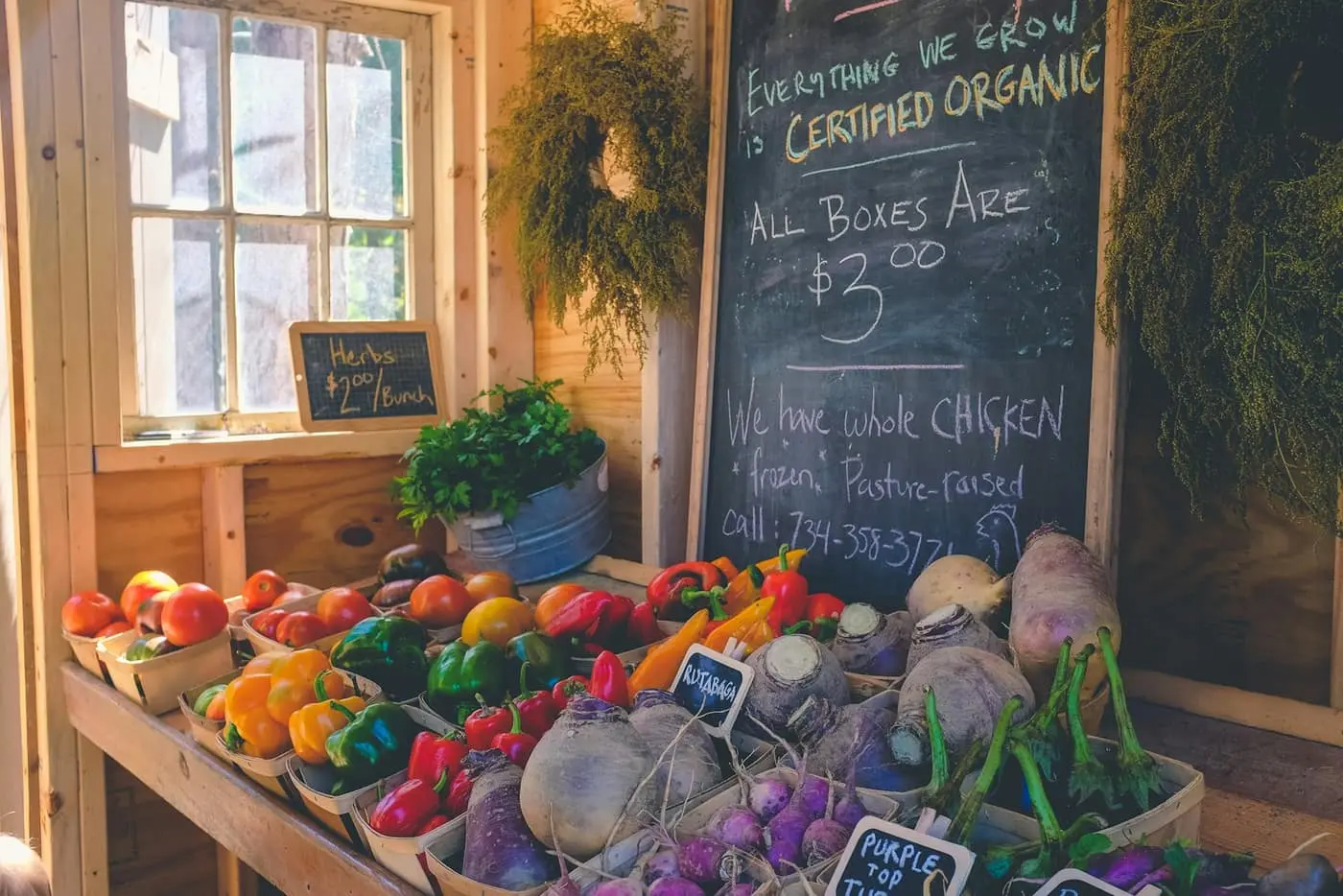
A farm-stand table piled with fresh peppers, tomatoes and root vegetables, under a hand-lettered sign reading "Everything we grow is certified organic"

At a glance

Figures are for the season shown and are guidance, not a substitute for the official notification.

Conversion period
2–3 years
PGS-India
Free, group-based, domestic market
NPOP
Third-party, paid, needed for export
Yield during conversion
Typically 10–25% lower
Price premium
20–40% when a buyer is lined up
Retail packet label
Separate FSSAI Jaivik Bharat registration
Register at
jaivikkheti.in

Selling a fistful of vegetables as "organic" at the local haat needs nothing more than a customer who trusts you. Selling into a supermarket chain, an export order, or printing the word "organic" on a packet legally needs a certificate — and India runs two separate government systems for it, built for two different situations, not one graded scale from basic to advanced.

PGS-India is the free, group-based system built for a smallholder selling locally. NPOP is the paid, third-party system built for anyone exporting or supplying a large retailer. Getting this choice wrong is the single most common certification mistake — a farmer who only ever sells at the village mandi gains nothing from paying an NPOP certification body, and an exporter cannot use a PGS-India certificate to clear customs. This page walks through both, plus the separate FSSAI logo needed before any packet can say "organic" on a shop shelf.

PGS-India — peer-reviewed, free, for the domestic market

PGS-India (Participatory Guarantee System) is run by the National Centre for Organic and Natural Farming (NCONF), under the Ministry of Agriculture and Farmers Welfare, through five Regional Councils — Ghaziabad (the headquarters), Bengaluru, Nagpur, Bhubaneswar and Imphal. Instead of paying an outside inspector, a local group of farmers reviews and vouches for each other's practices, which is what keeps the cost at zero.

One exception: under PGS-India's Large Area Certification route, an entire village or Gram Panchayat where every farmer signs the pledge together can be certified in around six months, skipping the multi-year wait that applies to an individual holding registering alone.

  • A local group needs at least 5 farmers, with no upper limit — Regional Councils recommend 20–25 members as a workable size.
  • No single farmer's land can be more than half the group's total registered area, and women's participation is required.
  • At least a quarter of the group should already understand PGS standards or have completed the training.
  • To register, the group submits an application form, a signed organic pledge, a farm-history sheet, identity proof and land records to its Regional Council.
  • A registered field must be fully under organic management, without banned inputs, before the group is certified — this takes about 2–3 years for most annual crops.
  • Once registered, the group attends compulsory training and 2–4 meetings a year, and a peer inspection team checks every member farm each season against a ten-point standard covering soil, water, pest management and record-keeping.

NPOP — third-party certification for export and big retail

NPOP (National Programme for Organic Production) is run by APEDA (Agricultural and Processed Food Products Export Development Authority), under the Ministry of Commerce and Industry. Unlike PGS-India's peer review, NPOP works through independent, government-accredited Certification Bodies — 37 are currently active, including 14 run by state governments — who inspect your farm and charge a fee for it.

NPOP is not optional if you export: it is a mandatory requirement for any organic produce leaving India, and its standards have been formally recognised as equivalent by the European Commission and Switzerland for unprocessed plant products, which is what lets a certified Indian farm's produce enter those markets without a second inspection. A large domestic retail chain will often ask for NPOP too, even for a purely Indian sale, because it is the certificate their own compliance teams already know how to verify.

  • Choose a certification body from APEDA's accredited list — the fee, inspection schedule and paperwork vary by body, so compare more than one before committing.
  • Certification bodies are themselves accredited by India's National Accreditation Body, whose secretariat sits with APEDA — a shortcut to checking a body is genuine is confirming it appears on APEDA's own list, not just on the certifier's website.
  • A certified farm and its produce are tracked on APEDA's TraceNet system, which is what lets a buyer or customs check verify a certificate is real.
  • The same 2–3 year in-conversion period applies before full certification — NPOP does not offer a shortcut equivalent to PGS-India's Large Area Certification.

PGS-India vs NPOP, at a glance

PGS-IndiaNPOP
Who runs itNCONF, Ministry of AgricultureAPEDA, Ministry of Commerce
Cost to farmerFree (peer review)Paid (certification body fee)
Who checks the farmFellow farmers in your local groupAn accredited third-party inspector
Best forSelling locally, direct or at a mandiExport or supplying large retail
Conversion wait2–3 years (~6 months under Large Area Certification)2–3 years

The Jaivik Bharat logo — a separate step for retail

Getting a PGS-India or NPOP certificate does not by itself let you print "organic" on a packet sold in an Indian shop. Under the Food Safety and Standards (Organic Foods) Regulations, 2017, FSSAI requires a separate registration through its FoSCoS portal before any packaged food can carry the Jaivik Bharat logo — the single mark that tells a shopper a product is genuinely certified organic, whether the underlying certificate is PGS-India or NPOP.

This step is easy to miss because it comes after certification, not instead of it: a farmer can hold a valid PGS-India certificate and still not be allowed to put the organic label on a packet until the FSSAI registration is also done. Loose produce sold directly to a known local customer, without packaging, doesn't need this at all — the requirement is about what goes on a sealed packet in a shop.

How PKVY pays for the certification

Most smallholders never pay for PGS-India certification directly because the government scheme that promotes organic farming, Paramparagat Krishi Vikas Yojana (PKVY), already covers it. PKVY organises farmers into 20-hectare clusters and provides ₹31,500 per hectare over three years — for organic inputs, training, marketing support and the group's PGS-India certification together — so a farmer joining an existing PKVY cluster typically gets certified without a separate fee.

  • Ask your Krishi Vigyan Kendra or block agriculture office whether a PKVY cluster already exists near you before starting an independent PGS-India registration.
  • PKVY is a Government of India scheme; some states also run their own organic-conversion schemes with similar cluster-and-certification support — check with your state agriculture department too.

How to actually start

  • Decide your market first — local or direct sale points to PGS-India, export or big retail points to NPOP — since the two are not interchangeable, and switching later means starting the paperwork again.
  • For PGS-India: find or form a local group of at least 5 farmers and register with your nearest Regional Council (Ghaziabad, Bengaluru, Nagpur, Bhubaneswar or Imphal) at jaivikkheti.in.
  • For NPOP: shortlist an accredited certification body from APEDA's published list and request a quote — fees and inspection timing vary enough between bodies that it's worth comparing two or three.
  • Keep farm records from day one of conversion — input purchases, sowing and harvest dates, and pesticide-free confirmation — since both systems inspect against your documented history, not just the standing crop.
  • Once certified and selling packaged organic produce in India, register separately with FSSAI through FoSCoS for the Jaivik Bharat logo before printing it on any packet.

Common mistakes

  • Applying for NPOP when every sale is local — the fee buys nothing a local buyer doesn't already trust you for.
  • Assuming a PGS-India certificate lets you export — it doesn't; NPOP is the only certificate accepted for organic exports.
  • Printing "organic" or the Jaivik Bharat logo on a packet without the separate FSSAI FoSCoS registration — this is a labelling violation even with a valid PGS-India or NPOP certificate underneath it.
  • Selling produce as certified during the conversion period — it only carries a certified-organic claim once the group or the accredited body confirms full conversion is complete, typically after 2–3 years.

Frequently asked questions

Which certification should a small farmer selling in the local mandi choose?

PGS-India. It's free, doesn't need a paid inspector, and is designed for exactly this — a smallholder selling locally or directly to known buyers. NPOP's cost only makes sense once you're exporting or supplying a large retail chain that specifically asks for it.

How long does organic certification actually take?

Plan for 2–3 years from the day you stop using banned inputs to the day the certificate is issued, under both PGS-India and NPOP — that's the standard in-conversion period during which yields are typically 10–25% lower. The one exception is PGS-India's Large Area Certification, where an entire village pledging together can be certified in around six months.

Do I need to pay for PGS-India certification?

Not usually. PGS-India itself is free because farmers review each other rather than paying a third-party inspector, and most groups are covered under the PKVY scheme, which funds the certification alongside organic inputs and training. Ask your local Krishi Vigyan Kendra whether a PKVY cluster already covers your area.

Can I put "organic" on my product packet once I'm certified?

Not automatically. A PGS-India or NPOP certificate qualifies your produce, but printing the organic claim — or the Jaivik Bharat logo — on a sealed packet sold in India needs a separate FSSAI registration through the FoSCoS portal, under the 2017 Organic Foods Regulations. Produce sold loose, without packaging, doesn't need this.

What's the difference between PGS-India and NPOP in one line?

PGS-India is free, peer-reviewed certification for the domestic market, run by NCONF; NPOP is paid, third-party certification via APEDA-accredited inspectors, and is the only one accepted for exporting organic produce out of India.

More in this category

More in Organic Farming

See all