
Complete Happy Seeder Guide for Indian Farmers
A Happy Seeder sows wheat straight into loose paddy straw — it cuts and lifts the residue, drills the seed, and drops the straw back as a surface mulch. It is the machine that makes not burning the stubble the easy choice, not the hard one.
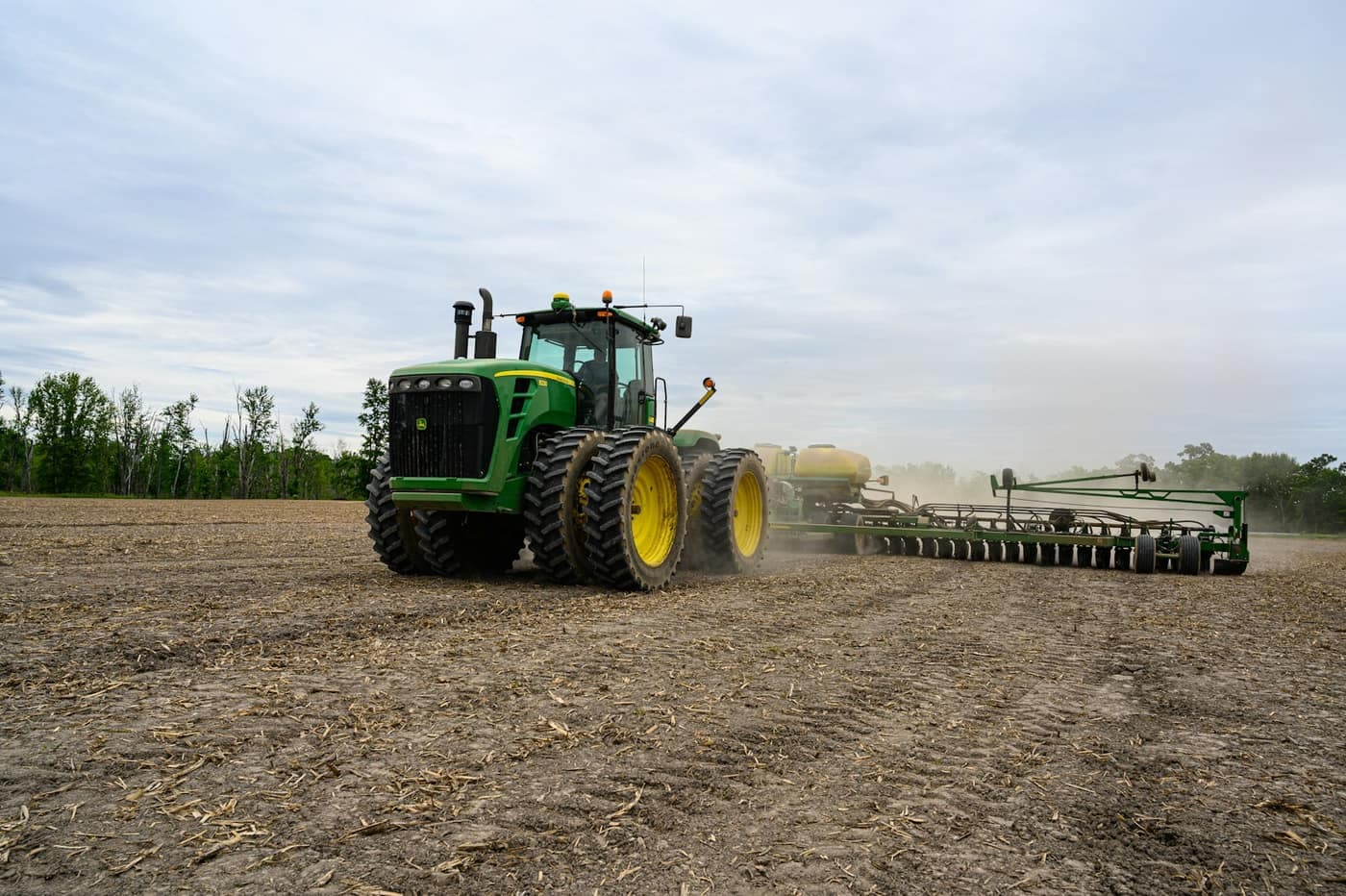
- What it does
- Drills wheat into paddy stubble, no burning
- Tractor needed
- 45–60 HP with PTO
- Field capacity
- ~0.3–0.4 ha/hour
- Price
- ₹1,30,000 – ₹1,80,000
- Residue
- Left as a surface mulch
- Subsidy
- Up to 50–80% under CRM
Overview
A Happy Seeder is a tractor-mounted, PTO-driven machine built for one specific, high-stakes job: sowing wheat into a field still covered in loose paddy straw, without burning it first. A flail rotor ahead of each furrow opener cuts and lifts the straw, the drill sows seed and fertiliser into the clean slot beneath, and the straw falls back behind as a surface mulch. In one pass it does what farmers otherwise achieve only by setting the field on fire.
That mulch is the whole point. Left on the surface it conserves soil moisture, suppresses weeds and adds organic matter as it rots — while the burning it replaces destroys nutrients, blankets north India in smoke every winter, and carries a legal penalty. The Happy Seeder turns residue from a problem to be burned into a cover that works for the crop.
This guide covers what decides whether it succeeds — which version suits your tractor and residue load, how to set it so straw flows instead of choking, how to get an even wheat stand through the mulch, and the CRM subsidy and hiring routes that put it within reach without a full purchase.
Why it earns its place
- Sows wheat directly into loose or standing paddy straw with no burning and no separate tillage.
- Leaves the straw as a surface mulch that conserves moisture, suppresses weeds and builds organic matter.
- Saves the diesel, time and cost of the two or three tillage passes conventional sowing needs.
- Keeps the farmer clear of stubble-burning fines while retaining the residue’s nutrients in the field.
Common uses
- Drilling wheat into combine-harvested paddy fields in the rice–wheat belt.
- Sowing without burning where a stubble-burning ban and penalty apply.
- Retaining paddy straw as mulch to cut the first irrigation and early weed flush.
- Sowing other rabi crops into loose residue where a mulch cover is wanted.
Types of Happy Seeder
The variants differ in how aggressively they handle the straw and how much tractor power they demand — the Turbo version is the mainstream choice; lighter and hybrid units trade capacity for a smaller tractor.
Turbo Happy Seeder (THS)
The mainstream version: a turbo flail rotor lifts and throws the straw clear of the furrow openers so it never chokes, giving the cleanest sowing into heavy loose residue. The standard choice across Punjab and Haryana.
- Power range
- For 50–60 HP tractors
- Best for
- Heavy loose paddy straw after a combine
Standard Happy Seeder
The original design with a straight flail rotor. It handles moderate residue at a lower price and power draw, but can choke in very heavy straw where the Turbo version is worth the extra.
- Power range
- For 45–55 HP tractors
- Best for
- Moderate residue and a smaller tractor
Smart Seeder
A newer hybrid that lightly tills a narrow band while managing the straw, aiming for reliable seed placement with lower power than a full Super Seeder. A middle path where a THS struggles and a Super Seeder is too heavy.
- Power range
- For 45–55 HP tractors
- Best for
- Reliable placement at lower power
Popular brands compared
Trade-offs, not a ranking. No brand here is called the best, and nothing on this page is a paid placement.
Dasmesh (Punjab)
MidA well-known Punjab residue-machinery maker offering Turbo Happy Seeders widely used across the rice–wheat belt.
- Known for
- Residue machinery in the paddy belt
- HP range
- For 50–60 HP tractors
Pros
- Proven in heavy Punjab residue
- Good dealer and part support locally
- Range of widths
Cons
- Reach thinner outside the north-west
National Agro Industries
Budget–midAn implement maker producing Happy and Turbo Happy Seeders to the standard PAU-derived design at competitive prices.
- Known for
- Value residue seeders
- HP range
- For 45–60 HP tractors
Pros
- Competitive pricing
- Standard design and spares
- Multiple sizes
Cons
- Finish and consistency vary by batch
PAU-licensed / local fabricators
BudgetMany workshops build Happy Seeders to the Punjab Agricultural University design under licence, giving a low-cost, locally-repairable option.
- Known for
- Low cost and local repair
- HP range
- For 45–60 HP tractors
Pros
- Lowest cost route
- Repaired and tuned locally
- Design proven by research
Cons
- Build quality varies by workshop
- No formal warranty
- Metering accuracy inconsistent
Maintenance timeline
A Happy Seeder is a flail rotor, a seed box and delivery tubes working in heavy loose straw — worn flails, a choked tube or a slipping metering drive are what spoil the stand. These checks keep the straw flowing and every row fed.
Before the sowing window
- Inspect and replace worn or bent flails on the rotor
- Check the rotor gearbox oil and the PTO shaft guards
- Clear last season’s straw and seed from the box, tubes and openers
- Calibrate the seed and fertiliser rate for your wheat variety
During work (each fill / daily)
- Check no delivery tube is blocked and every opener is placing seed
- Watch for straw building up ahead of the openers and adjust rotor speed
- Confirm even depth across the width and correct the top link if not
- Grease the driveline and check flail bolts are tight
End of season / storage
- Empty and clean the seed and fertiliser boxes to prevent corrosion
- Wash off straw and soil, then oil the rotor and bright metal
- Store under cover with the machine resting on stands, off the ground
Common problems & fixes
Symptoms, likely causes and what you can safely do before calling a mechanic.
Straw choking the furrow openers
- Symptoms
- Straw drags and balls up in front of the openers, hair-pinning seed above the soil.
- Likely causes
- Rotor speed too low, worn flails, very heavy or damp straw, or ground speed too high.
- What to do
- Raise the rotor (PTO) speed, replace worn flails, slow the forward speed, and sow when the straw is dry. In the heaviest residue a Turbo Happy Seeder is the real answer.
Uneven or poor germination
- Symptoms
- Patchy, thin or late emergence through the mulch.
- Likely causes
- Seed placed on straw rather than soil, wrong depth, dry seedbed, or metering off.
- What to do
- Set the openers to cut through to firm soil, correct the depth, calibrate the seed rate, and give the first irrigation promptly. Good seed-to-soil contact under the mulch is everything.
Uneven seed or fertiliser rate
- Symptoms
- Some rows over- or under-sown, or fertiliser not matching the plan.
- Likely causes
- Metering not calibrated, a blocked run, or a slipping drive to the metering shaft.
- What to do
- Re-calibrate over a measured run, clear any blocked tube, and check the metering drive chain or belt for slip. Do this every season and on a variety change.
Flails wearing or breaking
- Symptoms
- Rotor throwing straw poorly, more choking, unusual vibration.
- Likely causes
- Abrasive soil and stones, missed inspection, or unbalanced replacement.
- What to do
- Replace flails as a balanced set, avoid stony patches, and inspect before each season. Balanced flails cut both the choking and the vibration.
Buying guide
For most farmers this is an own-versus-hire call against the two or three weeks it runs each year. With CRM subsidy heavily favouring Custom Hiring Centres and groups, hiring or shared ownership often beats buying outright.
Buying new
Advantages
- Correct flail rotor and accurate metering out of the box
- Heavy CRM subsidy brings the net price down sharply
- A dealer to set it up and calibrate with you
Disadvantages
- Runs only two to three weeks a year for most farmers
- Needs a 50 HP-plus tractor to run the Turbo version well
Hiring / shared (CHC or group)
Advantages
- CRM subsidy favours CHCs and farmer groups at up to 80%
- No idle capital for a machine used a few weeks a year
- Access to a well-set-up Turbo unit and an operator
Disadvantages
- Booking pressure in the narrow post-paddy sowing window
- Less control over timing than owning
- Setup quality depends on the provider
Inspection checklist
- A tractor of 50 HP or more with a working PTO for the Turbo version
- Flail rotor complete, balanced and with sound bearings
- Accurate seed and fertiliser metering that calibrates cleanly
- Furrow openers and tubes clear and undamaged
- Evidence it sows cleanly in heavy loose straw, not just light residue
- CRM subsidy eligibility confirmed for your buyer category
Government subsidy & finance
The routes that bring the cost down — central, state and credit.
Crop Residue Management (CRM)
The Happy Seeder is a flagship CRM machine: individual farmers typically get around 50% of the cost, and Custom Hiring Centres, cooperatives and FPOs up to 80%, in the paddy-belt states running the in-situ residue-management scheme.
SMAM (Sub-Mission on Agricultural Mechanization)
Where CRM does not apply, the general mechanization subsidy covers seed-drill machinery, at higher rates for SC/ST, women and small/marginal farmers, through the state portal.
Custom Hiring Centre (CHC)
CRM funds CHCs specifically so that farmers who will not buy a Happy Seeder can still hire one locally instead of burning their straw. The CHC-Farms app lists nearby machines.
CRM and SMAM rates, caps and eligibility vary by state and year and change each scheme cycle — the higher CRM rates apply mainly in the paddy-burning states. Confirm the current figure with your block agriculture office or the official state portal before you buy.
Safety essentials
The flail rotor spins fast and throws straw and stones, and the machine is heavy on the linkage. Keep clear of the rotor, and never clear a blockage with the PTO engaged.
Keep well clear of the flail rotor while the PTO is engaged — it throws straw and stones at speed.
Never clear a straw blockage until the PTO is off and the rotor has stopped completely.
Check the PTO shaft guards are in place before starting; an exposed shaft is a killer.
Support the raised machine on its stands before working underneath — it is heavy on the linkage.
Raise the machine and slow at the headland, and keep bystanders clear of the working width.
Official downloads
Government portals only — everything below is hosted on an official server.
Frequently asked questions
What is the difference between a Happy Seeder and a Super Seeder?
Both sow wheat into paddy residue without burning, but differently. A Happy Seeder cuts and lifts the loose straw, drills the seed, and drops the straw back as a surface mulch — leaving the residue on top. A Super Seeder rotavates the standing stubble into the soil and drills in the same pass, leaving a clean, mulch-free field. The Super Seeder handles the heaviest residue but is heavier and needs more tractor power; the Happy Seeder keeps the moisture-saving mulch and draws less power.
How much tractor HP does a Happy Seeder need?
A standard Happy Seeder runs on about 45–55 HP, while a Turbo Happy Seeder — the version that handles heavy loose straw best — wants 50–60 HP. Under-powering it slows the rotor, which is exactly what causes straw to choke the openers, so matching enough HP is not optional in heavy residue.
Why use a Happy Seeder instead of burning the stubble?
Burning destroys the nitrogen and organic matter in the straw, pollutes the air across whole regions, damages soil life, and carries a legal penalty in the paddy states. A Happy Seeder lets you sow on time without burning, keeps the straw as a moisture-conserving, weed-suppressing mulch, and returns its nutrients to the field — which is why it is subsidised so heavily under CRM.
Does the straw mulch affect the wheat crop?
Handled correctly, it helps: the mulch conserves soil moisture (often saving the first irrigation), suppresses early weeds and moderates soil temperature. The keys are getting the seed into firm soil beneath the straw rather than onto it, and giving a timely first irrigation. Poor seed-to-soil contact under a thick mat is the main cause of a patchy stand, not the mulch itself.
Still deciding?
The FAQs above cover the common questions. For a choice tuned to your exact soil, crop and acreage, your nearest Krishi Vigyan Kendra or a Custom Hiring Centre is the authoritative next step.