
Complete Cultivator Guide for Indian Farmers
A cultivator is your secondary-tillage workhorse — it breaks clods after the plough, kills weeds between passes and stirs a seedbed for a fraction of a rotavator’s cost. The decision is tyne type and spacing, not power.
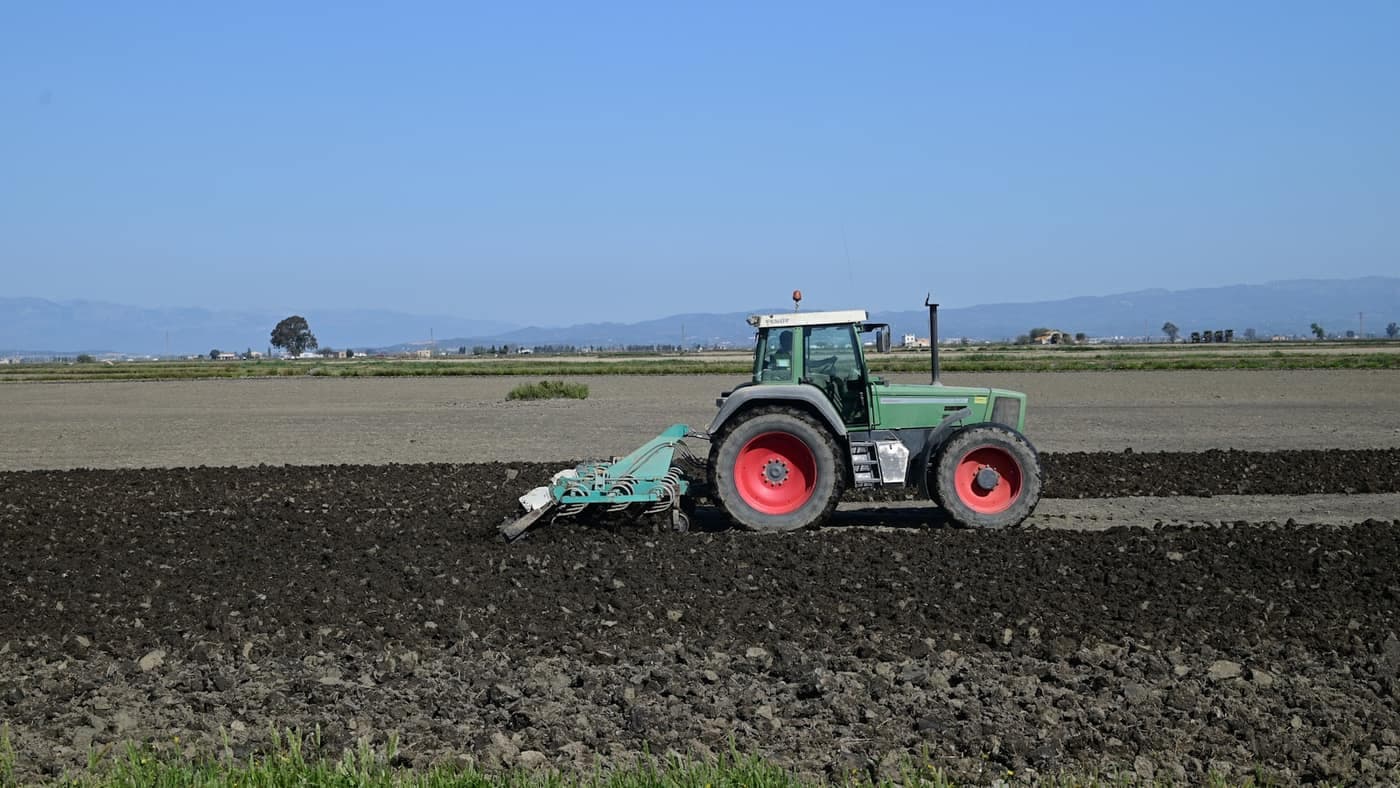
- Where it fits
- Secondary tillage, after the plough
- Tractor needed
- 30–50 HP for a 9–13 tyne unit
- Field capacity
- 0.4–0.6 ha/hour
- Price
- ₹18,000 – ₹55,000
- Working depth
- 10–20 cm (tyne-dependent)
- Life
- 10–15 years frame; shovels wear in ~1–2 seasons
Overview
A cultivator (tyne cultivator or tiller) is a secondary-tillage implement: after the field is ploughed once, it drags a row of spring or rigid tynes through the soil to break clods, uproot weeds and open a rough seedbed. It is the most-owned implement on Indian farms after the trolley, because it is cheap, simple and does the everyday stirring work a rotavator is too expensive to waste on.
Its second job is weeding. Run with sweep or duck-foot shovels between an existing crop’s rows, a cultivator undercuts young weeds and breaks the surface crust that lets soil moisture escape — a single blade-hoe pass in standing cotton or pigeonpea does the work of a day of manual hoeing.
This guide covers the decisions that decide whether it earns its keep — which tyne type suits your soil, how many tynes your tractor can pull, how to set an even working depth, and how to keep the shovels and clamps from turning a cheap implement into a daily nuisance.
Why it earns its place
- The cheapest way to break clods and prepare a seedbed after the plough — a fraction of a rotavator’s price and diesel.
- Doubles as a weeder: sweep shovels undercut weeds between crop rows and conserve soil moisture by breaking the surface crust.
- Simple and near-unbreakable — no gearbox, no PTO, just tynes and bolts a village workshop can repair.
- Adjustable working width and depth let one frame serve many soils and operations.
Common uses
- Secondary tillage — breaking clods and levelling after the first ploughing.
- Inter-cultivation and weeding between the rows of a standing crop (cotton, pigeonpea, maize).
- Mixing farmyard manure or basal fertiliser into the topsoil before sowing.
- Breaking the surface crust after rain to check moisture loss and improve infiltration.
Types of cultivator
The choice is the tyne — rigid, spring-loaded or sweep — matched to your soil’s hardness and how many stones and roots it hides. Spacing and tyne count follow the width your tractor can pull.
Rigid tyne cultivator
Fixed, bolted tynes that hold their depth in hard, clean soil. The cheapest and strongest option, but the tynes cannot flex, so a hidden stone or root can bend a tyne or jolt the tractor.
- Power range
- For 30–50 HP tractors
- Best for
- Deep secondary tillage in clean, stone-free soils
Spring-loaded tyne cultivator
Each tyne is mounted on a coil spring that trips back over a stone or root and snaps forward again. It protects the frame and tractor in trashy or stony fields — the most popular type across most of India.
- Power range
- For 35–55 HP tractors
- Best for
- Stony, rooty or trash-covered fields
Duck-foot / sweep cultivator
Fitted with wide, flat sweep shovels that run shallow and slice weeds off just below the surface without turning the soil — the inter-cultivation and moisture-conservation tool rather than a clod-breaker.
- Power range
- For 30–45 HP tractors
- Best for
- Weeding between crop rows and conserving moisture
Cultivator-cum-planker
A tyne frame with a levelling board or planker bolted behind it, so one pass both stirs and smooths the surface into a ready-to-sow seedbed — saving a separate planking run.
- Power range
- For 35–50 HP tractors
- Best for
- Finishing a seedbed in a single pass
Popular brands compared
Trade-offs, not a ranking. No brand here is called the best, and nothing on this page is a paid placement.
Fieldking
Budget–midA large implement-only maker with a wide cultivator range and dealer reach across the north and west.
- Known for
- Broad range and spare-part availability
- HP range
- For 30–75 HP tractors
Pros
- Easy to find spares
- Many widths and tyne counts
- Competitive pricing
Cons
- Finish quality varies by dealer stock
Shaktiman
Mid–premiumTirth Agro’s implement brand, offering heavier-built spring and rigid cultivators aimed at contractors and hard-soil districts.
- Known for
- Heavier build for hard soils
- HP range
- For 35–90 HP tractors
Pros
- Sturdy frame and clamps
- Good for long contractor hours
Cons
- Heavier — wants adequate tractor HP
- Costs more than a basic local unit
Local / regional fabricators
BudgetEvery farming district has workshops building cultivators to a standard pattern at low cost, with repairs available next door.
- Known for
- Lowest cost and local repair
- HP range
- For 25–55 HP tractors
Pros
- Cheapest option
- Repaired and modified locally
- Parts fit village stock
Cons
- Steel and weld quality inconsistent
- No warranty
- Depth control can be basic
Maintenance timeline
A cultivator is mostly bolts, tynes and shovels dragged through abrasive soil — worn points and loose U-clamps are what ruin the job, not engine trouble. These checks keep every tyne cutting to depth.
Before each season
- Replace shovels or reversible points worn short or blunt
- Tighten every U-clamp and tyne bolt to spec
- Straighten or replace bent tynes so all run at one depth
- Grease spring assemblies and check the hitch pins
Every 25–30 hours
- Re-torque tyne clamps — they loosen fastest in the first hours
- Check spring tension is even across all tynes
- Inspect the main frame and cross-members for cracks at the welds
End of season / storage
- Scrape off caked soil and wash the frame
- Coat shovels and bright metal with used engine oil against rust
- Store on level ground under cover, tynes off the wet earth
Common problems & fixes
Symptoms, likely causes and what you can safely do before calling a mechanic.
Tynes bending or snapping
- Symptoms
- One or more tynes bent back or broken after hitting hard ground.
- Likely causes
- Rigid tynes in stony soil, working too deep, or loose clamps letting a tyne twist.
- What to do
- Switch to spring-loaded tynes in stony fields, reduce depth, and keep clamps tight. Replace bent tynes rather than re-bending them, which weakens the steel.
Uneven working depth
- Symptoms
- Some tynes bite deep while others barely scratch the surface.
- Likely causes
- Frame not level front-to-back, worn shovels on some tynes, or unequal spring tension.
- What to do
- Level the frame with the top link so all tynes sit at the same height, renew worn shovels as a set, and even out the spring tension.
Shovels wearing out fast
- Symptoms
- Points blunt or worn short within a season, work getting shallower.
- Likely causes
- Abrasive sandy soil, working too deep, or low-grade shovel steel.
- What to do
- Use hardened or reversible points, keep to the depth the job needs, and carry a few spare shovels — they are cheap and quick to swap.
Clamps and bolts loosening
- Symptoms
- Tynes shifting, rattling, or dropping out of line during work.
- Likely causes
- Vibration in the first hours after fitting, or worn U-bolts.
- What to do
- Re-torque all clamps after the first few hours and again each season, and replace stretched U-bolts. A dab of thread-lock helps on chronic offenders.
Buying guide
A cultivator is cheap and long-lived, so build quality and the right width for your tractor matter far more than new versus used — a solid second-hand frame with fresh shovels often beats a flimsy new one.
Buying new
Advantages
- Full-strength frame and fresh shovels
- Choice of exact width and tyne count for your tractor
- Eligible for SMAM/state implement subsidy
Disadvantages
- Costs more than a used or local-made unit
- Overkill if you till only a few acres a year
Buying used
Advantages
- A sound frame lasts decades — the wear parts are cheap to renew
- A fraction of the new price
- Fine for light annual use
Disadvantages
- Check for cracked welds and bent tynes
- No warranty
- May not match your tractor’s width
Inspection checklist
- Width and tyne count matched to your tractor’s HP
- Straight tynes, all at one height on level ground
- Sound welds at the frame joints and cross-members
- Shovels and reversible points not worn past half
- Springs (on spring-tyne units) with even tension and no cracks
- A three-point hitch that fits your tractor’s category
Government subsidy & finance
The routes that bring the cost down — central, state and credit.
SMAM (Sub-Mission on Agricultural Mechanization)
Cultivators and other tillage implements draw a subsidy on the approved price, typically higher for SC/ST, women and small/marginal farmers. Applied through your state agriculture department’s portal.
State agriculture-department schemes
Many states run their own implement-subsidy lists that include cultivators, often on a first-come, demand-draft basis with an approved-dealer requirement.
Custom Hiring Centre (CHC)
If you till only a few acres a year, hiring a cultivator with tractor from a CHC or the CHC-Farms app is usually cheaper than owning one outright.
Subsidy rates, caps and eligibility vary by state and year and change with each scheme cycle. Always confirm the current figure with your block agriculture office or the official state portal before you buy.
Safety essentials
The tynes are heavy and the frame swings wide on the headland. Most injuries are crushed feet and hands during hitching and shovel changes, not the field itself.
Lower the cultivator fully and switch off the tractor before changing shovels or clearing trash.
Keep hands and feet clear of the tynes while hitching — they are heavy and swing on uneven ground.
Never let anyone stand or ride on the frame while it is raised or in transit.
Raise the implement and slow down at the headland; a lowered cultivator can dig in and jolt the tractor.
Check that lift arms and pins are sound before lifting — a dropped implement crushes feet.
Official downloads
Government portals only — everything below is hosted on an official server.
Frequently asked questions
What is the difference between a cultivator and a rotavator?
A cultivator drags tynes through soil that has already been ploughed to break clods and kill weeds — it is cheap, light and uses little diesel, but leaves a rougher finish. A rotavator uses powered, PTO-driven blades to chop and mix soil into a fine seedbed in one pass, at several times the cost. Most farmers use the cultivator for everyday stirring and weeding, and a rotavator only when a fine tilth is needed.
How many tynes should my cultivator have?
Match tyne count to tractor HP: roughly a 9-tyne cultivator for a 35 HP tractor, 11 tynes for 45 HP and 13 tynes for 50 HP or more. An over-wide cultivator on an under-powered tractor simply cannot pull all the tynes to depth, and you end up working shallow.
Rigid or spring-loaded tynes — which is better?
It depends on your soil, not on quality. Rigid tynes hold depth best in clean, stone-free fields and cost less. Spring-loaded tynes trip back over stones and roots and protect the frame, so they are the safer choice in trashy or stony soils. Neither is universally better — pick for the ground you actually work.
Can a cultivator be used for weeding a standing crop?
Yes — fitted with sweep or duck-foot shovels and run at shallow depth between the rows, a cultivator undercuts young weeds and breaks the surface crust to save moisture. Keep the working width matched to your row spacing so the shovels do not damage the crop roots.
Still deciding?
The FAQs above cover the common questions. For a choice tuned to your exact soil, crop and acreage, your nearest Krishi Vigyan Kendra or a Custom Hiring Centre is the authoritative next step.