
Complete Sprayer Guide for Indian Farmers
Pick the right sprayer for your crop and scale, choose the nozzle before you worry about the pump, calibrate so you apply the label dose and no more — and spray safely, because the commonest sprayer injury is poisoning the operator.
- Main types
- Knapsack, battery, HTP, boom, drone
- Knapsack price
- ₹1,200 – ₹4,500
- Battery sprayer
- ₹2,500 – ₹6,000
- Drone hire
- ₹400 – ₹700 / acre
- Calibrate
- Every crop; new nozzles yearly
- Subsidy
- 40–50% under SMAM (state-wise)
Overview
A sprayer applies pesticide, herbicide, fungicide or foliar nutrient as a controlled spray. The decision most farmers get wrong is spending on the pump and ignoring the nozzle — yet the nozzle sets the droplet size, the spray pattern and the volume delivered, and a nozzle worn by one season delivers up to 30% more liquid than a fresh one, quietly over-dosing every acre.
That over-application is expensive twice: you buy chemical you did not need, and you put more of it into the crop, the soil and yourself than the label intends. The fix is cheap — replace nozzles every season and calibrate before the first spray of each crop — and it is the single highest-return habit in the whole of crop protection.
This guide covers the choices that matter — which sprayer suits your crop and area, which nozzle for which job, how to calibrate to the label dose, and how to spray without poisoning yourself, because far more farmers are hurt by their sprayer through pesticide exposure than by any moving part.
Why it earns its place
- Applies crop protection evenly at the label dose, so it actually works and nothing is wasted.
- Right nozzle and calibration cut chemical use — often the biggest saving a sprayer offers.
- Covers far more area per hour than hand application, catching the narrow window when a spray must go on.
- Battery, power and boom sprayers cut the drudgery and fatigue of a hand-pumped knapsack.
- A drone sprays a standing or waterlogged crop no other machine can enter, keeping the operator off the field.
Common uses
- Applying insecticides, fungicides and herbicides at the labelled dose and timing
- Foliar feeding with micronutrients and water-soluble fertiliser
- Weed control in standing crops and on fallow field bunds
- Spraying tall or dense crops — sugarcane, cotton, orchards — with a power or HTP sprayer
- Aerial spraying of paddy and other standing crops by hired drone
Types of sprayer
Knapsack, battery, HTP, boom or drone — the type follows your crop height and area, not the price tag. Size it to the acres you actually spray in a day before comparing anything else.
Manual knapsack sprayer
The back-carried, hand-lever sprayer almost every farm owns. Cheap, simple and repairable anywhere, but tiring over a full day and only as accurate as the operator’s pace and pump stroke.
- Suits
- Small plots, spot spraying
- Best for
- Small holdings, targeted spraying
Battery / rechargeable sprayer
A knapsack with a rechargeable battery driving the pump, so pressure stays steady without hand-pumping. Much less tiring and more uniform than a manual unit — the popular upgrade for a few thousand rupees more.
- Suits
- Small to medium plots
- Best for
- Uniform pressure without fatigue
Power / HTP sprayer
A petrol-engine or tractor-PTO high-pressure (HTP) pump that pushes spray through a long hose and lance. Reaches the top of tall or dense crops — sugarcane, cotton, orchards — that a knapsack cannot cover.
- Suits
- Tall/dense crops, orchards
- Best for
- Height and pressure a knapsack lacks
Tractor boom sprayer
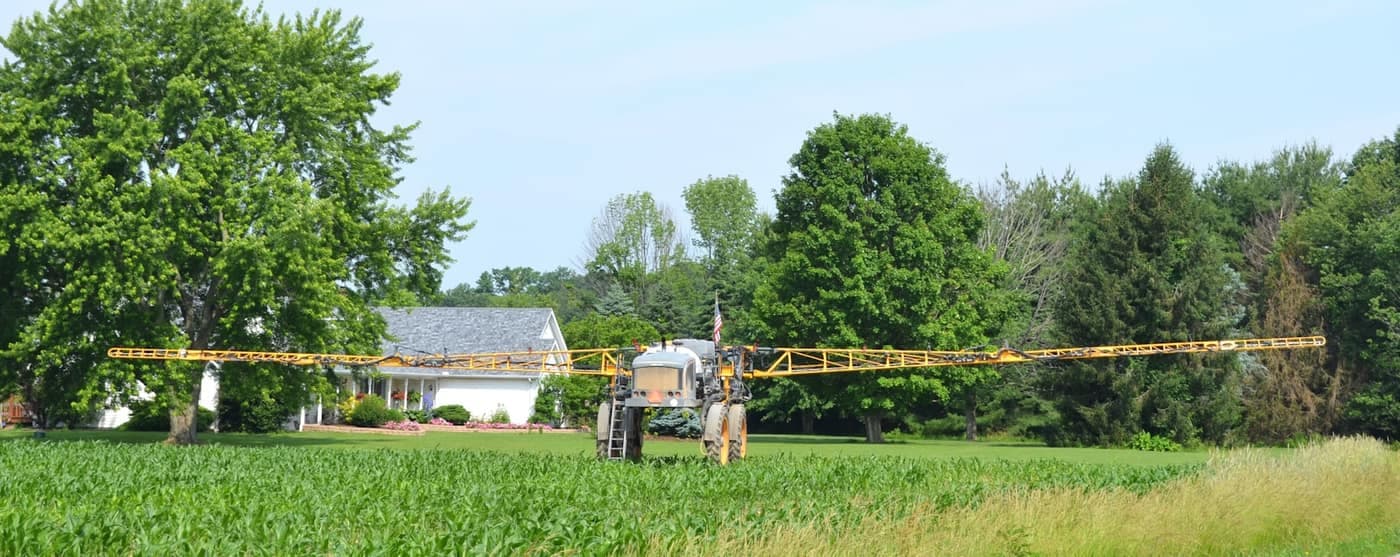
A tank and a wide horizontal boom carrying many nozzles, mounted on or trailed behind a tractor, covering a broad swath in one pass. High output for field crops, but needs the crop low enough to clear the boom.
- Suits
- Large field-crop area
- Best for
- Fast, uniform cover on field crops
Drone (aerial) sprayer
A battery agri-drone that sprays from above, covering an acre in minutes and reaching standing paddy or a waterlogged crop no ground machine can enter. Usually hired per acre rather than owned; central to the Namo Drone Didi scheme.
- Suits
- Standing/tall/wet crops
- Best for
- Aerial cover, operator off the field
Popular brands compared
Trade-offs, not a ranking. No brand here is called the best, and nothing on this page is a paid placement.
ASPEE
MidOne of India’s oldest and widest crop-spray ranges — knapsack, battery, power and boom sprayers plus a full line of nozzles and spares, available almost everywhere.
- Known for
- Range, nozzles, availability
- HP range
- Manual to tractor-mounted
Pros
- Widest range and nozzle choice
- Spares easy to find
- Trusted, long-established
Cons
- Priced above the cheapest imports
Neptune
Budget to midA broad line of knapsack, battery and power sprayers at competitive prices, common across retail farm-input shops.
- Known for
- Value, battery sprayers
- HP range
- Manual to power
Pros
- Good value
- Wide retail availability
- Popular battery models
Cons
- Nozzle quality varies by model
KisanKraft
MidA large farm-machinery supplier with battery and power sprayers and engine-driven HTP units, backed by a growing dealer network.
- Known for
- Power & HTP sprayers
- HP range
- Battery to engine-powered
Pros
- Good power-sprayer options
- Reasonable pricing
- Spreading service network
Cons
- Service thinner in some regions
Honda (engine sprayers)
Premium (engine)Not a sprayer brand as such, but the petrol engine on many power and HTP sprayers — its reliability is often why farmers pick a particular unit.
- Known for
- Engine reliability
- HP range
- Engine-powered HTP
Pros
- Reliable, easy-starting engine
- Good resale
- Wide service for the engine
Cons
- Raises the price of the sprayer
- Only the engine, not the whole unit
Sharda / regional brands
BudgetValue knapsack and battery sprayers widely sold through local input dealers, adequate for routine spraying on small holdings.
- Known for
- Affordability
- HP range
- Manual to battery
Pros
- Low purchase price
- Simple to repair
- Easy to find locally
Cons
- Shorter life
- Replace worn nozzles early for accuracy
Maintenance timeline
A sprayer’s enemies are a worn nozzle and a clogged filter — both silently change the dose. A five-minute rinse and check after every tank keeps the application honest and the pump alive.
Before and after each spray
- Check the nozzle for wear and the spray pattern for streaks before you start
- Fill through the strainer only, and check the tank strainer is in place
- Triple-rinse the tank, hose and nozzle with clean water after spraying
- Wash away from wells, ponds and drains — never rinse into a water source
- Check for leaks at the hose, lance and pump seals that could wet the operator
Periodically / every season
- Replace all nozzles at the start of the season — a worn nozzle over-applies by up to 30%
- Clean or replace the tank, line and nozzle filters
- Check and replace worn pump seals, O-rings and gaskets
- Test pressure — a power/HTP sprayer that will not hold pressure needs pump service
- Charge and check the battery on a battery sprayer; replace when it will not hold charge
Storage
- Drain and dry the tank and lines completely — never store with chemical inside
- Remove and clean nozzles and filters and store them safely
- Store out of the sun; UV cracks the tank and perishes hoses and seals
- Store any leftover chemical in its labelled container, locked away from children and food
Common problems & fixes
Symptoms, likely causes and what you can safely do before calling a mechanic.
Over-application from worn nozzles
- Symptoms
- Chemical runs out faster than the area should need; crop or weed damage from too strong a dose.
- Likely causes
- Worn nozzles delivering up to 30% more volume than rated, and never re-calibrating.
- What to do
- Replace nozzles every season and calibrate before each crop — measure the output over a known area and time and set volume to the label dose. This is the highest-return fix on the whole machine.
Uneven spray / streaking
- Symptoms
- Striped results — treated and missed bands across the field or canopy.
- Likely causes
- Mismatched or worn nozzles, wrong boom height, or an inconsistent walking pace and pressure.
- What to do
- Fit matched nozzles of the same type and rate, set boom or lance height for full overlap, and keep a steady pace and pressure. A battery or powered sprayer holds pressure better than a hand pump.
Blocked nozzle
- Symptoms
- One nozzle sprays weakly or not at all, leaving an untreated strip.
- Likely causes
- Grit or undissolved chemical, no in-line filter, or filling without a strainer.
- What to do
- Always fill through a strainer, keep line and nozzle filters in place, and clear a blocked nozzle with a soft brush or water — never a wire or your mouth, which can poison you.
Low or dropping pressure
- Symptoms
- Weak spray, poor reach, coarse droplets that do not cover the leaf.
- Likely causes
- Worn pump seals or valves, a flat sprayer battery, or a clogged filter starving the pump.
- What to do
- Clean the filters, replace worn seals and valves, and charge or replace a weak battery. On an HTP sprayer, low pressure that persists means a pump strip-down.
Spray drift
- Symptoms
- Spray carried onto the next field, a neighbour’s crop, or back onto the operator.
- Likely causes
- Spraying in wind, too fine a droplet, or nozzle held too high above the crop.
- What to do
- Never spray into the wind or in gusty conditions, use a coarser droplet nozzle where drift is a risk, and keep the nozzle low and close to the target. Spray in the calm of early morning or evening.
Leaks wetting the operator
- Symptoms
- Chemical soaking the back or hands from a leaking tank, hose or lance — a direct poisoning route.
- Likely causes
- Perished seals, a cracked tank or hose, or an over-tightened, worn joint.
- What to do
- Replace perished seals, hoses and a cracked tank before use, never carry a leaking sprayer on your back, and always wear the protective gear. A leak is a health hazard, not a minor annoyance.
Buying guide
A knapsack is a small cash buy; a boom or drone rig is a hiring decision for most farmers. Judge it on the area you spray each season and whether custom hiring covers your peak weeks.
Buying new
Advantages
- Fresh, correctly rated nozzles and a sealed, leak-free tank
- Warranty, and eligible for SMAM subsidy on the invoice
- A knapsack or battery sprayer is cheap enough that used rarely makes sense
Disadvantages
- A power/HTP or boom sprayer is a bigger outlay
- A drone is rarely worth owning — hiring per acre is usually better
Hiring (drones and boom sprayers)
Advantages
- Drone spraying at ₹400–700/acre needs no capital and no licence
- Right for a machine used only a few times a season
- A trained operator brings the calibration and the safety gear
Disadvantages
- You depend on the operator’s availability at the right spray window
- Quality depends on how well the machine is calibrated and maintained
Inspection checklist
- Nozzles — the real decision; buy the right type for your crop and fresh, not worn
- Pump and pressure — holds steady pressure, no leaks at seals or joints
- Tank and straps — no cracks or leaks; comfortable to carry a full load
- Filters — tank, line and nozzle strainers all present
- Battery (battery sprayer) — holds charge for a full tank or more
- Spares — nozzles, seals and filters easy to buy locally for this brand
Government subsidy & finance
The routes that bring the cost down — central, state and credit.
SMAM (Sub-Mission on Agricultural Mechanization)
Knapsack, battery, power and boom sprayers are covered implements under SMAM, typically at 40–50% of cost, with a higher share for SC/ST, women and small/marginal farmers. Applied through the state agriculture department on the agrimachinery / OFMAS portal.
Namo Drone Didi
A central scheme that funds agri-drones for women’s Self-Help Groups to run as a spraying service, with a large subsidy on the drone. It is why drone spraying is now available for hire at ₹400–700 per acre in many districts.
Custom Hiring Centre (CHC)
Power sprayers, boom sprayers and drones are often held by a Custom Hiring Centre and hired out, so a farmer who sprays a large area only occasionally pays per use instead of buying.
Subsidy availability, percentage and eligibility vary by state and change every financial year, and drone-scheme terms in particular are evolving. Always confirm the current rate and the open-application window with your state agriculture department or KVK before you buy. Nothing on this page is a paid placement.
Work out the EMI before you commit
A knapsack or battery sprayer is an out-of-pocket buy; a boom or drone rig is where an equipment loan makes sense. See the instalment, and weigh it against Namo Drone Didi hiring for the acres you spray.
Safety essentials
The commonest sprayer injury is poisoning the operator, not a mechanical one. PPE, wind and rinse discipline matter more here than on any other machine — treat every tank as toxic.
Wear gloves, a mask, full sleeves and covered shoes — the commonest sprayer injury is pesticide poisoning the operator, not a mechanical one.
Never spray into the wind; spray with the wind at your back so the mist blows away from you.
Never clear a blocked nozzle by blowing through it with your mouth — this swallows concentrated chemical.
Do not eat, drink or smoke while spraying, and wash hands and face thoroughly before you do.
Bathe and change out of sprayed clothes immediately after finishing, and wash those clothes separately.
Follow the label dose and the pre-harvest interval exactly, keep chemicals locked away from children and food, and triple-rinse and puncture empty containers rather than reusing them.
Official downloads
Government portals only — everything below is hosted on an official server.
SMAM & farm-machinery portal (agrimachinery.nic.in)
The official portal for farm-mechanisation and drone subsidy applications and empanelled implements.
Ministry of Agriculture & Farmers Welfare
Scheme guidelines, drone (Namo Drone Didi) and mechanisation notifications, and safe pesticide-use advisories.
Frequently asked questions
Why does the nozzle matter more than the pump?
The nozzle sets the droplet size, the spray pattern and the volume delivered — the three things that decide whether a spray works. A pump only moves liquid. A nozzle worn by a single season can deliver up to 30% more volume than a fresh one, silently over-dosing every acre, so replacing nozzles yearly and calibrating is the highest-return habit in crop protection.
How do I calibrate a sprayer?
Fill the tank with clean water, spray a measured area at your normal pace and pressure, and measure how much water you used. That tells you the litres per acre the machine is applying; adjust your pace, pressure or nozzle until it matches the volume the chemical label specifies. Calibrate before every crop and whenever you change nozzles.
Which sprayer should a small farmer buy?
For a small holding, a battery (rechargeable) knapsack sprayer is usually the best value — it holds steady pressure for a more uniform spray and is far less tiring than a hand-lever knapsack, for only a few thousand rupees more. Keep a manual knapsack as a cheap, repairable backup for spot spraying.
Is drone spraying worth it, and should I buy a drone?
Drone spraying is genuinely useful for standing paddy, tall crops and waterlogged fields no ground machine can enter, and it keeps the operator out of the spray. But buying a drone rarely pays for an individual farmer — hiring at ₹400–700 per acre is almost always better. The Namo Drone Didi scheme is set up around women’s Self-Help Groups running drones as a hire service.
How do I stop spray drift onto other fields?
Never spray in wind or gusty conditions, use a coarser-droplet nozzle where drift is a risk, and keep the nozzle low and close to the crop rather than high. Spray in the calm of early morning or evening. Drift wastes chemical, can damage a neighbour’s crop, and blows the spray back onto you.
What safety gear do I need for spraying?
At a minimum, gloves, a mask, full-sleeved clothing and covered shoes, because the most common sprayer injury is the operator being poisoned. Spray with the wind at your back, never blow out a blocked nozzle by mouth, do not eat or smoke while spraying, and bathe and change clothes immediately afterwards. Always follow the label dose and the pre-harvest interval.
Still deciding?
The FAQs above cover the common questions. For a choice tuned to your exact soil, crop and acreage, your nearest Krishi Vigyan Kendra or a Custom Hiring Centre is the authoritative next step.