
Complete Zero Till Drill Guide for Indian Farmers
A zero-till drill sows seed and fertiliser straight into an unploughed field — no seedbed, no tillage pass, no waiting. It saves a full round of cultivation, gets wheat in a week earlier, and holds the moisture the plough would have dried out.
- What it does
- Sows into untilled soil, no seedbed prep
- Tractor needed
- 35–45 HP with PTO
- Field capacity
- ~0.4–0.6 ha/hour
- Price
- ₹35,000 – ₹75,000
- Saves
- A tillage round + often one irrigation
- Subsidy
- Up to 50% (higher in CRM states)
Overview
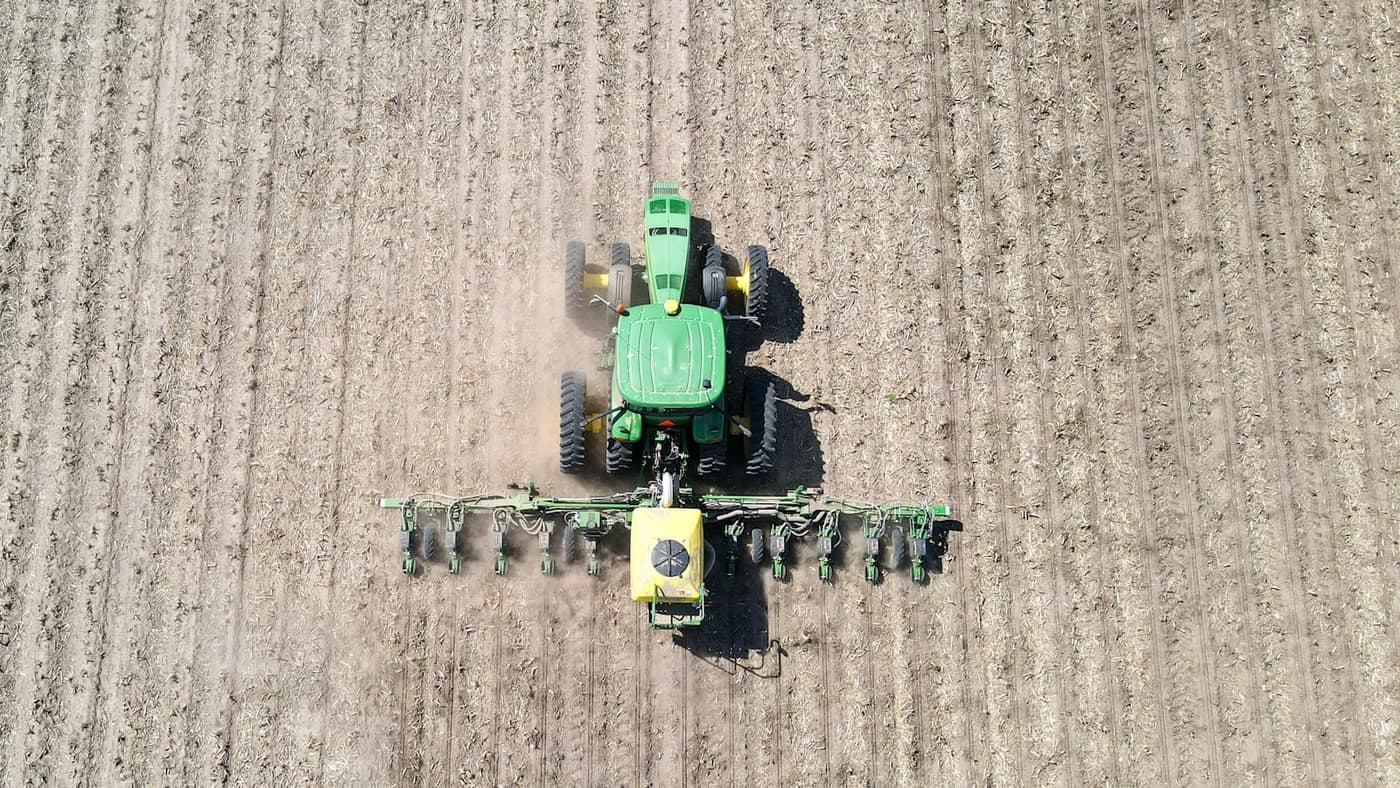
A zero-till drill (zero-till seed-cum-fertiliser drill) sows seed and basal fertiliser directly into an untilled field in a single pass. Narrow furrow openers slice a slot just wide enough for the seed, place it at an even depth beside the fertiliser, and close it — with no ploughing, harrowing or planking beforehand. The field is sown exactly as the previous crop left it.
The gain is time, moisture and cost. Skipping the two or three tillage passes conventional sowing needs saves the diesel and the days they take, which lets wheat go in a week to ten days earlier after rice — timing that directly lifts yield. And because the soil is never opened and dried, the residual moisture from the last crop is still there for germination, often saving the first irrigation. It is the foundation practice of conservation agriculture.
This guide covers what makes it work — which opener type suits your soil and residue, how to set the openers to cut firm ground, how to calibrate seed and fertiliser so a thin-looking untilled field is actually well sown, and how it differs from a residue seeder like the Happy Seeder.
Why it earns its place
- Saves a full round of tillage — the diesel, the machine hours and the days it takes.
- Lets wheat be sown 7–10 days earlier after rice, the single biggest lever on rice–wheat yield.
- Retains residual soil moisture, often saving the first irrigation and improving germination.
- Cheap, simple and light — runs on a small tractor and needs little maintenance.
Common uses
- Sowing wheat into unploughed, harvested rice fields in the rice–wheat system.
- Sowing pulses, oilseeds and maize into untilled fields to save time and moisture.
- Timely sowing when a wet field or a tight window leaves no time for tillage.
- Conservation-agriculture rotations where the soil is deliberately left undisturbed.
Types of zero-till drill
The choice is the furrow opener — narrow inverted-T tynes for clean fields, disc coulters or a strip-till rotor where some residue is present — matched to how much trash your field carries and how hard the soil is.
Inverted-T tyne drill
The standard zero-till drill: narrow inverted-T openers slice a clean slot in firm, clean soil with minimal disturbance. Cheapest and lightest, but they choke in loose residue.
- Power range
- For 35–45 HP tractors
- Best for
- Clean or lightly-residued untilled fields
Disc-coulter zero-till drill
Rolling disc coulters cut through some surface residue ahead of the seed, so it handles more trash than a plain tyne drill without a powered rotor. A step up for fields with anchored or moderate residue.
- Power range
- For 40–50 HP tractors
- Best for
- Fields with moderate anchored residue
Strip-till (roto) drill
A PTO rotor tills only a narrow band in each row, leaving the space between undisturbed — combining zero-till’s moisture saving with a clean, workable seed slot in heavier residue.
- Power range
- For 45–55 HP tractors
- Best for
- Heavier residue needing a clean seed band
Multi-crop zero-till drill
An adjustable-spacing drill with interchangeable metering for wheat, maize, pulses and oilseeds, so one machine sows several zero-till crops across the rotation.
- Power range
- For 40–50 HP tractors
- Best for
- Zero-tilling several crops in a rotation
Popular brands compared
Trade-offs, not a ranking. No brand here is called the best, and nothing on this page is a paid placement.
National Agro Industries
Budget–midA large maker of zero-till and seed-cum-fertiliser drills to the standard research design, with wide availability in the north.
- Known for
- Standard zero-till drills at value
- HP range
- For 35–55 HP tractors
Pros
- Competitive pricing
- Standard parts and metering
- Many row configurations
Cons
- Finish varies by batch
Fieldking
Budget–midAn implement brand offering tyne and disc zero-till drills across a broad size range with strong dealer reach.
- Known for
- Range and dealer network
- HP range
- For 35–60 HP tractors
Pros
- Wide range and spares
- Disc and tyne options
- Good availability
Cons
- Opener quality varies by model tier
Local / research-licensed fabricators
BudgetDistrict workshops build zero-till drills to the state-university design at low cost, easily repaired and adjusted nearby.
- Known for
- Low cost and local repair
- HP range
- For 35–50 HP tractors
Pros
- Cheapest route in
- Repaired and re-set locally
- Proven design
Cons
- Metering accuracy inconsistent
- No warranty
- Opener steel quality varies
Maintenance timeline
A zero-till drill lives on sharp, correctly-set openers and accurate metering — a worn opener that will not cut firm soil, or a slipping metering drive, is what thins the stand. These checks keep every row cutting and fed.
Before the sowing window
- Inspect furrow openers for wear and replace or sharpen so they cut firm soil
- Calibrate the seed and fertiliser rate for the crop and variety
- Clear old seed and fertiliser from the boxes, runs and tubes
- Check tyne bolts, disc bearings (on disc units) and the frame
During work (each fill / daily)
- Confirm every opener is placing seed and no tube is blocked
- Check the working depth is even across the width
- Watch for residue building up on the tynes and clear it
- Keep the metering drive chain/belt tensioned and free of slip
End of season / storage
- Empty and clean the seed and fertiliser boxes against corrosion
- Oil the openers and bright metal, grease disc bearings
- Store under cover on stands, openers off the wet ground
Common problems & fixes
Symptoms, likely causes and what you can safely do before calling a mechanic.
Openers not penetrating hard soil
- Symptoms
- The drill rides on the surface and seed is left too shallow or on top.
- Likely causes
- Worn openers, a dry hard-set field, or not enough weight on the tynes.
- What to do
- Sharpen or replace the openers, add ballast to the frame if allowed, and sow into a field with some residual moisture rather than bone-dry. On very hard ground a disc-coulter drill penetrates better.
Residue choking the tynes
- Symptoms
- Loose straw drags and balls up between the openers, skipping seed.
- Likely causes
- Too much loose surface residue for a plain tyne drill.
- What to do
- Use a disc-coulter or strip-till drill in residue, widen the tyne spacing, or clear the field of heavy loose straw first. A plain zero-till drill is built for clean or lightly-residued fields.
Uneven seed depth or thin stand
- Symptoms
- Emergence patchy, some rows deep, some on the surface.
- Likely causes
- Frame not level, mixed opener wear, or a rough, cloddy surface.
- What to do
- Level the frame with the top link so all openers run at one depth, renew worn openers as a set, and reduce speed on rough ground. Even seed-to-soil contact is what fills the rows.
Inaccurate seed or fertiliser rate
- Symptoms
- Over- or under-sowing, or fertiliser not matching the plan.
- Likely causes
- Metering not calibrated, a blocked run, or a slipping metering drive.
- What to do
- Calibrate over a measured distance every season and on each crop change, clear blocked runs, and check the drive for slip. An untilled field looks bare, so trust the calibration, not the eye.
Buying guide
A zero-till drill is inexpensive and long-lived, so opener quality and accurate metering matter far more than new versus used — and in many states the subsidy makes a new one nearly as cheap as a used one.
Buying new
Advantages
- Sharp openers and accurate metering from the start
- Choice of tyne, disc or strip-till for your residue
- Subsidy often makes a new drill nearly as cheap as a used one
Disadvantages
- Modest but real outlay for occasional use
- A disc or strip-till unit costs more than a plain tyne drill
Buying used
Advantages
- A sound frame lasts many seasons; openers are cheap to renew
- Well below new price
- Fine where residue is light and use is occasional
Disadvantages
- Check opener wear and metering accuracy
- No warranty or subsidy
- May need re-calibration and new openers
Inspection checklist
- Opener type (tyne/disc/strip-till) matched to your residue and soil
- Openers sharp and all at one depth on level ground
- Seed and fertiliser metering that calibrates accurately
- Tubes and runs clear; no blockages
- Sound frame and, on disc units, free-running coulter bearings
- Row spacing and count suited to your crop and tractor
Government subsidy & finance
The routes that bring the cost down — central, state and credit.
SMAM (Sub-Mission on Agricultural Mechanization)
Zero-till drills are covered under the mechanization subsidy on the approved price, at higher rates for SC/ST, women and small/marginal farmers, applied through the state agriculture portal.
Crop Residue Management (CRM)
As a machine that sows without tillage or burning, the zero-till drill draws higher CRM subsidy in the paddy-belt states — up to around 50% for individuals and more for CHCs and farmer groups.
Custom Hiring Centre (CHC)
For occasional use, hiring a zero-till drill with a tractor from a CHC or the CHC-Farms app is often cheaper than owning, and gives access to a well-set-up machine.
Subsidy rates, caps and eligibility vary by state and year and change each scheme cycle — the higher CRM rates apply mainly in the paddy-belt states. Confirm the current figure with your block agriculture office or the official state portal before you buy.
Safety essentials
The tynes and openers are heavy and the frame swings wide at the headland. The real risks are crushed hands and feet during hitching and calibration, not the sowing itself.
Lower the drill fully and switch off the tractor before touching the openers or clearing residue.
Keep hands and feet clear while hitching — the tyne frame is heavy and swings on uneven ground.
Support the raised drill on stands before working underneath it.
Do not let anyone ride on the drill or the frame in work or transit.
Raise the drill and slow at the headland so the openers do not dig in and jolt the tractor.
Official downloads
Government portals only — everything below is hosted on an official server.
Frequently asked questions
What is the difference between a zero-till drill and a Happy Seeder?
A zero-till drill sows into a firm, untilled field with narrow openers and minimal disturbance — it is built for clean or lightly-residued ground and is cheap and light. A Happy Seeder is a PTO-driven machine that cuts and lifts heavy loose paddy straw, sows through it, and leaves the straw as a surface mulch. Use a zero-till drill where residue is light or removed; use a Happy Seeder where a combine has left a thick mat of loose straw.
Does a zero-till drill work in hard, dry soil?
It works best when there is some residual moisture, which is exactly the situation after rice — the soil is firm but not bone-hard, and the openers cut a clean slot. In a completely dry, hard-set field a plain tyne drill struggles to penetrate; a disc-coulter drill does better, and adding weight to the frame helps. Sowing to catch the residual moisture is a large part of why zero-till pays.
How much can a zero-till drill save compared with conventional sowing?
It removes two to three tillage passes, saving that diesel and the days they take, and the retained moisture often saves the first irrigation. Just as importantly, it lets wheat go in 7–10 days earlier after rice, and earlier sowing is the single biggest lever on rice–wheat yield. Together these are why zero-till is promoted so strongly across the north-Indian plains.
What tractor HP does a zero-till drill need?
A plain tyne zero-till drill runs on a modest 35–45 HP tractor because there is no powered rotor and little soil to move. A disc-coulter drill wants 40–50 HP to push the coulters through residue, and a strip-till (roto) version needs 45–55 HP to drive its narrow-band rotor. Match the HP to the opener type, not just the width.
Still deciding?
The FAQs above cover the common questions. For a choice tuned to your exact soil, crop and acreage, your nearest Krishi Vigyan Kendra or a Custom Hiring Centre is the authoritative next step.