
Complete Seed Drill & Seeder Guide for Indian Farmers
Choose between a plain seed-cum-fertiliser drill, a zero-till drill and a Happy or Super Seeder, calibrate the seed rate for your crop, sow at an even depth — and, after paddy, drill wheat straight into the residue instead of burning it.
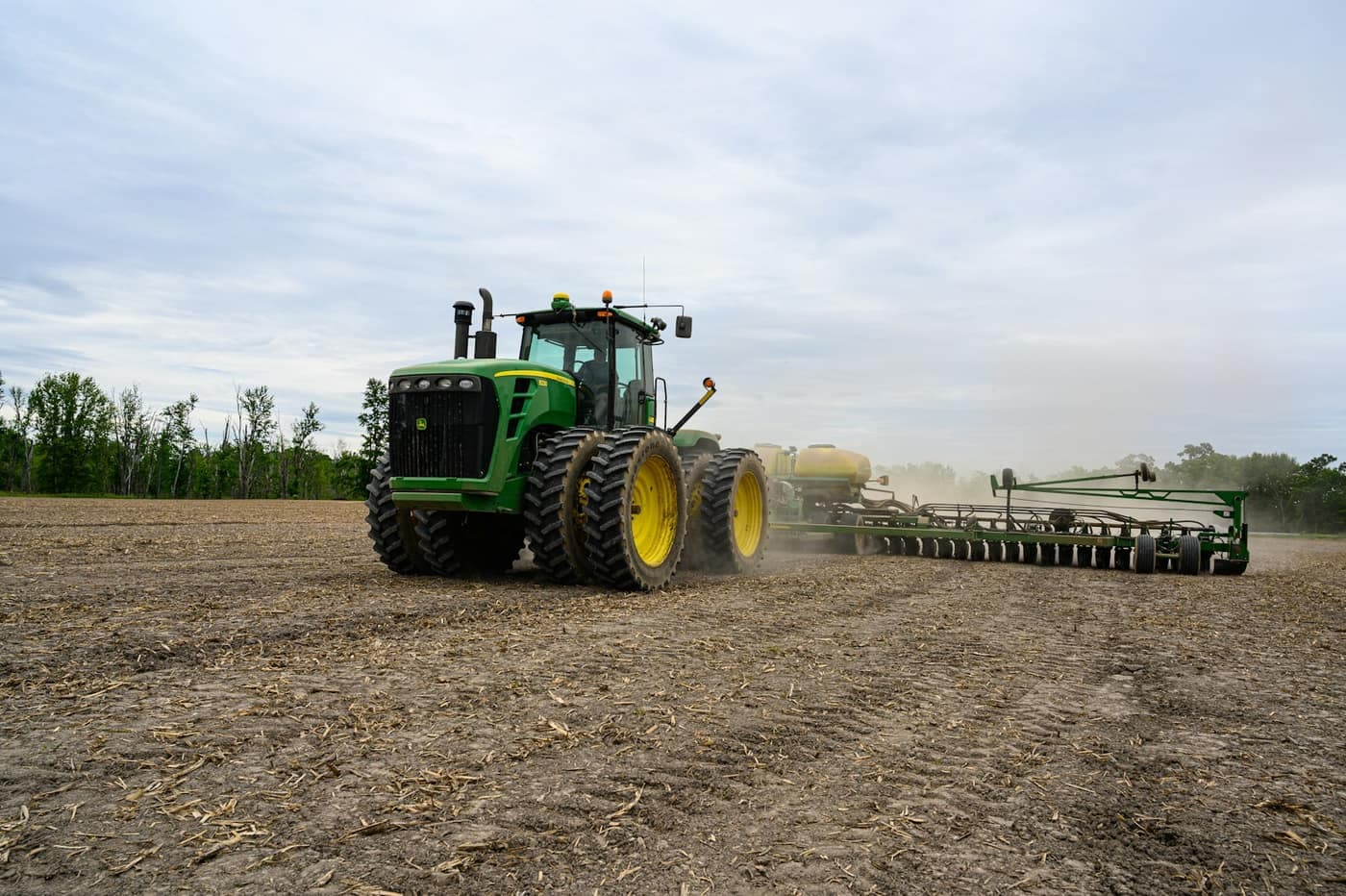
- Main types
- Seed-cum-fertiliser, zero-till, Happy/Super Seeder
- Seed saving
- 15–20% vs broadcasting
- Tractor needed
- 35 HP+ (more for Super Seeder)
- Field capacity
- 0.2–0.4 ha/hour
- Price band
- ₹30,000 – ₹1.6 lakh
- Subsidy
- 40–50%+ under SMAM / CRM (state-wise)
Overview
A seed drill places seed — and, on most models, the basal dose of fertiliser — at a set depth and row spacing in a single pass. Against broadcasting by hand it cuts the seed rate by 15–20%, buries the seed at a uniform depth so germination is even, and puts the fertiliser where the roots can reach it rather than on the surface.
The bigger story is residue. A zero-till drill sows straight into an untilled field, saving a full round of tillage and the diesel with it; a Happy Seeder and a Super Seeder go further and sow wheat directly through standing or loose paddy straw — which is the single most practical alternative to burning the stubble that chokes north India every winter.
This guide covers the decisions that matter — which type of drill your rotation actually needs, how to calibrate the seed and fertiliser rate so you are not over- or under-sowing, how to sow at an even depth, and how to keep the metering mechanism working so every row gets seed.
Why it earns its place
- Cuts the seed rate by 15–20% against broadcasting — a real saving on costly certified seed.
- Places seed at one uniform depth, so germination is even and the crop stands together.
- Drills basal fertiliser beside the seed where roots reach it, not wasted on the surface.
- Sets row spacing that makes weeding, spraying and inter-culture far easier later.
- A zero-till, Happy or Super Seeder sows straight into residue — no tillage pass, no stubble burning.
Common uses
- Line-sowing wheat, gram, mustard, soybean, maize and other field crops
- Placing seed and basal fertiliser together in one pass
- Zero-till sowing of wheat after paddy to save time, diesel and a tillage round
- Direct drilling of wheat into paddy stubble with a Happy or Super Seeder
- Precision planting of maize, cotton and vegetables at a set plant-to-plant spacing
Types of seed drill
The type is decided by your residue, not your acreage — a plain drill on a clean field, a zero-till or Happy/Super Seeder where paddy straw is on the ground. Match that first, then the brand.
Seed-cum-fertiliser drill
The standard drill. Tynes open furrows, the metering mechanism drops seed and a basal fertiliser dose together at a set depth, and a covering device closes the row. What most farmers mean by a "seed drill".
- Power range
- 35–50 HP tractor
- Suits
- Tilled seedbeds
- Best for
- Routine line-sowing of most crops
Zero-till (no-till) drill
Sows directly into an untilled field with narrow inverted-T or disc openers, saving a whole tillage round. The classic tool for sowing wheat into a lightly cleared paddy field to catch the sowing window.
- Power range
- 40–55 HP tractor
- Suits
- Untilled fields, light residue
- Best for
- Wheat after paddy, saving tillage
Happy Seeder
Cuts and lifts the loose paddy straw, sows the wheat, and drops the straw back as a mulch — all in one pass. Lets wheat be drilled straight into combine-harvested paddy fields without burning the residue.
- Power range
- 45–60 HP tractor
- Suits
- Paddy residue fields
- Best for
- Wheat into paddy straw, no burning
Super Seeder
Rotavates the standing stubble into the topsoil and drills the wheat in the same pass, leaving a clean, sown field. Heavier and needs more power than a Happy Seeder, but buries the residue rather than mulching it.
- Power range
- 50–60 HP+ tractor
- Suits
- Heavy paddy residue
- Best for
- Full residue incorporation + sowing
Multi-crop / inclined-plate planter
Uses interchangeable seed plates to single out and space larger seeds — maize, cotton, groundnut, gram — at a precise plant-to-plant distance, giving a uniform stand no drill can match.
- Power range
- 35–50 HP tractor
- Suits
- Row crops
- Best for
- Maize, cotton, pulses at set spacing
Pneumatic precision planter
A vacuum (air-suction) metering system singulates seed with the highest accuracy, favoured for high-value row crops where every plant and its spacing counts. The premium end of the planter market.
- Power range
- 45 HP+ tractor
- Suits
- High-value row crops
- Best for
- Precision spacing, high-value seed
Popular brands compared
Trade-offs, not a ranking. No brand here is called the best, and nothing on this page is a paid placement.
National Agro Industries
Budget to midA long-established maker with a wide range of seed drills, zero-till drills and planters, widely available across the northern crop belt.
- Known for
- Range, availability
- HP range
- For 35–75 HP tractors
Pros
- Wide model choice
- Easy to find and service
- Competitive pricing
Cons
- Finish varies across the range
Fieldking (Beri Udyog)
Mid to premiumA large implement maker and exporter offering rugged seed drills and Super Seeders built for hard soils and long hours.
- Known for
- Heavy-duty build
- HP range
- For 40–90 HP tractors
Pros
- Robust build
- Good Super Seeder options
- Strong dealer network
Cons
- Heavier units need adequate HP
Dasmesh
MidA Punjab maker with a strong reputation in the paddy–wheat belt for Happy Seeders, Super Seeders and zero-till drills tuned for residue conditions.
- Known for
- Residue-sowing drills
- HP range
- For 45–75 HP tractors
Pros
- Proven in paddy residue
- Good Happy/Super Seeder range
- Trusted in the north
Cons
- Service thinner outside the north
Landforce (Sonalika)
Budget to midValue-focused drills often bought alongside the same group’s tractors as a matched package.
- Known for
- Value for money
- HP range
- For 35–75 HP tractors
Pros
- Competitive pricing
- Convenient with a matching tractor
Cons
- Fewer precision-planter options
Maschio Gaspardo
PremiumItalian-origin planters and drills built in India at the precision end of the market, favoured for pneumatic planters and even seed placement.
- Known for
- Precision, planters
- HP range
- For 45–110 HP tractors
Pros
- Excellent seed singulation
- Durable European engineering
Cons
- Highest price
- Spares can cost more
Amar / Khedut
Budget to midRegional value brands offering dependable seed-cum-fertiliser and zero-till drills at a lower price point for routine field crops.
- Known for
- Regional value
- HP range
- For 35–65 HP tractors
Pros
- Good value
- Adequate for routine sowing
- Simple to repair
Cons
- Service network thinner outside home states
Maintenance timeline
A drill sows blind — you only find a blocked tube or slipping metering shaft when a row comes up bare weeks later. These checks keep every furrow fed.
Before each use
- Calibrate the seed and fertiliser rate for the crop before you start the field
- Check every furrow opener and tyne for wear, bends or blockage
- Confirm the seed and fertiliser boxes are clean and dry — damp fertiliser clogs the metering
- Grease the drive chain, sprockets and bearings
- Check that all metering cups or rollers are turning and dropping seed evenly
Every ~50 hours / during season
- Check drive-chain tension and sprocket wear
- Inspect furrow openers, shovels and disc coulters and replace worn ones
- Clear any seed or fertiliser caking in the boxes and tubes
- Check seed-tube connections for cracks or blockages
- Re-check calibration if you change crop, seed lot or fertiliser
End of season / storage
- Empty and wash out the fertiliser box thoroughly — fertiliser residue corrodes fast
- Clean the seed box and metering mechanism and dry them
- Grease all points and coat exposed metal and openers against rust
- Replace badly worn openers and shovels before next season, not during it
- Store under cover, resting on stands, with the openers off the ground
Common problems & fixes
Symptoms, likely causes and what you can safely do before calling a mechanic.
Uneven or wrong seed rate
- Symptoms
- Too thick or too thin a stand; seed runs out sooner or later than the area expected.
- Likely causes
- The drill was never calibrated, wrong metering setting, or worn seed cups.
- What to do
- Calibrate before every crop — collect and weigh the seed dropped over a measured run, and adjust the metering until it matches the target rate. Replace worn cups.
Uneven sowing depth
- Symptoms
- Patchy, staggered germination — some seed too deep to emerge, some left on top.
- Likely causes
- Openers set unevenly, the drill not level on the linkage, or worn openers riding up.
- What to do
- Level the drill front-to-back and side-to-side, set all openers to the same depth, and replace worn shovels or discs.
Seed or fertiliser tube blockage
- Symptoms
- One or more rows sow nothing while the rest are fine — visible gaps in the crop.
- Likely causes
- Damp or lumpy fertiliser caking in the tube, trash blocking an opener, or a kinked seed tube.
- What to do
- Use dry, free-flowing fertiliser, clear and straighten the tubes, and check every row is dropping before committing to the field. Fit residue-clearing coulters where trash is heavy.
Cracked or damaged seed
- Symptoms
- Split or crushed seed in the box or poor germination from mechanical damage.
- Likely causes
- The wrong metering type or plate for the seed size, or the mechanism set too tight.
- What to do
- Match the seed plate or roller to the seed size and use a fluted-roller or inclined-plate mechanism gentle enough for the crop. For large seed like maize, use a planter, not a fine-seed drill.
Choking in paddy residue (Happy/Super Seeder)
- Symptoms
- Straw wraps and bunches at the openers so the machine drags and misses rows.
- Likely causes
- Combine harvested without an SMS so the straw is in a thick windrow, or ground speed too high.
- What to do
- Harvest the paddy with an SMS so the straw is spread, keep the rotor and openers sharp, and hold a steady, moderate ground speed. A Super Seeder copes with heavier residue than a Happy Seeder.
Fertiliser box corrosion
- Symptoms
- Pitted, rusted fertiliser box and seized metering — often found at the start of the season.
- Likely causes
- Fertiliser left in the box over storage; it is highly corrosive and draws moisture.
- What to do
- Always empty and wash the fertiliser box after use and dry it before storage. Replace a badly corroded box — a seized meter mid-field wastes the sowing window.
Buying guide
A drill is a modest, long-lived buy, so weigh build and metering quality over price — and check what your state CRM scheme or a Custom Hiring Centre offers before you commit.
Buying new
Advantages
- Accurate metering and a warranty, correctly matched to your tractor
- Fresh openers and a clean, uncorroded fertiliser box
- Zero-till, Happy and Super Seeders draw high SMAM / CRM subsidy
Disadvantages
- Higher upfront cost, especially for a Super Seeder
- Worth it only if you sow enough area, or share it
Buying used
Advantages
- Much cheaper for a plain seed-cum-fertiliser drill
- Fine for light, occasional sowing on a small holding
Disadvantages
- Worn metering and openers give an uneven, unreliable stand
- Corroded fertiliser boxes are common and costly to replace
- Usually not eligible for subsidy
Inspection checklist
- Metering mechanism — turns freely, drops seed evenly on every row, cups not worn
- Furrow openers / discs — check wear; a worn opener sows at the wrong depth
- Fertiliser box — no corrosion or seized meter, cleans out fully
- Calibration — can you set it accurately for your main crop’s seed rate?
- Residue capability — for wheat after paddy, does it clear straw, or need an SMS first?
- Match it to your tractor — HP and the 540 rpm PTO where the drill is powered
Government subsidy & finance
The routes that bring the cost down — central, state and credit.
SMAM (Sub-Mission on Agricultural Mechanization)
Seed drills, zero-till drills and planters are covered implements under SMAM, typically at 40–50% of cost, with a higher share for SC/ST, women and small/marginal farmers. Applied through the state agriculture department on the agrimachinery / OFMAS portal.
Crop-residue management (CRM) subsidy
The paddy states subsidise Happy Seeders and Super Seeders heavily under the CRM scheme — often 50% for an individual and up to 80% for a Custom Hiring Centre — precisely to replace stubble burning. This is usually the cheapest route to a residue drill.
Custom Hiring Centre (CHC)
A Happy or Super Seeder is used for only a short sowing window each year, so a subsidised CHC or shared machine is often better economics than owning one — you pay only for the acres you sow.
Subsidy availability, percentage and eligibility vary by state and change every financial year — and the CRM subsidy on Happy/Super Seeders is far higher in the paddy states than elsewhere. Always confirm the current rate and the open-application window with your state agriculture department or KVK before you buy. Nothing on this page is a paid placement.
Work out the EMI before you commit
A seed drill is small enough for a short equipment loan, and Happy/Super Seeders draw a heavy CRM subsidy on top. See the instalment, and weigh it against a season of Custom Hiring Centre hire.
Safety essentials
Most drill injuries happen at the headland — hands near the metering shaft or feet under a lowered frame. Disengage and lower fully before you clear or calibrate.
Never put hands into the seed or fertiliser box or the metering mechanism while the PTO or drive is engaged.
Disengage the drive fully before clearing a blocked tube or opener.
Keep bystanders clear of the openers and drive chain during operation and turning.
Wash your hands after handling treated seed and fertiliser — both are toxic; never eat or smoke while sowing.
On a Happy or Super Seeder, keep the PTO guard fitted and stay clear of the rotor.
Lower the drill onto stands when parked, never leave it resting on the openers.
Official downloads
Government portals only — everything below is hosted on an official server.
Frequently asked questions
How much seed does a seed drill save?
Line-sowing with a calibrated drill typically cuts the seed rate by 15–20% against broadcasting, because seed is placed at a set depth and spacing instead of scattered. On costly certified seed that saving alone can offset a large part of the drill’s running cost over a season.
What is the difference between a Happy Seeder and a Super Seeder?
Both sow wheat into paddy residue without burning it, but differently. A Happy Seeder cuts and lifts the loose straw, sows, and drops the straw back as a surface mulch. A Super Seeder rotavates the standing stubble into the soil and drills the seed in the same pass, leaving a clean field. The Super Seeder handles heavier residue but is heavier and needs more tractor power.
Do I need to calibrate a seed drill?
Yes, before every crop and whenever you change seed lot or fertiliser. Calibration means collecting and weighing the seed the drill drops over a measured run and adjusting the metering until it matches your target rate. An uncalibrated drill is the most common cause of a stand that is too thick or too thin.
Can a seed drill sow without tilling the field?
A zero-till (no-till) drill is built for exactly this — it sows directly into an untilled field with narrow openers, saving a full tillage round and its diesel. It is the standard way to sow wheat into a lightly cleared paddy field and catch the sowing window. For heavy standing paddy straw, use a Happy or Super Seeder instead.
What tractor HP does a seed drill need?
A plain seed-cum-fertiliser drill runs on about a 35 HP tractor; a zero-till drill wants 40 HP or so; a Happy Seeder around 45–60 HP; and a Super Seeder, which rotavates as it drills, needs 50–60 HP or more. Under-powering a Super Seeder is a common mistake that stalls the rotor in heavy residue.
Is subsidy available on a Happy or Super Seeder?
Yes, and it is usually generous. Under the Crop-Residue-Management scheme in the paddy states, Happy and Super Seeders are subsidised at around 50% for an individual farmer and up to 80% for a Custom Hiring Centre, specifically to end stubble burning. Plain seed drills are covered under SMAM at 40–50%. Rates change yearly and vary by state, so confirm before buying.
Still deciding?
The FAQs above cover the common questions. For a choice tuned to your exact soil, crop and acreage, your nearest Krishi Vigyan Kendra or a Custom Hiring Centre is the authoritative next step.