
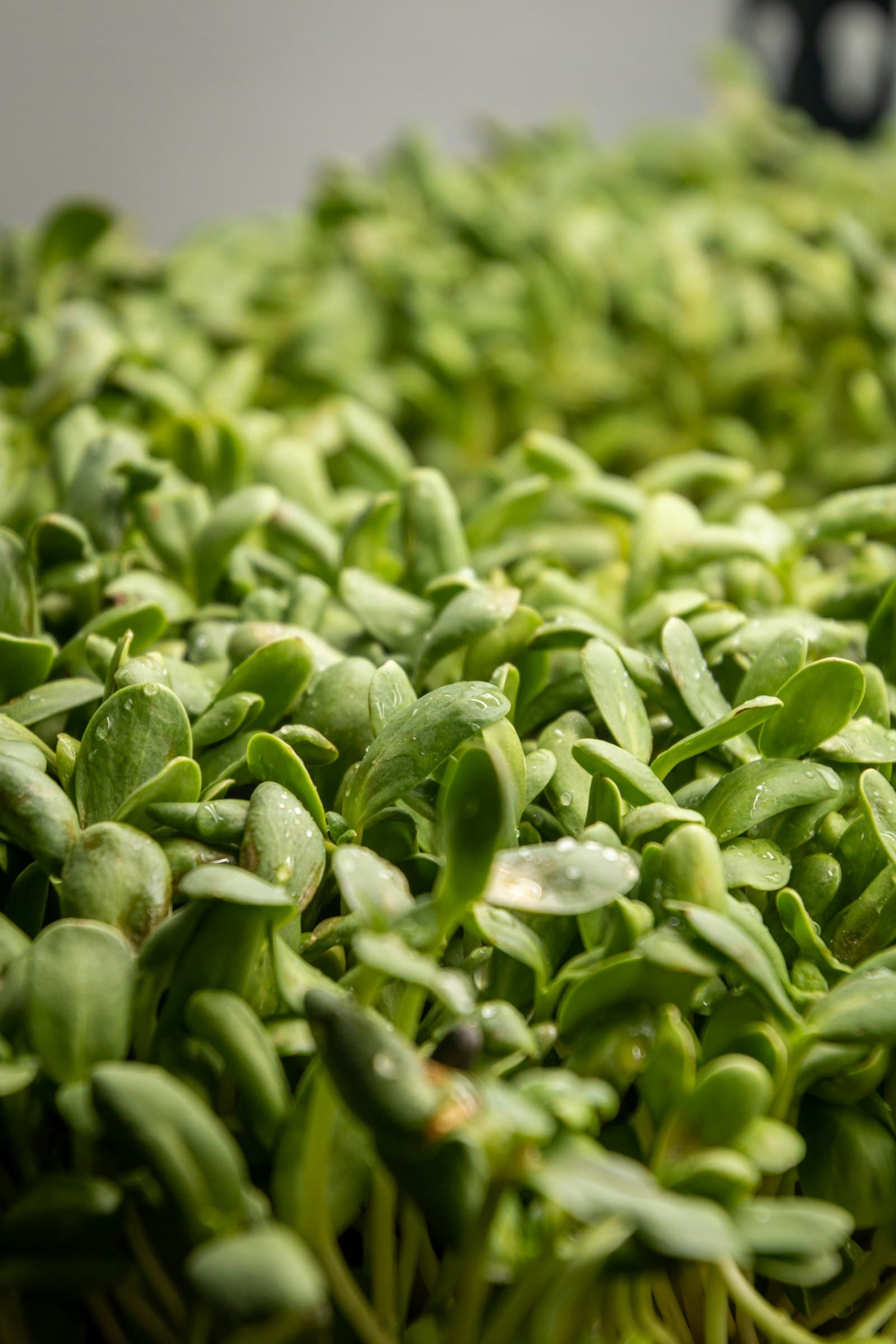
Microgreen Farming: Growing It at Home
Microgreens explained simply - how they differ from sprouts, what a home tray setup needs, easy varieties, and first-batch mistakes.
Vaibhav Dhama6 min readEnter your crop, area and input cost. Get the extra cost of conversion, certification cost, the price premium once certified, and the payback period.
The calculator above turns your farm's figures into six numbers. Here is what each one means, and what to check before deciding whether the switch makes financial sense for your field.
The total cost of getting through the conversion window before you can sell as certified organic — extra input spend, certification fees and the foregone revenue from the yield dip, added up across every conversion year. This is what you are actually risking, not just what you spend on compost.
Organic input cost minus what you currently spend on synthetic fertiliser and pesticide. On cereals and pulses this is usually a saving, since compost displaces urea and DAP; on spice and vegetable crops it can run higher, because the bio-input programme replacing a fungicide schedule is not always cheaper.
What your chosen route costs per year for the whole holding — nothing for PGS-India's group self-certification, a real recurring inspection fee for NPOP. This keeps running every year you stay certified, not just during conversion.
How much more a quintal fetches once you are certified and selling into an organic market, in rupees rather than a percentage. This is the number to check against what a real buyer in your area will actually pay — a premium that exists only on paper is not a premium.
The steady-state gain once conversion is behind you: premium income, minus the ongoing input-cost change and the recurring certification fee, every year from then on. This is the number the whole decision rests on — everything before it is the price of getting here.
How many years of that extra profit it takes to recover the conversion cost. A short payback means the switch pays for itself quickly once certified; a payback of zero means the figures you entered do not recover the cost at all, and the switch loses money at those numbers.
Organic conversion is not a single decision, it is a multi-year commitment with a different job in each year. Here is what actually happens on the ground.
Year 0
Year 1
Year 2–3
The same eight-acre decision, looked at side by side.
| Factor | Conventional | Organic |
|---|---|---|
| Fertiliser | Synthetic inputs — urea, DAP, MOP | Compost, vermicompost, bio-inputs |
| Initial cost | Lower, established supply chain | Higher during the transition window |
| Yield | Stable, close to package-of-practice figures | May reduce initially while soil biology rebuilds |
| Market price | Normal mandi or MSP rate | Premium possible, but only once certified and a buyer exists |
| Soil health | Depends entirely on the farmer's own practices | Improvement is the explicit focus of the method |
| Certification | Not required | Required before any premium can legally be claimed |
Conversion cost is not only what you spend on inputs — most of it is usually revenue you give up, not money you hand over.
Reference example — chilli, 1 acre, NPOP route, 15% yield dip
On this reference crop, the yield dip alone accounts for most of the total conversion cost — not the compost bill. That foregone revenue is an opportunity cost: money the crop would have earned, not money that left your pocket, and it is easy to miss if you only budget for input purchases.
Compost preparation, manual weeding, closer pest monitoring and biological spray schedules all take more hands and more hours than a synthetic programme. The calculator has no line for this — budget the extra labour days yourself before you convert.
Green manuring, mulching, building on-farm compost capacity and correcting years of synthetic-only management take real time and real material, on top of the routine organic input spend. Treat this as a startup cost, separate from the annual input figure.
Six habits that decide whether the premium is real by the time certification comes through.
Convert one field first and learn what organic management actually demands on your soil, your pests and your labour, before committing land you depend on for this year's income.
Buying every bag of vermicompost and every litre of jeevamrit from outside erodes the input-cost saving that makes organic cereals and pulses work. On-farm production of both is what keeps the annual input cost down.
Certification — PGS or NPOP — runs on documentation: what was applied, when, and on which plot. A farm that has kept clean records from day one moves through inspection far faster than one reconstructing two years of memory at audit time.
A premium exists only where a buyer is willing to pay it. Line up a mandi, an aggregator, a farmer-producer organisation or a direct buyer before the certificate is even issued, not after the first certified harvest is sitting unsold.
Not every crop carries the same premium or the same buyer interest. Spices, pulses and select fruit often find organic demand more easily than a bulk cereal — check local demand before deciding which field to convert first.
The steady-state gain in the calculator above is highest when the annual input-cost change is a saving, not an extra cost. That only happens when compost and bio-inputs are produced on-farm rather than bought in at spice-crop prices.
Two very different routes to the same word on the label — and the calculator models both.
₹0 certification fee per year in the calculator's PGS preset — a 2-year conversion window.
₹1,500 per acre per year in the calculator's NPOP preset — a 3-year conversion window.
These figures are typical starting points, not a quotation. Actual requirements, documentation and costs vary by certification agency, group size and state — confirm the current fee and process with your chosen agency before committing.
Every one of these turns a financially sound conversion into a loss-making one — and every one is avoidable once you know to check for it.
A whole holding switched at once means the whole holding is exposed if a buyer does not materialise or the premium does not clear. There is no partial retreat once synthetic inputs have been stopped for a season.
Do this instead: Convert one field first, confirm a buyer and a premium actually exist, then scale up field by field.
The premium only applies to certified produce, and certification only follows the full conversion window — 2 years for PGS, 3 for NPOP. Produce sold during conversion sells at the ordinary market rate, not the organic one.
Do this instead: Budget the entire conversion window at conventional prices, and treat the premium as something that starts after certification, not before.
Stopping synthetic fertiliser without actively rebuilding organic matter and soil biology just leaves the soil under-fed — the yield dip gets deeper and lasts longer than it needs to.
Do this instead: Start compost, green manuring and residue incorporation before or alongside stopping synthetic inputs, not after the yield has already fallen.
A field that loses its urea and DAP but does not gain an equivalent compost or bio-input programme is simply under-fertilised, not organic. The crop pays for the gap in yield.
Do this instead: Size the organic input programme to actually replace the nutrient load the synthetic inputs were supplying, not just to fill the same rupee figure.
Both PGS and NPOP run on documentation — what was applied, when, and where. Gaps in the record are the single most common reason an inspection stalls or a certificate is delayed.
Do this instead: Keep a plot-wise input and activity log from the day conversion starts, not from the week before the inspector visits.
Compost preparation, closer pest monitoring and manual weeding all need more hands than a synthetic programme did. A farm that has not planned for the extra labour finds the field under-managed exactly when it can least afford to be.
Do this instead: Budget the extra labour days into your season plan before conversion starts, the same way you would budget an input cost.
The questions farmers ask most before deciding whether organic conversion makes financial sense.
The mandatory conversion period before produce can be sold as certified organic is 2 years under PGS-India and 3 years under NPOP, counted from the date synthetic inputs stop. This is set by the certification scheme, not negotiable by choosing a faster inspector.
You can sell the produce, but not as certified organic and not at an organic premium — it has to go through the full conversion window (2 years PGS, 3 years NPOP) and pass certification first. Selling uncertified produce as "organic" during this window is exactly the practice certification exists to prevent.
PGS-India is group-based — a local farmer group cross-verifies each other's fields through peer review, has no certification fee, and is aimed at domestic markets. NPOP is third-party certification by an accredited, independent body, is a paid recurring process, and is generally required for premium and export markets that specifically ask for it.
Only if the premium you actually realise, once certified, exceeds the ongoing input-cost change and certification fee — and only after the conversion cost has been paid back. The calculator above works out exactly that comparison for your own numbers; it is not automatically yes.
Soil biology that has adapted to synthetic fertiliser over years takes time to rebuild once you switch to compost and bio-inputs, and pest and disease control without synthetic sprays is harder to get exactly right in the first seasons. The dip is usually temporary, recovering once soil organic matter and beneficial microbial activity are re-established.
PGS-India charges no certification fee — the group self-certifies. NPOP is a paid, recurring third-party inspection, typically scaling with area; the calculator's reference figure is ₹1,500 per acre per year. Actual costs vary by agency, group size and state, so confirm the current fee with your chosen certification body.
Crops with genuine organic market demand and buyer interest in your area — spices, pulses and select fruit often clear a premium more easily than a bulk cereal sold into a commodity mandi. The right crop is the one you already have a buyer lined up for, not the one with the highest quoted premium percentage.
Often, but not always. On cereals, millets, oilseeds and pulses, compost and biofertiliser typically cost less than the urea and DAP they replace. On spice and some vegetable crops, the bio-input programme replacing a fungicide schedule can cost more, not less — check your own crop's figures rather than assuming a saving.
Only once the certification body has confirmed the conversion period is complete and issued certification — 2 years into PGS, 3 years into NPOP, at the earliest. Charging a premium on uncertified produce, even if it was grown without chemicals, is not a certified organic sale.
PGS-India was specifically designed for small and marginal farmers — it is group-based, has no certification fee, and fits a smaller holding better than the third-party inspection NPOP requires. Starting with a small converted area, as the tips above suggest, further limits the risk while the switch is being learned.
The arithmetic is exact and is checked automatically against hand-computed figures on every build. What is general is the starting data — input costs, yields and prices are typical figures for an average irrigated field, and the premium percentage and yield dip are editable assumptions, not guarantees. Certification fees in particular vary by agency, group and state, so treat every preset as a starting point to edit, not a quote.
Yes, and it is generally the safer approach — nothing about certification requires converting the whole holding at once. Converting one field first, confirming the premium and the buyer are real, and then scaling up limits how much income is exposed while you are still learning organic management on your own soil.
Longer reads on organic practices, inputs and certification, for the field-management side of the same decision.
Microgreens explained simply - how they differ from sprouts, what a home tray setup needs, easy varieties, and first-batch mistakes.
Vaibhav Dhama6 min read
A starting sequence for organic farming in India - which plot to pick, building soil first, what to grow while converting, and certification.
Vaibhav Dhama5 min read
Sell certified organic through a regular mandi and it prices like conventional - the premium only exists in channels built to recognise it.
Vaibhav Dhama3 min read
Organic farming genuinely rebuilds soil and commands a premium - and genuinely costs yield during conversion and needs more labour. Both true.
Vaibhav Dhama3 min read
Beejamrit coats seed in cow dung, urine and lime to block soil- and seed-borne disease. The recipe, method, and its real limits.
Vaibhav Dhama3 min read
Crushed, steamed bone gives a slow-release organic phosphorus and calcium, best for fruit, flower and root crops. How to apply it.
Vaibhav Dhama2 min read