
Complete Combine Harvester Guide for Indian Farmers
Decide whether to own, hire or share a combine, pick the right type for your crop and soil, set it to lose grain in single digits — and use the SMS attachment so the straw is managed, not burned. Two days of work where hand harvest takes two weeks.
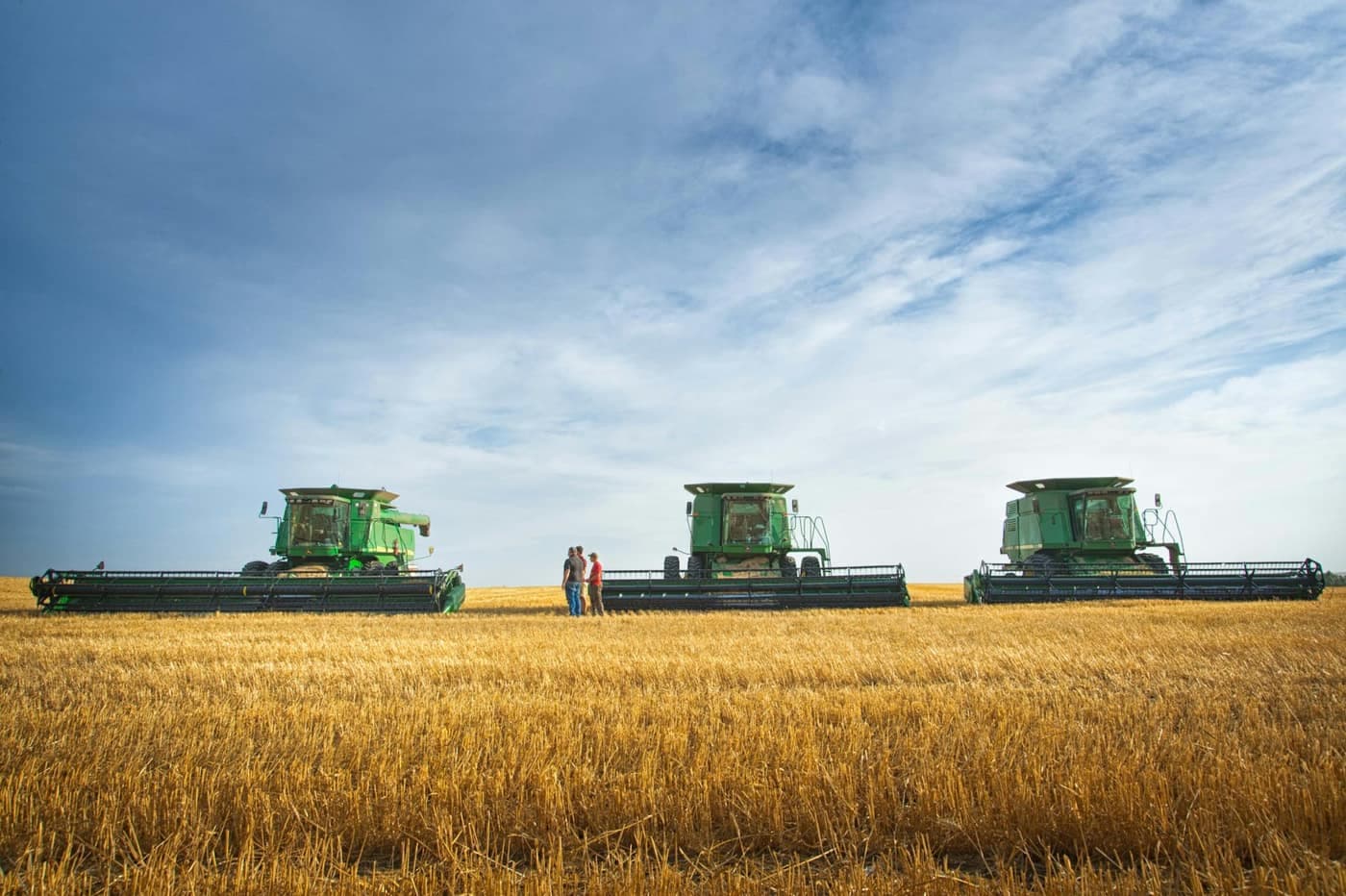
- Main types
- Self-propelled, tractor-mounted, track
- Field capacity
- 1–1.5 ha/hour
- Hire rate
- ₹1,800–2,800 / hour
- Grain loss (set right)
- 2–4%
- Price band (new)
- ₹18–35 lakh
- Subsidy
- 40–50% under SMAM (state-wise)
Overview
A combine harvester cuts, threshes, cleans and bags grain in a single continuous pass. Against manual harvest-and-thresh it roughly halves the per-acre cost and compresses a two-week job into two days — and in a rabi season racing the pre-monsoon rain, that speed is often the whole reason to hire one.
It is also the machine almost no individual farmer should own. A combine costs ₹18–35 lakh new and needs to run several hundred hours a season across many farms to earn its keep, which is why the honest model for all but the largest holdings is custom hiring or a Custom Hiring Centre (CHC) machine, not a private purchase. Owning one is a contracting business, not a farming decision.
This guide follows the real decisions — own versus hire, which combine type suits your crop, how to keep grain loss in single digits, what it burns in diesel, and how to run it legally with a Straw Management System so you are not tempted to burn the residue and pay a fine for it.
Why it earns its place
- Cuts harvesting cost by roughly half against hiring manual labour to cut and thresh.
- Turns a two-week harvest into two days — decisive when rain threatens a standing crop.
- Removes the acute labour shortage at peak harvest, when wages spike and workers are scarce.
- Threshes and cleans in the same pass, so grain goes straight to bags or the trolley.
- With an SMS or mulcher attachment, spreads the straw for the next crop instead of leaving a burnable windrow.
Common uses
- Harvesting wheat, paddy, barley, mustard, soybean and gram at scale
- Custom hiring across a district — the machine following the harvest north through the season
- Clearing a standing crop fast ahead of forecast rain or hail
- Direct-to-market harvesting where grain is bagged in the field
- Managing straw in-field with an attached SMS, mulcher or baler
Types of combine harvester
Wheel, track or tractor-mounted is decided by your crop and how wet your fields get — not by price. Pick the platform your paddy or wheat and your soil can actually carry before anything else.
Self-propelled combine (wheeled)
A dedicated harvesting machine with its own engine and cab. The workhorse of the wheat belt — fast, high-capacity and the standard choice for contractors on firm, dry fields.
- Suits
- Large area, dry firm fields
- Best for
- Wheat, mustard, gram at scale
Track-type combine
Runs on rubber tracks rather than wheels, spreading its weight so it floats over wet, soft paddy fields where a wheeled machine would sink. The standard paddy harvester in the east and south.
- Suits
- Wet, soft paddy fields
- Best for
- Paddy in standing water or soft mud
Tractor-mounted / PTO combine
A combine unit powered by an existing tractor’s PTO rather than its own engine. Cheaper to buy for a farmer who already owns a suitable tractor, but slower and lower-capacity than a self-propelled machine.
- Suits
- Medium area, own tractor
- Best for
- Farmers with a spare high-HP tractor
Maize / multi-crop combine
Fitted with a maize header or an adjustable multi-crop threshing setup, so one machine can move between wheat, paddy, maize, soybean and gram across the season with a header and sieve change.
- Suits
- Mixed-crop districts
- Best for
- Contractors chasing several crops
Mini / compact combine
A small, low-power harvester for terraced, hilly or small holdings where a full-size combine cannot turn or is uneconomic. Lower capacity, but reaches fields the big machines never will.
- Suits
- Small, terraced, hill plots
- Best for
- Small and fragmented holdings
Popular brands compared
Trade-offs, not a ranking. No brand here is called the best, and nothing on this page is a paid placement.
Preet
Mid to premiumOne of India’s largest combine makers, with a wide self-propelled range and a very deep parts-and-service network across the northern grain belt.
- Known for
- Range, service reach
- HP range
- Self-propelled & tractor-mounted
Pros
- Parts and service easy to find
- Wide model range
- Strong resale demand
Cons
- Premium models priced above regional rivals
Kartar
Mid to premiumA long-established Punjab combine maker with a strong reputation in the wheat and paddy belt for rugged, high-capacity self-propelled machines.
- Known for
- Capacity, wheat-belt trust
- HP range
- Self-propelled
Pros
- High output on wheat and paddy
- Well proven in the north
- Good dealer support
Cons
- Heavier machines need firm fields
Dasmesh
MidA Punjab manufacturer offering combines plus a full line of harvesting and residue-management attachments, popular with contractors running a mixed fleet.
- Known for
- Attachments, contracting
- HP range
- Self-propelled & tractor-mounted
Pros
- Good attachment ecosystem
- Value for contractors
- Multi-crop options
Cons
- Service thinner outside the north
John Deere
PremiumGlobal machines built and sold in India, at the technology-and-efficiency end of the market with lower grain loss and better residue handling when correctly set.
- Known for
- Technology, low grain loss
- HP range
- Self-propelled
Pros
- Lower grain loss when set well
- Fuel-efficient
- Durable build
Cons
- Highest purchase price
- Spares cost more
Kubota
PremiumThe reference name in track-type paddy combines, built for wet fields in the east and south where wheeled machines cannot go.
- Known for
- Track paddy combines
- HP range
- Track self-propelled
Pros
- Excellent in wet paddy
- Low grain loss on rice
- Reliable tracks
Cons
- Premium price
- Best suited to paddy, not an all-rounder
New Holland / Mahindra
Mid to premiumFull-line farm-equipment makers whose combines are backed by large tractor dealer and service networks, a real advantage in districts where downtime at harvest is costly.
- Known for
- Service network, backing
- HP range
- Self-propelled & tractor-mounted
Pros
- Wide service reach
- Trusted brands
- Good financing tie-ups
Cons
- Fewer paddy-specialist options
Estimated fuel consumption
Rough diesel use by power band, for budgeting only.
Power
Track paddy combine
Estimated diesel
~6–9 litres/hour
Power
Self-propelled (wheat)
Estimated diesel
~8–12 litres/hour
Power
Tractor-mounted combine
Estimated diesel
~7–10 litres/hour
Figures are indicative for a well-maintained machine on a normal crop. Diesel is the single biggest running cost of a combine, so hire rates (₹1,800–2,800/hour) move with the diesel price — factor that in when comparing a hire quote against owning.
Maintenance timeline
A combine works flat-out for a few frantic weeks — a snapped belt or blocked sieve mid-season costs a day of harvest you cannot buy back. Service it before the window, not during it.
Daily during harvest
- Blow chaff and dust off the engine, radiator and sieves — a fire risk if it builds up
- Check engine oil, coolant and hydraulic fluid levels
- Grease all the marked points on the header and threshing drum
- Inspect the cutter bar and reel for bent or missing knife sections
- Check belt and chain tension before the day starts
Weekly / every ~50 hours
- Clean or replace the air filter — dusty harvest conditions clog it fast
- Check concave clearance and re-set for grain loss and cracked grain
- Inspect sieves and the grain elevator for wear and leaks
- Re-tension or replace worn belts and drive chains
- Check tyre pressure, or track tension on track machines
End of season / storage
- Wash out all crop residue — trapped grain draws rodents and moisture
- Change engine and hydraulic oil and all filters
- Grease everything and coat exposed metal against rust
- Store under cover; take the weight off the tyres or tracks if possible
- Book any header, drum or bearing repairs now, not the week before next harvest
Common problems & fixes
Symptoms, likely causes and what you can safely do before calling a mechanic.
High grain loss out the back
- Symptoms
- Visible grain thrown out with the straw; yield in the trailer lower than expected.
- Likely causes
- Ground speed too high, concave clearance wrong, sieves misadjusted, or a worn threshing drum.
- What to do
- Slow down, reset concave clearance and sieve openings for the crop, and check drum and rasp-bar wear. Do a loss check by counting grains on the ground behind the machine.
Cracked or broken grain
- Symptoms
- A high share of split or damaged grain in the tank — a price penalty at the mandi.
- Likely causes
- Drum (cylinder) speed too high, concave set too tight, or the crop too dry.
- What to do
- Drop the drum speed and open the concave clearance a little. Harvest very dry crops in the cooler part of the day to reduce shatter.
Header pickup losses / uncut crop
- Symptoms
- The header misses lodged crop or leaves standing stalks and shattered heads.
- Likely causes
- Cutter bar set too high, reel speed or position wrong, or dull knife sections.
- What to do
- Lower the cutter bar for lodged crop, match reel speed to ground speed, and replace worn knife sections. Harvest lodged crop from the direction it is leaning.
Blockage / drum choking
- Symptoms
- The threshing drum stalls or the feed chokes, especially in green or damp crop.
- Likely causes
- Crop too green or wet, ground speed too high, or belt slipping so the drum lacks torque.
- What to do
- Wait for the crop to dry, ease off the ground speed, and check belt tension. Clear a blockage only with the engine off and the drum stopped.
Fire risk from chaff build-up
- Symptoms
- Chaff and dust packing around the engine, exhaust and bearings — a real combine-fire cause.
- Likely causes
- Not cleaning the machine down daily, or a hot bearing or exhaust igniting trapped residue.
- What to do
- Blow the machine down every day, keep a fire extinguisher and water on the machine, and stop to investigate any hot smell immediately.
Straw left in a burnable windrow
- Symptoms
- A thick row of loose straw behind the combine that tempts residue burning.
- Likely causes
- Harvesting without a Straw Management System (SMS), mulcher or baler attached.
- What to do
- Run a mandated SMS behind the combine to spread and chop the straw, or bale it. In many states harvesting paddy without an SMS is itself an offence — fit one before the season.
Buying guide
For all but the largest holdings this is an own-versus-hire call, and hiring almost always wins. Owning a combine is a contracting business — judge it on hours booked across many farms, not on your own acreage.
Owning (as a contracting business)
Advantages
- Earns custom-hiring income across a whole district
- Full control of timing on your own crop
- Eligible for SMAM / CHC subsidy on the invoice
Disadvantages
- ₹18–35 lakh outlay — only viable as a contracting business, not for one farm
- Needs several hundred hours of work a season to pay back
- High diesel, repair and skilled-operator costs
Hiring / CHC (for almost every farmer)
Advantages
- Pay only for the hours you use, at ₹1,800–2,800/hour
- No capital tied up, no maintenance or storage
- A subsidised CHC machine is cheaper still where available
Disadvantages
- You wait your turn in the queue at peak harvest
- Rain can delay the operator and your window with it
- Quality depends on how well the operator sets the machine
Inspection checklist
- Grain loss — do a loss check behind the machine; single digits is the target
- Threshing drum and concave — wear here drives both loss and cracked grain
- Header knife sections and reel — bent or missing sections leave crop standing
- Sieves and grain elevator — no cracks or leaks that spill grain
- SMS / residue attachment — fitted and working, especially for paddy
- Engine and hydraulics — oil condition, no leaks, service records for a used machine
Government subsidy & finance
The routes that bring the cost down — central, state and credit.
SMAM (Sub-Mission on Agricultural Mechanization)
Combines and Custom Hiring Centres are covered under SMAM, commonly at 40–50% of cost with a higher share for a CHC or a group of farmers. Applied through the state agriculture department on the agrimachinery / OFMAS portal.
Custom Hiring Centre (CHC)
The mainstream route for combines: a subsidised CHC or FPO owns the machine and hires it out, so individual farmers pay per hour instead of buying. Setting up a CHC attracts higher subsidy than a private purchase.
Crop-residue management (CRM) subsidy
The paddy states run a dedicated CRM scheme subsidising SMS attachments, balers and mulchers — often at 50–80% for a CHC — to end stubble burning. Check it before buying a combine in a paddy district.
Subsidy availability, percentage and eligibility vary by state and change every financial year. Combine and CRM rates in particular differ sharply between the paddy states and the rest of the country. Always confirm the current rate and the open-application window with your state agriculture department or KVK before you buy. Nothing on this page is a paid placement.
Work out the EMI before you commit
A combine is a ₹18–35 lakh purchase usually financed over 5–7 years and repaid from custom-hiring income, not one farm’s harvest. See the instalment, then check the booking it needs to break even against hiring at ₹1,800–2,800/hour.
Safety essentials
The cutter bar, threshing drum and unloading auger are all exposed and unforgiving. Never clear a blockage with the header engaged, and keep bystanders clear of a working machine.
Never open a jam, feed by hand, or touch the header while the engine is running and the drum is turning — this is where the worst combine injuries happen.
Keep everyone clear of the header, unloading auger and moving belts during operation.
Carry a fire extinguisher and water on the machine and blow off chaff daily — combine fires are common and fast.
Do not carry passengers on the machine or ride on the grain tank.
Watch for overhead power lines when the unloading auger is raised.
Only a trained operator should run and set the machine — most losses and accidents trace back to poor operation.
Official downloads
Government portals only — everything below is hosted on an official server.
Frequently asked questions
Should a farmer buy a combine harvester?
For all but the largest holdings, no. A combine costs ₹18–35 lakh and needs several hundred hours of work a season across many farms to pay back, so owning one is really a custom-hiring business. Most farmers are far better off hiring a combine at ₹1,800–2,800 per hour, or using a subsidised Custom Hiring Centre machine.
How much grain does a combine lose?
A well-set machine on a standing crop loses about 2–4% of the grain. Losses climb quickly with excess ground speed, wrong concave and sieve settings, a worn drum, or lodged crop. Do a quick loss check by counting the grains on the ground behind the machine and slow down or reset if it looks high.
Wheeled or track combine for paddy?
For wet, soft paddy fields, a track combine is the right choice — the rubber tracks spread the weight so it floats where a wheeled machine would sink and rut. Wheeled self-propelled combines suit firm, dry fields and crops like wheat, mustard and gram. Track machines cost more but are essential in standing-water paddy.
What is the SMS attachment and is it compulsory?
A Straw Management System (SMS) is a device fitted behind the combine that chops and spreads the paddy straw instead of leaving a thick windrow, so the next crop can be sown without burning it. In several paddy-growing states it is legally required — harvesting paddy without an SMS is an offence — because it is a direct alternative to stubble burning.
How much diesel does a combine use?
Roughly 6–9 litres per hour for a track paddy combine and 8–12 litres per hour for a self-propelled wheat combine, more in thick or lodged crop. Diesel is the biggest running cost, which is why hire rates track the diesel price. Always factor fuel into any own-versus-hire comparison.
Is combine subsidy available?
Yes, under SMAM — commonly 40–50% of cost, with a higher share for a Custom Hiring Centre or a farmer group rather than an individual. Paddy states also run a Crop-Residue-Management scheme subsidising SMS attachments, balers and mulchers, often at 50–80% for a CHC. Rates change yearly and vary by state, so confirm with your agriculture department first.
Still deciding?
The FAQs above cover the common questions. For a choice tuned to your exact soil, crop and acreage, your nearest Krishi Vigyan Kendra or a Custom Hiring Centre is the authoritative next step.