
Litchi
Litchi chinensis
A slow, temperamental tree that does not come true from seed and does not take to grafting either — it is propagated almost entirely by air-layering, so the "variety" you plant is really a clone cut and rooted straight off a named mother tree, and even then the crop can crack open in the last two weeks before harvest if watering swings from dry to wet at exactly the wrong moment.
Quick Summary
The key points from this page in about two minutes — read it or have it read aloud.
Quick Summary
Litchi (Litchi chinensis) is grown mainly in Bihar, which accounts for over 40% of India's litchi and whose Muzaffarpur-area Shahi variety carries a GI tag, along with West Bengal, Jharkhand, Uttar Pradesh, Punjab and Uttarakhand. Unlike most fruit trees on this site, litchi is not propagated by grafting a scion onto a rootstock seedling — it is propagated almost entirely by air-layering (called gootee), where a ring of bark is stripped from a healthy branch, wrapped in rooting medium, and left to grow its own roots for six to eight weeks before being cut off and planted as a new, genetically identical tree.
Because every commercial tree is a direct clone of its mother, choosing the right named variety at planting time is a decision you cannot easily correct later. Different varieties ripen weeks apart, from the earliest table types in late May through Shahi in the first half of June to late-season Calcuttia into July, so a grower can spread the harvest window (and the labour and market risk that comes with it) by mixing varieties rather than planting one type across the whole orchard.
The single hardest problem litchi growers manage is fruit cracking in the final two to three weeks before harvest, when the fruit is most sensitive to a sudden swing between a dry spell and heavy rain or irrigation — the skin cannot expand fast enough and splits, ruining the fruit for the fresh market. Even, moderate soil moisture through this window, rather than either extreme, is what keeps a crop sellable.
- Crop type
- Subtropical evergreen fruit tree (propagated by air-layering)
- Season
- Winter chill for flower initiation; harvest May–July depending on variety
- Suitable states
- Bihar, West Bengal, Jharkhand, Uttar Pradesh, Punjab, Uttarakhand
- Time to first bearing
- 4–5 years from a rooted air-layer
- Water requirement
- Moderate; even moisture critical in the final weeks before harvest
- Temperature
- Needs winter chill (10–15°C) for flowering; frost-sensitive when young
- Soil type
- Deep, well-drained sandy loam to loam, pH 5.5–7.5
- Difficulty level
- Difficult (air-layer propagation, erratic bearing, fruit cracking, short harvest window)
- Expected yield
- 80–150 kg/tree/year at full bearing (10+ years)
- Key risk
- Fruit cracking from a sudden dry-to-wet moisture swing in the final weeks before harvest
Overview
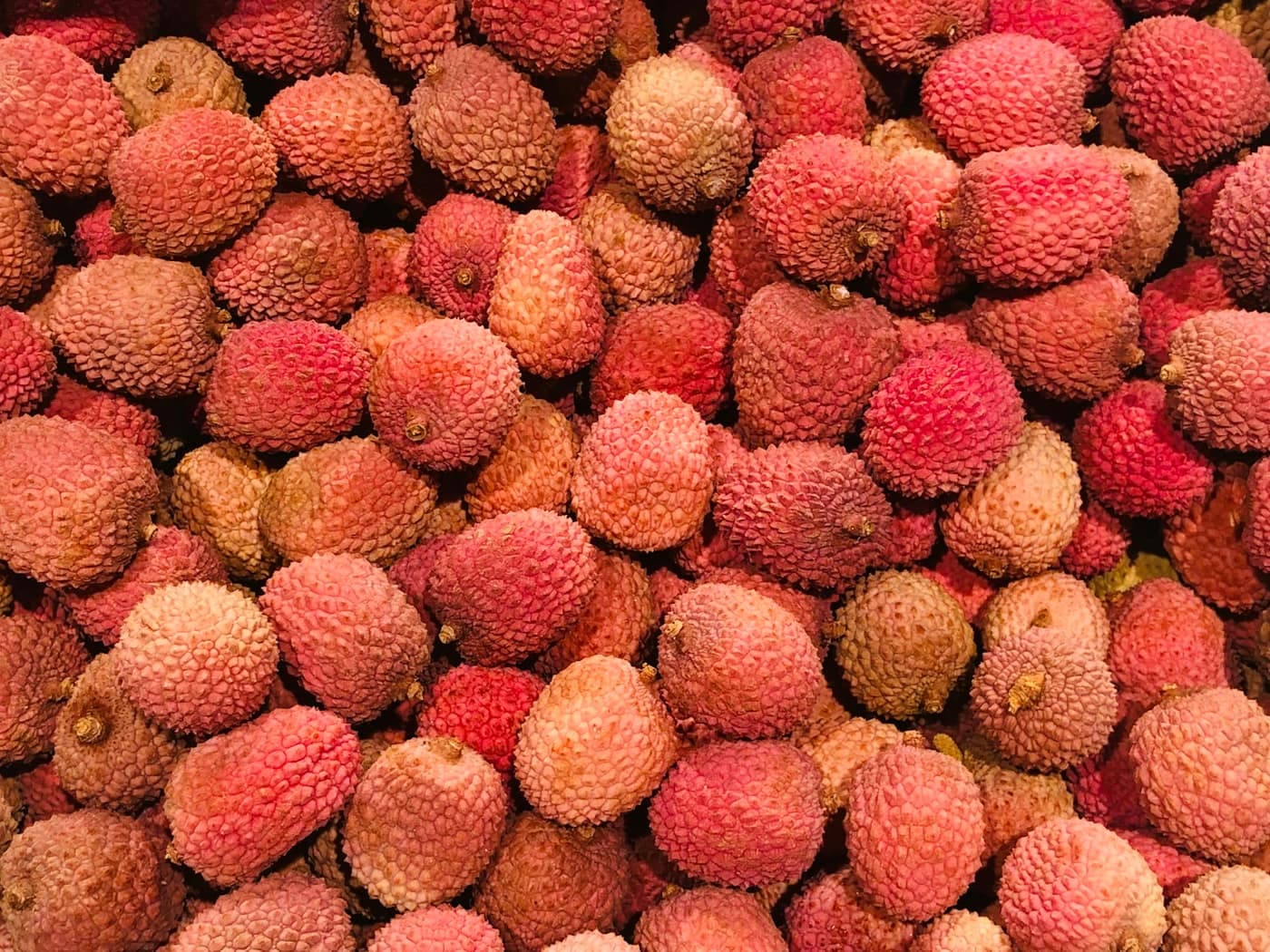
Litchi (Litchi chinensis) is a subtropical evergreen fruit tree grown for its sweet, juicy, pink-white aril-covered fruit inside a rough red skin, eaten fresh. It needs a genuine winter chill to flower well, which is why it is concentrated in the sub-Himalayan belt rather than the deep south.
Bihar, especially the Muzaffarpur area, is India's dominant litchi region and produces over 40% of the national crop; its Shahi variety carries a Geographical Indication tag. West Bengal, Jharkhand, Uttar Pradesh, Punjab, Uttarakhand, Tripura and Assam grow it as well. The tree is propagated almost entirely by air-layering rather than grafting, since litchi does not graft reliably and does not breed true from seed.
Two decisions shape a litchi orchard: choosing the right named clone (air-layered from a proven mother tree) at planting, since correcting a wrong choice means starting over, and managing soil moisture evenly through the final weeks before harvest to avoid the fruit cracking that ruins a crop just before it is ready to sell.
Crop timeline, sowing to harvest
A quick visual map of the season — jump to any section below for the detail behind each stage.
- Year 0
Planting
A rooted air-layer of a named variety is planted in a well-prepared pit at the start of the monsoon, after roots have developed for six to eight weeks on the mother tree.
- Year 1–4
Establishment
The young tree is trained to a strong framework and protected from frost and strong wind while its root system develops; early flowering is usually removed.
- Year 4–5
First bearing
The tree comes into its first light bearing, true to the mother tree's variety since it is a genetic clone.
- December–January
Flower bud initiation
A period of cool, dry winter weather is essential for the tree to set flower buds; a mild winter can badly reduce flowering.
- February–March
Flowering
Panicles of small flowers open over several weeks; frost or hot dry winds during this window can badly damage the flush.
- April–July (variety-dependent)
Fruit development & harvest
Fruit develops over roughly ten to twelve weeks; early varieties ripen from late May, Shahi through the first half of June, and late varieties like Calcuttia into July. Fruit cracking risk peaks in the final two to three weeks.
Suitable states
States where this crop is grown at scale, highlighted below. Your local Krishi Vigyan Kendra is still the final word for your specific block.
- Jammu and Kashmir
- Himachal Pradesh
- Punjab
- Uttarakhand
- Haryana
- Delhi
- Uttar Pradesh
- Rajasthan
- Bihar
- Jharkhand
- West Bengal
- Sikkim
- Assam
- Arunachal Pradesh
- Meghalaya
- Nagaland
- Manipur
- Mizoram
- Tripura
- Gujarat
- Madhya Pradesh
- Chhattisgarh
- Maharashtra
- Odisha
- Goa
- Telangana
- Andhra Pradesh
- Karnataka
- Kerala
- Tamil Nadu
- Puducherry
- Ladakh
- Chandigarh
- Lakshadweep
Grown here
Climate requirements
The need for a genuine winter chill is why litchi is concentrated in Bihar and the sub-Himalayan belt rather than further south — without that chill period the tree grows well but flowers poorly.
Ideal temperature
A subtropical tree needing genuine winter chill (roughly 10–15°C for several weeks) to set flower buds well, followed by warm weather for fruit development. Young trees are frost-tender; established trees tolerate light frost but flowering and fruit set suffer in a very warm winter or from hot, dry winds during flowering.
Rainfall
Grows well on 1,200–1,800 mm of well-distributed rainfall. A dry spell during flower initiation is actually helpful, but even moisture matters greatly during fruit development, and a sudden heavy rain after a dry spell in the final weeks before harvest is the single biggest cause of fruit cracking.
Humidity
Moderate humidity suits flowering and fruit set; very high humidity with poor airflow favours some fungal fruit and leaf problems.
Sunlight
Full sun gives the best flowering and fruit colour; a shaded tree flowers and fruits poorly.
Soil requirements
Litchi is genuinely more soil-sensitive than many other fruit trees on this site — a poorly drained or shallow site rarely gives a good orchard however well the rest of the management is done.
Suitable soil
A deep, well-drained sandy loam to loam suits litchi best; it does not tolerate a shallow soil or a hard pan that restricts its root system.
pH range
Best at pH 5.5–7.5; it tolerates a moderately acidic soil reasonably well but performs poorly on strongly alkaline or saline ground.
Drainage
Free drainage is essential — litchi's root system is intolerant of waterlogging, and poor drainage is a common cause of weak, unproductive trees on otherwise reasonable soil.
Organic matter
Responds well to organic matter worked into the planting pit and applied as ongoing mulch, which also helps buffer the soil-moisture swings that cause fruit cracking.
Land preparation
Same four steps whichever region you are in — only the timing shifts with the sowing window.
- 1
Dig and fill generous planting pits
Dig pits about 1 m³, fill with topsoil mixed with well-rotted FYM, and let them settle before planting a rooted air-layer at the start of the monsoon.
- 2
Space for a large mature canopy
Space trees 10–12 m apart in both directions, since a mature litchi tree develops a large, dense, long-lived canopy over its productive life.
- 3
Provide windbreaks in exposed sites
Where the site is exposed to strong wind, establish a windbreak before or alongside planting, since young trees and flowering panicles are both vulnerable to wind damage.
Seed information
How the main varieties compare, so you can pick by duration, yield, disease pressure or what you are growing for.
| Variety | Duration | Yield | Disease resistance | Best state | Suitable for |
|---|---|---|---|---|---|
The earliest-ripening major variety, grown mainly in Uttar Pradesh and Punjab for the table and processing market. Fruit is small to medium, heart- to oval-shaped, with carmine-red tubercles at maturity and creamy-white pulp of about 19.8% TSS. | Earliest harvest, late May | 60–100 kg/tree/year at full bearing | No special resistance claimed | Uttar Pradesh, Punjab | Earliest market entry, table and processing use |
An early, heavy and regular bearer with attractive fruit colour, though susceptible to sunburn and cracking; fruit typically ripens in the second week of June. | Early, ripens second week of June | 80–120 kg/tree/year at full bearing | Susceptible to sunburn and fruit cracking | Uttarakhand | Early-season regular bearing, needs careful moisture management against cracking |
An early-to-mid-season variety widely grown across the litchi belt, valued for reasonably consistent bearing and good fruit quality without the sunburn sensitivity of Dehradun. | Early-to-mid season | 80–130 kg/tree/year at full bearing | No special resistance claimed | Bihar, West Bengal, Jharkhand | A dependable early-to-mid-season staple |
The signature variety of Muzaffarpur, Bihar, carrying a GI tag, mid-season, with large, juicy fruit and a pleasant sugar-acid balance and distinctive rose-like aroma — considered the finest table variety from the region. | Mid-season, first half of June | 80–140 kg/tree/year at full bearing | No special resistance claimed | Bihar (Muzaffarpur belt) | Premium table market, the GI-tagged flagship variety |
A mid-to-late-season variety commonly grown alongside Shahi in Bihar's Muzaffarpur belt, valued as a reliable complementary variety that extends the harvest window slightly past Shahi. | Mid-to-late season | 80–130 kg/tree/year at full bearing | No special resistance claimed | Bihar | Extending the Shahi harvest window |
Grown commercially in the Muzaffarpur area for its high fruit quality and a distinct rose-like aroma even more pronounced than Shahi's, valued for the premium table market. | Mid-season | 70–110 kg/tree/year at full bearing | No special resistance claimed | Bihar (Muzaffarpur belt) | Premium aromatic table market |
A late-season, heavy-bearing variety suited to hot, dry areas, giving large, attractive, moderately juicy fruit of good flavour; ripens in the third week of June, extending the season's tail end and considered by many the best late-season table variety in northern India. | Late season, third week of June | 80–100 kg/tree/year (80–100 kg reported in some orchards) | No special resistance claimed | Northern India, hot and dry tracts | Extending the season, late-market premium |
- Seed rate
- Not sown from seed commercially — one rooted air-layer per planting position, at roughly 70–100 trees per hectare (10–12 m spacing).
- Certified seed
- Buy rooted air-layers of a named variety from a government nursery, state horticulture department or reputed private nursery, and confirm the layer has developed a healthy, well-established root system before planting — a poorly rooted layer establishes slowly and may fail.
- Spacing
- 10–12 m between trees in both directions, reflecting the large canopy a mature litchi tree develops.
- Seed treatment
- Not applicable to air-layered planting material; the mother branch used for layering should be a healthy, disease-free, true-to-type branch of the desired variety.
Sowing guide
Confirm the air-layer's root ball is intact and undamaged when transplanting — a disturbed or dried-out root ball at this stage can set the young tree back badly or kill it.
- Best time
- Plant rooted air-layers at the start of the monsoon (June–July) so they establish before the following winter and dry season.
- Row spacing
- 10–12 m
- Plant spacing
- 10–12 m
- Sowing depth
- Planted at the same depth the layer stood in its nursery pot or bag
- Method
- Set the rooted air-layer in a well-prepared, manured pit, firm the soil, stake against wind, and water in well immediately.
Fertilizer schedule
A split dose beats one large dose applied at sowing — nitrogen especially is lost to the air and to leaching if it all goes in on day one.
- 1
Young tree (years 1–4)
Split doses through the year
Modest, increasing doses of nitrogen, phosphorus and potash as the tree establishes its framework, applied in the root zone and watered in.
- 2
Bearing tree, post-harvest
Immediately after harvest
A significant nitrogen and phosphorus split to help the tree recover from fruiting and build the vegetative flush that will carry next season's flower buds.
- 3
Bearing tree, pre-flowering
Just before the winter flowering flush
A potash-heavy split to support flowering and fruit-set quality, with well-rotted FYM or compost worked into the basin.
Irrigation schedule
1. Young tree establishment
Years 1–4
Regular watering, especially through the first two dry seasons, until the root system is well established.
2. Flower initiation (winter)
December–January
Deliberately reduce irrigation during this window — a dry spell actually helps trigger good flower bud formation, and over-watering now can suppress flowering.
3. Fruit development, final weeks
The last 2–3 weeks before harvest
The single most critical irrigation period — keep soil moisture even and moderate; both a prolonged dry spell followed by heavy rain or irrigation, and a sudden swing in either direction, cause the fruit to crack.
Critical stages
- Deliberate dry period for flower initiation (December–January)
- Even moisture in the final 2–3 weeks before harvest to prevent cracking
Water-saving tips
- A mulch of dry leaves or crop residue in the tree basin buffers soil-moisture swings, which is directly useful against fruit cracking as well as saving water.
- Drip irrigation gives much finer control over even soil moisture through the critical pre-harvest weeks than flood irrigation does.
- Deliberately withholding water during flower initiation is itself a water-saving practice as well as a flowering aid — do not irrigate on a fixed schedule regardless of the crop stage.
Weed management
Common weeds
Organic control
- Regular basin weeding by hand, especially around young trees where weeds compete hardest for water and nutrients.
- A mulch of dry leaves or crop residue in the basin suppresses weeds while also buffering the soil-moisture swings that cause fruit cracking.
Chemical control
- A directed spot spray of a cleared herbicide in the inter-row of a mature orchard, keeping it well away from the trunk and root flare.
- Confirm the current product and dose with your local KVK before spraying near a fruiting orchard.
Nutrient deficiency identification
What a shortage of each nutrient actually looks like on the plant, so you can tell a deficiency apart from a disease before you spray the wrong thing.
Zinc
Visible symptom
Small, narrow, mottled young leaves and shortened internodes on new growth, corrected with a foliar zinc sulphate spray.
Boron
Visible symptom
Poor fruit set and an increased tendency for fruit to crack even under otherwise reasonable moisture management.
Potassium
Visible symptom
Scorched older leaf margins and smaller, less well-filled fruit with poorer sugar content.
Diseases to watch for
Symptoms, likely cause and what actually treats it — not just a spray name.
Pests to watch for
What to look for before the damage is visible, and organic options before you reach for a chemical.
Litchi fruit borer
- Identification
- Small caterpillars that bore into the developing fruit near the stalk end, often leaving a fine entry hole and frass; internally the seed and surrounding pulp are damaged and the fruit may show internal rot.
- Damage
- One of litchi's most damaging pests — a bored fruit is unsellable in the fresh market and losses can be severe in an unmanaged orchard during fruit development.
- Organic control
- Collect and destroy fallen and visibly bored fruit promptly to break the pest's life cycle, and keep the orchard floor clean of fruit debris that shelters pupae.
- Chemical control
- A recommended insecticide timed to fruit set and early development where the pest has a history in the orchard, observing the pre-harvest interval strictly on a fruit eaten fresh.
Litchi mite (erinose)
- Identification
- A microscopic eriophyid mite causing a distinctive velvety, brown-to-pink felty growth on the underside of leaves and sometimes on flower panicles and young fruit, with the upper leaf surface blistering and curling upward.
- Damage
- Heavy infestation distorts and weakens leaves and can reduce flowering and fruit set on badly affected panicles; it is a different pest from the red spider mite or yellow mite seen on other crops and needs its own management.
- Organic control
- Prune out and destroy badly galled leaves and shoots, and conserve natural predatory mites by avoiding unnecessary broad-spectrum spraying.
- Chemical control
- A recommended acaricide (miticide) specifically labelled for eriophyid mites, since general-purpose insecticides give poor control of this pest.
Common mistakes to avoid
The mistakes that cost growers the most, ranked by how often they show up in the field — not in the order you might expect.
- 1
Planting a seedling or an ungrafted, unlayered tree expecting it to bear like the parent variety.
Why it hurts
Litchi does not breed true from seed at all — a seedling tree will bear fruit of unpredictable, usually inferior quality. Only a rooted air-layer taken directly from a known, named mother tree is genetically identical to that variety.
- 2
Letting soil moisture swing between a dry spell and heavy irrigation or rain in the final weeks before harvest.
Why it hurts
This sudden swing is the single biggest cause of fruit cracking, which ruins fruit for the fresh market just before it is ready to sell. Keep moisture even and moderate through this critical window rather than catching up on missed irrigation all at once.
- 3
Over-watering during the winter flower-initiation period.
Why it hurts
Litchi actually needs a deliberate dry spell in December–January to set flower buds well; watering on a fixed schedule regardless of season can suppress flowering and cost the whole year's crop.
- 4
Planting on a poorly drained or shallow site because "the land was available".
Why it hurts
Litchi is genuinely more soil-sensitive than many fruit trees — a waterlogged or shallow root zone gives a weak, unproductive tree no matter how well the above-ground management is done.
- 5
Growing only one variety across the whole orchard.
Why it hurts
A single-variety orchard concentrates the entire harvest, labour need and market-price risk into one narrow window. Mixing early, mid-season and late varieties spreads the harvest and reduces that risk.
Harvesting
Harvest when the fruit skin has developed the variety's full red colour and the tubercles are well raised, tasting a sample fruit to confirm sugar development. Litchi does not ripen further once picked, so it must be harvested at full maturity. Cut small bunches with secateurs rather than pulling fruit individually, which damages the stalk end and speeds spoilage.
Signs it is ready
- Full, deep red skin colour typical of the variety
- Well-raised, prominent tubercles on the skin
- A sample fruit tasting sweet with the variety's expected flavour
- No green shoulder remaining near the stalk
Tools
- Secateurs for cutting small bunches with a short stalk
- Padded baskets or crates — bruised fruit spoils fast
- Shade at the field edge for holding harvested fruit
Expected yield
Roughly 80–150 kg per tree per year at full bearing (from about the tenth year onward), varying considerably by variety, age and management.
Post-harvest & storage
Storage
Fresh litchi is highly perishable and does not ripen after picking — it must be harvested fully mature. It keeps only 3–5 days at ambient temperature before the skin browns, but can be held for 3–4 weeks at 1–2°C and high humidity in cold storage.
Packaging
Pack in ventilated crates lined with leaves or paper, in small bunches rather than loose fruit where possible, since bunched fruit bruises less in transit.
Transportation
Move quickly to market or to cold storage — litchi's short ambient shelf life means delay directly costs quality and price.
Shelf life
3–5 days at ambient temperature; 3–4 weeks at 1–2°C and high humidity in proper cold storage.
Market prices
Today's mandi price near you, pulled live from the government's own Agmarknet data.
Live daily mandi prices from the government Agmarknet dataset.
Synced from data.gov.in (Agmarknet). Rates are ₹ per quintal.
Weather
Current conditions and a 5-day outlook for your selected location, with one line of stage-aware advice.
Pick your state for current conditions and a 5-day outlook.
Live data from Open-Meteo
Profit calculator
Your own cost sheet, expected yield and selling price — not ours.
Where the money goes
Share of the total cost per acre, using the calculator’s own default cost sheet below — adjust the numbers there to match your field and this picture will no longer apply to you exactly, but the ranking rarely changes.
- Labour31% (₹18,000)
- Seed21% (₹12,000)
- Land rent17% (₹10,000)
- Fertiliser9% (₹5,000)
- Pesticide & weedicide9% (₹5,000)
- Irrigation5% (₹3,000)
- Interest4% (₹2,500)
- Machinery3% (₹2,000)
Official downloads
Government and ICAR documents only — everything below is hosted on an official server.
National Research Centre for Litchi (ICAR-NRC Litchi), Muzaffarpur
Shahi litchi, air-layering technique and Bihar litchi production technology
National Horticulture Board (NHB) — Litchi
Regional litchi variety notes and package of practices
Kisan Call Centre — 1800-180-1551
Free crop advice in your language
Frequently asked questions
Can I grow litchi from a seed I saved from a fruit?
You can grow a tree, but it will not give fruit like the one you ate. Litchi does not breed true from seed at all — a seedling tree gives fruit of unpredictable, usually inferior quality, and it also takes far longer and less reliably to bear. Every commercial litchi tree is an air-layer, a rooted branch cut directly from a known, named mother tree, which is genetically identical to that variety.
Why did my litchi fruit crack open right before I was ready to harvest?
Almost certainly a sudden swing in soil moisture — a dry spell followed by heavy rain or irrigation in the final two to three weeks before harvest is the single biggest cause of fruit cracking. The fruit's skin cannot expand fast enough for the sudden water uptake and splits. Keep moisture even and moderate through this window rather than catching up on missed watering all at once.
Should I water my litchi tree through the winter?
Deliberately reduce watering during December–January. Litchi actually needs a period of dry, cool weather to set its flower buds well, and over-watering on a fixed schedule during this window can suppress flowering and reduce the whole season's crop.
Why do different litchi varieties ripen weeks apart?
Varieties are genetically distinct clones with different natural ripening times, from Early Bedana in late May through Dehradun and Bombai in early-to-mid June, Shahi in the first half of June, and Calcuttia into July. Growing a mix rather than a single variety spreads the harvest window, easing labour demand and market-price risk.
Does litchi have an MSP or a mandi price?
There is no MSP for litchi. It is traded on Agmarknet under the commodity name "Litchi", with records concentrated in the harvest season (roughly May–July) at markets in Bihar, West Bengal and elsewhere in the litchi belt; outside the season, mandi records are naturally sparse since there is no fresh crop moving.
Still have questions?
The FAQs above cover the common ones. For anything specific to your field and soil, your nearest Krishi Vigyan Kendra is the authoritative answer.