
Elephant Foot Yam (Suran / Jimikand)
Amorphophallus paeoniifolius
A big-money corm crop that is planted from pieces of last year's corm, not from seed — so the planting material is the biggest cost — and three things decide the result: a healthy, bud-bearing seed piece, soil that never stays waterlogged (collar rot), and a variety that does not make your mouth itch.
Quick Summary
The key points from this page in about two minutes — read it or have it read aloud.
Quick Summary
Elephant foot yam — suran or jimikand in Hindi, Amorphophallus paeoniifolius — is grown for its large, round underground corm, sold as a vegetable across India. Andhra Pradesh, Telangana, West Bengal, Bihar, Odisha, Kerala, Karnataka, Maharashtra, Gujarat and Uttar Pradesh all grow it. It is a slow crop: it is planted in the pre-monsoon months and stays in the field for six to ten months, depending on the variety, before the leaves dry down and the corm is dug.
There is no seed to sow. Every plant starts from a whole small corm or a cut piece of a big one, and each piece must carry part of the central bud. This is why suran is called an expensive crop to start — the planting material is heavy and is the largest single cost. A farmer who cuts pieces too small, or plants from a diseased corm, loses money before the season has really begun.
The crop likes warm, humid weather while it grows leaves and cooler, drier weather while the corm fills. It wants deep, loose, well-drained soil. What it cannot take is standing water: waterlogged soil is the fastest way to bring on collar rot, a soil fungus that makes the plant collapse at the base. The other worries are leaf blight in wet weather, a virus carried by aphids, and acridity — the itchy, burning feeling some corms give in the mouth and throat. Newer varieties are chosen partly to reduce that, and good cooking removes most of the rest.
Suran usually trades steadily in vegetable markets, and a well-run acre can pay well — but only if the seed piece, the drainage and the variety are right.
- Crop type
- Warm-season corm crop (planted from corm pieces, not seed)
- Season
- Planted March–May (pre-monsoon); dug about 6–10 months later
- Suitable states
- Andhra Pradesh, Telangana, West Bengal, Bihar, Odisha, Kerala, Karnataka, Maharashtra, Gujarat, Uttar Pradesh
- Growing duration
- About 180–300 days depending on variety
- Water requirement
- Mostly rainfed; light irrigation in dry spells; waterlogging is harmful
- Temperature
- Warm and humid for leaf growth, cooler and drier for corm filling
- Soil type
- Deep, loose, well-drained sandy loam or red loam, pH 5.5–7.2
- Difficulty level
- Moderate (seed cost, collar rot, drainage)
- Expected yield
- About 30–40 t/ha for a well-managed crop (12–16 t per acre)
- Key risk
- Collar rot in waterlogged or heavy soil
Overview
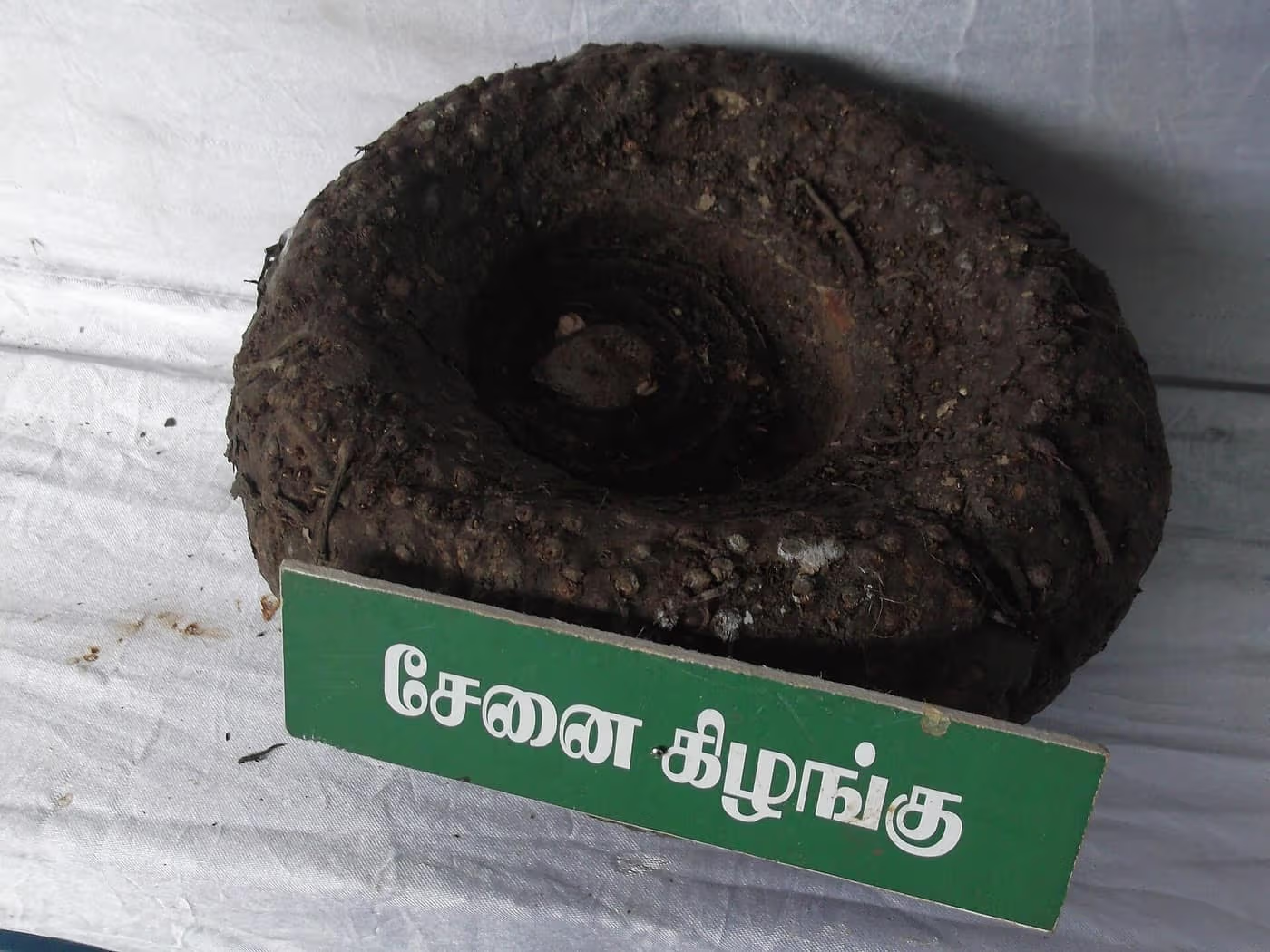
Elephant foot yam (Amorphophallus paeoniifolius, also written A. campanulatus) — suran or jimikand — is a warm-season corm crop grown for its large starchy underground corm. It is planted from whole small corms or cut pieces of a large corm, never from true seed, and it stays in the field for about six to ten months.
It is grown mostly in Andhra Pradesh, Telangana, West Bengal, Bihar, Odisha, Kerala, Karnataka, Maharashtra, Gujarat and Uttar Pradesh, and it sells in vegetable markets across the country, with a steady demand in Kerala and Tamil Nadu. It grows well on deep, loose, well-drained sandy loam or red loam, and it also does reasonably in partial shade, so it is often grown between young plantation trees or with banana.
Three things decide the crop: the seed piece (roughly 500 g to 1 kg, healthy, with part of the bud), drainage (waterlogging brings collar rot), and the variety (for yield, cooking quality and how itchy the corm is). Get those right and suran is one of the better-paying vegetable crops of the rainy season.
Crop timeline, sowing to harvest
A quick visual map of the season — jump to any section below for the detail behind each stage.
- Day 0
Planting
Plant whole corms of about 500 g or cut pieces of 750 g–1 kg, each with part of the central bud, in pits (60 × 60 × 45 cm) at about 90 × 90 cm. Cut pieces are treated and left to dry in shade for a day or two before planting. Best time is March to May, before the monsoon.
- Day 20–45
Sprouting
Sprouting is slow — be patient. Mulch the pits with straw or crop residue, water lightly in dry weather, and replace any piece that rots or fails to sprout.
- Day 45
First top-dressing, weeding and earthing-up
Give the first dose of fertiliser (40 kg N, 60 kg P₂O₅, 50 kg K₂O per hectare), weed, and earth up around the plant.
- Day 75
Second top-dressing and earthing-up
About a month later, give the second dose (40 kg N and 50 kg K₂O per hectare), with a shallow weeding and another earthing-up.
- Day 45–150
Leaf growth — watch for wet-weather diseases
The big umbrella-like leaf grows fast. In wet, humid spells watch for leaf blight, and look at the base of the plant for collar rot. Remove and destroy sick plants early.
- Day 150–210
Corm filling
The corm swells underground in the cooler, drier weather after the rains. Keep the soil lightly moist but never waterlogged.
- Day 180–300
Maturity and harvest
The leaf and stalk turn yellow and dry down. Early types such as Gajendra are ready in about 6–7 months; Sree Padma takes 8–9 and Sree Athira 9–10 months. Dig gently so the corm is not cut.
Suitable states
States where this crop is grown at scale, highlighted below. Your local Krishi Vigyan Kendra is still the final word for your specific block.
- Jammu and Kashmir
- Himachal Pradesh
- Punjab
- Uttarakhand
- Haryana
- Delhi
- Uttar Pradesh
- Rajasthan
- Bihar
- Jharkhand
- West Bengal
- Sikkim
- Assam
- Arunachal Pradesh
- Meghalaya
- Nagaland
- Manipur
- Mizoram
- Tripura
- Gujarat
- Madhya Pradesh
- Chhattisgarh
- Maharashtra
- Odisha
- Goa
- Telangana
- Andhra Pradesh
- Karnataka
- Kerala
- Tamil Nadu
- Puducherry
- Ladakh
- Chandigarh
- Lakshadweep
Grown here
Climate requirements
A warm, humid season followed by cooler, drier weather at corm-filling is the ideal pattern. Growing suran on land that stays wet, in a low spot, or in heavy clay is what usually goes wrong.
Ideal temperature
Suran likes warm, humid weather while the leaves are growing and cooler, drier weather while the corm fills. It is a tropical and sub-tropical crop and does not like frost.
Rainfall
It is mostly grown as a rainfed crop planted just before the monsoon. If the monsoon is late or breaks for a long time, a light irrigation about once a week keeps the crop going. Too much water is the bigger danger — waterlogging is harmful.
Humidity
Warm, wet, humid weather is what makes leaf blight spread, so scout the leaves during rainy spells. The same weather helps the leaves grow well, so humidity is both what the crop needs and what you must watch.
Sunlight
Full sun gives the best corm size, but suran also grows in light shade, which is why it is grown between young plantation trees or along with banana.
Soil requirements
Never plant suran again and again on the same plot. The collar-rot fungus builds up in the soil over the years, so rotate to a different crop for two or three seasons.
Suitable soil
Deep, loose, well-drained sandy loam or red loam rich in organic matter. The corm has to push out and swell underground, so a hard, compacted, stony soil gives small, misshapen corms.
pH range
pH 5.5–7.2 suits it well.
Drainage
Drainage decides the crop. Standing water is a direct path to collar rot. Avoid low spots, and on heavier soil plant on raised beds or ridges so water can drain away.
Organic matter
It responds strongly to organic matter — about 25–30 tonnes of well-rotted FYM per hectare (2–3 kg per pit), mixed into the soil in the pit before planting. Adding Trichoderma with the FYM helps guard against collar rot.
Land preparation
Same four steps whichever region you are in — only the timing shifts with the sowing window.
- 1
Plough deep and make pits or beds
Plough well so the soil is deep and loose, then dig pits of 60 × 60 × 45 cm at about 90 × 90 cm spacing. On heavier soil make raised beds (about 45 × 90 cm spacing) instead, so extra water drains off.
- 2
Fill the pits with FYM
Mix 2–3 kg of well-rotted FYM (25–30 t/ha in all) with the topsoil in each pit. Adding Trichoderma with the FYM gives some protection against collar rot.
- 3
Prepare healthy seed corm pieces
Choose a clean, healthy corm with no rot or wounds. Cut it into pieces of 750 g–1 kg, each with a part of the central bud, or use whole corms of about 500 g. Treat the pieces (a cow-dung slurry with Trichoderma, or the fungicide your KVK recommends) and dry them in shade for a day or two before planting.
Seed information
How the main varieties compare, so you can pick by duration, yield, disease pressure or what you are growing for.
| Variety | Duration | Yield | Disease resistance | Best state | Suitable for |
|---|---|---|---|---|---|
The most widely grown suran variety in India and the national check variety. It started as a local selection from the Kovvur area of Andhra Pradesh. The corm is smooth and round, low in itch (non-acrid), and has few or no side cormels, so all seed pieces must be cut from the main corm. Trials have recorded about 37 t/ha, and up to 50–60 t/ha is reported as its potential. | 180–210 days | 37 t/ha in recent trials; 50–60 t/ha potential | No special resistance claimed | Andhra Pradesh, Telangana, Bihar and widely across India | Commercial cultivation where a non-acrid, market-friendly corm is wanted |
The first suran variety released from Kerala (1998), selected from local material collected in Wayanad by ICAR-CTCRI, Thiruvananthapuram. A medium-tall plant (about 78 cm) with a round, brown-skinned corm and cream flesh, and very good cooking quality. It is reported to show some tolerance to collar rot and mosaic. | 8–9 months | 42 t/ha average; 80 t/ha potential | Reported tolerant of collar rot and mosaic | Kerala | Kerala and similar humid regions |
A genetically improved variety released by ICAR-CTCRI in 2006, from the cross Am-15 × Am-45. A medium-height plant (85–110 cm) with a round, brown-skinned corm and pink flesh, and excellent cooking quality. It is tolerant of collar rot and mosaic disease. | 9–10 months | 40.5 t/ha; 45.6 t/ha potential | Tolerant of collar rot and mosaic | Kerala | Fields with a history of collar rot or mosaic, where a longer crop is acceptable |
A selection from Bidhan Chandra Krishi Viswavidyalaya (BCKV), Kalyani, West Bengal, for the eastern plains. Sources describe smooth corms with creamy flesh and a high yield (about 50–55 t/ha reported). Reports differ on how itchy it is, so try a small lot before planting a large area. | Not documented in available sources | About 50–55 t/ha (reported) | Not documented in available sources | West Bengal | Eastern India; buy planting material through the university or your KVK |
An early variety from Narendra Deva University of Agriculture and Technology (NDUAT), Faizabad (Ayodhya), Uttar Pradesh, with smooth corms. Station trials report very high yields, but one comparison found more oxalate — so more itch if undercooked — than other varieties, so cook it thoroughly. | 180–200 days | 60–85 t/ha (station trials; farm yields are lower) | Not documented in available sources | Uttar Pradesh | Uttar Pradesh and nearby plains; buy planting material through the university or your KVK |
A clonal selection released by Navsari Agricultural University, Gujarat, after clearance by the State Seed Sub-Committee, and described in the Indian Journal of Horticulture in 2024. Gujarat farmers prefer it for good yield, disease tolerance, good flesh colour and taste, and in one comparison it had the lowest oxalate and the highest starch of the types tested. | Not documented in available sources | Not documented in available sources | Described as disease-tolerant (details not documented in available sources) | Gujarat | Gujarat and the tribal belt of south Gujarat; a newer Gujarat line, NEFY-25 (GEFY-2, Dangi Suran), has since out-yielded it in trials |
- Seed rate
- Roughly 8–10 tonnes of corm pieces per hectare (about 35–40 quintals per acre) when you plant 750 g–1 kg pieces at 90 × 90 cm, which gives about 12,300 pits per hectare. Published figures vary a lot with piece size and spacing — some sources quote as little as 3.5 t/ha — so work out your own need from your spacing and piece weight.
- Certified seed
- Buy or save seed corms only from a healthy crop with no rot or mosaic. Collar rot travels on the seed corm, so never plant from a field where plants collapsed. Buy from your state agriculture university, KVK, or a known grower, and ask for the variety name.
- Spacing
- Pits of 60 × 60 × 45 cm at about 90 × 90 cm; on beds, about 45 × 90 cm.
- Seed treatment
- After cutting, treat the pieces with a cow-dung slurry plus Trichoderma, or with the fungicide your KVK recommends, and dry them in shade for a day or two before planting. This protects the cut face from rot in the first weeks.
Sowing guide
Never plant a piece without part of the central bud, a rotten or wounded piece, or a piece from a plant that collapsed. That one shortcut is the most common reason for a poor stand.
- Best time
- Plant March to May, so the crop sprouts before or with the monsoon. If you can irrigate, planting can go on into July. Match the planting time to your variety's duration so the digging falls in dry, cool weather.
- Row spacing
- 90 cm (45 cm on beds)
- Plant spacing
- 90 cm (pit spacing)
- Sowing depth
- Cover the piece with 5–10 cm of soil, bud side up
- Method
- Set each piece bud-side up in the pit, cover with soil and firm lightly. Mulch the pit with straw or crop residue to keep the soil moist and stop weeds. Water lightly if the weather is dry.
Fertilizer schedule
A split dose beats one large dose applied at sowing — nitrogen especially is lost to the air and to leaching if it all goes in on day one.
- 1
Basal (in the pit)
Before planting
Well-rotted FYM at 2–3 kg per pit (25–30 t/ha), with Trichoderma if you can. This is the base of the crop.
- 2
First top-dressing
Day 45
At 45 days after planting, give 40 kg N, 60 kg P₂O₅ and 50 kg K₂O per hectare (part of the overall 80:60:100), with weeding and earthing-up.
- 3
Second top-dressing
Day 75
A month later, the remaining 40 kg N and 50 kg K₂O per hectare, applied close to the plant with a shallow weeding and earthing-up so the fertiliser is covered with soil.
Irrigation schedule
1. Sprouting
Day 0–45
If you plant in dry weather before the rains, water lightly and keep the pit moist. Mulch helps a lot. Do not overwater; the piece can rot.
2. Leaf growth and corm filling
Day 45–210
Mostly rainfed. In a long break in the rains, irrigate about once a week. Drain away any standing water.
3. Before harvest
Last 3–4 weeks
Stop irrigation as the leaf yellows and dries so the soil is dry for digging.
Critical stages
- Sprouting (first 6 weeks)
- Corm filling
Water-saving tips
- Mulching the pits with straw or crop residue holds moisture and reduces the number of irrigations needed.
- Suran is mostly a rainfed crop — irrigate only in a dry break, and never let the plot stay waterlogged.
- On heavier soil, raised beds and drains cost little and are the best protection against collar rot.
Weed management
Common weeds
Organic control
- Mulch every pit with straw or crop residue soon after planting; this alone stops many weeds.
- Hand-weed at about 45 and 75 days, at the same time as the top-dressings and earthing-up.
- Earthing-up buries small weeds around the plant and gives the corm room to swell.
Chemical control
- A weedicide cleared for this crop can be used soon after planting; check the product and dose with your KVK before you buy.
- Once the big leaves open (from about two months), the shade holds most weeds back.
Nutrient deficiency identification
What a shortage of each nutrient actually looks like on the plant, so you can tell a deficiency apart from a disease before you spray the wrong thing.
Potassium
Visible symptom
Yellow-brown, scorched leaf edges and smaller, poorer corms. Suran takes a lot of potash, and it is the largest part of the fertiliser dose.
Nitrogen
Visible symptom
Pale, small leaves and a weak canopy. Usually caused by skipping the second top-dressing.
Phosphorus
Visible symptom
Slow, stunted growth and dull, dark-green or purplish leaves on poor soil, and a weaker corm. Give the phosphorus dose at 45 days as recommended.
Diseases to watch for
Symptoms, likely cause and what actually treats it — not just a spray name.
Collar rot
- Symptoms
- Water-soaked brown patches at the base (collar) of the plant just above the soil; the plant yellows, the stalk shrinks and the plant collapses. A white cottony growth and small round mustard-seed-like balls may show on the base, and in bad cases the whole plant and corm rot.
- Cause
- The soil fungus Sclerotium rolfsii, which lives in the soil and on the seed corm, and spreads fast in waterlogged, heavy, poorly drained soil, especially in the rainy season.
- Treatment
- Remove and destroy collapsed plants with the soil around them. Drench the base with the fungicide recommended by your KVK (a 0.2% captan drench is one option), and add Trichoderma with FYM and neem cake.
- Prevention
- Use healthy, treated seed corm pieces, plant on raised beds or ridges with good drainage, add Trichoderma and neem cake (about 10 quintals per hectare) with the FYM, avoid wounding the corm at the collar, and rotate away from suran for two or three seasons.
Leaf blight (Phytophthora colocasiae)
- Symptoms
- Small, dark, round spots on the leaves that quickly grow and join; drops of yellow liquid may ooze from the spots, and the leaves can dry off in a few days. Corms of a badly hit crop can also rot after harvest.
- Cause
- The fungus-like organism Phytophthora colocasiae (the same one that causes taro leaf blight), which spreads in wet, humid weather with warm days.
- Treatment
- Pick and destroy the worst leaves, and spray a recommended fungicide such as mancozeb (2 g per litre of water), repeating during wet spells as per label and KVK advice.
- Prevention
- Use disease-free planting material, do not plant too densely so air can move through the crop, drain fields well, and scout the leaves at the start of wet weather so the first spray is not late.
Mosaic (Dasheen mosaic virus)
- Symptoms
- Light-green to yellow mottling on the leaves, twisted or distorted leaf blades, and a weaker plant; the corm from an infected plant is noticeably smaller.
- Cause
- Dasheen mosaic virus, spread by aphids as they feed and carried inside infected planting corms from one season to the next.
- Treatment
- There is no cure. Pull out and destroy infected plants early so they do not spread the virus.
- Prevention
- Plant only virus-free corms, control aphids, and do not use tools or seed from infected plants. A tolerant variety such as Sree Athira helps.
Pests to watch for
What to look for before the damage is visible, and organic options before you reach for a chemical.
Tobacco caterpillar
- Identification
- A fat, greenish-brown caterpillar with dark markings that feeds at night and hides in the soil by day. It is a general pest that attacks many crops.
- Damage
- It eats large holes in the big leaves and, when there are many, can leave the plants stripped, which slows corm filling.
- Organic control
- Hand-pick caterpillars and egg masses, use light and pheromone traps, and spray neem-based products or Bt on young larvae.
- Chemical control
- Use a recommended insecticide only when numbers are high, following the label and your KVK's advice.
Aphids
- Identification
- Tiny soft insects clustered on young leaves and leaf stalks, often with sticky honeydew.
- Damage
- They weaken the plant a little by feeding, but the real harm is that they carry mosaic virus from plant to plant.
- Organic control
- Yellow sticky traps, neem-based sprays and protecting ladybird beetles and other natural enemies.
- Chemical control
- A recommended insecticide when aphids are building up fast, especially around plants that will supply seed corms.
Root-knot nematodes
- Identification
- Tiny soil worms you cannot see; look for small knots or galls on the roots, yellowing, and a plant that looks weak in spite of good watering.
- Damage
- They damage the roots and reduce both the yield and the market look of the corm; the wounds also let rot fungi in.
- Organic control
- Rotate with a non-host crop, add neem cake and well-rotted FYM, and use clean seed pieces from a nematode-free field.
- Chemical control
- Follow your KVK's advice; the ICAR-CTCRI technical leaflet on nematode management in elephant foot yam is a good guide.
Common mistakes to avoid
The mistakes that cost growers the most, ranked by how often they show up in the field — not in the order you might expect.
- 1
Cutting the seed corm into small pieces, or into pieces with no part of the central bud, to save money.
Why it hurts
Pieces of about 500 g–1 kg with part of the bud give strong plants and big corms. Tiny or bud-less pieces sprout late, weakly or not at all, and cut the yield far more than the seed saving is worth.
- 2
Planting in a low spot, or on heavy clay, without raised beds or drainage.
Why it hurts
Water that stands around the base of the plant invites collar rot, which can wipe out plants and even the seed. Drainage is the cheapest protection this crop has.
- 3
Planting from a corm or field that had collapsed plants, or without treating the cut pieces.
Why it hurts
The collar-rot fungus and mosaic virus travel on the seed piece, so a single bad lot can seed a whole new field. Choose clean corms, treat the pieces and let the cut faces dry in shade before planting.
- 4
Skipping the top-dressings and earthing-up at about 45 and 75 days.
Why it hurts
Suran takes a lot of potash and nitrogen, and earthing-up gives the corm room to swell and buries the fertiliser. Skipping either gives smaller, lower-quality corms.
- 5
Growing suran again and again on the same plot.
Why it hurts
Collar-rot fungus and nematodes build up in the soil over the years. Rotate to another crop for two or three seasons.
- 6
Ignoring acridity — planting an itchy variety, or selling or cooking a corm without checking.
Why it hurts
A corm that makes the mouth and throat itch is hard to sell and gives the crop a bad name. Choose a low-itch variety like Gajendra, and cook thoroughly; boiling with a little tamarind or lemon is a common way to reduce the itch.
Harvesting
Dig when the leaf and stalk have yellowed, dried and fallen, usually six to ten months after planting depending on the variety. Digging too early gives small corms that do not keep; leaving them too long in wet soil risks rot.
Signs it is ready
- The leaf and stalk turn yellow and dry down
- The plant falls over and the leaf stalk has withered
- The variety's stated duration has passed
Tools
- A spade or digging fork to lift the corm without cutting it
- Baskets or sacks with soft lining to carry the heavy corms
- A knife to trim roots, and a sun-dry space to spread the corms
Expected yield
About 30–40 tonnes per hectare for a well-managed crop, which is roughly 12–16 tonnes (120–160 quintals) per acre. Some improved varieties have given more in trials, but farm yields are usually lower.
Post-harvest & storage
Storage
Let the corms dry in shade for a day or two, brush off soil (do not wash them) and remove damaged ones. Store in a cool, dry, airy shed on a raised platform or straw bed, in a single layer or a low heap with air moving through. Sound corms usually keep well for several weeks, and some types keep for months. Set aside some good corms for seed if you plan to plant again.
Packaging
Pack in ventilated baskets or gunny sacks. Handle with care — a cut or bruise on the corm is where rot starts.
Transportation
Move on padded, well-ventilated loads and avoid dropping the corms; a cracked or bruised corm sells for less and rots faster.
Shelf life
Several weeks at ordinary temperature for sound corms; longer in a cool, dry, airy store.
Market prices
Today's mandi price near you, pulled live from the government's own Agmarknet data.
Live daily mandi prices from the government Agmarknet dataset.
Synced from data.gov.in (Agmarknet). Rates are ₹ per quintal.
Weather
Current conditions and a 5-day outlook for your selected location, with one line of stage-aware advice.
Pick your state for current conditions and a 5-day outlook.
Live data from Open-Meteo
Profit calculator
Your own cost sheet, expected yield and selling price — not ours.
Where the money goes
Share of the total cost per acre, using the calculator’s own default cost sheet below — adjust the numbers there to match your field and this picture will no longer apply to you exactly, but the ranking rarely changes.
- Seed52% (₹80,000)
- Labour19% (₹30,000)
- Fertiliser9% (₹14,000)
- Land rent6% (₹10,000)
- Interest4% (₹6,000)
- Pesticide & weedicide3% (₹5,000)
- Machinery3% (₹5,000)
- Irrigation3% (₹5,000)
Official downloads
Government and ICAR documents only — everything below is hosted on an official server.
ICAR-Central Tuber Crops Research Institute (CTCRI), Thiruvananthapuram
Sree Padma, Sree Athira, the elephant foot yam package of practices and nematode management leaflet
TNAU Agritech Portal — Elephant yam
Soil, planting, fertiliser dose and disease control for elephant yam
Kisan Call Centre — 1800-180-1551
Free crop advice in your language
Frequently asked questions
How much seed corm do I need for one acre, and can I cut the corm?
Yes, you can cut it. The usual practice is to plant whole corms of about 500 g, or cut a large corm into pieces of 750 g–1 kg, each with part of the central bud. At about 90 × 90 cm, one hectare needs roughly 8–10 tonnes, which is about 35–40 quintals per acre. Published figures vary with piece size and spacing, so work it out from your own spacing. Treat the cut pieces and dry them in shade for a day or two before you plant.
Which suran variety should I grow?
Gajendra is the most widely grown all-round variety, with a smooth, low-itch corm, in about 6–7 months. In Kerala, Sree Padma and Sree Athira suit local conditions and Sree Athira is tolerant of collar rot and mosaic. Bidhan Kusum suits West Bengal, NDA-9 suits Uttar Pradesh, and Swagata suits Gujarat. Buy from your state agriculture university, KVK, or a trusted grower and ask for the variety name.
Why does suran make my mouth and throat itch?
Suran has needle-like calcium-oxalate crystals, more in some varieties than in others. Choose a low-itch type like Gajendra, cook the corm thoroughly, and boiling with a little tamarind or lemon juice is a common way to reduce the itch further. Wear gloves when cutting large amounts of raw corm.
My suran plants are collapsing at the base. What is it?
It is most likely collar rot (Sclerotium rolfsii), a soil fungus that spreads in waterlogged, heavy soil. Remove and destroy the collapsed plants, drench the base with a recommended fungicide or Trichoderma, and drain the field. Next time, use treated seed pieces, plant on raised beds and rotate away from suran for two or three seasons.
How much can I earn from one acre of suran?
It depends on your yield, your seed cost and the price you get. A well-managed crop can give about 12–16 tonnes per acre. On 23 September 2026, wholesale market prices reported on Agmarknet mostly ranged between about ₹3,000 and ₹6,000 per quintal, while retail Uzhavar Sandhai markets in Tamil Nadu were higher. The seed corm is the biggest single cost, so use the profit calculator on this site with your own numbers.
Does suran have an MSP or a mandi price?
There is no MSP for suran. It trades on Agmarknet under the commodity name "Elephant Yam (Suran)/Amorphophallus", with many daily price records — mostly from Tamil Nadu and Kerala, and also from Telangana, Maharashtra, Gujarat and other states — so you can check the price on the Mandi Price page of this site.
Still have questions?
The FAQs above cover the common ones. For anything specific to your field and soil, your nearest Krishi Vigyan Kendra is the authoritative answer.