
Gram (Chana)
Cicer arietinum
India's largest rabi pulse — sown on the moisture the monsoon leaves behind, it asks for very little water and almost no nitrogen, but the whole season turns on one thing: a well-timed defence against pod borer at flowering. Over-watering and over-fertilizing a legume that fixes its own nitrogen does more harm than good.
Quick Summary
The key points from this page in about two minutes — read it or have it read aloud.
Quick Summary
Gram, or chana, is India’s largest rabi pulse, and it is grown on very little. Sown after the monsoon withdraws, it lives mostly on the moisture left in the soil, needs at most one or two protective irrigations, and — as a legume that fixes its own nitrogen through root nodules — asks for only a small starter dose of fertiliser. It follows a cereal like rice or maize in the rotation without a heavy input bill and leaves the soil better than it found it.
The classic mistake with gram is kindness. Over-water or over-fertilise it and the plant runs to leaf, flowers poorly, pods late and is more prone to wilt. The sowing window threads a needle for the same reason: too early into warm soil and the crop grows lush and vegetative; too late and flowering meets cold snaps, then a hot spell at pod-fill shrivels the grain.
What the season really turns on is one well-timed defence against the gram pod borer, which arrives at flowering and can hollow the pods before the damage is obvious — get that right and it matters more than anything done earlier. A cool, dry, rainless spell through flowering and podding is ideal; unseasonal rain or heavy dew then invites grey mould and feeds the borer. Choose desi or kabuli gram to suit your soil and market — kabuli fetches more but needs richer, better-managed ground. Harvest when the plants dry off, the leaves turn reddish-brown and shed, and the pods rattle. The page below carries the exact seed rate, spacing, starter nutrient dose, protective irrigation timing, crop duration, expected yields and current MSP.
- Crop type
- Pulse (legume)
- Season
- Rabi
- Suitable states
- 10 major states
- Growing duration
- 100–120 days
- Water requirement
- Low (mostly rainfed; 1–2 protective irrigations where available)
- Temperature
- 20–25°C
- Soil type
- Well-drained sandy loam to clay loam
- Difficulty level
- Easy
- Expected yield
- 15–20 q/ha (up to 25 irrigated)
- MSP (RMS 2026–27)
- ₹5,875 / quintal
Overview
Gram (Cicer arietinum), called chana, is by far India's largest rabi pulse, grown across roughly 10 million hectares. Madhya Pradesh, Maharashtra, Rajasthan, Uttar Pradesh and Karnataka together account for most of the crop, sown after the monsoon withdraws and grown almost entirely on the soil moisture the monsoon leaves behind.
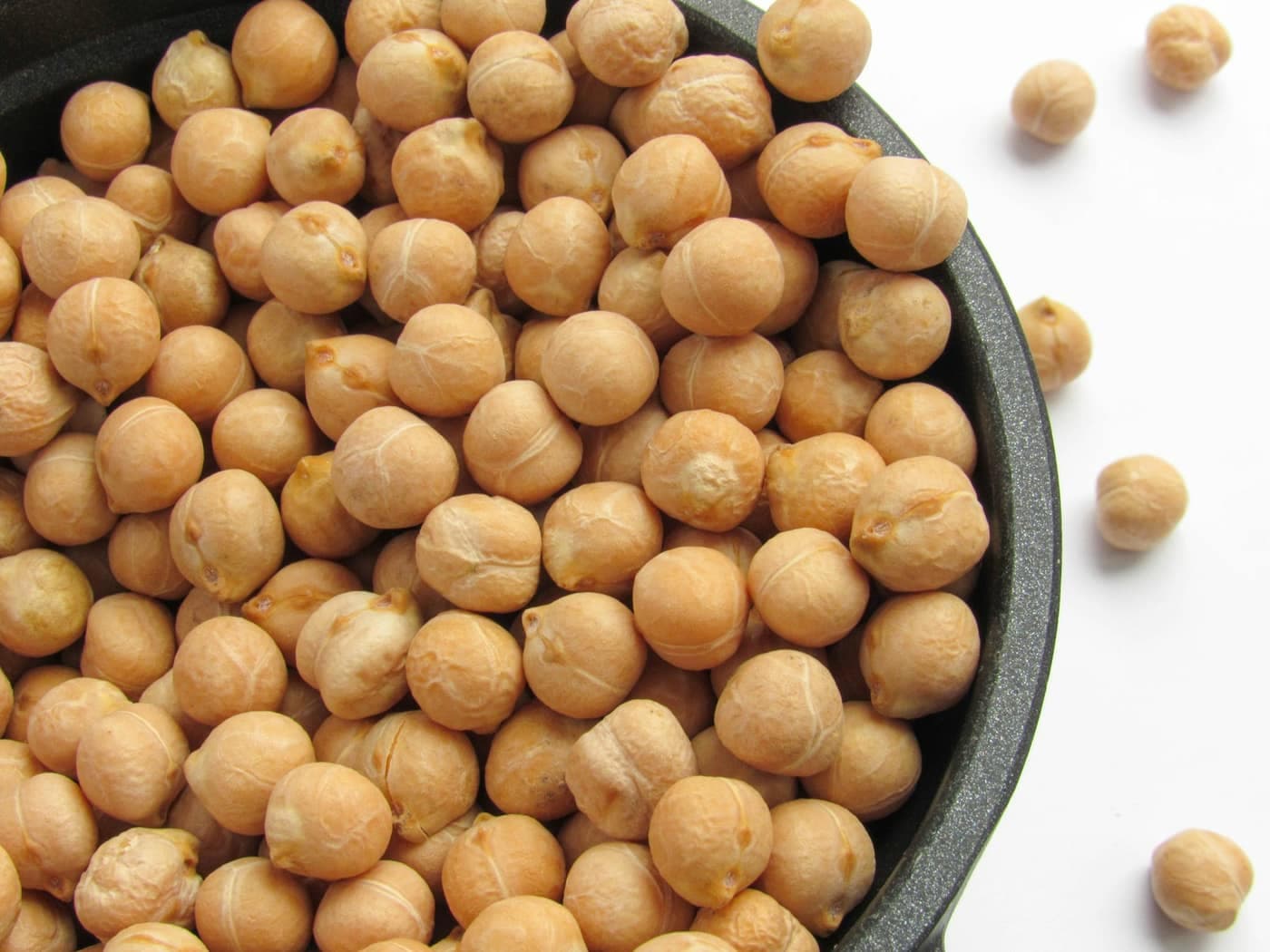
Two broad types are grown: desi gram — the small, angular, brown or dark-seeded chana that makes up the bulk of India's area and goes mostly into dal and besan — and kabuli gram, the larger, cream-coloured seed that fetches a higher price and needs richer, better-managed soil to size up. What both share is that they fix their own nitrogen through root nodules, so gram follows a cereal like rice or maize in rotation without a heavy fertilizer bill, and actually leaves the soil better than it found it.
The crop's defining risk is the gram pod borer (Helicoverpa armigera), which arrives at flowering and can hollow out the pods before you notice — a single well-timed defence here matters more to the final yield than anything applied earlier. Its other classic mistake is kindness: over-irrigating and over-fertilizing a legume pushes leafy growth, delays podding and worsens wilt. This page follows the crop in the order you will actually meet it — land, seed, sowing, nutrition, water, protection, harvest, sale.
Crop timeline, sowing to harvest
A quick visual map of the season — jump to any section below for the detail behind each stage.
- Day 0
Sowing
Sown mid-October to mid-November into receding soil moisture, 30 cm rows, 5–8 cm deep — deep enough to reach moisture, since the crop is grown largely without irrigation.
- Day 8–12
Germination & nodulation begins
Mesorhizobium bacteria on treated seed start forming the root nodules the crop uses to fix its own nitrogen — the reason gram needs only a small starter dose of N.
- Day 30–40
Vegetative growth / nipping
In a vigorous, early-sown crop, pinching out the growing tips (nipping) encourages branching and more pod-bearing sites — a traditional practice that pays off only where the crop is lush, not on a thin late-sown stand.
- Day 45–50
Pre-flowering irrigation
Where irrigation is available, the first of at most two protective irrigations goes on here — the single most rewarding one, timed just before flowering.
- Day 50–70
Flowering & pod initiation
The pod borer watch begins in earnest; a cold snap or frost during flowering can also blank a large share of pods, which is why the sowing window is not pushed too late.
- Day 70–90
Pod filling
Decides final grain weight; the second protective irrigation goes on early in this stage. A hot, moisture-stressed spell now brings dry root rot and shrivels the grain.
- Day 100–120
Maturity & harvest
The crop is ready when plants dry off, leaves turn reddish-brown and shed, and pods rattle — harvested too green, the grain shrivels and stores poorly.
Suitable states
States where this crop is grown at scale, highlighted below. Your local Krishi Vigyan Kendra is still the final word for your specific block.
- Jammu and Kashmir
- Himachal Pradesh
- Punjab
- Uttarakhand
- Haryana
- Delhi
- Uttar Pradesh
- Rajasthan
- Bihar
- Jharkhand
- West Bengal
- Sikkim
- Assam
- Arunachal Pradesh
- Meghalaya
- Nagaland
- Manipur
- Mizoram
- Tripura
- Gujarat
- Madhya Pradesh
- Chhattisgarh
- Maharashtra
- Odisha
- Goa
- Telangana
- Andhra Pradesh
- Karnataka
- Kerala
- Tamil Nadu
- Puducherry
- Ladakh
- Chandigarh
Grown here
Climate requirements
The whole sowing calendar is a balance — sow too early into warm soil and the crop grows lush and vegetative and flowers poorly; sow too late and flowering runs into cold snaps first, then terminal heat at pod-fill. Mid-October to mid-November for most of the plains is the window that threads that needle.
Ideal temperature
20–25°C through growth; gram is a cool-season crop, but a hard frost during flowering blanks pods and a hot spell above 30°C during pod-fill (terminal heat) shrivels the grain in a late-sown crop
Rainfall
A cool, dry, largely rainless season is ideal — the crop lives on stored soil moisture. Unseasonal rain or heavy dew during flowering and podding is actively harmful, favouring Botrytis grey mould and pod borer alike
Humidity
Low to moderate humidity suits the crop; a humid, cloudy spell over a dense canopy is the classic trigger for grey mould and Ascochyta blight in the northern belt
Sunlight
Full sun and clear, dry days through flowering and podding give the best pod set; overcast, humid weather at flowering is the worst combination for both disease and pest pressure
Soil requirements
A soil test here matters most for phosphorus and sulphur and for pH — not for nitrogen, which the crop mostly makes for itself. On a field that has not grown gram or another pulse recently, seed inoculation with Mesorhizobium is the cheapest, highest-return input there is, because there is no established rhizobium population in the soil to begin with.
Suitable soil
Well-drained sandy loam to medium-heavy clay loam; the black cotton soils of Madhya Pradesh and Maharashtra grow excellent gram provided drainage is good, while kabuli types need the better, more fertile end of that range to size up
pH range
6.0–7.5 — nodulation and Mesorhizobium survival both drop off in strongly acidic or highly alkaline soil; gram tolerates mild salinity better than most pulses but not waterlogging
Drainage
Good to very good — gram is highly intolerant of waterlogging, and standing water even briefly at the seedling or flowering stage invites wilt and root rots that no spray reliably cures once established
Organic matter
Medium; the crop does not need heavy organic build-up and actively responds poorly to a rich, over-fertile field by growing leafy at the expense of pods
Land preparation
Same four steps whichever region you are in — only the timing shifts with the sowing window.
- 1
Field cleaning
Clear the previous kharif crop's residue and stubble; undecomposed residue left in a moist seedbed is a common trigger for collar rot in the emerging seedlings.
- 2
One or two harrowings
Gram does best on a rough, cloddy seedbed rather than a fine, over-worked one — a coarse tilth conserves the sub-surface moisture the crop will live on and improves aeration around the roots.
- 3
Conserve residual moisture
Every operation after the monsoon is really about protecting stored soil moisture. Avoid unnecessary tillage that dries the seed zone, and sow soon after the field is prepared rather than letting it bake open.
- 4
Ridge-and-furrow on heavy soil
On heavy black soils prone to even brief waterlogging after unseasonal rain, forming broad beds or ridges gives the crop the drainage it genuinely cannot tolerate being without.
Seed information
How the main varieties compare, so you can pick by duration, yield, disease pressure or what you are growing for.
| Variety | Duration | Yield | Disease resistance | Best state | Suitable for |
|---|---|---|---|---|---|
A short-duration, wilt-resistant desi variety that became the mainstay across central and southern India for its reliability and machine-harvest suitability. | 95–100 days | High | Resistant to Fusarium wilt | Madhya Pradesh, Maharashtra, Karnataka | Rainfed dal-type desi, mechanised harvest |
A widely grown wilt-resistant desi with bold, attractive grain and steady performance across the central plateau. | 105–110 days | High | Resistant to wilt, root rot and collar rot | Maharashtra, Madhya Pradesh, Gujarat, Rajasthan, Chhattisgarh | Bold-grain desi for the mainstream dal market |
An early, high-yielding desi suited to double-cropping and to escaping terminal heat in shorter-season situations. | 100–105 days | High | Moderately wilt-resistant | Madhya Pradesh, Gujarat | Early sowing and late-sown heat escape |
A drought-tolerant desi bred for the rainfed tracts of Maharashtra, holding yield better than most under moisture stress. | 85–100 days | Medium–High | Wilt-tolerant | Maharashtra, Madhya Pradesh, Gujarat | Rainfed, moisture-stress-prone fields |
A long-established north-Indian desi for the irrigated and timely-sown conditions of the Indo-Gangetic plain. | 135–150 days | High | Moderate | Uttar Pradesh, Punjab, Haryana | Timely-sown, irrigated northern plains |
An IARI bold-seeded desi bred for large, brown grain that fetches a premium over ordinary desi lots, for both normal and late-sown timing. | 110–115 days | 18–20 q/ha | Moderate wilt tolerance | Punjab, Haryana, Madhya Pradesh | Premium bold-grain desi, normal and late sowing |
One of the Ganganagar (Rajasthan) series bred for the north-western tract, combining wilt tolerance with good grain size on light soils. | 135–155 days | High | Wilt-tolerant | Rajasthan, Haryana, Punjab, Uttar Pradesh, Jammu and Kashmir | North-western light soils, irrigated |
A sibling release in the Ganganagar (Rajasthan) series, on the same wilt-tolerant, light-soil breeding line as GNG-1581. | 135–145 days | High | Wilt-tolerant | Rajasthan, Punjab, Haryana, Delhi, Uttar Pradesh | North-western light soils, irrigated |
A bold, extra-large-seeded kabuli type grown for the premium and export market — higher priced but needing richer soil and tighter management than desi. | 90–100 days | Medium–High | Moderate; kabuli is generally more disease-sensitive than desi | Madhya Pradesh, Maharashtra, Karnataka, Andhra Pradesh, Chhattisgarh, Gujarat | Premium bold-seeded kabuli, export grade |
A bold-seeded kabuli type on the same premium, extra-large-grain export line as Kak-2, needing the same richer soil and tighter management than desi. | 105–120 days | Medium–High | Moderate; kabuli is generally more disease-sensitive than desi | Madhya Pradesh, Maharashtra, Karnataka | Premium bold-seeded kabuli, export grade |
- Seed rate
- Desi: 65–80 kg/ha; bold-seeded and kabuli types: up to 100 kg/ha, since the same plant population needs more weight in larger seed. A late-sown crop is deliberately sown thicker to compensate for reduced branching.
- Certified seed
- Use certified or truthfully-labelled seed of a wilt-resistant variety suited to your region — on wilt-prone black soils, variety resistance is the single most effective and cheapest defence there is, working where no spray reliably does.
- Spacing
- 30 cm between rows and about 10 cm between plants for desi; kabuli and bold types are given wider rows (up to 45 cm) as they branch more.
- Seed treatment
- A three-step treatment in order: first a fungicide (carbendazim + thiram, or Trichoderma viride) against wilt and root rots, then Mesorhizobium ciceri culture, and finally a phosphate-solubilising bacteria (PSB) culture — the rhizobium and PSB must go on after the fungicide has dried, never mixed with it.
Sowing guide
Sowing deep into moisture is the whole game in a rainfed rabi pulse — a shallow-sown crop chasing a drying surface germinates unevenly and never fully recovers the stand, and the resulting gaps are exactly where weeds and later wilt patches take hold.
- Best time
- Mid-October to mid-November across most of the plains; timely sowing matters more here than for many crops because both ends of the calendar carry a penalty — lush vegetative growth if too early, cold at flowering then terminal heat at pod-fill if too late.
- Row spacing
- 30 cm for desi; up to 45 cm for spreading kabuli and bold desi types
- Plant spacing
- About 10 cm within the row
- Sowing depth
- 5–8 cm — deeper than a cereal, so the seed reaches reliable sub-surface moisture in a crop grown largely without irrigation
- Method
- Line sowing with a seed drill or behind a plough into moisture; deeper placement into moist soil gives far more even emergence than shallow sowing that depends on a top-soil that dries out fast
Fertilizer schedule
A split dose beats one large dose applied at sowing — nitrogen especially is lost to the air and to leaching if it all goes in on day one.
- 1
Basal (at sowing)
Day 0
A small starter dose only — around 15–20 kg N and 40–50 kg P2O5 per hectare, placed near the seed. The nitrogen is just a starter until nodulation takes over; phosphorus is the nutrient gram most reliably responds to.
- 2
Sulphur & micronutrients (basal)
Day 0
On light or sulphur-deficient soils, 20 kg sulphur per hectare at sowing lifts both yield and grain quality; a zinc application follows a soil test where zinc is low.
- 3
No nitrogen top-dressing
—
Unlike a cereal, gram gets no nitrogen top-dressing. Once nodulation is working the crop supplies its own; adding urea now pushes leafy growth, delays podding and worsens wilt — a classic and costly kindness.
Irrigation schedule
1. Pre-flowering irrigation
Day 45–50
Where water is available, this first light irrigation just before flowering is the single most rewarding one — but only a light one, since gram resents wet feet.
2. Pod-filling irrigation
Day 70–80
A second light irrigation early in pod-fill helps grain size where the season has turned dry; skip it if the crop is lush or the soil still holds moisture.
Critical stages
- Pre-flowering (branching and flower initiation)
- Pod filling (grain-size determination)
Water-saving tips
- Most gram is grown entirely on stored soil moisture with zero irrigation — treat any irrigation as a small, precise top-up at the two critical stages, not a routine schedule.
- Deep sowing into moisture at the start replaces much of the need for early irrigation.
- Over-irrigation is the more common error than under-irrigation: it pushes vegetative growth, delays podding and directly worsens wilt and root rots.
- If only one irrigation is possible, give it just before flowering rather than later.
Weed management
Common weeds
Organic control
- One or two hand weedings or a light inter-row hoeing at 30 and 45 days covers the crop's critical weed-free period.
- The 30 cm row spacing is set partly so a hoe or wheel-hand-hoe can pass between rows.
- A vigorous, well-nodulated crop closes its canopy and suppresses late weeds itself — another reason a good early stand matters.
Chemical control
- A pre-emergence herbicide such as pendimethalin applied within 2–3 days of sowing controls the early flush of weeds during the critical first 30–45 days.
- Follow local recommendations for any post-emergence option, as registered choices for pulses are limited and crop-safety is narrow.
Nutrient deficiency identification
What a shortage of each nutrient actually looks like on the plant, so you can tell a deficiency apart from a disease before you spray the wrong thing.
Nitrogen (nodulation failure)
Visible symptom
Uniform pale yellowing and stunted growth despite adequate soil nitrogen — in a legume this almost always means poor or absent rhizobium nodulation, not a genuine soil shortfall, and traces back to skipped or poorly done seed inoculation.
Phosphorus
Visible symptom
Dull, dark green older leaves, delayed flowering and weak root development; gram is notably responsive to phosphorus, and a shortfall shows up as fewer pods rather than obvious leaf symptoms.
Sulphur
Visible symptom
Pale yellowing of the younger leaves first (sulphur does not move within the plant), easily mistaken for nitrogen deficiency; common on light soils and a real yield-limiter in pulses.
Iron
Visible symptom
Interveinal yellowing of the youngest leaves while the veins stay green, most common on high-pH calcareous soils or after a spell of waterlogging.
Zinc
Visible symptom
Small leaves, shortened internodes and a bushy, stunted appearance; shows up on zinc-poor and heavily cereal-cropped soils and is confirmed with a soil test.
Diseases to watch for
Symptoms, likely cause and what actually treats it — not just a spray name.
Fusarium wilt
- Symptoms
- Sudden drooping and yellowing of whole plants in patches, often at flowering; a cut stem shows dark, discoloured internal tissue. Plants collapse and dry standing.
- Cause
- The soil-borne fungus Fusarium oxysporum f. sp. ciceris, which persists in the soil for years and is worse in warm soil, late sowing and continuous gram cropping.
- Treatment
- There is no reliable in-season cure once wilt appears — management is preventive. Rogue out and remove affected plants to limit spread.
- Prevention
- Grow a wilt-resistant variety (JG-11, JAKI-9218, JG-14) — the single most effective defence. Treat seed with a fungicide or Trichoderma, sow at the right time into cooler soil, and rotate away from gram on badly affected fields.
Ascochyta blight
- Symptoms
- Brown, circular lesions with dark concentric rings on leaves, stems and pods; stems may girdle and break. Spreads fast in cool, cloudy, humid weather and after unseasonal rain.
- Cause
- The fungus Ascochyta rabiei, favoured by cool humid conditions and dense canopies, most damaging in the northern and north-western belt.
- Treatment
- Spray a suitable fungicide (chlorothalonil or mancozeb-based) at first appearance and repeat as advised, especially after rain during the susceptible period.
- Prevention
- Use clean, treated seed of a tolerant variety, avoid overly dense stands, and do not sow gram after gram on a field with a blight history.
Botrytis grey mould
- Symptoms
- A grey, fuzzy mould on flowers, growing tips and pods, causing flower drop and empty pods; worst in a dense, humid canopy after unseasonal rain or heavy dew at flowering.
- Cause
- The fungus Botrytis cinerea, favoured by high humidity and a closed, over-vegetative canopy — one more reason over-fertilizing and over-watering backfire.
- Treatment
- Spray a recommended fungicide at flowering if humid, cloudy weather sets in, and improve air movement by avoiding excessive plant density.
- Prevention
- Avoid over-dense sowing and excess nitrogen that build a humid canopy; grow tolerant varieties and prefer wider rows in humid tracts.
Dry root rot
- Symptoms
- Sudden drying of scattered plants late in the season, usually during a hot, moisture-stressed spell at pod-fill; roots are dark, brittle and shredded with the fine rootlets rotted away.
- Cause
- The fungus Rhizoctonia bataticola (Macrophomina), which strikes when the crop is under combined heat and moisture stress in the later stages.
- Treatment
- No effective in-season spray; a light protective irrigation to relieve moisture stress during a hot spell is the practical response.
- Prevention
- Seed treatment with Trichoderma, timely sowing to avoid terminal heat, and maintaining some moisture at pod-fill reduce its incidence.
Pests to watch for
What to look for before the damage is visible, and organic options before you reach for a chemical.
Gram pod borer (Helicoverpa armigera)
- Identification
- Green to brown caterpillars that bore neat, round holes into pods and eat the developing grain, often with the head thrust inside the pod and the body hanging out. Moths and early larvae appear around flowering.
- Damage
- The single most damaging pest of gram — a caterpillar hollows out one pod after another, and a heavy infestation at podding can take a large share of the crop before the damage is obvious from the field edge.
- Organic control
- Install pheromone traps to time action, set up bird perches for predatory birds, and spray Helicoverpa NPV or neem-based products against early-stage larvae; conserve natural parasitoids by not spraying broad-spectrum insecticide too early.
- Chemical control
- A need-based spray of a recommended insecticide (such as emamectin benzoate or chlorantraniliprole) timed to early-stage larvae at flowering and early podding, guided by pheromone-trap catches rather than the calendar.
Cutworm
- Identification
- Dull grey-brown caterpillars that hide in the soil by day and cut young seedlings off at the base at night; damage shows as toppled seedlings and gaps in the early stand.
- Damage
- Thins the stand at the seedling stage, most damaging in a patchy, moist early crop and in fields with heavy weed or residue cover.
- Organic control
- Flood or expose the soil ahead of sowing to kill hiding larvae and pupae, remove weed cover that shelters them, and hand-collect at night in a bad patch.
- Chemical control
- A soil or basal insecticide application where cutworm history is bad; spot treatment of affected patches rather than the whole field.
Pulse beetle (bruchid) — storage
- Identification
- Small brown beetles whose grubs develop inside the stored grain, leaving round exit holes; infestation often begins in the field and multiplies rapidly in storage.
- Damage
- The main post-harvest pest of gram — it bores through stored grain, reducing weight, germination and market grade, and can ruin a stored lot within a few months if unchecked.
- Organic control
- Dry the grain to about 9–10% moisture before storage, store in airtight containers, and mix in neem leaves or use the traditional practices that deny the beetle air; solar heating of small lots also kills the grubs.
- Chemical control
- Fumigation of stored grain under proper safety precautions where a large quantity is held; keep seed and food lots separate and never treat food grain with seed-only chemicals.
Common mistakes to avoid
The mistakes that cost growers the most, ranked by how often they show up in the field — not in the order you might expect.
- 1
Over-irrigating the crop
Why it hurts
Gram fixes its own nitrogen and lives on stored moisture — extra water pushes leafy growth, delays and reduces podding, and directly worsens wilt and root rots. Over-watering is the most common way farmers cut their own gram yield.
- 2
Applying a full nitrogen dose like a cereal
Why it hurts
Top-dressed urea on a nodulating legume grows a lush canopy at the expense of pods, delays maturity and increases disease — the opposite of the intended effect, and wasted money.
- 3
Skipping Mesorhizobium seed inoculation
Why it hurts
On a field new to gram there is no rhizobium in the soil; without inoculation the crop cannot fix nitrogen properly and behaves like a starved plant — forfeiting the cheapest, highest-return input the crop has.
- 4
Growing a wilt-susceptible variety on wilt-prone soil
Why it hurts
Fusarium wilt has no reliable in-season cure; planting a susceptible variety on infected black soil can wipe out patches of the field that a resistant variety would have carried through.
- 5
Sowing too shallow
Why it hurts
A shallow-sown rabi crop chases a fast-drying surface and germinates unevenly, leaving a gappy stand that never fully recovers and hands those gaps to weeds and wilt.
- 6
Sowing too late
Why it hurts
Late-sown gram flowers into cold snaps and then meets terminal heat at pod-fill, shrivelling the grain — both ends of the penalty at once, and a major reason late crops under-yield.
- 7
Ignoring the pod borer until damage is visible
Why it hurts
By the time hollowed pods are obvious from the field edge, the borer has already taken its share; the return on control is highest when it is timed to early-stage larvae at flowering, guided by pheromone traps.
- 8
Calendar spraying instead of monitoring
Why it hurts
Routine early broad-spectrum spraying kills the natural parasitoids that suppress pod borer and can trigger a worse outbreak later, besides wasting money on sprays applied at the wrong stage.
- 9
Over-dense sowing
Why it hurts
A too-thick stand builds a humid, closed canopy that invites Botrytis grey mould and Ascochyta blight and reduces branching and pod set per plant.
- 10
Storing under-dried grain
Why it hurts
Gram stored above about 10% moisture is prey to the pulse beetle, which can hollow out a stored lot within months — losing in storage what was earned in the field.
Harvesting
When the plants have dried off, the leaves have turned reddish-brown and started to shed, and the pods are dry and rattle — usually 100–120 days after sowing. Harvesting too green shrivels the grain and spoils storage quality.
Signs it is ready
- Leaves turn reddish-brown and begin to drop
- Pods dry, turn straw-coloured and rattle when shaken
- Whole plants dry down uniformly
- Grain is hard and at about 12–15% moisture, drying further before storage
Tools
- Sickle for manual harvesting of the whole plant
- Combine harvester for short, erect, machine-suitable varieties on larger holdings
- Threshing by pulse thresher or gentle beating, avoiding grain cracking
Expected yield
15–20 q/ha under rainfed conditions, rising to 20–25 q/ha with one or two protective irrigations and a wilt-resistant variety.
Post-harvest & storage
Storage
Dry the grain to about 9–10% moisture before storage — this is the single most important step against the pulse beetle. Store in clean, airtight containers or well-sealed bags in a dry space, keeping seed and food lots separate.
Packaging
Bagged in clean jute or woven bags for market; premium bold kabuli is graded by seed size, which sets its price, so size uniformity is worth protecting.
Transportation
Transport dry and protected from rain; moisture picked up in transit undoes careful drying and invites both mould and storage pests.
Shelf life
Well-dried gram stored airtight keeps for a year or more; the limiting factor is almost always the pulse beetle rather than the grain itself, which is why drying and airtight storage matter so much.
Market prices
Today's mandi price near you, pulled live from the government's own Agmarknet data.
Live daily mandi prices from the government Agmarknet dataset.
Synced from data.gov.in (Agmarknet). Rates are ₹ per quintal.
Weather
Current conditions and a 5-day outlook for your selected location, with one line of stage-aware advice.
Pick your state for current conditions and a 5-day outlook.
Live data from Open-Meteo
Profit calculator
Your own cost sheet, expected yield and selling price — not ours.
Where the money goes
Share of the total cost per acre, using the calculator’s own default cost sheet below — adjust the numbers there to match your field and this picture will no longer apply to you exactly, but the ranking rarely changes.
- Land rent40% (₹10,000)
- Labour16% (₹4,000)
- Seed12% (₹3,000)
- Machinery12% (₹3,000)
- Fertiliser7% (₹1,800)
- Pesticide & weedicide6% (₹1,600)
- Irrigation5% (₹1,200)
- Interest2% (₹600)
Official downloads
Government and ICAR documents only — everything below is hosted on an official server.
ICAR-IIPR — Indian Institute of Pulses Research, Kanpur
Package of practices, chickpea variety releases and pulse-specific advisories from the ICAR institute mandated for pulses research.
Agmarknet — mandi prices
Daily mandi arrivals and prices for gram (desi and kabuli) across regulated markets, to compare against MSP before selling.
Soil Health Card portal
Get a free, crop-wise fertilizer and micronutrient recommendation for your own field before finalising the schedule above.
mKisan — SMS advisory portal
Register for free SMS advisories timed to your crop stage and district.
Frequently asked questions
What is the best time to sow gram (chana)?
Mid-October to mid-November across most of the plains, into receding soil moisture after the monsoon. Timely sowing matters more here than for many crops: too early and the crop grows lush and vegetative and flowers poorly; too late and flowering runs into cold snaps followed by terminal heat at pod-fill, which shrivels the grain.
How much seed do I need per acre?
For desi gram, roughly 26–32 kg per acre (65–80 kg/ha); bold-seeded and kabuli types need up to about 40 kg per acre (100 kg/ha) because the same plant population weighs more in larger seed. A late-sown crop is sown a little thicker to make up for reduced branching.
What is the difference between desi and kabuli gram?
Desi is the small, angular, brown or dark-seeded chana that makes up most of India's area and goes into dal and besan; kabuli is the larger, cream-coloured seed sold at a premium for the table and export market. Kabuli fetches a higher price but needs richer soil and tighter management, and is generally more disease-sensitive than desi.
Does gram need nitrogen fertilizer?
Only a small starter dose at sowing. Gram fixes its own nitrogen through root nodules once inoculated with Mesorhizobium, so it gets no nitrogen top-dressing at all. Applying a full cereal-style nitrogen dose is a classic and costly mistake — it grows leaves at the expense of pods and worsens wilt.
Why is seed inoculation with Rhizobium so important for gram?
The nodule bacteria that let gram fix its own nitrogen (Mesorhizobium ciceri) are not always present in the soil — especially on a field that has not grown gram or another pulse recently. Inoculating the seed with the culture at sowing is the cheapest, highest-return input the crop has; skip it and the crop cannot fix nitrogen properly and behaves like a starved plant.
How many irrigations does gram need?
Most gram is grown entirely on stored soil moisture with no irrigation at all. Where water is available, give at most two light protective irrigations — one just before flowering (the most rewarding) and one early in pod-fill if the season has turned dry. Over-irrigation does more harm than under-irrigation, pushing leafy growth and worsening wilt.
What is Fusarium wilt and how do I manage it?
Fusarium wilt is a soil-borne fungal disease that makes whole plants droop, yellow and dry in patches, often at flowering, with dark discoloured tissue inside a cut stem. It has no reliable in-season cure, so management is preventive: grow a wilt-resistant variety such as JG-11, JAKI-9218 or JG-14, treat the seed with a fungicide or Trichoderma, sow at the right time, and rotate away from gram on badly affected fields.
How do I control the pod borer in gram?
The gram pod borer (Helicoverpa armigera) is the crop's single most damaging pest, arriving at flowering and hollowing out the pods. Use pheromone traps to time action, set up bird perches, and spray Helicoverpa NPV or neem against early-stage larvae; a need-based chemical spray (such as emamectin benzoate or chlorantraniliprole) is most effective timed to young larvae at flowering and early podding, guided by trap catches rather than the calendar.
What is nipping and should I do it?
Nipping is pinching out the growing tips of the plants at around 30–40 days to encourage side branching and more pod-bearing sites. It pays off only in a vigorous, lush, early-sown crop — on a thin, late-sown or moisture-stressed stand it removes growth the crop can ill afford, so it is not a universal recommendation.
Why does over-watering reduce my gram yield?
Gram is a legume that makes its own nitrogen and is grown on stored moisture — extra water pushes it into leafy vegetative growth that delays and reduces podding, and it directly favours Fusarium wilt and root rots, which gram cannot tolerate. Over-irrigation is one of the most common ways farmers unintentionally cut their own gram yield.
What is the current MSP for gram?
₹5,875 per quintal for RMS (Rabi Marketing Season) 2026–27, as notified by the Government of India. Gram is India's largest rabi pulse and is procured under MSP, though actual procurement varies by state and district, so it is worth checking your local mandi rate against MSP before selling.
What yield can I realistically expect from gram?
Around 15–20 quintals per hectare under rainfed conditions, rising to 20–25 q/ha with one or two protective irrigations and a wilt-resistant variety. Realised yield depends heavily on timely sowing, avoiding wilt through variety choice, and getting the pod borer defence timed right at flowering.
Can gram be grown after rice?
Yes — gram grown on residual moisture after kharif rice or maize is a very common and sound rotation. As a legume it fixes nitrogen and leaves the soil better for the following crop, and it needs little irrigation, which suits the drier post-monsoon period. On heavy rice soils, ensure good drainage, since gram is highly intolerant of waterlogging.
Why is my gram crop growing tall and leafy but setting few pods?
Almost always too much water or nitrogen, or both — often on a rich field or after over-irrigation. A legume responds to a rich, wet environment by growing vegetatively rather than podding. Cut back irrigation, never top-dress nitrogen, and consider nipping in a genuinely lush early crop to redirect that growth into branches and pods.
Does frost damage gram?
Yes — a hard frost or cold snap during flowering can blank a large share of the pods, which is one reason the sowing window is not pushed too late. Light protective irrigation before a forecast frost, and avoiding very late sowing that puts flowering in the coldest weeks, both reduce the risk.
How do I stop the pulse beetle from ruining stored gram?
Dry the grain to about 9–10% moisture before storage — that single step matters most — then store it airtight in clean containers or well-sealed bags in a dry place. Neem leaves and, for small lots, solar heating help; keep seed and food grain separate and never treat food grain with seed-only chemicals. The pulse beetle, not the grain itself, is what usually limits how long gram keeps.
Is gram eligible for crop insurance and PM-KISAN?
Gram is covered as a notified rabi crop under the Pradhan Mantri Fasal Bima Yojana (PMFBY) in districts where it is notified, and gram-growing farm households are eligible for PM-KISAN like any other. Check the current season's notification and cut-off dates for your district, since notified crops and enrolment windows change each season.
Still have questions?
The FAQs above cover the common ones. For anything specific to your field and soil, your nearest Krishi Vigyan Kendra is the authoritative answer.