
Soybean
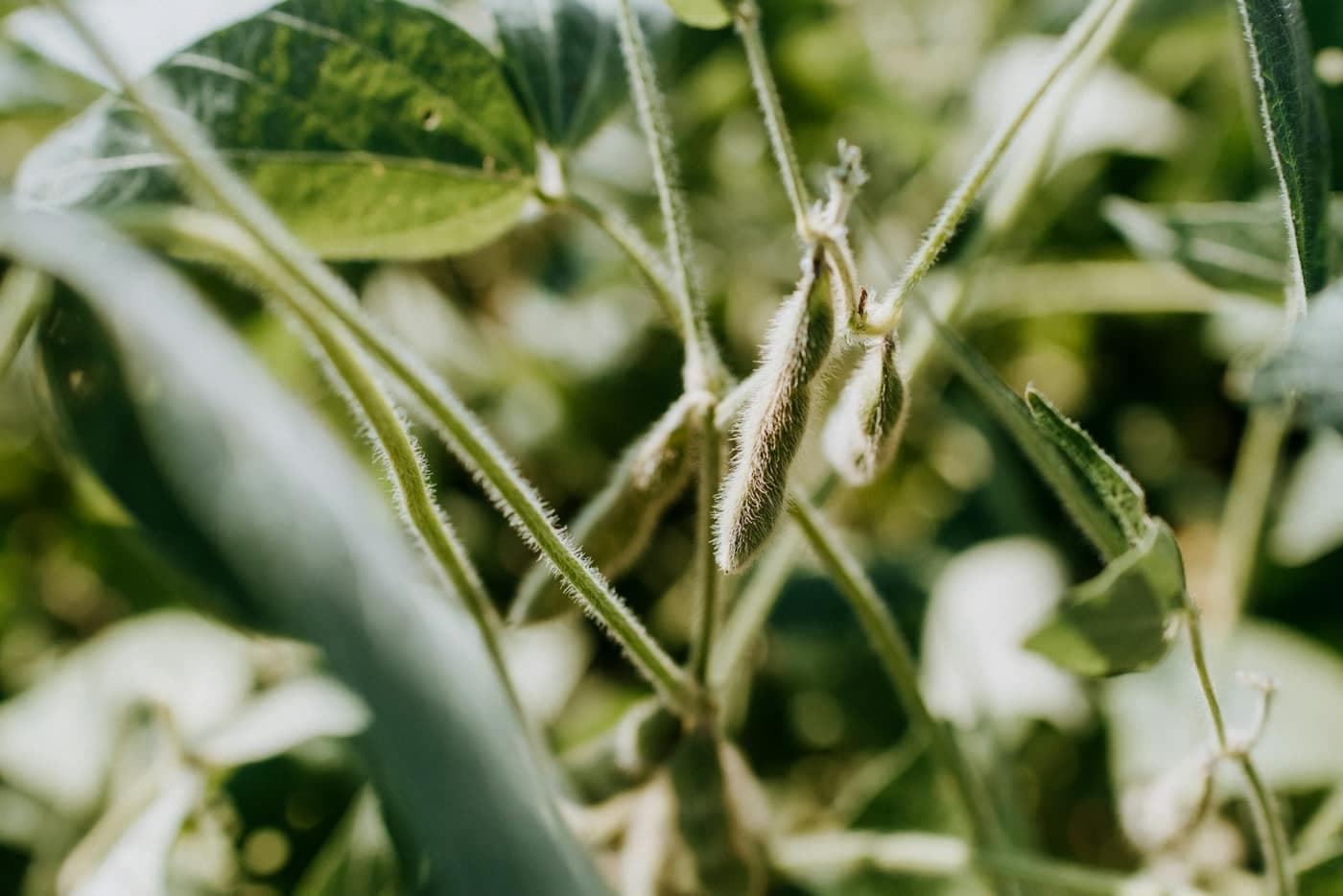
Glycine max
Central India's defining kharif oilseed — a nitrogen-fixing legume that needs far less fertilizer than any cereal, provided the seed is inoculated with rhizobium before sowing. Sowing at the true onset of the monsoon, not a hopeful early shower, is the single biggest lever on the whole season.
Quick Summary
The key points from this page in about two minutes — read it or have it read aloud.
Quick Summary
Soybean is central India’s defining kharif oilseed, with Madhya Pradesh alone growing close to half the country’s crop. What sets it apart from every other major kharif crop is that it fixes its own nitrogen: rhizobium bacteria in its root nodules pull nitrogen from the air, so it needs only a small starter dose of fertiliser rather than a full cereal schedule — but only if the seed is treated with the right rhizobium culture before sowing. Skip that one cheap step and the crop behaves like any nitrogen-starved plant, and no amount of urea top-dressed later fixes a nodulation failure as cheaply.
The biggest lever on the season is sowing timing. Wait for the monsoon to genuinely set in rather than chasing a hopeful early shower — a false shower that does not follow through kills the stand at the just-germinated stage, when it is most vulnerable. Once up, the crop’s slow, low canopy makes its first six weeks the most weed-sensitive stretch of any major kharif crop.
Its two real risks are yellow mosaic virus, brought in by whitefly early in the season, and standing water — soybean is among the least waterlogging-tolerant kharif crops, and a day or two of it at flowering can cost much of the pod set. Keep whitefly down, choose a tolerant variety, and make sure the field drains. Harvest when the pods rattle and nearly all have turned brown; too dry and the seed shatters in the field, too wet and it moulds in store. The page below carries the exact seed rate, inoculant details, spacing, starter nutrient dose, protective irrigation timing, crop duration, expected yields and current MSP.
- Crop type
- Oilseed (legume)
- Season
- Kharif
- Suitable states
- 8 major states
- Growing duration
- 90–110 days
- Water requirement
- Low–moderate (mostly rainfed; 1–2 protective irrigations where available)
- Temperature
- 20–30°C
- Soil type
- Well-drained loam to clay loam
- Difficulty level
- Moderate
- Expected yield
- 12–18 q/ha (rainfed)
- MSP (KMS 2026–27, yellow)
- ₹5,708 / quintal
Overview
Soybean (Glycine max) is India's defining kharif oilseed, grown across roughly 12 million hectares. Madhya Pradesh alone accounts for close to half the country's crop, with Maharashtra and Rajasthan making up most of the rest, and smaller areas across Karnataka, Telangana, Gujarat and Chhattisgarh.
What sets soybean apart from every other major kharif crop is that it fixes its own nitrogen. Rhizobium bacteria colonising its root nodules pull nitrogen from the air, which is exactly why the crop needs only a small starter dose of nitrogen fertilizer rather than a full cereal-level schedule — but only if the seed was inoculated with the right rhizobium culture before sowing. Skip that one step and the crop behaves like any other nitrogen-starved plant, and no amount of top-dressed urea afterward fixes a nodulation failure as cheaply as the inoculant would have.
The crop's two real risks are yellow mosaic virus, carried in by whitefly early in the season, and a slow, low canopy that loses badly to weeds in its first six weeks if not managed. This page follows the crop in the order you will actually meet it — land, seed, sowing, nutrition, water, protection, harvest, sale — so you can jump straight to whichever stage you are at.
Crop timeline, sowing to harvest
A quick visual map of the season — jump to any section below for the detail behind each stage.
- Day 0
Sowing
Sown at 3–4 cm depth once the monsoon has genuinely set in, mid-June to early July, 45 cm row spacing.
- Day 10–15
Germination & nodulation begins
Rhizobium bacteria on treated seed begin forming the root nodules the crop will use to fix its own nitrogen for the rest of the season.
- Day 15–45
Critical weed-free period
Soybean's slow, low canopy loses more yield to weed competition in this window than at any other stage — the single most weed-sensitive period of any major kharif crop.
- Day 40–50
Flowering
Whitefly buildup here is the moment to watch — it is the vector for yellow mosaic virus, the crop's single most damaging disease.
- Day 60–75
Pod formation
Sets pod number; a dry spell here costs more than at almost any other stage in a rainfed crop.
- Day 80–95
Pod filling (seed development)
Decides final seed weight and oil content; charcoal rot risk rises sharply if this stage runs into a moisture-stressed dry spell.
- Day 90–110
Harvest
When pods rattle and 95% have turned brown — harvested at the wrong moisture, seed either shatters in the field or discolours and moulds in storage.
Suitable states
States where this crop is grown at scale, highlighted below. Your local Krishi Vigyan Kendra is still the final word for your specific block.
- Jammu and Kashmir
- Himachal Pradesh
- Punjab
- Uttarakhand
- Haryana
- Delhi
- Uttar Pradesh
- Rajasthan
- Bihar
- Jharkhand
- West Bengal
- Sikkim
- Assam
- Arunachal Pradesh
- Meghalaya
- Nagaland
- Manipur
- Mizoram
- Tripura
- Gujarat
- Madhya Pradesh
- Chhattisgarh
- Maharashtra
- Odisha
- Goa
- Telangana
- Andhra Pradesh
- Karnataka
- Kerala
- Tamil Nadu
- Puducherry
- Ladakh
- Chandigarh
Grown here
Climate requirements
Soybean's whole sowing calendar is written around the actual monsoon, not a fixed date — sowing into a false early shower that fails to follow through kills the stand at the most vulnerable, just-germinated stage, which is why waiting a few extra days for a genuinely established monsoon is worth far more than the days it costs.
Ideal temperature
20–30°C through active growth; germination and nodulation both slow down noticeably below 20°C
Rainfall
600–650 mm over the crop cycle, almost entirely from the monsoon — a genuinely rainfed crop across most of its area, not a supplementary-irrigation one
Humidity
Moderate to high humidity through vegetative growth is normal for a monsoon crop; the same humidity that suits the plant also favours whitefly buildup and, later, pod and stem blight in a delayed harvest
Sunlight
Full sun; a cloudy, waterlogged spell during flowering and pod-fill costs more yield than almost any other single weather event
Soil requirements
A soil test matters here less for nitrogen — the crop mostly makes its own — and more for pH and sulphur; acidic or poorly buffered soil measurably weakens nodulation, which is the one input substitution this crop cannot really compensate for with fertilizer alone.
Suitable soil
Well-drained medium to deep loam or clay loam; the crop tolerates the black cotton soil common across Madhya Pradesh and Maharashtra well, provided drainage is good
pH range
6.0–7.5 — rhizobium survival and nodulation both drop off sharply outside this range, which makes soil pH more consequential here than for most crops
Drainage
Very good — soybean is one of the least waterlogging-tolerant kharif crops grown in India; even a day or two of standing water at flowering can cost a large share of the pod set
Organic matter
Medium to high organic matter supports the soil biology the rhizobium inoculant depends on; a field that has never grown soybean or another legume benefits most from inoculation, since it starts with no established rhizobium population of its own
Land preparation
Same four steps whichever region you are in — only the timing shifts with the sowing window.
- 1
Field cleaning
Remove the previous rabi crop's residue and weeds so the field starts clean ahead of the monsoon.
- 2
Summer ploughing
One deep summer ploughing exposes soil-borne disease inoculum (including charcoal rot and Rhizoctonia) to the sun and helps the field absorb the first monsoon rain rather than shedding it as runoff.
- 3
Harrowing
One or two harrowings after the first monsoon shower break clods to a fine, even tilth ahead of sowing.
- 4
Ridge and furrow / broad-bed formation
On heavier black cotton soil, forming ridges and furrows (or broad beds) ahead of sowing is the single most effective defence against the one thing soybean genuinely cannot tolerate — standing water after a heavy shower.
Seed information
How the main varieties compare, so you can pick by duration, yield, disease pressure or what you are growing for.
| Variety | Duration | Yield | Disease resistance | Best state | Suitable for |
|---|---|---|---|---|---|
The most widely grown soybean variety in India by a large margin, released by JNKVV Jabalpur — a dependable, widely adapted standard with a long track record across central India. | 90–100 days | 25–30 q/ha | Resistant to girdle beetle and stem fly; tolerant of moisture stress | Madhya Pradesh, Maharashtra, Rajasthan (pan-India) | Widely adapted, high-yielding standard choice |
Ten days shorter than JS 335 — the extra week it frees up before rabi sowing is the whole reason to choose it. | 85–90 days | 20–30 q/ha | Moderate — rust and pod blight | Madhya Pradesh, Maharashtra | Freeing the field earlier for rabi |
A newer JNKVV Jabalpur release with a real yield step up over JS 335, now displacing it across much of Madhya Pradesh. | 95–100 days | 20–22 q/ha | Moderate rust and pod blight tolerance | Madhya Pradesh, Maharashtra, Rajasthan | Yield upgrade over JS 335 |
An ICAR-IISR Indore release specifically valued for tolerating delayed sowing (up to 20 July) with little yield penalty — useful where the monsoon arrives late or the previous crop delays land availability. | ~94 days | ~16.5 q/ha | Moderately resistant to Alternaria leaf spot, bacterial pustule and target leaf spot | Madhya Pradesh | Delayed or late sowing |
An ICAR-IISR Indore release approved by the Madhya Pradesh government, bred with a focus on soil-borne disease tolerance rather than peak yield. | ~93 days | ~15 q/ha | Moderately resistant to charcoal rot and target leaf spot | Madhya Pradesh | Fields with a history of charcoal rot |
India's first drought-tolerant soybean variety, from ICAR-IISR Indore — already notified for the eastern region and newly released for Madhya Pradesh, aimed at areas where a dry spell during the season is the norm rather than the exception. | ~105 days | ~17 q/ha | Moderately resistant to yellow mosaic virus (MYMV) | Madhya Pradesh, eastern India (drought-prone tracts) | Drought-prone, moisture-stressed fields |
- Seed rate
- 65–80 kg/ha (roughly 26–32 kg/acre) — high for an oilseed, since soybean is sown as a dense, direct crop rather than transplanted or thinned to a wide spacing
- Certified seed
- Get a fresh germination test before sowing every season, even on your own saved seed — soybean seed loses viability far faster than cereal seed in ordinary humid on-farm storage, and a lot that tested fine last year can already be well below a usable germination percentage by the next sowing.
- Spacing
- 45 cm row-to-row, 5–7 cm plant-to-plant
- Seed treatment
- Two separate treatments, not one: a fungicide (carbendazim or thiram) against seed and soil-borne fungal disease, followed by inoculation with the correct Rhizobium japonicum culture plus a PSB (phosphate-solubilising bacteria) biofertilizer, applied to seed in the shade just before sowing — inoculated seed should be sown the same day, since the live culture does not survive long once applied.
Sowing guide
Waiting for a genuinely established monsoon before sowing, even if it costs a week against the calendar, is worth far more than the days saved — a stand that germinates into a dry spell right after emergence is lost outright, and re-sowing costs both the lost seed and the lost time far more than the original delay would have.
- Best time
- Mid-June to early July, sown only once the monsoon has genuinely established itself — not at the first isolated pre-monsoon shower, which too often fails to follow through and leaves a killed, patchy stand behind
- Row spacing
- 45 cm
- Plant spacing
- 5–7 cm
- Sowing depth
- 3–4 cm
- Method
- Seed drill for an even stand and consistent depth; broadcasting remains common on small holdings but gives patchier germination and makes the critical early weeding pass harder
Fertilizer schedule
A split dose beats one large dose applied at sowing — nitrogen especially is lost to the air and to leaching if it all goes in on day one.
- 1
Basal dose
At sowing
A starter dose of nitrogen (around 20 kg/ha N — far below any cereal, since the crop will fix most of its own once nodulation is established) plus the full phosphorus and potassium dose (commonly 60–80 kg/ha P₂O₅ and 40 kg/ha K₂O) and 20 kg/ha sulphur where soil tests show a shortfall, all placed at sowing.
- 2
No routine nitrogen top dressing
Through the vegetative stage
Unlike wheat, maize or bajra, a well-nodulated soybean crop does not need a mid-season nitrogen top dressing — the root nodules take over nitrogen supply within a few weeks of germination, which is the entire economic case for getting seed inoculation right at sowing.
- 3
Foliar micronutrient spray (as needed)
At flowering to early pod-fill, on deficient soils
A 2% DAP or 0.5% ferrous sulphate foliar spray corrects a visible iron or general nutrient shortfall at a stage too late for a fresh basal dose to help.
Irrigation schedule
1. Flowering
~40–50 days after sowing
The single most valuable protective irrigation if a dry spell coincides with flowering — losing flowers here directly caps pod number for the rest of the season.
2. Pod filling
~80–95 days after sowing
A second protective irrigation, where available, decides final seed weight and oil content, and meaningfully lowers charcoal rot risk in a moisture-stressed crop.
Critical stages
- Flowering (~40–50 days) — the single irrigation to prioritise if only one is possible
- Pod filling / seed development
Water-saving tips
- Soybean is grown almost entirely on monsoon rainfall — plan any irrigation infrastructure as insurance against a dry spell at flowering or pod-fill, not as a routine schedule
- Ridges, furrows or broad beds that shed excess water after a heavy shower protect the crop from waterlogging, which costs more yield here than a missed irrigation ever would
- Where irrigation is genuinely scarce, prioritise flowering over pod-filling — the earlier stage has the larger effect on final pod count
Weed management
Common weeds
Organic control
- One or two hand weedings timed at 20–25 and 35–40 days after sowing — soybean's critical weed-free period runs from about 15 to 45 days, and losses inside that window compound fast if weeding is delayed
- A stale seedbed ahead of sowing — let the first weed flush emerge on early monsoon moisture, then kill it before drilling — measurably cuts the in-season weed load
- Blind (pre-emergence) harrowing at 3–4 days after sowing, before the crop emerges, controls the first weed flush without touching the germinating soybean
Chemical control
- Pre-emergence: pendimethalin within 1–2 days of sowing on moist soil
- Post-emergence, grassy weeds: quizalofop-ethyl at 15–20 days
- Post-emergence, broad-spectrum: imazethapyr at 15–20 days where both grasses and broadleaf weeds are present
Nutrient deficiency identification
What a shortage of each nutrient actually looks like on the plant, so you can tell a deficiency apart from a disease before you spray the wrong thing.
Nitrogen (nodulation failure)
Visible symptom
Uniform pale yellowing and a stunted, spindly plant despite a fertilized field — almost always traces back to poor or absent rhizobium nodulation rather than a genuine soil nitrogen shortfall.
Phosphorus
Visible symptom
Dark green to purplish leaves, delayed flowering and stunted root development.
Potassium
Visible symptom
Yellowing and scorching along the margins of older leaves, with weak stems and poor pod fill.
Iron
Visible symptom
Interveinal yellowing on the youngest leaves while the veins themselves stay green, most common on high-pH or waterlogged soil.
Sulphur
Visible symptom
Pale yellowing of younger leaves first, since sulphur does not move within the plant — often mistaken for a nitrogen shortfall, the same confusion as in mustard.
Diseases to watch for
Symptoms, likely cause and what actually treats it — not just a spray name.
Yellow Mosaic Virus (YMV / MYMV)
- Symptoms
- Bright yellow patches mottled across otherwise green leaves, starting on younger leaves and spreading until the whole leaf yellows; infected plants set fewer, smaller, malformed pods.
- Cause
- A virus transmitted by whitefly (Bemisia tabaci) — not seed-borne or soil-borne, which is why controlling the whitefly vector matters as much as any direct treatment of the virus itself, since there is no cure once a plant is infected.
- Treatment
- No in-season cure for an infected plant. Rogue out and remove infected plants early to reduce the source of further whitefly-borne spread, and control whitefly populations before symptoms appear rather than after.
- Prevention
- Grow a variety with at least moderate MYMV tolerance (NRC 136 is bred specifically for this), control whitefly from early vegetative growth onward, and avoid sowing right next to a whitefly-favouring crop like cotton where practical.
Rhizoctonia Root Rot / Collar Rot
- Symptoms
- Wilting and yellowing seedlings with a dark, water-soaked lesion at the soil line or on the root; affected plants die in patches, usually in poorly drained parts of the field.
- Cause
- Soil-borne fungus Rhizoctonia solani, favoured by waterlogged or poorly drained soil, especially after heavy early-season rain.
- Treatment
- No effective in-season chemical cure once collar rot sets in; remove and destroy affected plants to limit spread within the patch.
- Prevention
- Good field drainage (ridges, furrows or broad beds) is the single most effective prevention; a carbendazim or Trichoderma-based seed treatment also reduces early infection.
Charcoal Rot
- Symptoms
- Premature yellowing, wilting and death of the whole plant close to maturity, with grey-black speckling visible inside a split stem or root when checked.
- Cause
- Fungus Macrophomina phaseolina, which specifically attacks a plant already under moisture or heat stress — most common in a late-sown crop whose pod-filling stage runs into a dry spell.
- Treatment
- No effective in-season treatment; the practical response is managing the stress that invites it rather than treating the fungus directly.
- Prevention
- Sow on time so pod-filling does not land in the driest part of the season, avoid moisture stress at pod-fill with a protective irrigation if available, and rotate out of soybean where charcoal rot has been severe in a previous season.
Soybean Rust (Asian Soybean Rust)
- Symptoms
- Small, reddish-brown to tan pustules on the underside of lower leaves first, spreading upward; a heavy attack causes rapid leaf yellowing and premature defoliation.
- Cause
- Fungus Phakopsora pachyrhizi, favoured by warm, humid weather and heavy dew — more of a risk in southern and coastal growing tracts than in the drier central Indian belt.
- Treatment
- A triazole or strobilurin fungicide spray at first sign of pustules on lower leaves, before the infection climbs into the upper, yield-bearing canopy.
- Prevention
- Scout the lower canopy regularly from flowering onward in a humid season, since rust is easy to miss until it has already spread upward.
Pests to watch for
What to look for before the damage is visible, and organic options before you reach for a chemical.
Whitefly
- Identification
- Tiny white insects that flutter up in a cloud when a leaf is disturbed, usually clustering on the underside of leaves from early vegetative growth onward.
- Damage
- Direct sap-sucking is a minor loss on its own — the real damage is that whitefly is the vector for yellow mosaic virus, so an unchecked early buildup shows up weeks later as a mosaic-infected field with no direct in-season fix.
- Organic control
- Yellow sticky traps placed at canopy height early in the season monitor and reduce whitefly numbers; conserving natural predators by avoiding unnecessary early spraying helps too.
- Chemical control
- Spray a systemic insecticide (e.g. thiamethoxam or imidacloprid) as soon as whitefly numbers build in early vegetative growth — the point of controlling it is prevention of yellow mosaic spread, not just leaf-feeding damage.
Girdle Beetle
- Identification
- A distinctive ring-shaped girdle cut around the stem or petiole, causing the portion beyond the cut to wilt and eventually snap off.
- Damage
- A heavily infested plant loses branches and pods beyond each girdled cut, and severe attacks can girdle the main stem itself, killing the plant outright.
- Organic control
- Remove and destroy girdled, wilting stems and branches promptly — this also removes the larvae feeding inside before they complete their cycle.
- Chemical control
- A seed treatment or early foliar spray of a labelled insecticide (e.g. thiamethoxam) checks early infestation; JS 335 and similar resistant varieties reduce the baseline risk considerably.
Stem Fly
- Identification
- Tiny maggots mining inside the stem, visible as a thin tunnel when the stem is split open; affected seedlings show wilting of the growing tip.
- Damage
- Damage is worst on young seedlings, where a mined stem can kill the growing point outright; older, established plants tolerate it with less yield loss.
- Organic control
- Early, healthy establishment (good seed, timely sowing) reduces the window of seedling vulnerability the pest depends on.
- Chemical control
- A seed treatment with a systemic insecticide is the most effective control, since it protects the seedling from the moment stem fly pressure typically begins.
Tobacco Caterpillar (Spodoptera litura)
- Identification
- Pale green to dark, hairless caterpillars that feed in groups when young, skeletonising leaves before spreading out and causing more scattered defoliation as they mature.
- Damage
- A heavy, unchecked outbreak can strip a field of leaf area rapidly, cutting the photosynthetic capacity the plant needs through flowering and pod-fill.
- Organic control
- Hand-collect and destroy egg masses and young clustered larvae early, while they are still concentrated on a few plants rather than spread across the field; a neem-based spray checks moderate populations.
- Chemical control
- A spray of chlorantraniliprole or a similar labelled insecticide once larvae have dispersed beyond a few plants and hand-picking is no longer practical.
Common mistakes to avoid
The mistakes that cost growers the most, ranked by how often they show up in the field — not in the order you might expect.
- 1
Skipping rhizobium seed inoculation before sowing
Why it hurts
The single most avoidable mistake on this page — an un-inoculated crop, especially on land that has never grown soybean, behaves like any nitrogen-starved plant, and no amount of top-dressed urea afterward fixes a nodulation failure as cheaply as the inoculant would have at sowing.
- 2
Sowing at the first pre-monsoon shower instead of waiting for the monsoon to genuinely establish
Why it hurts
A stand that germinates into a dry spell right after emergence is lost outright, and re-sowing costs far more in lost seed and lost time than the few days of patience would have.
- 3
Ignoring early whitefly buildup because leaf damage looks minor
Why it hurts
By the time yellow mosaic symptoms actually appear, the virus is already systemic in every plant whitefly reached — there is no in-season cure, only prevention before symptoms show.
- 4
Delaying the first weeding past 20–25 days after sowing
Why it hurts
Soybean's critical weed-free period runs from about 15 to 45 days after sowing — losses inside that window compound fast, since the crop's own slow, low canopy cannot out-compete weeds on its own.
- 5
Applying a cereal-level nitrogen dose out of habit
Why it hurts
Wastes money the crop does not need and can actively suppress the nodulation it should be relying on instead — the whole economic case for growing soybean in rotation rests on its low fertilizer bill.
- 6
Sowing farm-saved seed without a fresh germination test
Why it hurts
Soybean seed loses viability far faster than cereal seed in ordinary humid storage — a lot that germinated well last season can already be below a usable percentage, and the gap only shows up after the sowing window has passed.
- 7
Growing soybean on the same field season after season without rotating to a cereal
Why it hurts
Loses the whole-rotation nitrogen benefit that makes soybean valuable beyond its own market price, and builds up soil-borne charcoal rot and Rhizoctonia inoculum that a following soybean crop walks straight into.
- 8
Choosing a variety without matching its duration and drought tolerance to your field's actual rainfall reliability
Why it hurts
A long-duration variety on a shallow or unreliably watered field pushes pod-filling into a moisture-stressed dry spell — precisely the condition charcoal rot needs to take hold.
- 9
Sowing too late into a season where pod-filling then lands in the driest weeks
Why it hurts
Charcoal rot specifically attacks a plant already under moisture and heat stress near maturity — timely sowing is a real defence against a disease that has no effective in-season chemical treatment.
- 10
Harvesting well past full maturity, or on a hot, dry afternoon
Why it hurts
Over-mature or midday-harvested pods shatter and drop seed in the field, while the opposite mistake — harvesting too wet — risks seed discoloration and mould in storage; both trade a small timing convenience for a real yield or quality loss.
Harvesting
When about 95% of pods have turned brown and rattle when shaken, and leaves have mostly yellowed and dropped — usually 90–110 days after sowing depending on the variety.
Signs it is ready
- Pods turn from green to brown/tan and dry
- Leaves yellow and drop, leaving mostly bare stems with rattling pods
- Seed hardens and separates audibly from the pod wall when shaken
Tools
- Combine harvester on larger, level fields, increasingly common across Madhya Pradesh
- Sickle for manual harvesting on smaller holdings, followed by sun-drying and threshing
- Threshing by beating or a mechanical thresher where cutting and threshing are separate operations
Expected yield
12–18 q/ha for a rainfed crop under normal management; 25–30 q/ha achievable with a high-yielding variety like JS 335 under good conditions and timely rain.
Post-harvest & storage
Storage
Dry seed to 10–12% moisture before storage — soybean's high oil content makes it more prone to rancidity and quality loss in storage than a cereal grain, so getting moisture right at harvest matters more here than for wheat or maize.
Packaging
Jute or HDPE bags for market sale; store in a cool, dry, well-ventilated space away from direct heat, since heat accelerates oil rancidity in stored seed.
Transportation
Keep loads dry and shaded where possible — both damp grain and prolonged heat exposure in transit degrade seed and oil quality.
Shelf life
Considerably shorter than a cereal grain at the same moisture content — soybean's oil content means quality (and seed germination, if kept for the next season's sowing) declines within a few months even in reasonable storage, so selling or using stored soybean sooner rather than later is the safer default.
Market prices
Today's mandi price near you, pulled live from the government's own Agmarknet data.
Live daily mandi prices from the government Agmarknet dataset.
Synced from data.gov.in (Agmarknet). Rates are ₹ per quintal.
Weather
Current conditions and a 5-day outlook for your selected location, with one line of stage-aware advice.
Pick your state for current conditions and a 5-day outlook.
Live data from Open-Meteo
Profit calculator
Your own cost sheet, expected yield and selling price — not ours.
Where the money goes
Share of the total cost per acre, using the calculator’s own default cost sheet below — adjust the numbers there to match your field and this picture will no longer apply to you exactly, but the ranking rarely changes.
- Land rent40% (₹10,000)
- Labour18% (₹4,500)
- Machinery14% (₹3,500)
- Seed11% (₹2,800)
- Fertiliser7% (₹1,800)
- Pesticide & weedicide5% (₹1,200)
- Irrigation3% (₹800)
- Interest3% (₹700)
Official downloads
Government and ICAR documents only — everything below is hosted on an official server.
ICAR-IISR — Indian Institute of Soybean Research, Indore
Package of practices, variety releases and season-wise advisories from the ICAR institute mandated for soybean research.
Farmer Portal — crop advisories
Government of India's farmer portal, including season-specific advisories and market information.
Soil Health Card portal
Get a free, crop-wise fertilizer recommendation for your own field before finalising the fertilizer schedule above.
mKisan — SMS advisory portal
Register for free SMS advisories timed to your crop stage and district.
Frequently asked questions
What is the best time to sow soybean?
Mid-June to early July, but only once the monsoon has genuinely established itself — not at the first isolated pre-monsoon shower. Sowing into a false start that fails to follow through with more rain kills the stand right at the vulnerable, just-germinated stage.
How much seed do I need per acre?
About 26–32 kg per acre (65–80 kg/ha) — a high rate for an oilseed, since soybean is sown as a dense, direct crop rather than thinned or transplanted.
What is rhizobium inoculation, and is it really necessary?
Rhizobium is the bacterium that colonises soybean root nodules and fixes atmospheric nitrogen for the plant to use — the entire reason soybean needs so much less fertilizer than a cereal. Treating seed with the correct rhizobium culture just before sowing, especially on land that has never grown soybean or another legume before, is close to essential: skip it, and the crop behaves like any other nitrogen-starved plant, with no cheap way to fix it afterward.
How many irrigations does soybean need?
Soybean is grown almost entirely as a rainfed crop across most of its area. Where irrigation is available, one protective watering at flowering (~40–50 days) matters most, with a second at pod-filling (~80–95 days) as the next priority if water allows.
What fertilizer dose should I use for soybean?
A common recommendation is a low starter dose of about 20 kg/ha nitrogen, plus 60–80 kg/ha phosphorus and 40 kg/ha potassium, all applied at sowing — no routine mid-season nitrogen top dressing is needed once the crop is well nodulated. Your own soil test under the Soil Health Card scheme can refine this, especially for sulphur.
Why does soybean need so much less fertilizer than maize or bajra?
Because it is a legume — its root nodules, formed with the help of rhizobium bacteria, fix nitrogen directly from the air. A cereal has no equivalent and must get all its nitrogen from the soil or fertilizer, which is why soybean's fertilizer bill is a fraction of a cereal's for a comparable area.
What is yellow mosaic virus and how do I identify it?
A whitefly-transmitted virus causing bright yellow, mottled patches on otherwise green leaves, with infected plants setting fewer and smaller pods. There is no in-season cure once a plant is infected, so controlling whitefly from early vegetative growth onward — before symptoms appear — is the only real defence.
What is the current MSP for soybean?
₹5,708 per quintal for soybean (yellow) for KMS (Kharif Marketing Season) 2026–27, as notified by the Government of India — an increase of ₹380 over the previous season.
What yield can I realistically expect from soybean?
12–18 quintals per hectare for a rainfed crop under normal management; 25–30 q/ha is achievable with a high-yielding variety like JS 335 under good conditions and timely rain. A crop hit by a poor monsoon, weed neglect or yellow mosaic yields meaningfully less.
When should I harvest soybean?
When about 95% of pods have turned brown and rattle when shaken, usually 90–110 days after sowing. Harvesting too late, or in the heat of a dry afternoon, causes pods to shatter and drop seed in the field; harvesting too wet risks seed discoloration and mould in storage.
How should I store harvested soybean?
Dry seed to 10–12% moisture before storage, and keep it cool, dry and out of direct heat — soybean's high oil content makes it lose quality through rancidity faster than a cereal grain, so it should generally be sold or used sooner rather than held for long-term storage.
Why did my saved soybean seed germinate poorly this season?
Soybean seed loses germination viability much faster than cereal seed in ordinary humid on-farm storage. A lot that germinated well last season can already have dropped below a usable percentage by the next sowing — always run a germination test on saved seed before relying on it.
Does growing soybean qualify me for PM-KISAN?
PM-KISAN is not crop-specific — any landholding farmer family meeting the scheme's land-record and eligibility criteria qualifies, soybean or otherwise. See the Related schemes section below.
Can I insure my soybean crop?
Yes, under PMFBY (Pradhan Mantri Fasal Bima Yojana). As a kharif crop, the farmer's premium is capped at 2% of the sum insured. Enrolment is seasonal — check your state's cut-off date before sowing is complete.
Which soybean variety should I choose?
JS 335 is the widely adapted, high-yielding standard across central India. If your field tends to sow late, NRC 157 tolerates delayed sowing well; if charcoal rot has been a past problem, NRC 131 is bred for that; if your area sees regular dry spells, NRC 136 is India's first drought-tolerant release and also carries some yellow mosaic tolerance.
Why is soybean often grown before wheat in rotation?
Because soybean's root nodules leave measurably more nitrogen in the soil than they started with, the following wheat crop typically needs a somewhat lighter nitrogen dose than it would after a cereal — part of why the soybean–wheat rotation is standard across much of central India, beyond soybean's own market value.
How long is the critical weed-free period for soybean?
Roughly 15 to 45 days after sowing. Soybean's canopy grows slowly and stays low early on, so it competes poorly with weeds in this window — a delayed first weeding here costs more yield than a delayed weeding at almost any other crop stage.
What causes soybean plants to wilt and die in patches during a wet spell?
Most likely Rhizoctonia root rot or collar rot — a soil-borne fungus favoured by waterlogged, poorly drained soil. Forming ridges, furrows or broad beds ahead of sowing is the single most effective prevention, since there is no strong in-season chemical cure once it sets in.
Is soybean a heavy water user like rice or sugarcane?
No — soybean is grown almost entirely on monsoon rainfall across most of its area, with at most one or two protective irrigations at flowering and pod-fill where available. It is meaningfully less water-demanding than rice, sugarcane or even irrigated wheat.
What should I do if I see small white insects flying up when I disturb the leaves?
That is whitefly — control it early with a systemic insecticide or yellow sticky traps rather than waiting for visible leaf damage, since its real threat is transmitting yellow mosaic virus, not the direct sap-sucking itself. Prevention before symptoms show is the only real defence, as there is no cure once a plant is infected.
Still have questions?
The FAQs above cover the common ones. For anything specific to your field and soil, your nearest Krishi Vigyan Kendra is the authoritative answer.