
Linseed (Flaxseed / Alsi)
Linum usitatissimum
India's traditional rabi oilseed of the poor, marginal, un-irrigated rabi field — grown on the moisture the monsoon leaves behind, often relayed straight into standing rice, and prized for a seed oil exceptionally rich in omega-3. It has no MSP, so it stands on cost: sow early to dodge rust, powdery mildew and the bud fly, and protect the flower buds from that one small midge that can otherwise take most of the crop.
Quick Summary
The key points from this page in about two minutes — read it or have it read aloud.
Quick Summary
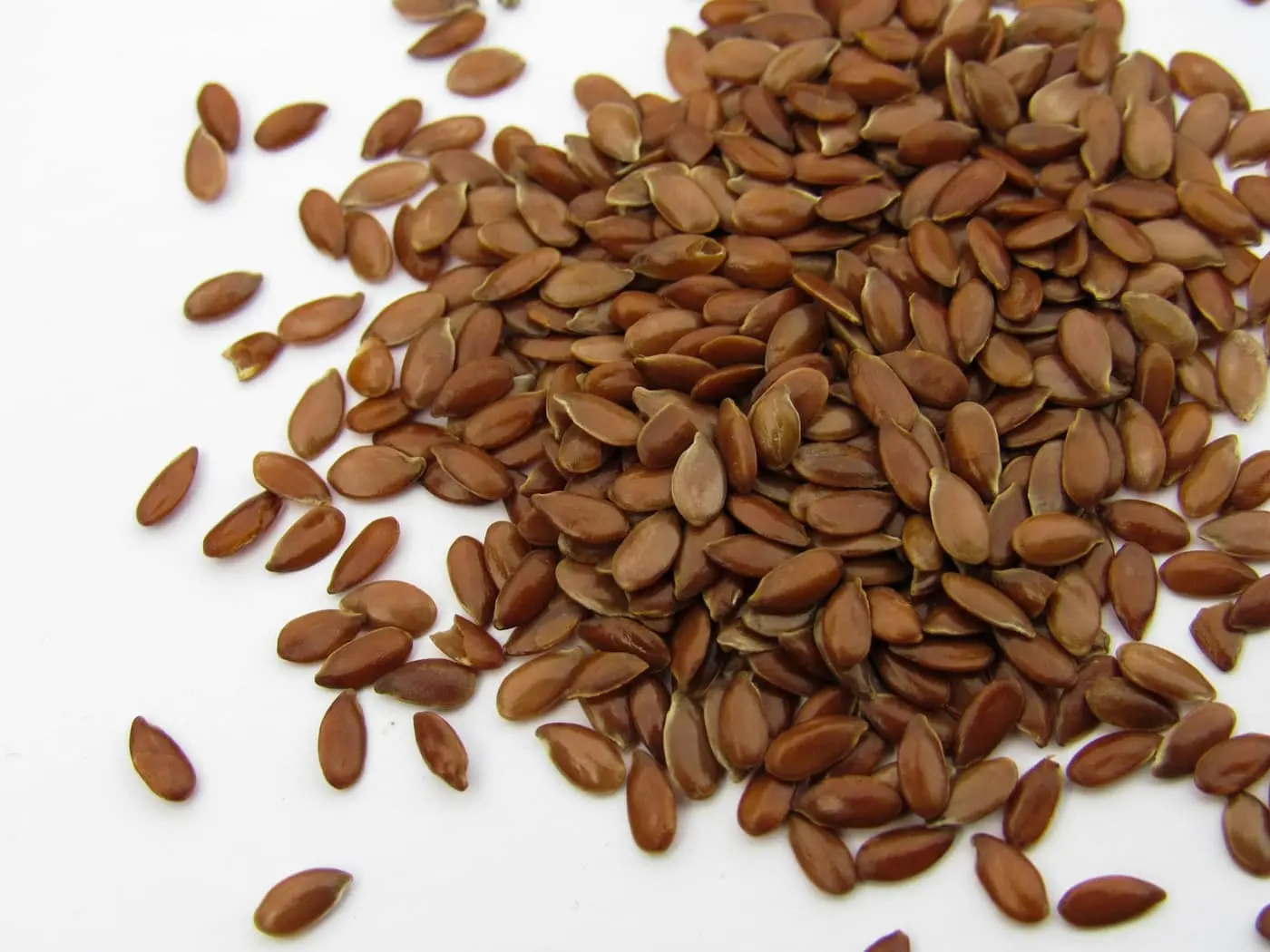
Linseed — the same crop sold as flaxseed, and called alsi, tisi or jawas — is India’s oldest cultivated oilseed and today a low-input rabi crop, grown mostly on marginal, un-irrigated land that cannot profitably carry wheat or mustard. Its seed oil is unusually rich in omega-3, which is behind both its traditional use and its renewed demand as a health food. Madhya Pradesh grows the largest area, with Uttar Pradesh, Chhattisgarh, Bihar and Maharashtra following.
It is grown three ways: as a rainfed sole crop sown into conserved soil moisture after the monsoon; as a rice-fallow relay broadcast into standing, near-mature paddy so it establishes with no land preparation; and as an irrigated, fertilised crop that repays one or two irrigations and a nitrogen dose with a much higher yield — the version most improved varieties are bred for.
Two things decide the crop. The first is sowing date: an early-sown crop largely escapes rust, powdery mildew and the linseed bud fly, while a late-sown one meets all three at their worst. The second is the bud fly itself — a tiny midge whose maggots hollow out the flower buds so no seed forms, and which in a bad year has taken most of the crop — so protecting the buds through the two or three weeks of flowering is the key intervention.
Sow the small seed shallow into a fine, moist bed, and where water is available give the crop its first irrigation and nitrogen at the branching stage. Harvest when the capsules are brown and dry but before they split, then stack to cure and thresh gently. Rogue out wild vetch before it seeds, since it contaminates the lot and lowers its price. Linseed has no MSP and is sold to oil mills and in the open mandi. The page below carries the seed rate, spacing, the three growing approaches, the irrigation and nitrogen for the improved crop, the bud-fly and disease protection, and expected yields.
- Crop type
- Oilseed (37–44% oil, omega-3 rich)
- Season
- Rabi
- Suitable states
- Madhya Pradesh, Uttar Pradesh, Chhattisgarh, Bihar, Jharkhand, Maharashtra
- Growing duration
- 120–150 days
- Water requirement
- Low (mostly rainfed; 1–2 irrigations on managed land)
- Temperature
- 15–30°C
- Soil type
- Well-drained clay loam to black soil
- Difficulty level
- Easy
- Expected yield
- 5–8 q/ha rainfed, 10–18 q/ha managed
- No MSP
- Not a CACP-notified crop; sold to oil mills and in the open mandi
Overview
Linseed (Linum usitatissimum) — the same crop sold as flaxseed for the health-food market, and called alsi, tisi or jawas across India — is the country's oldest cultivated oilseed and today a distinctly low-input rabi crop, grown mostly on the marginal, un-irrigated land that cannot profitably carry wheat or mustard. Madhya Pradesh grows the largest area, followed by Uttar Pradesh (especially Bundelkhand), Chhattisgarh, Bihar, Jharkhand, Maharashtra and Rajasthan. The seed carries 37–44% oil, and that oil is unusually high in alpha-linolenic acid (omega-3) — the property behind both its traditional use and its renewed demand as a health food.
It is grown three ways. As a rainfed sole crop it is sown into conserved soil moisture on black or heavy soils after the monsoon. As a rice-fallow relay (utera or paira) it is broadcast into standing, near-mature paddy in the eastern belt so it establishes on residual moisture with no land preparation. And as an irrigated, fertilised crop it will repay one or two irrigations and a proper nitrogen dose with much higher yield — the version most improved varieties are bred for. A separate flax (fibre) type exists but is a very small part of Indian cultivation.
Two things decide the crop. The first is sowing date: an early-sown crop largely escapes rust, powdery mildew and the linseed bud fly, while a late-sown one meets all three at their worst. The second is the bud fly (Dasyneura lini) itself — a tiny midge whose maggots hollow out the flower buds so no seed sets, and which in a bad year in Maharashtra has taken up to 90% of the crop. Linseed has no Minimum Support Price, so it competes on low cost and is sold to oil mills and in the open mandi. This page follows the crop in field order — land, seed, sowing, nutrition, water, protection, harvest, sale.
Crop timeline, sowing to harvest
A quick visual map of the season — jump to any section below for the detail behind each stage.
- Day 0
Sowing
Sown mid-October to mid-November as a line crop into conserved moisture, 25–30 cm rows, 2–3 cm deep — shallow, because linseed seed is small. Rice-fallow (utera/paira) linseed is broadcast a week or two earlier into standing, near-mature paddy.
- Day 7–12
Germination & rosette
The small seed emerges quickly if the seedbed is fine and moist, then sits as a low rosette of narrow leaves for a few weeks. A wet, crusted seedbed at this stage is where seedling wilt and damping-off take hold.
- Day 25–40
Stem elongation & branching
The crop bolts upward and branches; on irrigated land the first irrigation and the top-dressing of nitrogen both go on here, at the branching stage — the crop's first critical moisture window.
- Day 40–65
Flowering
Sky-blue (sometimes white) flowers open a few at a time over two to three weeks. This is the bud fly's window — its maggots feed inside the flower buds so no seed forms — and the stage to watch rust and powdery mildew.
- Day 65–95
Capsule formation & seed fill
Round capsules ("bolls") set and fill with up to ten flat, glossy seeds each; the second irrigation, if any, goes on early here. Moisture or heat stress now directly cuts seed number and oil content.
- Day 100–130
Maturity
Leaves yellow and shed, stems turn straw-yellow, and capsules dry to brown and rattle. Late powdery mildew can hasten a patchy die-down.
- Day 120–150
Harvest
Cut or pull the whole plant when the capsules are brown and dry but before they split and shatter seed in the field; stack to cure, then thresh gently.
Suitable states
States where this crop is grown at scale, highlighted below. Your local Krishi Vigyan Kendra is still the final word for your specific block.
- Jammu and Kashmir
- Himachal Pradesh
- Punjab
- Uttarakhand
- Haryana
- Delhi
- Uttar Pradesh
- Rajasthan
- Bihar
- Jharkhand
- West Bengal
- Sikkim
- Assam
- Arunachal Pradesh
- Meghalaya
- Nagaland
- Manipur
- Mizoram
- Tripura
- Gujarat
- Madhya Pradesh
- Chhattisgarh
- Maharashtra
- Odisha
- Goa
- Telangana
- Andhra Pradesh
- Karnataka
- Kerala
- Tamil Nadu
- Puducherry
- Ladakh
- Chandigarh
- Lakshadweep
- Andaman and Nicobar Islands
- Dadra and Nagar Haveli and Daman and Diu
Grown here
Climate requirements
The sowing calendar is really a pest-and-disease calendar. Early sowing (mid-October) lets the crop flower and set capsules before rust, powdery mildew and bud fly peak; late sowing pushes the whole reproductive phase into the window when all three are most active, which is why timeliness matters more here than almost any input.
Ideal temperature
15–30°C suits the crop; cool weather through flowering and capsule-fill favours oil accumulation, while a hot spell above about 32°C at seed-fill cuts both seed number and oil percentage
Rainfall
A cool, dry, largely rainless season is ideal — linseed is grown on stored soil moisture. Cloudy, humid or unseasonably wet weather at flowering is actively harmful, favouring rust, powdery mildew, Alternaria blight and bud fly all at once
Humidity
Low to moderate humidity suits the crop; prolonged humid or foggy spells at flowering are the classic trigger for a rust and powdery-mildew flare
Sunlight
Full sun and clear, dry days through flowering and capsule-fill give the best seed set and oil; overcast, humid weather at flowering is the worst combination for disease and bud fly
Soil requirements
Land selection is half the decision. Linseed is deliberately placed on the fields that cannot profitably irrigate wheat or mustard — deep, moisture-retentive, well-drained land on the lighter-management end of the holding. On such land the crop needs a fine, moist, clod-free seedbed, because the seed is small and cannot push through a crust.
Suitable soil
Well-drained clay loam and the black cotton soils of Madhya Pradesh, Bundelkhand and Maharashtra; deep soils that hold moisture well suit the rainfed crop best. Rice-fallow relay linseed goes onto heavy paddy land, which works because the rice has already drawn the field down
pH range
6.0–7.5 — linseed tolerates a fairly wide range but does poorly on strongly acidic or waterlogged soil
Drainage
Good — linseed is intolerant of waterlogging, and standing water at any stage, especially early, invites seedling wilt and root rot
Organic matter
Medium; a moderately fertile soil is ideal. On a genuinely poor field the crop still yields something, which is exactly why it is grown there, but it repays a basal dose of nutrients where the land can carry it
Land preparation
Same four steps whichever region you are in — only the timing shifts with the sowing window.
- 1
Two or three harrowings to a fine tilth
Linseed seed is small, so it needs a finer, more level seedbed than a pulse — plough or harrow two or three times after the monsoon and follow with a plank (pata). A cloddy or crusted seedbed gives a broken, patchy stand.
- 2
Conserve every bit of residual moisture
The rainfed crop lives entirely on stored soil moisture. Prepare the field and sow promptly rather than letting it lie open and dry, and avoid unnecessary deep tillage close to sowing that vents moisture from the seed zone.
- 3
No land preparation for a rice-fallow (utera/paira) crop
For relay linseed, seed is broadcast straight into standing, near-mature paddy a week or two before harvest — no tillage at all — so it germinates on the residual moisture as the rice comes off.
- 4
Pick a well-drained field
Whatever the system, the field must drain. Linseed on a patch that holds water after unseasonal rain loses that patch to seedling wilt and root rot.
Seed information
How the main varieties compare, so you can pick by duration, yield, disease pressure or what you are growing for.
| Variety | Duration | Yield | Disease resistance | Best state | Suitable for |
|---|---|---|---|---|---|
The old national check variety, released around 1960 from Kanpur — a small brown-seeded, spreading type still grown across Bundelkhand, Bihar, Assam, Madhya Pradesh and Rajasthan for its wide adaptation and tolerance to rust, wilt and drought. Later varieties out-yield it on managed land, but it remains a benchmark on marginal ground. | 125–145 days | Medium | Tolerant to rust, wilt and drought | Uttar Pradesh (Bundelkhand), Bihar, Madhya Pradesh, Rajasthan | Rainfed marginal land, wide adaptation |
A variety carried in state recommendations for its combined rust and wilt resistance, grown mainly in the central and eastern tracts. Treat the specific release centre and year as not independently confirmed for this record — its standing rests on the disease-resistance trait it is listed for. | 120–135 days | Medium–High | Resistant to rust and wilt | Madhya Pradesh, Uttar Pradesh | Rust- and wilt-prone tracts |
A high-yielding variety from CSAUAT, Kanpur, widely grown in Uttar Pradesh, including in black-gram–linseed and rice-fallow systems; moderately resistant to rust and Alternaria blight. | 130–140 days | High | Moderately resistant to rust and Alternaria blight | Uttar Pradesh | Timely-sown and rice-fallow linseed in the plains |
A JNKVV, Jabalpur release for Madhya Pradesh, grown as a rainfed and utera crop across the state; a medium-duration line with moderate wilt and rust tolerance. Treat its exact yield and oil figures as not independently confirmed for this record. | 120–130 days | Medium–High | Moderate wilt and rust tolerance | Madhya Pradesh | Rainfed and utera linseed in central India |
A newer Jabalpur (RARS Sagar) line developed under the AICRP on Linseed, noted for a very high alpha-linolenic (omega-3) fraction in its oil — of interest where the crop is grown for the health-food market rather than only for total oil. | 120–130 days | High | Moderate; check current AICRP rating for your zone | Madhya Pradesh | Omega-3-focused seed, central India |
An IGKV, Raipur release for Chhattisgarh, bred for the state's rice-fallow and utera situations. Treat its exact duration, yield and disease figures as not independently confirmed for this record — its fit is the eastern relay system it was developed for. | 120–135 days | Medium–High | Bred with wilt tolerance for rice-fallow land | Chhattisgarh | Rice-fallow (utera/paira) linseed in the east |
A variety carried in recommendations for rainfed situations, with a bolder seed than T-397. Treat the specific release centre, year and yield as not independently confirmed for this record. | 120–135 days | Medium | Moderate; confirm locally | Madhya Pradesh, Uttar Pradesh | Rainfed linseed, bolder seed |
- Seed rate
- Line sowing: 25–30 kg/ha (10–12 kg/acre). Broadcast and rice-fallow (utera/paira) sowing: 35–40 kg/ha, to offset poorer establishment. A dedicated fibre (flax) crop is sown far thicker, but that is a niche in India.
- Certified seed
- Use certified or truthfully-labelled seed of an improved variety recommended for your zone and cropping situation — the older T-397 is hardy but is out-yielded on managed land by newer lines. Wilt-tolerant seed matters most on land with a linseed history, since wilt has no in-season cure.
- Spacing
- 25–30 cm between rows and about 5 cm between plants for a line crop; rice-fallow crops are broadcast and not spaced.
- Seed treatment
- Treat seed with a fungicide (carbendazim or thiram at 2–3 g/kg, or Trichoderma viride) against seedling wilt and damping-off before sowing. Where bud fly pressure is high, an imidacloprid seed treatment gives some early protection but does not replace a flowering-stage spray.
Sowing guide
Every week of delay past mid-October moves flowering and capsule-fill further into the period when rust, powdery mildew and bud fly are all most active, and further into the terminal-heat risk at seed-fill. Timely sowing is the cheapest yield and oil protection the crop has.
- Best time
- Mid-October to mid-November as a line crop — earlier is better, because an early-sown crop flowers and sets capsules before rust, powdery mildew and bud fly reach their peak. Rice-fallow (utera/paira) linseed is broadcast into standing near-mature paddy in late September to October.
- Row spacing
- 25–30 cm for a line crop; broadcast for rice-fallow
- Plant spacing
- About 5 cm within the row
- Sowing depth
- 2–3 cm — shallow, because the seed is small and cannot emerge from deep placement or through a crust
- Method
- Line sowing with a seed drill or behind a plough into moisture for the sole crop; broadcasting into standing rice for the relay crop. A fine, moist, level seedbed is essential for an even stand
Fertilizer schedule
A split dose beats one large dose applied at sowing — nitrogen especially is lost to the air and to leaching if it all goes in on day one.
- 1
Basal (at sowing) — irrigated crop
Day 0
On land that can carry it, apply about half the nitrogen with the full phosphorus and potash as a basal dose — a common irrigated schedule is 60–80 kg N, 40 kg P2O5 and 20–40 kg K2O per hectare, plus 20 kg sulphur on light soils.
- 2
Basal — rainfed crop
Day 0
On a rainfed sole crop, a reduced dose of around 30–40 kg N and 20 kg P2O5 per hectare, all basal, is the norm — there is no second application because there is no irrigation to carry it in.
- 3
Nitrogen top-dressing — irrigated crop only
Day 30–40 (branching, with first irrigation)
Apply the remaining half of the nitrogen at the branching stage along with the first irrigation. Do not top-dress a rainfed crop — the nitrogen will simply sit unused on dry soil.
- 4
Utera (rice-fallow) crop
Day 0
A low basal dose only, around 10–20 kg N, 20 kg P2O5 and 10 kg K2O per hectare, broadcast with or just before the seed into the standing rice — the relay crop runs mainly on residual fertility and moisture.
Irrigation schedule
1. Branching irrigation
Day 30–40
On irrigated land, the first irrigation at the branching / stem-elongation stage, given with the nitrogen top-dressing — the crop's first critical moisture window.
2. Capsule-formation irrigation
Day 60–70
A second irrigation early in capsule formation and seed-fill where the season has turned dry; this one protects seed number and oil content.
Critical stages
- Branching / stem elongation
- Capsule formation and seed-fill
Water-saving tips
- Most Indian linseed is grown entirely on stored soil moisture with no irrigation — where water is available, two well-timed irrigations at branching and capsule-fill capture most of the possible gain.
- A fine, firm seedbed and prompt sowing after field preparation conserve the moisture the rainfed crop depends on.
- Avoid a heavy pre-sowing irrigation that delays sowing into warmer, pest-prone weather — earlier sowing on slightly less moisture usually beats later sowing on more.
Weed management
Common weeds
Organic control
- One hand-weeding at 25–30 days covers the crop's critical weed-free period; the crop's own canopy closes in after that.
- Cuscuta (amarbel) comes in mainly as a seed contaminant — start from clean, certified seed, and pull and burn attached patches early before it spreads and sets its own seed.
- Rogue out wild vetch before it seeds, as its seed contaminates the harvested lot.
Chemical control
- A pre-emergence herbicide such as pendimethalin within 2–3 days of sowing controls the early weed flush during the critical first 30–40 days; the small linseed seedling competes poorly early on.
- There is no selective spray for Cuscuta (amarbel) once it is attached — it must be managed by clean seed and hand-removal.
Nutrient deficiency identification
What a shortage of each nutrient actually looks like on the plant, so you can tell a deficiency apart from a disease before you spray the wrong thing.
Nitrogen
Visible symptom
Uniform pale-green to yellow older leaves, thin stems and poor branching, ending in fewer capsules — unlike a pulse, linseed genuinely needs applied nitrogen, and on poor rainfed land a nitrogen shortfall is the most common yield-limiter.
Phosphorus
Visible symptom
Dull dark-green leaves, sometimes with a reddish or purplish tinge on stems, delayed flowering and weak roots; common on the marginal soils linseed is usually grown on.
Potassium
Visible symptom
Scorching and browning along the margins of older leaves, weak stems that lodge, and poorly filled capsules; shows up on light and heavily cropped soils.
Sulphur
Visible symptom
Pale yellowing of the younger leaves first, and lower oil content in the seed — sulphur is directly tied to oil synthesis in an oilseed, so a shortfall costs quality as well as yield.
Zinc
Visible symptom
Small, narrow leaves, shortened internodes and a stunted, bushy look; common on high-pH and rice-fallow soils and confirmed with a soil test.
Diseases to watch for
Symptoms, likely cause and what actually treats it — not just a spray name.
Linseed wilt
- Symptoms
- Seedlings collapse and dry soon after emergence, or older plants wilt, yellow and dry in patches from flowering onwards; roots are dark and rotted and the base of the stem discoloured. Worst on land cropped to linseed year after year.
- Cause
- The soil- and seed-borne fungus Fusarium oxysporum f. sp. lini, which persists in the soil for years and is worse in warm soil and late sowing.
- Treatment
- No reliable in-season cure — management is preventive. Remove and destroy wilted plants to limit build-up.
- Prevention
- Grow a wilt-tolerant variety (T-397, Neelam), treat seed with carbendazim or Trichoderma, sow early into cooler soil, and rotate linseed with a non-host crop (wheat, gram) on affected fields — never linseed after linseed on wilt-sick land.
Rust
- Symptoms
- Bright orange-yellow powdery pustules on leaves and stems from flowering onwards, later turning to black crusty patches; a heavy attack dries the crop early and shrivels the seed, cutting oil.
- Cause
- The fungus Melampsora lini, favoured by cool, humid, cloudy weather and heavy dew during and after flowering; one of the most serious linseed diseases in India.
- Treatment
- Spray mancozeb or a suitable systemic fungicide at first pustules and repeat as advised if the weather stays favourable.
- Prevention
- Grow a rust-resistant or tolerant variety, sow early so the susceptible flowering stage is past before rust weather peaks, and destroy infected stubble and volunteer plants that carry the fungus over.
Powdery mildew
- Symptoms
- A white to greyish powdery growth on the upper leaf surface and stems, usually late in the season; heavily coated leaves yellow and drop early, hastening a patchy die-down and reducing seed fill.
- Cause
- The fungus Oidium lini, favoured by dry days with cool humid nights and dew late in the crop's life; more damaging on late-sown crops.
- Treatment
- Spray wettable sulphur or a suitable systemic fungicide (such as a triazole) at first appearance if the crop is still filling seed.
- Prevention
- Early sowing so the crop is near maturity before mildew weather sets in, tolerant varieties where available, and avoiding over-dense, over-fertilised stands that hold humidity in the canopy.
Alternaria blight
- Symptoms
- Small dark brown spots with concentric rings on leaves, stems and capsules, enlarging and merging in humid weather; capsule infection shrivels the seed and can carry over on it.
- Cause
- Alternaria lini and related species, favoured by humid, cloudy weather and unseasonal rain at flowering and capsule formation.
- Treatment
- Spray a mancozeb- or chlorothalonil-based fungicide at first appearance, especially after rain during flowering and podding, and repeat as advised.
- Prevention
- Use clean, treated seed, avoid overly dense stands, sow early, and do not grow linseed after linseed on a field with a blight history.
Pests to watch for
What to look for before the damage is visible, and organic options before you reach for a chemical.
Linseed bud fly (Dasyneura lini)
- Identification
- A tiny orange-red midge; you rarely see the fly, only the result — flower buds that stay closed, feel hollow, turn brownish and drop without setting a capsule. Cut a suspect bud and small orange maggots are inside.
- Damage
- The single most damaging pest of linseed in India. The maggots feed inside the flower bud and destroy the developing ovary, so no seed forms in that bud; a heavy, sustained infestation through the long flowering period has taken up to 90% of the crop in Maharashtra.
- Organic control
- Sow early to get the bulk of flowering done before the fly population peaks, grow shorter-duration varieties that flower over a tighter window, and spray neem-based products at the start of flowering; conserve the tiny parasitoid wasps that attack the maggots by avoiding early broad-spectrum sprays.
- Chemical control
- A need-based spray of a recommended insecticide (such as a synthetic pyrethroid, dimethoate or a diamide) timed to the start of flowering and repeated once or twice at 10–12 day intervals through the flowering period, since the crop flowers over several weeks.
Semilooper and leaf-eating caterpillars
- Identification
- Green looping caterpillars that eat leaves and, later, scrape at soft capsules; damage shows as ragged leaves and, in a heavy attack, bitten capsules.
- Damage
- Usually a secondary pest — leaf loss the crop can often absorb — but a heavy attack at capsule formation cuts seed fill.
- Organic control
- Hand-pick in a small field, encourage predatory birds with perches, and spray Bt or neem against young larvae; natural enemies usually keep numbers down if broad-spectrum sprays are avoided.
- Chemical control
- A need-based spray of a recommended insecticide only when defoliation is heavy or capsules are being attacked — often the same flowering-stage spray used for bud fly covers it.
Gujhia weevil / cutworm — seedling stage
- Identification
- Ash-grey weevils or soil-dwelling cutworm caterpillars that cut or graze young seedlings at or near the soil line at night, leaving gaps in the early stand.
- Damage
- Thins the stand at the seedling stage, most damaging in a patchy, weedy or residue-covered early crop.
- Organic control
- Expose the soil to sun and birds before sowing to kill hiding larvae and pupae, remove weed and residue cover, and hand-collect at night in a bad patch.
- Chemical control
- A soil or spot application of a recommended insecticide where seedling-pest history is bad; treat affected patches rather than the whole field.
Common mistakes to avoid
The mistakes that cost growers the most, ranked by how often they show up in the field — not in the order you might expect.
- 1
Sowing late
Why it hurts
Every week past mid-October moves flowering and seed-fill deeper into the peak window for rust, powdery mildew and bud fly, and into terminal-heat risk. Late sowing is the single biggest avoidable cause of a poor linseed crop.
- 2
Ignoring the bud fly until pods are missing
Why it hurts
By the time you notice empty, hollow buds dropping, the crop has already lost that flush of seed. Bud fly control has to start at the beginning of flowering and repeat through it, because the crop flowers for weeks.
- 3
Sowing too deep or into a cloddy seedbed
Why it hurts
Linseed seed is small and cannot push through a crust or emerge from deep placement — a rough or deep seedbed gives a broken, gappy stand that never yields well.
- 4
Top-dressing nitrogen on a rainfed crop
Why it hurts
Without irrigation to carry it in, top-dressed urea sits on dry soil unused. On a rainfed crop, apply all the (reduced) nitrogen as a basal dose at sowing.
- 5
Growing linseed after linseed on wilt-sick land
Why it hurts
Fusarium wilt builds up in the soil and has no in-season cure; continuous linseed on infected land can lose whole patches that rotation and a tolerant variety would have saved.
- 6
Sowing seed contaminated with amarbel (Cuscuta)
Why it hurts
Dodder comes into a linseed field mainly as a seed contaminant; once established it is parasitic, spreads fast and has no selective spray. Clean, certified seed is the only reliable prevention.
- 7
Treating it as a zero-care crop on land that could do better
Why it hurts
Linseed is low-input by tradition, but on a field that can carry a basal dose and one or two irrigations, an improved variety will roughly double the yield of an unfertilised T-397 crop — the "grow it and forget it" habit leaves that on the table.
- 8
Harvesting too late
Why it hurts
Left standing after the capsules dry, linseed shatters and drops seed in the field; cut when the capsules are brown and dry but still closed, and cure in a stack before threshing.
- 9
Assuming an MSP backstop
Why it hurts
Linseed has no Minimum Support Price and no assured procurement — its price is set by oil-mill demand and the open mandi, so it is worth lining up a buyer and checking the going rate before deciding the area.
Harvesting
When the leaves have yellowed and shed, the stems have turned straw-yellow, and the capsules are brown, dry and rattle — usually 120–150 days after sowing. Cut before the capsules split, which shatters seed in the field; early-morning harvesting reduces shattering loss.
Signs it is ready
- Leaves yellow and drop from the base upward
- Stems turn straw-yellow and stiff
- Capsules turn brown, dry and rattle, seed hard and glossy inside
- Seed at about 10–12% moisture, dried further before storage
Tools
- Sickle for cutting the whole plant, or plants pulled by hand on a light stand
- Stacking space to cure the cut crop for a few days before threshing
- Pedal or power thresher, or gentle beating, followed by winnowing to clean the small seed
Expected yield
5–8 q/ha as a rainfed sole crop and 4–6 q/ha as a rice-fallow (utera) crop, rising to 10–18 q/ha with early sowing, an improved variety, a basal nutrient dose and one or two irrigations.
Post-harvest & storage
Storage
Dry the seed to about 8–9% moisture before storage — linseed picks up moisture readily and moulds if stored damp, which also raises free fatty acids and drops oil quality. Store in clean, dry, airtight containers away from the floor and wall.
Packaging
Bagged in clean, dry jute or woven bags; keep the seed lot free of amarbel and wild-vetch contamination, which buyers and oil mills discount.
Transportation
Transport dry and covered — a wetting in transit undoes careful drying and starts the oil deteriorating.
Shelf life
Well-dried linseed keeps for several months to a year in airtight storage; because the oil is highly unsaturated it goes rancid faster than most oilseeds once it takes up moisture or heat, so it is usually not held as long as gram or wheat.
Market prices
Today's mandi price near you, pulled live from the government's own Agmarknet data.
Live daily mandi prices from the government Agmarknet dataset.
Synced from data.gov.in (Agmarknet). Rates are ₹ per quintal.
Weather
Current conditions and a 5-day outlook for your selected location, with one line of stage-aware advice.
Pick your state for current conditions and a 5-day outlook.
Live data from Open-Meteo
Profit calculator
Your own cost sheet, expected yield and selling price — not ours.
Where the money goes
Share of the total cost per acre, using the calculator’s own default cost sheet below — adjust the numbers there to match your field and this picture will no longer apply to you exactly, but the ranking rarely changes.
- Land rent43% (₹8,000)
- Labour19% (₹3,500)
- Machinery13% (₹2,500)
- Fertiliser8% (₹1,500)
- Pesticide & weedicide8% (₹1,500)
- Irrigation4% (₹800)
- Seed3% (₹500)
- Interest3% (₹500)
Official downloads
Government and ICAR documents only — everything below is hosted on an official server.
ICAR-IIOR / AICRP on Linseed
Package of practices, released linseed varieties and zone-wise disease and bud-fly advisories from the ICAR oilseeds network.
Agmarknet — mandi prices
Daily mandi arrivals and prices for linseed across regulated markets — the reference point in a crop with no MSP.
Soil Health Card portal
Get a free, crop-wise fertilizer and micronutrient recommendation for your own field before finalising the schedule above.
mKisan — SMS advisory portal
Register for free SMS advisories timed to your crop stage and district.
Frequently asked questions
Does linseed have an MSP?
No. Linseed is not on the Government of India's list of MSP-notified crops — for rabi that list covers wheat, barley, gram, lentil, rapeseed/mustard and safflower, not linseed. Linseed is sold to oil mills and in the open mandi at a price set by demand, so it competes on low cost of cultivation. The National Mission on Edible Oils supports linseed area and seed but does not set a price floor.
What is the best time to sow linseed?
Mid-October to mid-November for a line-sown crop, and earlier is better — an early crop flowers and sets its capsules before rust, powdery mildew and the bud fly reach their peak, while a late crop meets all three at their worst and also risks terminal heat at seed-fill. Rice-fallow (utera/paira) linseed is broadcast into standing near-mature paddy in late September to October.
What is the linseed bud fly and how do I control it?
The bud fly (Dasyneura lini) is a tiny midge and the most damaging pest of linseed in India. Its maggots feed inside the flower buds and destroy the ovary, so no seed forms — a bad infestation has taken up to 90% of the crop in Maharashtra. Control starts at the beginning of flowering, not after you see empty buds: sow early, use a shorter-duration variety, and spray a recommended insecticide (a synthetic pyrethroid, dimethoate or a diamide) at flowering onset, repeating once or twice at 10–12 day intervals because the crop flowers for several weeks.
How much linseed seed do I need per acre?
About 10–12 kg per acre (25–30 kg/ha) for a line-sown crop, and 14–16 kg per acre (35–40 kg/ha) for broadcast or rice-fallow (utera) sowing, where establishment is poorer. A dedicated fibre (flax) crop is sown much thicker, but fibre linseed is a very small niche in India.
How is linseed grown in the utera or paira system?
Utera (or paira) linseed is a relay crop: the seed is broadcast into standing, near-mature paddy a week or two before the rice is harvested, so it germinates on the residual soil moisture with no land preparation at all. It is common in Chhattisgarh, Bihar, Jharkhand and eastern Uttar Pradesh. Yields are lower than a properly sown sole crop (4–6 q/ha), but the crop costs almost nothing to establish.
Does linseed need fertilizer?
Unlike a pulse, linseed is not a legume and genuinely responds to nitrogen. On irrigated or better land, a common dose is 60–80 kg N, 40 kg P2O5 and 20–40 kg K2O per hectare, with half the nitrogen basal and half at branching with the first irrigation. On a rainfed crop, a reduced dose of about 30–40 kg N and 20 kg P2O5 per hectare is applied entirely as a basal dose, since there is no irrigation to carry a top-dressing. Utera crops get only a small basal dose.
How many irrigations does linseed need?
Most Indian linseed is grown entirely on stored soil moisture with no irrigation. Where water is available, two irrigations capture most of the possible gain — one at the branching stage (around 30–40 days, with the nitrogen top-dressing) and one early in capsule formation and seed-fill (around 60–70 days).
Which linseed variety should I grow?
It depends on your zone and system. T-397 is the hardy old check for rainfed marginal land across Bundelkhand and central India. Shekhar and JLS 9 are higher-yielding lines for Uttar Pradesh and Madhya Pradesh respectively, Neelam is carried for rust- and wilt-prone tracts, JLS 73 is grown where a high omega-3 fraction is wanted, and RLC 153 is bred for Chhattisgarh's rice-fallow land. On any land that can carry inputs, an improved variety will out-yield T-397 substantially.
Why is early sowing so important for linseed?
Because the sowing calendar is really a pest-and-disease calendar. An early-sown crop gets through flowering and capsule-fill before rust, powdery mildew and the bud fly reach their seasonal peak, and before the risk of terminal heat at seed-fill. Every week of delay past mid-October pushes the whole reproductive phase into worse weather for all three problems — which is why timely sowing protects yield and oil more cheaply than any spray.
What is the amarbel (dodder) problem in linseed?
Cuscuta, called amarbel or dodder, is a parasitic weed that comes into a linseed field mainly as a contaminant in the seed lot. Once its thread-like stems attach to the crop it draws off sap, spreads fast over patches of the field, and there is no selective spray that removes it without killing the linseed. The only reliable prevention is clean, certified seed; established patches must be pulled and burned early before the dodder sets its own seed.
What yield and oil content can I expect from linseed?
A rainfed sole crop typically gives 5–8 quintals per hectare and a rice-fallow (utera) crop 4–6 q/ha, rising to 10–18 q/ha with early sowing, an improved variety, a basal nutrient dose and one or two irrigations. Seed oil content runs 37–44%, and that oil is unusually rich in alpha-linolenic acid (omega-3), which is behind the crop's renewed demand as a health food.
Can linseed be grown after rice?
Yes — linseed after kharif rice is one of its main systems, grown either as a normally sown crop on residual moisture or as a zero-till relay (utera/paira) broadcast into the standing rice. It suits land that cannot profitably irrigate wheat or mustard. On heavy rice soils, make sure the field drains, since linseed cannot tolerate waterlogging, and expect lower yields from the relay version in exchange for near-zero establishment cost.
Still have questions?
The FAQs above cover the common ones. For anything specific to your field and soil, your nearest Krishi Vigyan Kendra is the authoritative answer.