
Tea
Camellia sinensis
A perennial bush plucked, not harvested — for decades, every 7–14 days through the flush season. Everything rests on the “two leaves and a bud” plucking standard and on the frame built by years of disciplined pruning; coarse plucking trades this season’s weight for next season’s quality.
Quick Summary
The key points from this page in about two minutes — read it or have it read aloud.
Quick Summary
Tea is a perennial evergreen bush, planted once and then plucked for decades — every seven to fourteen days right through the flush season. India is one of the world’s largest producers, from the plains of Assam and the Dooars to the high hills of Darjeeling, the Nilgiris and Kerala, in large estates and a fast-growing small-grower sector alike.
The whole enterprise rests on two things built up over years. The first is the plucking table — the flat, low frame shaped by disciplined pruning in the early years and kept in shape by a multi-year cycle of skiffing and pruning afterwards. The second is the plucking standard: the tender "two leaves and a bud" that decides the quality of the made tea. Plucking coarser than that adds weight this round at the cost of next season’s quality.
From there tea is a crop of soil and rhythm. It needs an acidic, free-draining soil and a humid, well-spread rainfall, and it is a hill crop — warm, wet and humid enough for a strong flush, but never waterlogged. Elevation shapes quality as much as yield: the cool, misty high hills give the prized delicate teas, the warm wet plains give heavy, robust ones. The same humidity that drives the flush also drives blister blight, so wet-hill tea is a constant disease watch. Growth slows in the cold months and the plucking season pauses until the spring flush returns. The page below carries the planting and frame-formation method, the plucking standard, the pruning cycle, acidic-soil nutrition, blister-blight management and made-tea yields.
- Crop type
- Perennial plantation bush
- Plucking season
- Mar–Nov (flush)
- Suitable states
- Assam, WB, TN, Kerala + hills
- First plucking
- 3–4 years
- Water requirement
- High, well-distributed rain
- Temperature
- 18–30°C, humid
- Soil type
- Acidic, deep, well-drained
- Difficulty level
- Hard
- Expected yield
- 1,500–2,500 kg made tea/ha
- Key practice
- Plucking standard + pruning
- No MSP
- Sold through the auction system (Kolkata, Guwahati, Siliguri) and private sale, not APMC mandis
Overview
Tea (Camellia sinensis) is a perennial evergreen bush grown for its tender young shoots, which are plucked and processed into black, green or specialty tea. India is one of the world’s largest producers, led by Assam and the Dooars/Darjeeling of West Bengal, the Nilgiris of Tamil Nadu and the hills of Kerala, in both large estates and a fast-growing small-grower sector.
Unlike an annual crop, a tea bush is planted once and plucked for decades. The whole enterprise turns on two things built over years: the flat, low “plucking table” shaped by disciplined formative and maintenance pruning, and the plucking standard itself — the tender “two leaves and a bud” that decides the quality of the made tea.
From there tea is a crop of soil and rhythm: it needs an acidic, free-draining soil and a humid, well-distributed rainfall, and it is plucked on a tight 7–14 day round through the flush season, then pruned on a multi-year cycle. This guide follows the bush with plucking standard, pruning, acidic-soil nutrition and blister blight (in the wet hills) as the levers that decide yield and quality.
Crop timeline, sowing to harvest
A quick visual map of the season — jump to any section below for the detail behind each stage.
- Year 0
Planting
Cuttings/clonal plants set close (~1.05 × 0.75 m) into acidic, well-drained hill soil under partial shade at the monsoon.
- Year 1–2
Frame formation
The young bush is centre-pruned and pegged/tipped to build a wide, low, flat plucking frame — no leaf is taken for yield.
- Year 3–4
First plucking
Once the plucking table has formed, regular plucking of the tender shoots begins.
- Mar–Apr
First flush
After the winter dormancy, the new season’s first flush of tender shoots appears as the weather warms.
- Apr–Nov
Plucking rounds
Through the flush season, “two leaves and a bud” are plucked every 7–14 days as new shoots reach the right stage.
- Every few years
Pruning cycle
The bush is pruned on a multi-year cycle (skiff/light/hard) to keep the plucking table low, flat and productive.
- Dec–Feb
Dormancy
In the cold months growth slows or stops; the plucking season pauses until the spring flush returns.
Suitable states
States where this crop is grown at scale, highlighted below. Your local Krishi Vigyan Kendra is still the final word for your specific block.
- Jammu and Kashmir
- Himachal Pradesh
- Punjab
- Uttarakhand
- Haryana
- Delhi
- Uttar Pradesh
- Rajasthan
- Bihar
- Jharkhand
- West Bengal
- Sikkim
- Assam
- Arunachal Pradesh
- Meghalaya
- Nagaland
- Manipur
- Mizoram
- Tripura
- Gujarat
- Madhya Pradesh
- Chhattisgarh
- Maharashtra
- Odisha
- Goa
- Telangana
- Andhra Pradesh
- Karnataka
- Kerala
- Tamil Nadu
- Puducherry
- Ladakh
- Chandigarh
Grown here
Climate requirements
Tea is a humid-hill crop: warm, wet and humid for a strong flush, but always on free-draining ground. Elevation and climate shape quality as much as yield — the cool, misty high hills give the prized delicate teas, while the warm, wet plains give heavy, robust yields. The same humidity that grows the flush also drives blister blight, so wet-hill tea is a constant disease watch.
Ideal temperature
18–30°C with warmth and humidity drives the flush; growth slows below ~13°C, so plucking pauses in the cold months and elevation shapes quality
Rainfall
Wants 1,500–3,000+ mm well distributed through the year; tea needs a lot of moisture but on free-draining slopes, never waterlogged
Humidity
High humidity favours the tender flush and made-tea quality, but also the blister blight that dogs the wet hill districts
Sunlight
Bright, diffused light — often under high partial shade trees — suits it; harsh, dry full sun stresses the bush and coarsens the leaf
Soil requirements
The one non-negotiable soil condition for tea is acidity — it must have an acidic soil (pH ~4.5–5.5) and will not thrive on neutral or alkaline ground. Beyond that it wants depth, drainage and organic matter, typically on a slope so the abundant rain drains away. Acidity, drainage and humus together define tea land.
Suitable soil
Deep, well-drained, acidic loam rich in organic matter; hill and slope soils and the acidic alluvium of Assam suit it
pH range
4.5–5.5 (acidic — essential)
Drainage
Excellent drainage on slopes is essential; tea needs abundant moisture but its roots rot in waterlogged or heavy, ill-drained soil
Organic matter
High organic matter is important; mulch, shade-leaf litter and green manure maintain the humus the crop depends on
Land preparation
Same four steps whichever region you are in — only the timing shifts with the sowing window.
- 1
Slope & drainage
Prepare on well-drained, acidic slopes with contour drains/terracing so heavy rain runs off without eroding or waterlogging.
- 2
Shade & soil prep
Establish high shade trees and build up organic matter; correct pH toward the acidic range if needed and deep-prepare the ground.
- 3
Clonal planting material
Source high-yielding clonal cuttings/plants suited to the district from a reliable nursery for uniform quality and vigour.
Seed information
How the main varieties compare, so you can pick by duration, yield, disease pressure or what you are growing for.
| Variety | Duration | Yield | Disease resistance | Best state | Suitable for |
|---|---|---|---|---|---|
From Tocklai Tea Research Institute, propagated as rooted clonal cuttings, not grown from seed. The most widely planted Assam clone for over half a century — good liquor quality at a yield most seedling-origin tea cannot match. | First pluck 2–3 years after planting (clonal cutting) | 2,000–2,500 kg made tea/ha/year at full maturity | Moderate blister blight tolerance | Assam, West Bengal | High-yield Assam clone |
Assam type (var. assamica) clones Large-leaved, vigorous, high-yielding clones suited to the warm, humid plains; the basis of strong black (CTC) teas. | Plucked for decades | Very high | Variable | Assam | Black CTC, plains |
The original Assam jat, grown from seed rather than a clonal cutting — slower to first pluck and lower-yielding than a modern clone like TV1, but seed-origin bushes still anchor many of Assam's oldest gardens. | First pluck 4–5 years after planting (seed-origin jat) | 1,600–2,000 kg made tea/ha/year at full maturity | Moderate blister blight tolerance | Assam | Traditional seed-origin garden |
China type (var. sinensis) clones Small-leaved, hardy, slower-yielding clones tolerant of cold and elevation, giving fine, delicate teas. | Plucked for decades | Medium | Cold-hardy | Darjeeling/hills | Fine hill teas |
Darjeeling clones Selected China/hybrid clones that produce the distinctive muscatel, high-value Darjeeling teas at elevation. | Plucked for decades | Low–medium | Cold-hardy | West Bengal hills | Premium specialty tea |
TV / high-yielding estate clones Tocklai (TV-series) and other institute clones bred for yield and quality across the north-east. | Plucked for decades | Very high | Improved | Assam/Dooars | High-yield estates |
From UPASI Tea Research Institute, propagated as rooted clonal cuttings, not grown from seed. The south Indian counterpart to the Assam clones, grown across the Nilgiris and high ranges — but it is a susceptible clone under the blister-blight pressure those tracts see every monsoon, not a resistant one; grown there for rooting vigour, drought tolerance and canopy spread instead. | First pluck 2–3 years after planting (clonal cutting) | 2,200–2,700 kg made tea/ha/year at full maturity | Susceptible to blister blight | Tamil Nadu, Kerala | South Indian hills, drought tolerance |
UPASI / south-India clones South-Indian institute clones suited to the Nilgiris and Kerala hills for quality and yield. | Plucked for decades | High | Improved | Tamil Nadu/Kerala | South-India hills |
- Seed rate
- About 13,000–15,000+ clonal plants/ha at close spacing (~1.05 × 0.75 m), by clone and system
- Certified seed
- Plant high-yielding clonal cuttings/plants suited to your district (Assam type for the warm plains, China/Darjeeling clones for cool elevation) from a reliable nursery. The clone choice sets the yield and, crucially, the character of the made tea for the plantation’s decades-long life.
- Spacing
- ~1.05 m between rows × ~0.75 m within the row (about 13,000–15,000 bushes/ha) on contour rows
- Seed treatment
- Not a seed crop in practice — raise or buy hardened clonal cuttings and plant vigorous, healthy young plants.
Sowing guide
Plant on the contour at the monsoon’s onset under high shade, and then invest the first two years in frame formation — centre-pruning, pegging and tipping to build a wide, low, flat plucking table. That frame, not the planting itself, is what determines how much tender shoot the bush yields for the next several decades, so it must not be rushed for an early crop.
- Best time
- Plant clonal young plants at the onset of the monsoon (June–September) so they establish on the rains before the dry season
- Row spacing
- ~1.05 m between rows (on the contour)
- Plant spacing
- ~0.75 m within the row
- Sowing depth
- Plant the young clonal plant at nursery depth into a prepared, acidic, well-drained pit on the contour
- Method
- Plant hardened clonal plants on contour rows under high shade, and begin frame formation in the first two years
Fertilizer schedule
A split dose beats one large dose applied at sowing — nitrogen especially is lost to the air and to leaching if it all goes in on day one.
- 1
Young tea (frame)
Split, per year
Graduated nitrogen (with P, K) split through the growing season to build the frame; tea is a heavy nitrogen user on acidic soil.
- 2
Mature plucking tea
Split, growing season
Repeated split doses of nitrogen with potash and other nutrients through the flush season to sustain continuous shoot growth.
- 3
Acidity & micronutrients
As needed
Maintain soil acidity and correct zinc and other deficiencies; foliar zinc is a common, worthwhile input on tea.
Irrigation schedule
1. Establishment
Yr 1–2
Protect the young plants through the first dry seasons with mulch, shade and irrigation where available.
2. Dry-season plucking
Dry months
Where irrigation exists, watering through dry spells sustains the flush and yield; much of Indian tea is rainfed.
3. Monsoon
Rains
Rely on the well-distributed rain but keep the slopes draining — tea wants moisture, never standing water.
Critical stages
- Establishment
- Dry-season flush
Water-saving tips
- Heavy mulching under the bushes conserves moisture and suppresses weeds — standard practice on young and mature tea.
- High shade trees reduce moisture stress and temperature extremes on the bush.
- Good drainage on the slope means the abundant rain is used, not ponded — drainage and moisture go together in tea.
Weed management
Common weeds
Organic control
- Once the plucking table closes over, the tea canopy itself shades out most weeds — a well-formed frame is the best weed control.
- Mulch and cover the young tea between bushes until the canopy meets.
Chemical control
- Selective/spot herbicide use between mature bushes where hand weeding is costly, kept off the plucking table.
- Control aggressive climbers like Mikania that smother the bushes.
Nutrient deficiency identification
What a shortage of each nutrient actually looks like on the plant, so you can tell a deficiency apart from a disease before you spray the wrong thing.
Nitrogen
Visible symptom
Pale, small leaves and slow, thin flush — tea is a heavy nitrogen feeder and quickly shows shortage in the shoots.
Potassium
Visible symptom
Marginal scorch of maintenance leaves and reduced shoot vigour and drought tolerance.
Zinc
Visible symptom
Small, narrow, “sickle-leaf” new growth with short internodes — a very common tea deficiency corrected by foliar zinc.
Magnesium
Visible symptom
Interveinal yellowing of older maintenance leaves while the veins stay green.
Sulphur
Visible symptom
General yellowing of the young flush and a network chlorosis on acidic, leached soils.
Diseases to watch for
Symptoms, likely cause and what actually treats it — not just a spray name.
Blister blight
- Symptoms
- Translucent spots that become shiny, blister-like lesions on the underside of the tender young leaves and shoots — exactly the part that is plucked — cutting yield and quality.
- Cause
- The fungus Exobasidium vexans, which attacks only tender tissue and is driven by prolonged wet, humid, cloudy weather in the hills.
- Treatment
- A scheduled protectant fungicide (often copper) programme timed to the wet monsoon, adjusted to plucking rounds and weather.
- Prevention
- It thrives on tender shoots in wet weather, so plucking rounds, shade regulation and forecast-based spraying manage it — the defining disease of wet-hill tea.
Grey/black blight & leaf spots
- Symptoms
- Grey or black spreading spots on maintenance leaves, worst on stressed, poorly-nourished or sun-scorched bushes.
- Cause
- Various fungi (Pestalotiopsis and others) infecting stressed foliage in humid weather.
- Treatment
- Improve bush vigour and shade, remove badly affected material and spray a recommended fungicide where severe.
- Prevention
- Keep bushes well-nourished and unstressed with proper shade and nutrition; healthy tea largely shrugs these off.
Root diseases (red/brown/charcoal root rot)
- Symptoms
- Patches of declining, yellowing, dying bushes with rotted roots and characteristic fungal growth on the roots when dug.
- Cause
- Soil-borne fungi (Poria, Ustulina and others), often spreading from old tree stumps and infected roots in the soil.
- Treatment
- Isolate affected patches with trenches, uproot and destroy diseased bushes and stumps, and rehabilitate the soil before replanting.
- Prevention
- Remove old stumps and roots before planting, maintain drainage and vigour, and isolate outbreaks to stop spread through the soil.
Die-back & branch cankers
- Symptoms
- Dying-back of pruned branches and cankers, often entering through pruning cuts on weak or stressed bushes.
- Cause
- Fungi entering pruning wounds, worst on under-nourished or waterlogged bushes.
- Treatment
- Prune out dead wood below the canker and improve nutrition; treat cuts where die-back is a problem.
- Prevention
- Prune cleanly at the right time on well-nourished bushes and maintain drainage and vigour.
Pests to watch for
What to look for before the damage is visible, and organic options before you reach for a chemical.
Tea mosquito bug (Helopeltis)
- Identification
- A slender bug whose feeding leaves brown-black spots and blotches on the tender shoots and leaves, which then curl and dry.
- Damage
- A major tea pest — it attacks exactly the tender shoots that are plucked, scarring them and cutting both yield and quality.
- Organic control
- Shade and canopy management, monitoring, neem, and conserving natural enemies; timely plucking removes some eggs and damage.
- Chemical control
- A recommended insecticide timed to the pest and plucking round where Helopeltis crosses threshold.
Red spider mite & other mites
- Identification
- Fine reddening/bronzing of the maintenance leaves along the veins in hot, dry weather, with tiny mites and webbing.
- Damage
- Leaf bronzing reduces photosynthesis and shoot growth, worst in dry, stressed periods.
- Organic control
- Keep bushes unstressed with shade and moisture; conserve predatory mites and use recommended botanicals.
- Chemical control
- A recommended acaricide where mites build up in a dry spell, rotated to avoid resistance.
Tea thrips & jassids (green fly)
- Identification
- Thrips scarring and jassids (leafhoppers) yellowing and rolling the margins of the tender leaves.
- Damage
- Both feed on the tender flush, scarring and distorting it and reducing the pluckable, quality shoot.
- Organic control
- Monitoring, shade regulation, neem and conserving natural enemies.
- Chemical control
- A recommended insecticide timed to the flush and plucking round where these pests are damaging.
Looper & bunch caterpillars / termites
- Identification
- Looper and other caterpillars defoliating the bushes, and termites attacking the collar and roots of young tea.
- Damage
- Defoliators strip the maintenance foliage that feeds the flush; termites can kill young plants.
- Organic control
- Hand-collection and pheromone/light traps for caterpillars; termite mound destruction and healthy establishment.
- Chemical control
- A recommended insecticide for caterpillar outbreaks and for termite protection of young tea where needed.
Common mistakes to avoid
The mistakes that cost growers the most, ranked by how often they show up in the field — not in the order you might expect.
- 1
Plucking coarse instead of “two leaves and a bud”.
Why it hurts
Coarse plucking of older, hard shoots adds weight now but wrecks the quality of the made tea and coarsens the bush — the fine two-leaves-and-a-bud standard is the whole basis of good tea.
- 2
Rushing an early crop instead of forming the frame.
Why it hurts
Taking leaf before the plucking table is built gives a narrow, weak, unproductive frame for decades — the first two years must be spent shaping a wide, low, flat table, not chasing yield.
- 3
Planting on neutral or alkaline soil.
Why it hurts
Tea must have an acidic soil (pH ~4.5–5.5) and will not thrive on neutral or alkaline ground — the soil acidity is non-negotiable, so test and choose the land accordingly.
- 4
Planting where the slope waterlogs.
Why it hurts
Tea needs abundant rain but rots at the roots in waterlogged soil — plant on well-drained, contoured slopes so the heavy rain runs off, never ponds.
- 5
Neglecting the pruning cycle.
Why it hurts
Skipping or mistiming the skiff/light/hard pruning cycle lets the plucking table rise out of reach and lose vigour — disciplined pruning keeps it low, flat and productive.
- 6
Under-feeding nitrogen.
Why it hurts
Tea is a heavy nitrogen user on leached acidic soil, and a shortage quickly shows as a pale, thin, slow flush — feed nitrogen in repeated splits through the plucking season.
- 7
Removing or neglecting the shade trees.
Why it hurts
High shade moderates temperature, moisture and pests; stripping it out stresses the bush, coarsens the leaf and worsens mite and scorch problems — manage shade, do not abandon it.
- 8
Letting blister blight run in the wet hills.
Why it hurts
Blister blight attacks exactly the tender plucked shoot, so an unmanaged wet season slashes both yield and quality — it needs a scheduled, weather-driven fungicide programme, not a late reaction.
- 9
Stretching the plucking round too long.
Why it hurts
Letting shoots grow past the two-leaves-and-a-bud stage before plucking coarsens the leaf and drops grade — hold the tight 7–14 day round through the flush.
- 10
Ignoring root-disease spread from old stumps.
Why it hurts
Old tree stumps and infected roots left in the soil seed red/brown root rot that kills bushes in spreading patches — remove stumps before planting and isolate any outbreak with trenches.
Harvesting
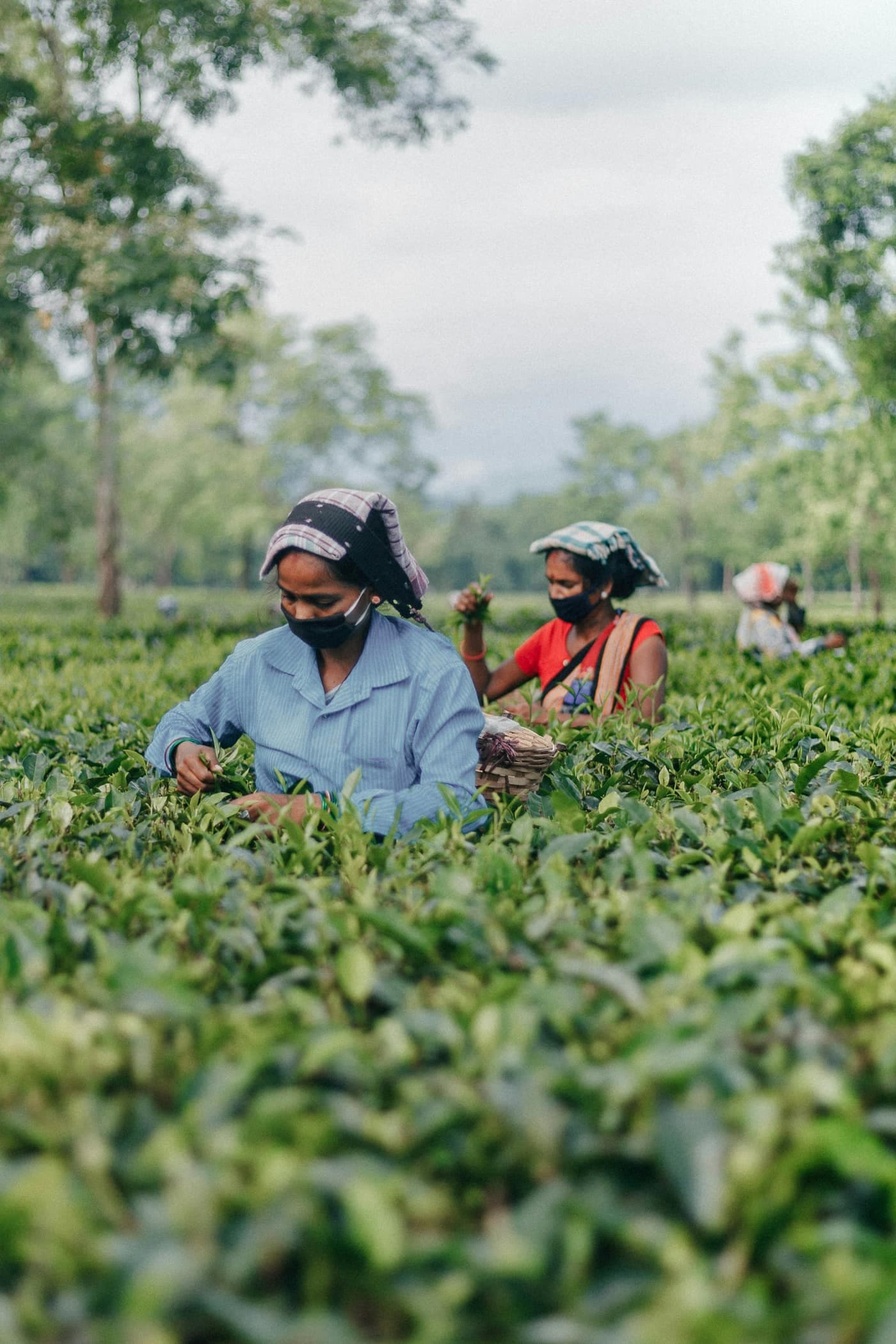
Tea is plucked, not harvested once: through the flush season (roughly March–November) the tender new shoots are plucked to the standard of “two leaves and a bud” every 7–14 days as they reach the right stage. Fine plucking (bud plus one-two tender leaves) gives quality; coarse plucking gives weight at the cost of grade. The plucked green leaf is then withered and processed the same day into black, green or specialty tea.
Signs it is ready
- New shoot at the two-leaves-and-a-bud stage
- Tender, soft, unhardened leaf and stem
- Round due on the 7–14 day plucking cycle
Tools
- Skilled hand-plucking (or shears/mechanical harvesters on some estates)
- Plucking baskets carried on the back
- Fast transport of green leaf to the factory the same day
Expected yield
1,500–2,500 kg of made tea per hectare per year in a well-managed plantation (roughly 4–5 kg of green leaf makes 1 kg of made tea), higher on the best estates
Post-harvest & storage
Storage
Green tea leaf is highly perishable and must be processed the same day, so “storage” means immediate factory processing — withering, rolling/CTC, oxidation (for black tea), drying and grading; made tea is then stored dry and airtight.
Packaging
Made tea is graded and packed dry in moisture- and aroma-proof chests/sacks/packets; green leaf itself is never stored, only moved fast to the factory.
Transportation
Green leaf moves fast and cool from field to factory; made tea ships as a durable, dry, graded product to auction and the trade.
Shelf life
Green leaf: hours (process the same day); made tea: many months to a couple of years when kept dry and airtight.
Market prices
Today's mandi price near you, pulled live from the government's own Agmarknet data.
Live daily mandi prices from the government Agmarknet dataset.
Government mandi price not available for this crop
This crop is not traded through APMC mandis covered by the government’s Agmarknet system, so there is no mandi price to show here.
Reference MSP: Sold through the auction system (Kolkata, Guwahati, Siliguri) and private sale, not APMC mandis
Weather
Current conditions and a 5-day outlook for your selected location, with one line of stage-aware advice.
Pick your state for current conditions and a 5-day outlook.
Live data from Open-Meteo
Profit calculator
Your own cost sheet, expected yield and selling price — not ours.
Where the money goes
Share of the total cost per acre, using the calculator’s own default cost sheet below — adjust the numbers there to match your field and this picture will no longer apply to you exactly, but the ranking rarely changes.
- Labour41% (₹30,000)
- Fertiliser16% (₹12,000)
- Land rent14% (₹10,000)
- Seed8% (₹6,000)
- Pesticide & weedicide8% (₹6,000)
- Machinery5% (₹4,000)
- Irrigation4% (₹3,000)
- Interest4% (₹3,000)
Official downloads
Government and ICAR documents only — everything below is hosted on an official server.
Frequently asked questions
Why does plucking standard matter so much in tea?
Because tea quality is made in the field, not just the factory. The classic standard is “two leaves and a bud” — the tender bud plus one or two soft young leaves. Fine plucking to that standard gives the delicate, high-grade made tea the market pays for. Coarse plucking, taking older and harder shoots, adds weight now but wrecks the quality of the made tea and coarsens the bush over time. So the plucking standard is the single most important routine decision in tea.
What is the plucking table and why spend two years forming it?
The plucking table is the wide, low, flat surface of the bush from which the tender shoots are plucked. It is built in the first two years by formative pruning — centre-pruning, pegging and tipping — rather than by taking an early crop. That frame determines how much pluckable shoot the bush yields, and it does so for the next several decades. Rushing an early crop instead of forming the table gives a narrow, weak, unproductive bush for the life of the plantation, so the frame must not be sacrificed for a quick first yield.
Why does tea need an acidic soil?
Tea is naturally an acid-loving (acidophilic) plant. It must have an acidic soil, roughly pH 4.5–5.5, and it simply will not thrive on neutral or alkaline ground — nutrient uptake and growth suffer badly. This is why tea is grown on the acidic hill and slope soils and the acidic alluvium of Assam. Before planting, the soil acidity has to be right; it is a non-negotiable condition, not something you can fully correct later.
What is blister blight and how is it managed?
Blister blight is a fungal disease (Exobasidium vexans) that attacks only the tender young shoots and leaves — exactly the part that is plucked — turning them into shiny, blister-like lesions and cutting both yield and quality. It thrives in the prolonged wet, humid, cloudy weather of the hill districts. Because it hits the plucked shoot, it can badly hurt a wet season if left alone, so it is managed with a scheduled protectant fungicide programme (often copper) timed to the monsoon and the plucking rounds, along with shade regulation and timely plucking.
How often is tea plucked and how much made tea does it give?
Through the flush season, roughly March to November, the tender shoots are plucked every 7 to 14 days as new shoots reach the two-leaves-and-a-bud stage; in the cold winter months growth slows or stops and plucking pauses. Roughly four to five kilograms of green leaf make one kilogram of finished “made” tea, and a well-managed plantation yields on the order of 1,500 to 2,500 kilograms of made tea per hectare per year, with the best estates doing more.
Does tea have an MSP?
No. Tea has no Minimum Support Price — most tea is sold through the auction system and by private sale, so the price is set by quality, grade, garden reputation and demand, and fine teas fetch many times the price of common grades. For small growers, the price of green leaf sold to bought-leaf factories is the key number. Use the profit calculator on this page for planning, and note that quality plucking and processing are where the value is made.
Still have questions?
The FAQs above cover the common ones. For anything specific to your field and soil, your nearest Krishi Vigyan Kendra is the authoritative answer.