
Cocoa Bean
Theobroma cacao L.
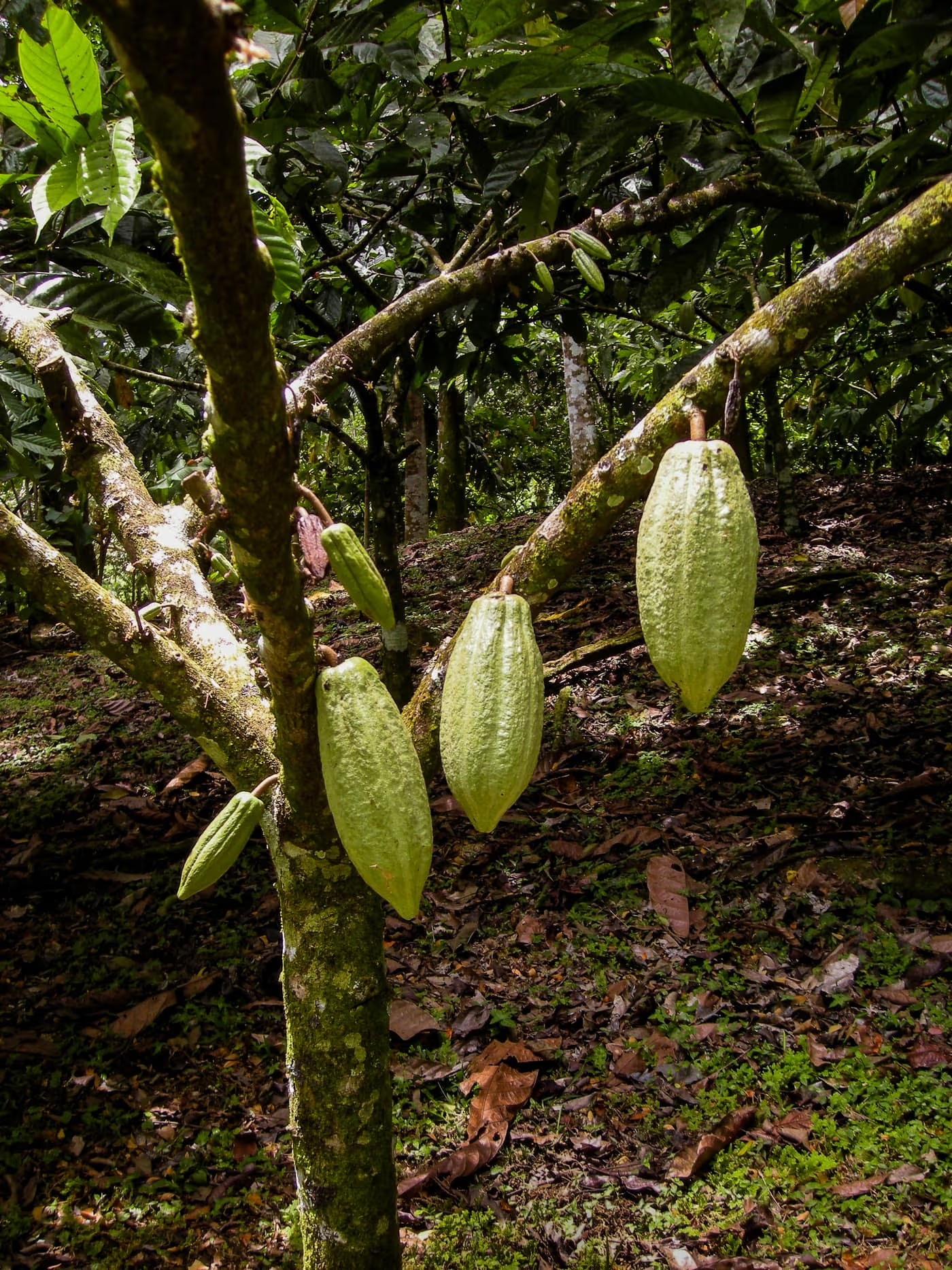
India's chocolate crop — a shade-loving understorey tree grown almost entirely as an intercrop beneath arecanut or coconut palms in the warm, humid south. Pods sprout straight from the trunk (cauliflory), are split open by hand, and the wet beans go through a week-long fermentation that decides whether the buyer pays a premium or the commodity floor price.
Quick Summary
The key points from this page in about two minutes — read it or have it read aloud.
Quick Summary
Cocoa (Theobroma cacao) is a tropical evergreen tree that produces the raw beans from which chocolate, cocoa butter and cocoa powder are made. In India it is not grown on its own — it is an intercrop under arecanut or coconut palms, using the natural shade these taller palms provide. Kerala, Karnataka, Tamil Nadu and Andhra Pradesh are the main growing states, together covering about one lakh hectares.
The ICAR-CPCRI research station at Vittal, Karnataka, has released eight improved varieties — five hybrids (VTLCH-1 through VTLCH-5) and three selections/clones (VTLCC-1, VTLCS-1, VTLCS-2). These are bred specifically for Indian palm-garden conditions: compact canopy that fits under the palms, early bearing (from about the third year), and tolerance to black pod rot, tea mosquito bug and moisture stress.
The defining post-harvest step is fermentation. Freshly scooped wet beans are heaped in wooden boxes or banana-leaf-lined baskets, covered, and turned every two days for five to seven days. Proper fermentation develops the chocolate flavour precursors that buyers test for; under-fermented or sun-dried-without-fermentation beans sell at a steep discount. After fermentation, beans are sun-dried to about six to seven percent moisture, graded and sold.
- Crop type
- Perennial tropical tree, intercropped under palms (cauliflorous)
- Season
- Planted in the monsoon (June–September); bears pods year-round with main harvest Oct–Mar
- Suitable states
- Kerala, Karnataka, Tamil Nadu, Andhra Pradesh
- First harvest
- About 3 years from planting
- Water requirement
- About 20 litres per tree per week via drip in summer
- Temperature
- Warm and humid tropical; about 20–32°C
- Soil type
- Deep, well-drained loam or clay loam rich in organic matter
- Difficulty level
- Moderate (fermentation skill decides bean quality and price)
- Expected yield
- About 1–2 kg dry beans per tree per year at full bearing
- Key risk
- Black pod rot in the monsoon; tea mosquito bug scarring pods year-round
Overview
Cocoa (Theobroma cacao L.), the source of chocolate, is a small tropical evergreen tree that in the wild grows under the canopy of taller rainforest trees. In India this shade requirement is met by growing cocoa as a lower-tier intercrop beneath arecanut or coconut palms — a palm-based cropping system that the ICAR-Central Plantation Crops Research Institute (CPCRI) at Vittal, Karnataka, has researched and promoted since the 1970s. India grows cocoa on about 1.1 lakh hectares, producing roughly 30,000 tonnes of dry beans annually.
The four main cocoa states are Andhra Pradesh, Kerala, Karnataka and Tamil Nadu — together accounting for nearly all production. Andhra Pradesh has expanded the fastest thanks to company-backed contract farming (Mondelez, Cargill). Unlike West Africa where cocoa is a standalone crop on cleared land, Indian cocoa almost always sits under existing palm gardens, making it an add-on income stream rather than a separate plantation.
CPCRI has released eight varieties specifically for Indian conditions: five hybrids (VTLCH-1 through VTLCH-5), one clone (VTLCC-1) and two selections (VTLCS-1, VTLCS-2). All are bred for compact canopy that fits under palms, early bearing and tolerance to the two main problems — black pod rot (Phytophthora palmivora, worst in the monsoon) and tea mosquito bug (Helopeltis spp., which scars young pods and cherelles).
Crop timeline, sowing to harvest
A quick visual map of the season — jump to any section below for the detail behind each stage.
- Before planting (3–6 months)
Nursery
Seeds from ripe pods of a recommended hybrid/clone are sown immediately (viability is short) in polybags filled with a soil-sand-FYM mix, kept under shade. Seedlings are ready for field planting at about 4–6 months.
- Year 0 (June–September)
Field planting
Four- to six-month-old seedlings are planted in the rainy season in prepared pits (50 × 50 × 50 cm) at 2.7 × 2.7 m or 2.7 × 5.4 m spacing between the existing palm rows. Temporary shade with banana or other cover is provided if the palm canopy is thin.
- Year 1–2
Establishment
Regular watering, mulching, weeding and graduated fertiliser doses build the young tree. Jorquette (the natural fork where the stem branches into the canopy) formation happens and the tree is trained to a single-tier canopy.
- Year 3
First flowering and fruiting
Hybrid varieties begin to flower from the trunk and main branches (cauliflory). The first small crop of pods may be harvested.
- Year 4–5
Building yield
Pod numbers increase steadily. Regular harvesting every 10–15 days during the bearing season, along with pruning and pest/disease watch, become the routine.
- Year 6 onward
Full bearing
A well-managed tree produces 50–100+ pods per year. Each pod yields about 30–40 wet beans; about 1–3 kg dry beans per tree per year depending on variety and management.
- Each harvest round
Pod harvest and fermentation
Ripe pods (colour changes from green to yellow or red depending on variety) are cut with a sharp knife without damaging the cushion. Beans are scooped out, fermented in boxes for 5–7 days with turning every 48 hours, then sun-dried to 6–7% moisture.
Suitable states
States where this crop is grown at scale, highlighted below. Your local Krishi Vigyan Kendra is still the final word for your specific block.
- Jammu and Kashmir
- Himachal Pradesh
- Punjab
- Uttarakhand
- Haryana
- Delhi
- Uttar Pradesh
- Rajasthan
- Bihar
- Jharkhand
- West Bengal
- Sikkim
- Assam
- Arunachal Pradesh
- Meghalaya
- Nagaland
- Manipur
- Mizoram
- Tripura
- Gujarat
- Madhya Pradesh
- Chhattisgarh
- Maharashtra
- Odisha
- Goa
- Telangana
- Andhra Pradesh
- Karnataka
- Kerala
- Tamil Nadu
- Puducherry
- Ladakh
- Chandigarh
- Lakshadweep
Grown here
Climate requirements
Altitude up to about 600 m is suitable. Outside a warm, humid belt with reliable shade and moisture, cocoa will not thrive.
Ideal temperature
Cocoa needs a warm, humid tropical climate — about 20–32°C. It does not tolerate frost or prolonged dry heat.
Rainfall
Well-distributed rainfall of about 1,250–2,500 mm per year. Trees need drip irrigation (about 20 litres per week) during dry months; waterlogging is harmful.
Humidity
High humidity, above about 70–80%, suits the tree and helps pod development. The same humidity favours black pod rot during the monsoon.
Sunlight
Cocoa is a shade-loving understorey tree — it performs best under about 50–70% filtered light. Arecanut or coconut palms provide ideal shade.
Soil requirements
The inter-row space between palm stems is the planting zone — the palm roots and cocoa roots share the same soil volume, so feeding must account for both crops.
Suitable soil
Deep, well-drained loam or clay loam rich in organic matter. Red laterite soils of Kerala and Karnataka, alluvial soils of Andhra Pradesh and Tamil Nadu are traditional cocoa soils.
pH range
Slightly acidic to near-neutral (pH 5.0–7.0).
Drainage
Good drainage is essential — waterlogging leads to root rot and worsens black pod disease.
Organic matter
Heavy organic matter at planting and as annual top-dress. Compost, well-rotted cattle manure and leaf-litter recycling from the palms above are standard practice.
Land preparation
Same four steps whichever region you are in — only the timing shifts with the sowing window.
- 1
Assess existing palm stand
Cocoa is planted between existing arecanut or coconut palms. Check that the palms provide about 50–70% shade cover. Thin or open palm canopies may need temporary shade (banana, gliricidia).
- 2
Dig pits
Dig pits of 50 × 50 × 50 cm at 2.7 × 2.7 m or 2.7 × 5.4 m spacing in the inter-row spaces between palms. Fill with a mix of topsoil, well-rotted FYM and rock phosphate.
- 3
Plan irrigation
Arrange drip irrigation if not already in place for the palm garden. Each cocoa tree needs about 20 litres per week in the dry months.
Seed information
How the main varieties compare, so you can pick by duration, yield, disease pressure or what you are growing for.
| Variety | Duration | Yield | Disease resistance | Best state | Suitable for |
|---|---|---|---|---|---|
VTLCH-1 (Vittal Cocoa Hybrid 1) Released by ICAR-CPCRI, Vittal. Early bearing, high yielding hybrid with about 50 pods/tree/year, pod weight 350–400 g, about 40 beans/pod, single dry bean weight about 1–1.11 g, fat content 54%. Yields about 1.4–1.5 kg dry beans/tree/year. | First bearing from year 3; full bearing by year 6–8 | About 1.4–1.5 kg dry beans/tree/year (959–1,030 kg/ha) | Not specifically documented | Kerala, Karnataka, Tamil Nadu, Andhra Pradesh | All palm-based cocoa areas in South India |
VTLCH-2 (Vittal Cocoa Hybrid 2) Released by ICAR-CPCRI. Parentage ICS 6 × SCA 6. Tolerant to black pod rot, tea mosquito bug and low moisture stress. About 50 pods/tree/year, 40 beans/pod, 1–1.5 g single dry bean weight, 54% fat content. | First bearing from year 3; full bearing by year 6–8 | About 1.5 kg dry beans/tree/year (1,030 kg/ha) | Tolerant to black pod rot and tea mosquito bug | Karnataka, Kerala, Andhra Pradesh, Gujarat | Areas with black pod rot and moisture-stress risk |
Released 2008 by ICAR-CPCRI in the institute's centenary year. The highest-yielding CPCRI hybrid — about 66 pods/tree/year, 43 beans/pod, 1.11 g single dry bean weight, 52% fat. Suitable for high-density planting under both arecanut and coconut. | First bearing from year 3; full bearing by year 6–8 | About 2.5–3.0 kg dry beans/tree/year (1,500–1,800 kg/ha) | Not specifically documented | Karnataka, Kerala, Tamil Nadu, Andhra Pradesh | High-density palm-based cropping; growers wanting the highest yield |
VTLCS-1 (Vittal Cocoa Selection 1) Released by ICAR-CPCRI through clonal selection. Stress-tolerant, heavy bearer — 55 pods/tree/year, 42 beans/pod, 1.3 g single dry bean weight (heavier than most hybrids), 52% fat content. | First bearing from year 3–4; full bearing by year 6–8 | About 2.5 kg dry beans/tree/year (1,700 kg/ha) | Stress-tolerant (drought, heat) | Karnataka, Kerala, Tamil Nadu, Andhra Pradesh | Dry-season stress-prone areas |
VTLCS-2 (Vittal Cocoa Selection 2) Released by ICAR-CPCRI through clonal selection. Stable, stress-tolerant heavy bearer — 41 beans/pod, 1.21 g single dry bean weight, 53% fat. The heaviest fat content among CPCRI selections. | First bearing from year 3–4; full bearing by year 6–8 | About 2.7 kg dry beans/tree/year (1,840 kg/ha) | Stress-tolerant (drought, heat) | Karnataka, Kerala, Tamil Nadu, Andhra Pradesh | Dry areas where stable yield under stress matters |
VTLCC-1 (Vittal Cocoa Clone 1) Released by ICAR-CPCRI as a clonal variety. Self-compatible and cross-compatible — about 75 pods/tree/year, 36 beans/pod, 0.9–1.05 g single dry bean weight, 52.5% fat. Compact 12 m² canopy. Recommended for north-eastern India. | First bearing from year 3; full bearing by year 6–8 | About 1.33 kg dry beans/tree/year (911 kg/ha) | Self-compatible (reliable fruit set without cross-pollination) | North-eastern states, Kerala, Karnataka | North-eastern India; small gardens where reliable self-pollination matters |
- Seed rate
- Cocoa is planted as 4–6 month-old seedlings raised from fresh pod seeds or as grafted/budded plants. About 200–270 trees per acre at 2.7 × 2.7 m spacing, or about 100–135 at 2.7 × 5.4 m.
- Certified seed
- Buy seed pods or seedlings from ICAR-CPCRI (Vittal, Karnataka), KAU (Kerala Agricultural University) cocoa research stations, DCCD (Directorate of Cashewnut and Cocoa Development) nurseries, or company-backed nurseries (Mondelez/Cadbury, Cargill). Insist on identified hybrid or clonal material.
- Spacing
- About 2.7 × 2.7 m or 2.7 × 5.4 m between existing palm rows (CPCRI).
- Seed treatment
- Seeds lose viability within a week of pod opening — sow immediately. Remove the pulp, sow 2–3 cm deep in polybags under 50% shade. Germination takes about 10–15 days.
Sowing guide
The palm canopy must provide about 50–70% shade. If the palms are too young or too widely spaced, plant temporary shade (banana, gliricidia) alongside.
- Best time
- Plant seedlings in the rainy season — June to September — when shade from the palms above is well established.
- Row spacing
- About 2.7 m or 5.4 m between rows (between palm stems)
- Plant spacing
- About 2.7 m between trees within a row
- Sowing depth
- Set the seedling at the same depth as in the nursery bag, in a pit filled with topsoil and FYM.
- Method
- One seedling per prepared pit between palm rows, watered in immediately and mulched.
Fertilizer schedule
A split dose beats one large dose applied at sowing — nitrogen especially is lost to the air and to leaching if it all goes in on day one.
- 1
At planting (basal)
Year 0
Pit filled with topsoil, about 5 kg well-rotted FYM and 100 g rock phosphate.
- 2
Young trees
Years 1–3
First year: about one-third of the full dose (roughly 33:13:47 g N:P₂O₅:K₂O). Second year: two-thirds. Third year onward: full dose.
- 3
Bearing trees
Year 4 onward
About 100:40:140 g N:P₂O₅:K₂O per tree per year (CPCRI). Apply in two equal splits — April–May and September–October. Trees yielding more than 50 pods/year: double the dose to 200:80:280 g.
- 4
Organic manure
Annually
About 10–15 kg well-rotted FYM or compost per tree per year, applied in a shallow trench around the tree.
Irrigation schedule
1. Young trees
Dry months
About 20 litres per tree per week through drip irrigation during summer. Basin irrigation as an alternative.
2. Bearing trees
Dry spells
Continue about 20 litres per tree per week through dry months. Providing adequate irrigation increases yield by about 30% (CPCRI).
Critical stages
- First two dry seasons after planting
- During flowering and pod development
- Long dry spells at any age
Water-saving tips
- Drip irrigation saves water and avoids waterlogging compared to flood irrigation.
- Mulch the basin with leaf litter from the palm canopy to hold moisture and suppress weeds.
- The palm irrigation system often serves the cocoa too — integrate both.
Weed management
Common weeds
Organic control
- Mulch the basin with palm leaf litter or cocoa pod husks to suppress weeds.
- Slash Mikania and Lantana before they flower and seed.
- Shade management naturally suppresses many weed species.
Chemical control
- Keep a clean basin around each young tree by hand weeding or hoeing. Avoid herbicides near young plants.
- If herbicide is needed in the inter-row, confirm the current registered product and dose with your KVK or state horticulture department.
Nutrient deficiency identification
What a shortage of each nutrient actually looks like on the plant, so you can tell a deficiency apart from a disease before you spray the wrong thing.
Nitrogen
Visible symptom
Pale, yellowish older leaves and slow canopy growth. Young trees look stunted.
Potassium
Visible symptom
Scorched or browned leaf edges, starting from older leaves. Pod filling is poor.
Zinc
Visible symptom
Small, narrow, mottled leaves with short internodes (rosette appearance). Common on alkaline soils.
Diseases to watch for
Symptoms, likely cause and what actually treats it — not just a spray name.
Black pod rot (Phytophthora palmivora)
- Symptoms
- Dark brown to black water-soaked patches on developing pods, spreading rapidly in wet weather until the whole pod rots. The rot starts from any point on the pod surface.
- Cause
- Phytophthora palmivora, a water-mould favoured by monsoon rain, poor drainage and dense canopy.
- Treatment
- Spray copper oxychloride at 0.25% or 1% Bordeaux mixture on pods during the monsoon season; confirm the current recommendation with your KVK. Remove and destroy all rotten pods promptly.
- Prevention
- Prune canopy for air circulation, drain standing water, remove rotten pods immediately (they are the main inoculum source), choose tolerant varieties like VTLCH-2.
Vascular streak dieback (Oncobasidium theobromae)
- Symptoms
- Scattered yellowing and drop of leaves from the second or third flush behind the growing tip. If bark is scraped, dark brown streaks are visible in the vascular tissue.
- Cause
- Oncobasidium theobromae (now Ceratobasidium theobromae), a basidiomycete fungus. The disease was first reported in India from Kottayam, Kerala.
- Treatment
- No effective fungicide control. Cut infected branches 30 cm below the last visible vascular streak and burn. Disinfect pruning tools.
- Prevention
- Use VSD-tolerant planting material. Prune to improve air circulation. Remove and burn infected branches promptly.
Thread blight (Marasmius)
- Symptoms
- Fine black silky threads forming an irregular network on stems and leaves during the monsoon, causing blight and leaf drop.
- Cause
- Marasmius pulcherrima and M. equicrinus, spreading through the canopy in wet weather.
- Treatment
- Spray copper oxychloride at 0.25% or 1% Bordeaux mixture during the monsoon; confirm with your KVK.
- Prevention
- Prune overlapping branches for air circulation. Remove and burn fallen infected leaves. Avoid overcrowding.
Pests to watch for
What to look for before the damage is visible, and organic options before you reach for a chemical.
Tea mosquito bug (Helopeltis)
- Identification
- A slender, reddish-brown sucking bug (about 6–8 mm) that feeds on young shoots, flower cushions and developing pods, leaving characteristic necrotic brown lesions that coalesce into large dead patches.
- Damage
- Young pods are scarred and deformed, reducing market grade. Severe infestations can destroy flower cushions and prevent fruit set.
- Organic control
- Prune to regulate shade and remove alternate host trees (neem, cashew, guava) from the vicinity. Spray neem oil at 3% or Beauveria bassiana at 4 g/L for moderate infestations (CPCRI).
- Chemical control
- For severe infestations: spray lambda cyhalothrin 5 EC at 0.3 mL/L or imidacloprid 17.8 SL at 0.25 mL/L (CPCRI). Repeat at 20–30 day intervals if infestation persists. Confirm the current recommendation with your KVK.
Mealybug (Planococcus)
- Identification
- Soft, oval, white-waxy-coated insects clustering on pod surfaces, leaf axils and flower cushions. Often attended by ants.
- Damage
- Heavy colonies weaken the plant, encourage sooty mould growth, and reduce pod quality.
- Organic control
- Conserve natural enemies — the lycaenid butterfly Spalgius epius and ladybird beetles (Pullus spp.) are effective biological control agents. Spot-apply neem oil emulsion at 0.5% with 5% soap solution twice at fortnightly intervals (CPCRI).
- Chemical control
- For severe infestations: spray imidacloprid at 0.3 mL/L of water (CPCRI). Need-based application only.
Cocoa pod borer / bark-eating caterpillar
- Identification
- Caterpillars boring into pods or feeding on bark under protective silk-and-frass tunnels.
- Damage
- Damaged pods lose beans or rot. Bark feeding weakens branches.
- Organic control
- Remove frass tunnels and caterpillars by hand. Keep tree trunk clean and whitewashed.
- Chemical control
- Confirm the current registered insecticide with your state horticulture department or KVK.
Common mistakes to avoid
The mistakes that cost growers the most, ranked by how often they show up in the field — not in the order you might expect.
- 1
Planting cocoa without adequate shade.
Why it hurts
Cocoa is a shade-loving understorey tree. In open sun it scorches, grows poorly and yields very little. It must be planted under an existing palm canopy or with temporary shade.
- 2
Skipping or shortening fermentation.
Why it hurts
Under-fermented beans lack chocolate flavour precursors and sell at a steep discount. The full 5–7 day box fermentation with turning every 48 hours is non-negotiable for quality.
- 3
Leaving rotten pods on the tree or ground.
Why it hurts
Each rotten pod is a source of Phytophthora spores that infect neighbouring pods. Remove and bury or burn rotten pods at every harvest round — this is the single most effective black pod rot control.
- 4
Using unidentified seedling material.
Why it hurts
Random seedlings vary widely in yield, bean size and disease tolerance. Use identified CPCRI hybrids or clones to ensure consistent, early bearing and the expected bean quality.
- 5
Not pruning the canopy.
Why it hurts
An unpruned cocoa tree grows tall, making harvest difficult, and develops a dense canopy with poor air circulation — ideal for black pod rot and thread blight. Annual pruning to a single-tier canopy keeps pods accessible and diseases in check.
- 6
Over-drying or under-drying beans.
Why it hurts
Beans dried below 6% moisture become brittle and break during handling. Beans above 8% moisture develop mould in storage. Target about 6–7% — the bean should snap cleanly when broken.
Harvesting
Bearing begins from about the third year. Pods are harvested when fully ripe — the colour changes from green to yellow (Forastero types) or from green/red to orange/red (Criollo/Trinitario types). Harvest every 10–15 days to avoid over-ripe pods splitting on the tree.
Signs it is ready
- Pod colour changes from green to yellow or orange-red depending on variety
- Pod surface gives a hollow sound when tapped
- Pod separates from the trunk cushion with a clean cut
Tools
- Sharp knife or secateurs (cut — never twist or pull, to avoid damaging the trunk cushion)
- Clean baskets or trays for collecting pods
- Wooden fermentation boxes (about 60 × 60 × 60 cm)
- Raised drying mats or racks for sun-drying
Expected yield
About 50–100 pods per tree per year at full bearing. Each pod yields about 30–40 wet beans. After fermentation and drying, about 1–2 kg dry beans per tree per year for standard hybrids; VTLCH-5 can reach 2.5–3.0 kg/tree/year.
Post-harvest & storage
Storage
Dried beans (about 6–7% moisture) are stored in clean, dry, ventilated jute or polypropylene bags off the ground. Keep away from moisture, strong odours and chemicals.
Packaging
Split pods immediately after harvest, scoop out wet beans. Ferment in wooden boxes for 5–7 days with turning every 48 hours. Sun-dry on raised mats to about 6–7% moisture. Grade by bean size (bean index: 100 beans should weigh about 100 g for Grade I).
Transportation
Dried cocoa beans are compact and transport well. Sold to Mondelez/Cadbury, Cargill, Campco (Central Arecanut and Cocoa Marketing and Processing Co-operative), or local traders.
Shelf life
Properly fermented, dried and stored cocoa beans keep well for several months. Moisture absorption and mould are the main storage risks.
Market prices
Today's mandi price near you, pulled live from the government's own Agmarknet data.
Live daily mandi prices from the government Agmarknet dataset.
Synced from data.gov.in (Agmarknet). Rates are ₹ per quintal.
Weather
Current conditions and a 5-day outlook for your selected location, with one line of stage-aware advice.
Pick your state for current conditions and a 5-day outlook.
Live data from Open-Meteo
Profit calculator
Your own cost sheet, expected yield and selling price — not ours.
Where the money goes
Share of the total cost per acre, using the calculator’s own default cost sheet below — adjust the numbers there to match your field and this picture will no longer apply to you exactly, but the ranking rarely changes.
- Labour52% (₹25,000)
- Land rent17% (₹8,000)
- Fertiliser8% (₹4,000)
- Seed6% (₹3,000)
- Irrigation6% (₹3,000)
- Pesticide & weedicide5% (₹2,500)
- Interest4% (₹2,000)
- Machinery1% (₹500)
Official downloads
Government and ICAR documents only — everything below is hosted on an official server.
ICAR-CPCRI — Cocoa varieties
Official CPCRI cocoa variety descriptions and yield data
Directorate of Cashewnut and Cocoa Development (DCCD)
National cocoa crop history, area and production data
CPCRI Cocoa Guide 2018
Comprehensive cocoa cultivation guide (PDF)
Kisan Call Centre — 1800-180-1551
Free crop advice in your language
Frequently asked questions
Can I grow cocoa without arecanut or coconut palms?
Cocoa needs about 50–70% shade. In India it is almost always grown as an intercrop under arecanut or coconut. Growing it in the open without shade leads to sunscorch, poor growth and very low yields. If you have no palm garden, you would need to establish shade trees (like gliricidia or silver oak) first, but this is uncommon in Indian practice.
Which cocoa variety should I plant?
For the highest yield, VTLCH-5 (Nethra Centura) gives about 2.5–3 kg dry beans per tree per year. If your area has black pod rot and moisture stress, VTLCH-2 (tolerant to both) is a safer choice. For the north-east, VTLCC-1 (self-compatible) is recommended. Buy identified planting material from CPCRI Vittal, KAU or DCCD nurseries.
How long before cocoa gives a crop?
CPCRI hybrids begin bearing from about the third year after planting. Yields build steadily — full bearing is reached around year 6–8. A well-managed tree can keep producing for 25–30 years or more.
Is there an MSP or mandi price for cocoa?
Cocoa has no MSP. It trades on Agmarknet — the commodity name is "Cocoa" — mainly through Kerala APMC markets (e.g. Pulpally). Prices in 2025–2026 have ranged from about ₹15,000 to ₹20,000 per quintal. Most Indian cocoa is bought by Mondelez/Cadbury, Cargill or Campco through contract or cooperative channels, often at prices higher than the mandi floor.
Why is fermentation so important?
Fermentation is the step where the chocolate flavour precursors develop inside the bean. Without proper fermentation (5–7 days in boxes, turned every 48 hours), the beans taste flat, astringent and bitter — buyers test for this and pay significantly less for under-fermented or unfermented beans. It is the single most important post-harvest step.
What is the biggest disease problem in cocoa?
Black pod rot (Phytophthora palmivora) during the monsoon is the most damaging disease. It can destroy 10–30% of pods in a bad year. The most effective control is sanitation — remove and destroy every rotten pod at every harvest round so it cannot spread spores to healthy pods. Copper sprays during the monsoon and choosing a tolerant variety like VTLCH-2 help further.
Still have questions?
The FAQs above cover the common ones. For anything specific to your field and soil, your nearest Krishi Vigyan Kendra is the authoritative answer.