
Grapes
Vitis vinifera
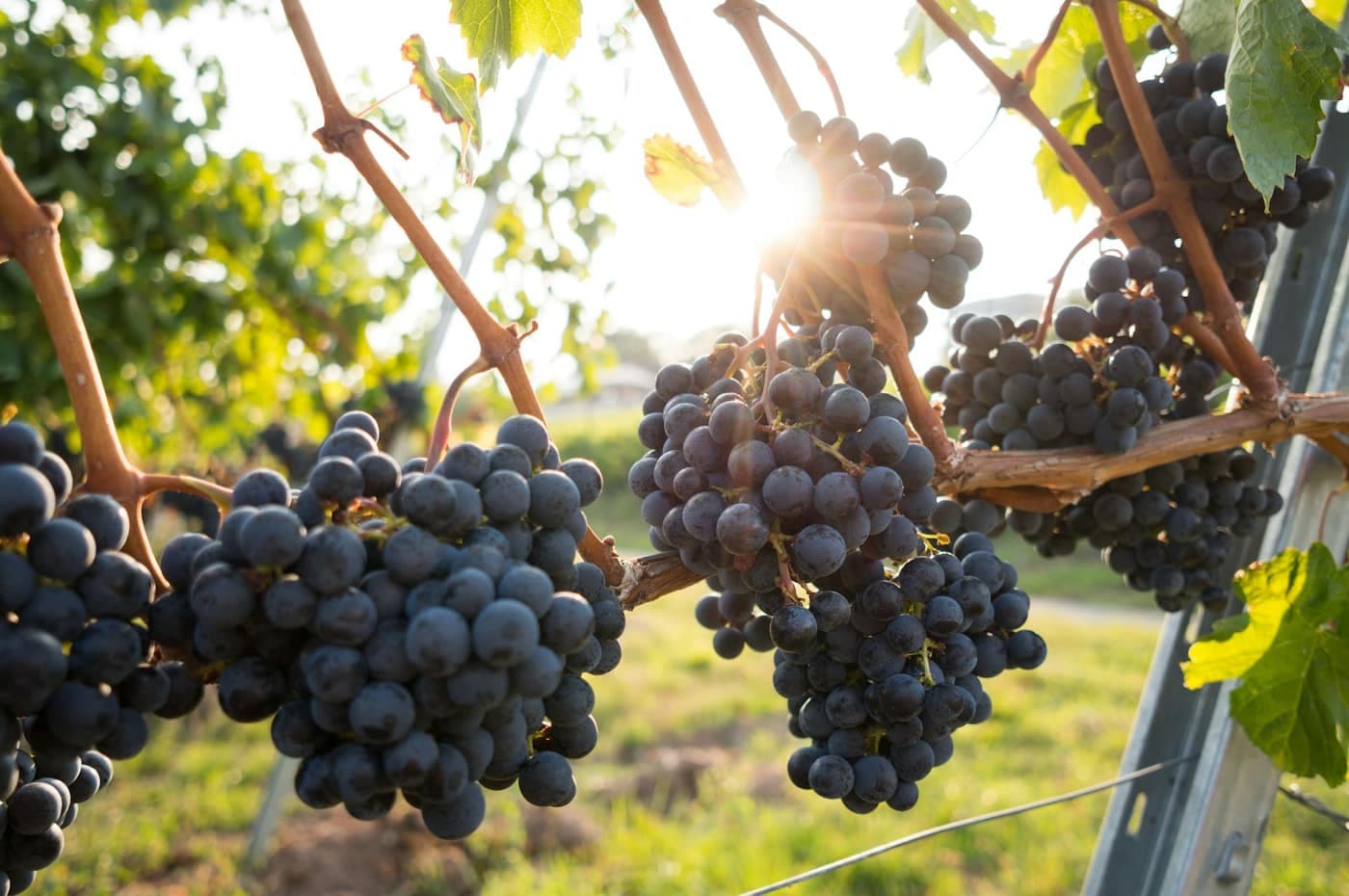
The most intensively managed fruit in India, grown on a double-pruning cycle — a foundation prune to build the vine and a fruit prune to crop it. Canopy and irrigation discipline through berry development is what separates an export-grade bunch from a rejected one.
Quick Summary
The key points from this page in about two minutes — read it or have it read aloud.
Quick Summary
Grape is the most capital- and skill-intensive fruit grown in India, concentrated in Maharashtra, northern Karnataka and Telangana, with Thompson Seedless and its clones dominating the table and export trade. What sets it apart from every other fruit here is the double-pruning cycle. In the Indian tropics the vine is pruned twice a year: a foundation prune around April that grows fruitful canes but takes no crop, and a fruit prune around September or October that sets the actual crop and fixes its harvest date. Get either one wrong and the season is lost.
From the fruit prune to harvest, the crop is an unbroken routine — canopy management, growth-regulator dips, bunch thinning, and above all a relentless spray programme against downy and powdery mildew, which can strip a crop in a single wet week.
Grape is really a dry-climate fruit forced to grow in the tropics, so the whole calendar is built to ripen the bunches in dry, sunny weather. Rain or humidity during flowering or ripening is the grower’s nightmare: it unleashes downy mildew and cracks and rots the berries, which is why the fruit prune is timed to land the harvest in a dry window. Through berry development, precise drip, an open canopy, girdling and growth regulators build the size and grade an export buyer will accept. Cut bunches at the target sugar, then cool and pack them fast. The page below carries the training layout, both pruning dates and methods, the mildew spray programme, the canopy and thinning steps, harvest sugar targets and expected yields.
- Crop type
- Perennial vine fruit
- Cycle
- Double pruning (foundation + fruit)
- Suitable states
- 6+ major states
- First bearing
- 2–3 years
- Water requirement
- Moderate; precise drip
- Temperature
- 15–35°C; dry ripening
- Soil type
- Well-drained loam
- Difficulty level
- Hard
- Expected yield
- 200–350 q/ha
- Key practice
- Double pruning + mildew control
Overview
Grape (Vitis vinifera) is the most capital- and skill-intensive fruit grown in India, concentrated in Maharashtra (Nashik, Sangli), northern Karnataka and Telangana. Thompson Seedless and its clones dominate the table and export trade, with coloured and raisin varieties alongside.
What makes grape unlike any other fruit here is the double-pruning cycle. In the tropical Indian climate the vine is pruned twice a year: a foundation (back) prune around April that grows fruitful canes but takes no crop, and a fruit (forward) prune around September–October that sets the actual crop. Get either wrong and the season is lost.
From fruit pruning to harvest, the crop is an unbroken discipline of canopy management, growth-regulator dips, bunch thinning and — above all — a relentless spray programme against downy and powdery mildew, which can strip a crop in a wet week. This guide follows the vine through that cycle, with the mildews, canopy and even irrigation as the levers that decide export grade.
Crop timeline, sowing to harvest
A quick visual map of the season — jump to any section below for the detail behind each stage.
- Year 0
Planting
Rooted cuttings (often grafted on Dogridge rootstock) planted at ~3 × 1.5–2 m and trained up to a trellis/bower.
- Year 1–2
Training & framing
The vine is trained to a strong trunk and arms on the trellis; the first crop comes in year 2–3.
- Apr–May
Foundation (back) pruning
The vine is hard-pruned to build fruitful canes for the coming season — this crop makes no fruit, it makes next season’s wood.
- Sep–Oct
Fruit (forward) pruning
The vine is pruned again to the fruitful buds; this is the prune that sets the fruiting crop and its harvest date.
- Oct–Dec
Flowering & berry set
Bunches emerge and set; dipping/thinning and the relentless downy- and powdery-mildew programme begin.
- Dec–Feb
Berry development
Berries grow and colour; canopy, girdling, growth regulators and even irrigation build size and export grade.
- Feb–Apr
Harvest
Bunches are cut at the target sugar (TSS) for the table or export market, then cooled and packed fast.
Suitable states
States where this crop is grown at scale, highlighted below. Your local Krishi Vigyan Kendra is still the final word for your specific block.
- Jammu and Kashmir
- Himachal Pradesh
- Punjab
- Uttarakhand
- Haryana
- Delhi
- Uttar Pradesh
- Rajasthan
- Bihar
- Jharkhand
- West Bengal
- Sikkim
- Assam
- Arunachal Pradesh
- Meghalaya
- Nagaland
- Manipur
- Mizoram
- Tripura
- Gujarat
- Madhya Pradesh
- Chhattisgarh
- Maharashtra
- Odisha
- Goa
- Telangana
- Andhra Pradesh
- Karnataka
- Kerala
- Tamil Nadu
- Puducherry
- Ladakh
- Chandigarh
Grown here
Climate requirements
Grape is a dry-climate fruit forced to grow in India’s tropics, which is why the whole calendar aims to ripen the crop in dry, sunny weather. Rain or humidity during flowering or ripening is the grower’s nightmare — it triggers downy mildew and rots the bunches — so timing the fruit prune to a dry harvest window is central to the crop.
Ideal temperature
15–35°C over the cycle; the vine needs warm growth and, crucially, a dry, warm ripening period for high sugar and clean bunches
Rainfall
Best in a dry climate with irrigation; rain and humidity during flowering and ripening are disastrous — they unleash downy mildew and crack and rot the berries
Humidity
Low humidity strongly preferred; humid, cloudy or wet weather during the fruiting season is the single biggest driver of mildew losses
Sunlight
Full, bright sun for photosynthesis, sugar and colour; a well-managed open canopy lets light and spray reach every bunch
Soil requirements
Grape needs depth and drainage, and in India it is very often grafted onto a vigorous, salt- and nematode-tolerant rootstock like Dogridge, which is what lets it crop on the lighter and saline soils of the growing belt. On any soil, drainage and controlled vigour matter more than raw richness.
Suitable soil
Deep, well-drained medium loam is ideal; grafting on Dogridge or other rootstocks lets the crop extend onto lighter, saline or nematode-prone soils
pH range
6.5–8.0 (tolerant on rootstock)
Drainage
Excellent drainage is essential — waterlogging causes root death, decline and disease; grape will not tolerate wet feet
Organic matter
Responds to FYM; but excessive vigour from over-rich, over-watered soil gives dense, mildew-prone canopies and poor fruitfulness
Land preparation
Same four steps whichever region you are in — only the timing shifts with the sowing window.
- 1
Deep prep & trellis
Deep-plough, incorporate FYM, and erect a sturdy trellis or bower system before planting — the vine will hang on it for 15+ years.
- 2
Drainage & rootstock
Ensure the block drains, and plant grafted vines on a suitable rootstock (e.g. Dogridge) for vigour and salt/nematode tolerance.
- 3
Drip layout
Lay a precise drip and fertigation system — grape is managed almost entirely through drip fertigation.
Seed information
How the main varieties compare, so you can pick by duration, yield, disease pressure or what you are growing for.
| Variety | Duration | Yield | Disease resistance | Best state | Suitable for |
|---|---|---|---|---|---|
Thompson Seedless (& clones: Tas-A-Ganesh, Sonaka) The dominant seedless table and export grape and the base for raisins; its improved clones drive the commercial crop. | ~130–150 days (fruit prune to harvest) | Very high | Mildew-susceptible | Maharashtra | Table, export, raisin |
An improved Thompson-type seedless selection widely grown for the fresh and export market. | ~140 days | Very high | Mildew-susceptible | Maharashtra | Table, export |
An improved Thompson-type seedless selection on the same fresh/export line as Sonaka. | ~140 days | Very high | Mildew-susceptible | Maharashtra | Table, export |
An early, red seedless table grape grown for the coloured fresh market. | Early | High | Moderate | Maharashtra/Karnataka | Coloured table market |
A popular black seedless table grape valued for colour and shipping quality. | Mid | High | Moderate | Maharashtra | Black table & export |
A regional juice-purpose type for domestic markets. | Mid | High | Variable — naturally resistant to phylloxera, but susceptible to some fungal diseases | Karnataka | Juice |
Raised from rooted cuttings, not true seed. One of the oldest grape varieties grown in India — large, amber, seeded berries grown for the fresh table market across the Deccan long before Thompson Seedless arrived. | Bearing from year 2–3 (rooted-cutting-raised vine) | 300–350 q/ha at full bearing | Susceptible to downy mildew | Andhra Pradesh, Telangana | Seeded table, Deccan heritage |
- Seed rate
- About 2,200–4,500 vines/ha depending on the training system and spacing
- Certified seed
- Plant healthy, true-to-type, grafted vines on a suitable rootstock from a reliable nursery. The rootstock choice (e.g. Dogridge for vigour and salinity) is as important as the scion variety and is a decades-long decision.
- Spacing
- Commonly ~3 m between rows × 1.5–2 m within the row on a trellis/bower; varies by training system
- Seed treatment
- Not a seed crop — select clean grafted planting material and protect the graft union and young vine from the nursery on.
Sowing guide
The real “sowing” decisions in grape are the two prunings, not planting. Once the vine is framed, everything is timed off the fruit prune, which is set so the crop ripens in a dry, warm window and hits the target market. Get the fruit-prune date and the vine’s pruning level right and the crop follows; get them wrong and no later effort recovers it.
- Best time
- Plant rooted/grafted vines in January or June–July; the crop then runs on the twice-yearly pruning cycle rather than an annual sowing
- Row spacing
- ~3 m between rows
- Plant spacing
- 1.5–2 m within the row
- Sowing depth
- Plant at nursery depth with the graft union above the soil; train the young vine up to the trellis wire
- Method
- Plant grafted vines against the trellis with drip, and train a strong single trunk in the first year
Fertilizer schedule
A split dose beats one large dose applied at sowing — nitrogen especially is lost to the air and to leaching if it all goes in on day one.
- 1
After foundation prune
Apr–May
FYM and a balanced NPK base as the vine builds fruitful canes; this feeds next season’s crop potential.
- 2
After fruit prune to set
Oct–Nov
Fertigate nitrogen and phosphorus early, then shift toward potash as berries develop, for size and sugar.
- 3
Berry development
Dec–Feb
Keep potash and calcium up through berry growth and ripening for size, firmness and shelf life; taper nitrogen.
Irrigation schedule
1. Post-prune growth
After each prune
Regular drip to push the new growth after pruning; the vine is thirsty as it builds canopy and bunches.
2. Berry growth
Dec–Jan
Steady, even drip through the berry-swelling phase for size — the peak water demand of the fruiting cycle.
3. Ripening
Jan–Feb
Reduce irrigation as the berries ripen to concentrate sugar and avoid cracking and dilution near harvest.
Critical stages
- Berry set & growth
- Ripening (controlled deficit)
Water-saving tips
- Grape is managed on precise drip fertigation — water and nutrients are metered to the growth stage, not flooded.
- A controlled reduction of water at ripening lifts sugar and reduces cracking — deficit is a tool here, not a failure.
- An open, well-managed canopy uses water efficiently and dries fast after dew, cutting mildew pressure too.
Weed management
Common weeds
Organic control
- A cover crop or managed sod in the inter-row suppresses weeds, holds the soil and can be mown as mulch.
- Mulch under the vine row conserves moisture and smothers weeds around the drip.
Chemical control
- A spot/pre-emergence herbicide along the vine row, kept off the trunk and low canes.
- Mow or slash the inter-row (often kept as a managed sod) rather than cultivating near the roots.
Nutrient deficiency identification
What a shortage of each nutrient actually looks like on the plant, so you can tell a deficiency apart from a disease before you spray the wrong thing.
Potassium
Visible symptom
Marginal scorch of leaves and small, poorly-sugared, soft berries — grape is a heavy potassium user.
Magnesium
Visible symptom
Interveinal yellowing of older leaves while the veins stay green, worsening near harvest.
Boron
Visible symptom
Poor fruit set, “hen-and-chicken” uneven berries and shot berries in the bunch.
Zinc
Visible symptom
Small, mottled leaves and “little-leaf” shoots with poor bunch fill.
Iron
Visible symptom
Interveinal yellowing of the youngest leaves with green veins, on calcareous soils.
Diseases to watch for
Symptoms, likely cause and what actually treats it — not just a spray name.
Downy mildew
- Symptoms
- Yellow “oil spots” on the upper leaf and white downy growth beneath, and infected shoots and bunches; a wet spell can strip the foliage and destroy the crop in days.
- Cause
- Plasmopara viticola, driven by rain, dew and high humidity during the growing and fruiting period.
- Treatment
- A strict protectant-plus-systemic fungicide programme timed to weather and vine stage; remove badly infected material.
- Prevention
- An open canopy for airflow, dry-window fruit pruning, forecast-based preventive spraying and sanitation — this is the crop’s most feared disease in a wet season.
Powdery mildew
- Symptoms
- A greyish-white powdery growth on leaves, shoots and berries that scars and cracks the fruit and downgrades or destroys the bunch.
- Cause
- Erysiphe (Uncinula) necator, favoured by warm, dry, cloudy conditions and dense canopies — unlike downy, it does not need free water.
- Treatment
- Sulphur and systemic fungicides on a schedule; open the canopy to expose bunches to light and air.
- Prevention
- Canopy management for light and airflow, and a preventive sulphur/fungicide programme from early growth.
Anthracnose (bird’s-eye rot)
- Symptoms
- Sunken, dark-bordered “bird’s-eye” spots on shoots, leaves and berries, worst in wet weather early in the season.
- Cause
- Elsinoë ampelina, favoured by warm, wet conditions on tender growth.
- Treatment
- Dormant and early-season protectant sprays and removal of infected wood.
- Prevention
- Clean planting material, sanitation and early protective sprays in wet regions.
Bunch rots (Botrytis / sour rot)
- Symptoms
- Grey mould or sour, leaking rot in the ripening bunch, spreading fast in tight or cracked bunches in humid weather near harvest.
- Cause
- Botrytis and other fungi/yeasts entering ripe, wet, cracked or thrips-damaged berries.
- Treatment
- Remove affected bunches, improve airflow, and use recommended botryticides near harvest where pressure is high.
- Prevention
- Bunch thinning for looseness, dry-window ripening, and controlling the thrips and cracking that open the door to rot.
Pests to watch for
What to look for before the damage is visible, and organic options before you reach for a chemical.
Thrips
- Identification
- Tiny slender insects scarring the flowers and young berries, causing corky russet and scab-like blemishes on the skin.
- Damage
- Skin scarring downgrades and can reject table and export bunches, and the wounds invite rot.
- Organic control
- Blue sticky traps, neem sprays and conserving natural enemies; monitor from flowering.
- Chemical control
- A recommended insecticide timed to flowering and early set where thrips scar the fruit.
Mealybug
- Identification
- White, waxy mealybugs hiding under bark and in the bunch, with sticky honeydew and sooty mould on leaves and fruit.
- Damage
- Contaminates the bunch with bodies, wax and sooty mould, making it unsellable — a major quarantine pest for export.
- Organic control
- Release of natural enemies (e.g. Cryptolaemus), sticky bands on the trunk, bark cleaning, and avoiding broad sprays that kill predators.
- Chemical control
- Targeted insecticide/oil timed to crawler emergence, integrated with biocontrol.
Flea beetle & leaf-eating caterpillars
- Identification
- Flea beetles biting the swelling buds after pruning, and caterpillars chewing the new foliage.
- Damage
- Bud damage after pruning directly cuts the crop; defoliators reduce the canopy feeding the bunches.
- Organic control
- Post-prune monitoring, hand-collection and neem sprays; protect the vulnerable bud-burst stage.
- Chemical control
- A recommended insecticide at bud swell after pruning where flea beetle is a problem.
Nematodes
- Identification
- Root-knot and other nematodes galling roots, reducing vigour and yield — a reason grape is grafted on tolerant rootstock.
- Damage
- Weakened roots cut vigour and productivity and stress the vine.
- Organic control
- Tolerant rootstock (Dogridge), organic amendments and bio-nematicides.
- Chemical control
- A recommended nematicide where counts are high on own-rooted vines, on expert advice.
Common mistakes to avoid
The mistakes that cost growers the most, ranked by how often they show up in the field — not in the order you might expect.
- 1
Getting the double-pruning cycle wrong.
Why it hurts
The foundation prune builds next season’s fruitful wood and the fruit prune sets the actual crop — mistime or mis-level either and the vine either grows without fruiting or fruits poorly, and no later effort recovers the season.
- 2
Timing the fruit prune to ripen in wet weather.
Why it hurts
Rain and humidity at flowering and ripening unleash downy mildew and rot the bunches — the fruit prune must be set so the crop ripens in a dry, warm window.
- 3
Relaxing the mildew spray programme.
Why it hurts
Downy and powdery mildew can strip foliage and destroy a crop in days in a wet spell — grape needs a relentless, forecast-driven preventive programme, not a reaction after spots appear.
- 4
Letting the canopy grow dense and shaded.
Why it hurts
A dense canopy holds humidity for mildew, shades the bunches from colour and sugar, and stops spray reaching the fruit — canopy management for light and airflow is central to the crop.
- 5
Planting own-rooted vines on light/saline/nematode soil.
Why it hurts
Without a tolerant rootstock like Dogridge the vine struggles on the very soils of the growing belt — grafting is what makes the crop viable there.
- 6
Not thinning bunches and berries.
Why it hurts
An over-cropped, tight bunch gives small, uneven berries that rot easily and miss export grade — thinning builds size, looseness and grade.
- 7
Over-irrigating at ripening.
Why it hurts
Heavy water near harvest dilutes sugar and cracks the berries, opening them to rot — a controlled reduction of water lifts sugar and firms the fruit.
- 8
Ignoring thrips and mealybug on export fruit.
Why it hurts
Thrips scarring and mealybug contamination reject export bunches outright — both must be managed on schedule, not after the damage shows.
- 9
Under-feeding potassium.
Why it hurts
Grape is a heavy potassium user; short it and berries stay small, soft and poorly sugared with scorched leaves — keep potash up through berry development.
- 10
Harvesting by colour rather than sugar (TSS).
Why it hurts
Colour can run ahead of ripeness — cutting before the target TSS gives sour, low-grade fruit, so harvest to the measured sugar the market demands.
Harvesting
Harvest to the target sugar (TSS), not just colour: table and export grapes are cut when the berries reach the required Brix and the bunch is fully coloured and firm, usually 130–150 days after the fruit prune. Cut bunches in the cool of the morning, handle by the stalk to avoid rubbing the bloom off, and cool them fast. Export fruit is field-graded and moved straight into the cold chain.
Signs it is ready
- Berries at target sugar (measured TSS/Brix)
- Bunch fully coloured for the variety
- Berries firm with intact surface bloom
Tools
- Sharp harvesting snips for a clean bunch cut
- Field crates/lugs handled by the stalk
- Rapid pre-cooling and a cold chain for export
Expected yield
200–350 q/ha in a well-managed vineyard, with the crop split between table/export grade and lower-grade fruit for juice or raisins
Post-harvest & storage
Storage
Table grape is highly perishable and depends on the cold chain — it is pre-cooled fast and held near 0–2°C with high humidity (often with SO₂ pads) to control rot and hold the stem green for weeks.
Packaging
Field-grade and pack into ventilated cartons/punnets with a bunch liner and often SO₂-generating sheets; export fruit is graded to strict berry-size and residue standards.
Transportation
Move only in a cold chain/reefer — grape loses quality fast at ambient; the cold chain is what makes the domestic and export table trade possible.
Shelf life
A few days at ambient; several weeks to a couple of months under correct cold storage with SO₂ management.
Market prices
Today's mandi price near you, pulled live from the government's own Agmarknet data.
Live daily mandi prices from the government Agmarknet dataset.
Synced from data.gov.in (Agmarknet). Rates are ₹ per quintal.
Weather
Current conditions and a 5-day outlook for your selected location, with one line of stage-aware advice.
Pick your state for current conditions and a 5-day outlook.
Live data from Open-Meteo
Profit calculator
Your own cost sheet, expected yield and selling price — not ours.
Where the money goes
Share of the total cost per acre, using the calculator’s own default cost sheet below — adjust the numbers there to match your field and this picture will no longer apply to you exactly, but the ranking rarely changes.
- Labour25% (₹35,000)
- Seed18% (₹25,000)
- Pesticide & weedicide16% (₹22,000)
- Fertiliser14% (₹20,000)
- Land rent11% (₹15,000)
- Irrigation9% (₹12,000)
- Interest4% (₹6,000)
- Machinery3% (₹4,000)
Official downloads
Government and ICAR documents only — everything below is hosted on an official server.
Frequently asked questions
Why is grape pruned twice a year?
In India’s tropical climate the grapevine is grown on a double-pruning cycle. The foundation (back) prune, around April, hard-cuts the vine to grow strong, fruitful canes — but takes no crop; it is building next season’s wood. The fruit (forward) prune, around September–October, cuts back to the fruitful buds and sets the actual crop and its harvest date. Both are essential and both must be timed and levelled correctly: get either wrong and the vine either grows without fruiting or fruits poorly, and nothing later in the season recovers it.
Why are downy and powdery mildew such a big deal in grapes?
They are the two diseases that most often destroy an Indian grape crop. Downy mildew is driven by rain, dew and humidity and can strip the foliage and rot the bunches within days of a wet spell. Powdery mildew thrives in warm, cloudy, dense-canopy conditions even without free water, scarring and cracking the berries. Because grape is so susceptible and so valuable, it demands a relentless, forecast-driven preventive spray programme plus an open canopy — you cannot wait for symptoms and then react.
What is a rootstock and why is grape grafted?
A rootstock is a separate, vigorous root system (commonly Dogridge in India) onto which the fruiting variety is grafted. Indian grape is very often grafted because the growing belt has light, saline and nematode-prone soils that own-rooted Thompson Seedless struggles on. The rootstock provides vigour and tolerance to salinity and nematodes, which is what makes a productive crop possible on those soils — so the rootstock choice is as important a decision as the fruiting variety.
When should I harvest grapes — by colour or sugar?
Harvest to the target sugar (TSS/Brix), not colour alone. Colour can run ahead of true ripeness, so cutting on appearance risks sour, low-grade fruit. Table and export grapes are picked when the berries reach the market’s required sugar and the bunch is fully coloured and firm, roughly 130–150 days after the fruit prune. Cut in the cool morning, handle by the stalk to protect the surface bloom, and get the fruit into the cold chain quickly.
Why does grape need a cold chain?
Table grape is highly perishable — at ambient temperature the berries soften, the stems brown and rot sets in within days. Rapid pre-cooling and storage near 0–2°C at high humidity, often with SO₂ pads to suppress Botrytis, hold the fruit firm and the stem green for weeks. The cold chain is not optional for a serious table or export crop; it is what turns a perishable bunch into a product that can reach distant and overseas markets.
Does grape have an MSP?
No. Grape is a high-value market and export fruit with no Minimum Support Price — the rate depends on grade, berry size, sugar and export demand, and export-grade Thompson Seedless fetches a large premium over juice- or raisin-grade fruit. Use the live mandi prices and the profit calculator on this page when planning; grading, the cold chain and raisin/juice value addition are where the margin is decided.
Still have questions?
The FAQs above cover the common ones. For anything specific to your field and soil, your nearest Krishi Vigyan Kendra is the authoritative answer.