Types of Agricultural Land in India
Agricultural or not, irrigated or not, cultivable or fallow - the label in your Khasra decides your tax, scheme eligibility and building rights.
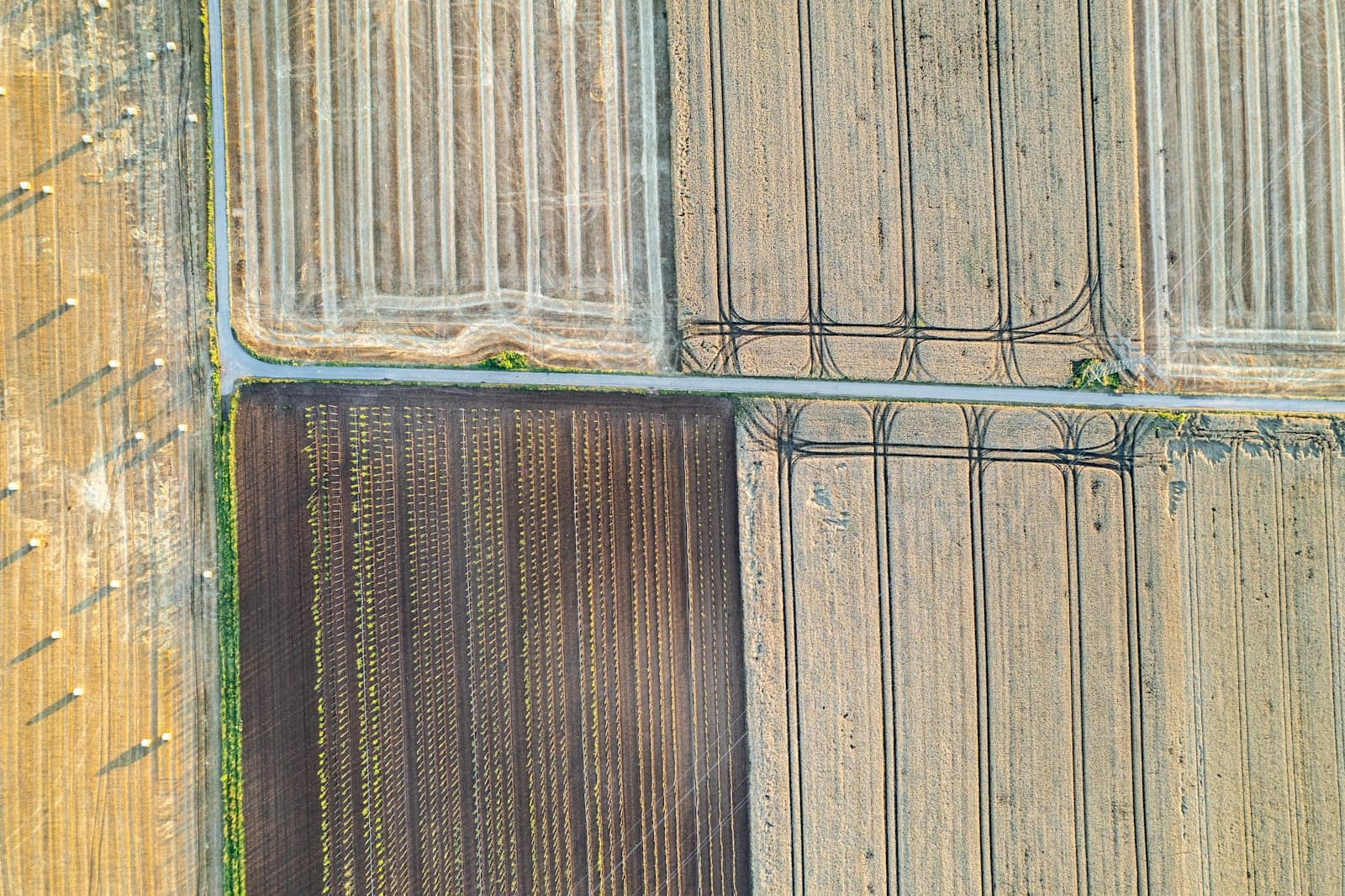
Two farmers can own plots that look identical from the road and be treated completely differently by the government, the bank and the tax office — because of a word written in a column of their Khasra that neither of them has ever paid much attention to.
Agricultural vs non-agricultural: the line that decides what you can build
The most consequential split in Indian land records is not about crops at all — it is the agricultural / non-agricultural (NA) classification.
- Agricultural land can be farmed, and its owner gets the tax treatment India reserves for farm income: agricultural income is exempt from central income tax, and capital gains on selling rural agricultural land generally fall outside the capital-gains-tax net altogether.
- Non-agricultural (NA) land is land that has been formally converted — through a state government process, usually via the District Collector or a designated land-conversion authority — for residential, commercial or industrial use. Only NA land can legally carry a permanent structure.
Building a house, godown or factory on land still classified agricultural, without first converting it, is unauthorised construction in the eyes of the record — regardless of how long it has stood.
Classification by irrigation: what the Khasra's "sinchit" column means
Within agricultural land, the Khasra records how each plot is watered:
- Sinchit (irrigated) — further split by source: canal-irrigated, tube-well/well-irrigated, tank-irrigated.
- Asinchit / Barani (unirrigated / rainfed) — dependent entirely on the monsoon.
This tag is not cosmetic. It feeds into crop-insurance premium calculations under PMFBY, into some state input-subsidy schemes that pay differently for irrigated versus rainfed cropping, and into the scale of finance a bank uses to set a KCC crop-loan limit.
Classification by cultivation status
A plot's Khasra entry also carries a cultivation-status label, updated at each season's girdawari:
| Label | What it means |
|---|---|
| Cultivated | Actively growing a crop that season |
| Current fallow | Deliberately left unsown for one season or year, usually to rest the soil |
| Other fallow | Unsown for more than a year but less than five |
| Cultivable waste | Capable of cultivation but unused for five years or more |
| Banjar / Barren | Not cultivable at all — rocky, saline, or otherwise unfit for farming |
The distinction matters most at sale and inheritance: land recorded as long-term fallow or cultivable waste can attract closer scrutiny during mutation, since revenue authorities sometimes treat prolonged non-cultivation as a trigger to re-examine the record.
Classification by tenure
Separately from what the land is used for, the record also tracks how the current occupant holds it:
- Bhumidar / Owner-cultivator — full ownership rights, the most common status for a settled agricultural family.
- Tenant / Asami — cultivating land owned by someone else under a recorded tenancy, with rights that vary sharply by state tenancy law.
- Government land (Gair Mumkin / Sarkari) — land recorded as belonging to the state, sometimes leased out, sometimes reserved (grazing land, village common land, forest land).
- Bhoodan land — land redistributed under the mid-20th-century Bhoodan movement, which in several states still carries restrictions on sale or transfer.
Tenure status decides whether the person actually farming the land is even the one entitled to a scheme payment or a KCC loan against it — a real source of PM-KISAN disputes where the recorded owner and the cultivating tenant are different people.
Why the label follows you to the bank and the tax office
Put together, these labels answer three practical questions before you ever fill a form:
- Can I build here? — only if it is NA land, or you complete conversion first.
- Is my income from this land tax-exempt? — only if it stays classified agricultural and is genuinely used for agriculture.
- What can I borrow against it, and what does my crop insurance cost? — driven partly by the irrigation and cultivation-status tags.
A plot's classification is not permanent. Conversion (agricultural to NA), reclamation (waste to cultivable), and irrigation upgrades (unirrigated to irrigated after a borewell or canal connection) are all changes that should be reflected back into the Khasra through the local revenue office — otherwise the record and the reality on the ground quietly drift apart.
Frequently asked questions
What happens if I build a house on agricultural land?
Technically it is unauthorised construction — agricultural land must be legally converted to non-agricultural (NA) status before a permanent residential or commercial structure can be built on it. Unconverted construction can be demolished by the local authority and blocks you from getting a home loan or a regular electricity/water connection.
Does PM-KISAN cover unirrigated (barani) land?
Yes. PM-KISAN eligibility is based on cultivable landholding, not on whether it is irrigated. Irrigated and unirrigated land are both counted, though the irrigation tag on your Khasra does matter for crop-insurance premium calculations and for some state-level input subsidies.
What is the difference between current fallow and other fallow?
Current fallow is land left uncultivated for one season or one year, usually deliberately to let the soil recover. Other fallow is land left uncultivated for more than one year but less than five — beyond five years unused, the record typically reclassifies it as cultivable waste.

Written by
Vaibhav Dhama
Founder, Technical Kisan
Vaibhav Dhama is the founder of Technical Kisan. He writes from Baghpat, Uttar Pradesh, and builds each guide on ICAR and state agricultural university guidance, official government scheme notifications, and live mandi-price data.
- Writes from Baghpat, Uttar Pradesh
- Software developer (BTech, 2021)
- Not a trained agronomist — confirm with your KVK
Discussion is coming soon
We are building a comments section where you can ask a question about this guide and see what other farmers in your district are doing.
For now, write to us at [email protected] — we read every message.