PMFBY Claim: What to Do After Crop Loss, Hour by Hour
Hail, flood or rain damaged your insured crop? Follow the PMFBY claim steps: the 72-hour report, what the surveyor does, payment timelines and appeals.
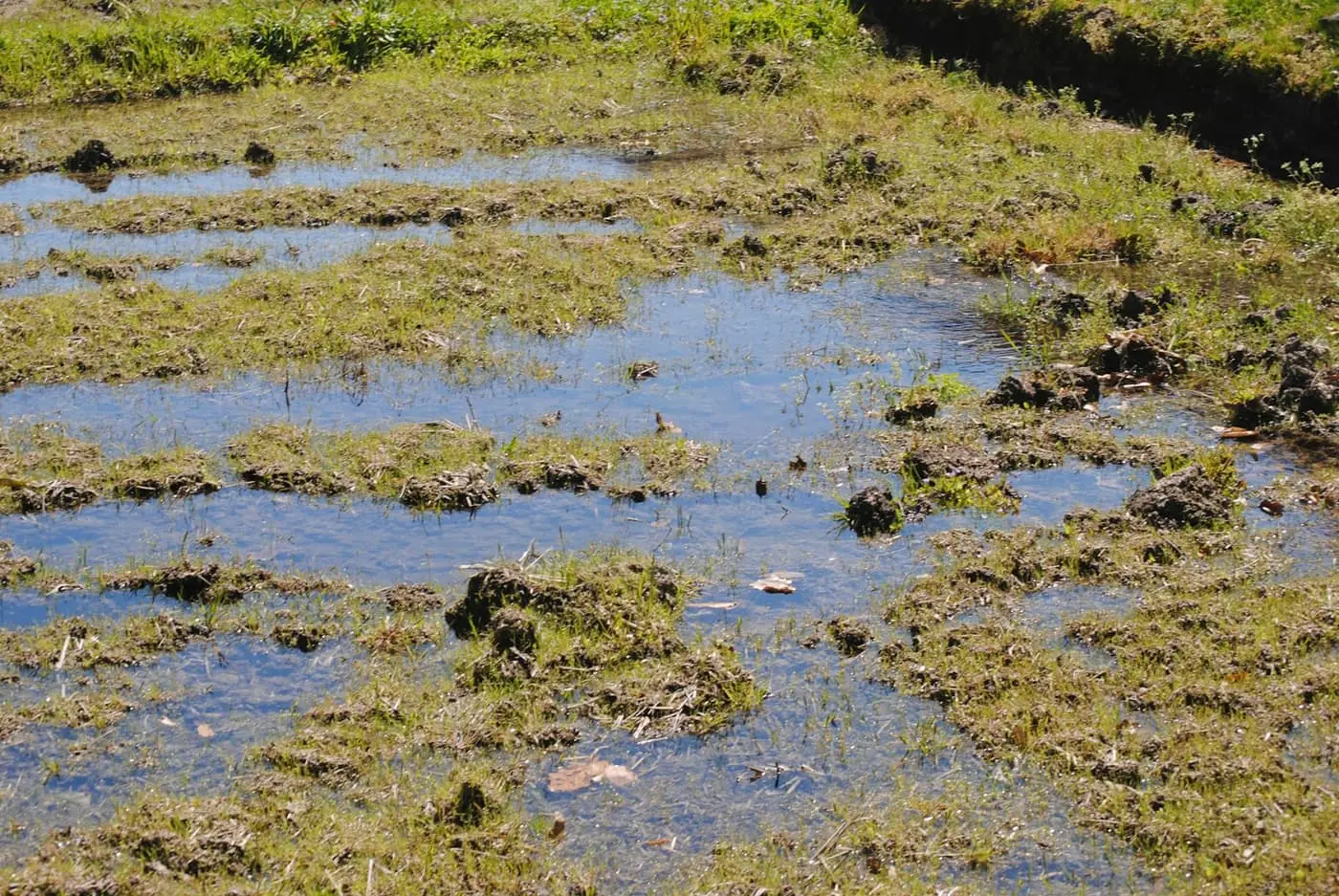
A hailstorm flattens your standing crop at night. By morning, the first thought is "how will I recover this?" The second should be "what is the date and time right now?" Under the Pradhan Mantri Fasal Bima Yojana (PMFBY), for many kinds of damage the clock starts the moment the damage happens.
This guide walks through a claim in the order things actually happen: first find out which type of loss you have, then the first 72 hours, then what the insurer must do, then what to do when things go wrong. The rules here come from the scheme's Revamped Operational Guidelines (August 2020 version, on pmfby.gov.in). Your state notification decides which crops, perils and dates apply to you, so check it too. For enrolment and premium, see our crop insurance scheme page.
Step 0: Which kind of loss is this?
PMFBY treats losses in two very different ways. Everything else depends on this.
| Type of loss | Examples | Do you need to report? | How is it assessed? |
|---|---|---|---|
| Widespread | Drought, dry spell, flood over a whole area, widespread pest attack | Not compulsory | Yield data from crop cutting experiments for the whole insurance unit |
| Localised calamity | Hailstorm, landslide, inundation (waterlogging), cloudburst, lightning fire hitting some farms | Yes, within 72 hours | A surveyor visits your individual farm |
| Post-harvest loss | Harvested crop lying in the field to dry, damaged by cyclone, cyclonic rain, unseasonal rain or hail | Yes, within 72 hours | Individual farm assessment |
| Prevented sowing / mid-season adversity | Could not sow due to deficit rain; severe dry spell mid-season | Handled by the district committee and state | Notified area basis |
Two of these rows are "optional extras" that a state has to switch on. Localised calamity, post-harvest cover and the others are add-on covers, available only if your state has notified them for your crop. Check your policy receipt or ask the agriculture office.
If your loss is widespread, you do not need to call anyone. Make sure your premium was paid and your enrolment details are correct, because the payout will arrive based on the area's yield data. If your loss is localised or post-harvest, read on, because the next 72 hours matter.
Hour 0 to 72: report first, collect proof second
Report the loss before you do anything else. The guidelines name the Crop Insurance app and a centralised toll-free number (the helpline is 14447) as the first modes of reporting. You can also report to the insurance company's own toll-free line, your bank branch, or the local agriculture department. If you tell a bank or government official, they are supposed to pass your report to the insurer within 48 hours, but do not rely on that. If you can, use the app or the helpline so the report has your name, time and a ticket number against it.
Keep your ticket number. The helpline registers your call against a unique ticket number and sends it to you by SMS. This is your main proof that you reported on time.
What the report must contain. The guidelines list these details:
- Your name and mobile number
- Survey (khasra) number of each affected plot, the insured crop and the affected area
- Your PMFBY application number from the portal
- Loan farmers: your KCC account number. Non-loan farmers: the savings account declared at enrolment
If you do not have everything in front of you, send a half-filled report now. The guidelines allow a semi-filled form first and the complete form with all details within 7 days of the loss.
Take photos and notes. The app can capture photos with location. Even if you report by phone, take dated photos of the field from several corners, of damaged plants up close, and of any standing water. The insurer can also match your claim with weather department data, local newspaper reports and revenue or agriculture department reports, so a local news cutting about the same storm helps.
Do not clear the field yet. The surveyor must see the damage. Do not plough, replant, or harvest the damaged area until the survey is done, unless there is a real risk of further loss. If you must act, record it with photos first.
Premium must already be paid. Only farmers whose premium was debited before the event are eligible. The insurer or bank verifies this from the portal or bank, usually within a couple of days.
Day 3 onwards: what the insurer must do
For a localised calamity, the guideline timetable is clear. Here it is in plain order:
| Step | Who | Time limit |
|---|---|---|
| Report passed on, if you used bank or official | Bank, PACS or agriculture office | Within 48 hours of receiving your report |
| Loss assessor appointed | Insurance company | Within 48 hours of the report |
| Affected area worked out (as % of area sown) | District Level Joint Committee | Within 10 days of the assessor appointment |
| Your individual farm assessed (when affected area is under 25% of the cropped area) | Insurance company with the block agriculture officer | Within 10 days of the assessor appointment |
| Your details checked with the bank | Insurance company | Within 7 days of your report |
| Loss assessment report finalised and claims uploaded | Insurance company | Within 7 days of the survey |
| Claim paid into your bank account | Insurance company | Within 15 days of the loss assessment report |
The payment time has one condition: the insurer has to have received at least the first instalment of the state and central premium subsidy. Remember that the 15 days start after the assessment report, not after your report. Add the steps up and a clean claim can take roughly a month or more. Do not count on it being faster.
What if many farmers in your area are affected? If the damaged area is more than 25% of the cropped area, the claim moves to an area-based method that uses weather and other indicators. Also, if the yield-based payout for your insurance unit is higher than the localised-loss assessment, you receive the higher of the two.
How much will you get? There is no fixed amount per acre. It depends on the sum insured for your crop, the percentage of loss the assessment finds, and your insured area. Insurers calculate from your policy, so ask for your sum insured number from the policy receipt before you panic about the payout.
When a claim goes wrong
Most problems fall into four types. Here is what to do in each.
"Your premium is not shown." Check your application status on pmfby.gov.in using your receipt number. If the bank debited you but the insurer shows nothing, take the bank statement to the branch manager and the district agriculture officer. The guidelines require the bank to provide premium payment verification within 48 hours of the insurer's request.
"You did not report in time." Report anyway. Ask your block or district agriculture officer to record the date you first learned of the loss and any weather report or news for that day. Late reports are a risk, not a certain rejection, but do not promise yourself the outcome.
"The surveyor never came." Call 14447 with your ticket number and say the 48-hour appointment period has passed. Write to the district agriculture officer the same day and keep a copy.
"The amount is too low or the claim is rejected." Ask for the written reason and the loss assessment details for your plot. Compare the survey number and area on the report with your own records, because wrong plot numbers cause many errors.
The complaint ladder
The guidelines set up a ladder, and each rung has a time limit:
- Helpline 14447 or the portal. Your complaint gets a unique ticket number and an SMS with the expected resolution time.
- Taluka or district grievance officer (usually the agriculture or horticulture officer). They must record and respond within 7 days.
- District Level Grievance Redressal Committee, headed by the District Collector, with members from banks, NABARD, the insurer, farmers and the agriculture department. It disposes the matter within 15 days. If the committee does not take up your complaint within 7 days, you can go straight to the state level.
- State Level Grievance Redressal Committee, within 15 days of the district decision. Matters above ₹25 lakh, or ones affecting many districts, can go here directly.
Write each complaint on paper too, with date, and keep a receipt.
Late-claim penalty for yield-based claims
For standing-crop losses assessed through crop cutting data, the guidelines say admissible claims must be paid by the cut-off date, or the insurer owes penal interest of 12% per year on pending admissible claims beyond 30 days of the state uploading the yield data (subject to the state releasing its premium subsidy). The state works out the interest and informs the insurer. This rule is for yield-based claims, not for individual localised claims, so do not quote it in the wrong case.
One-page checklist to keep with your documents
- Policy receipt and application number saved in your phone
- Insured survey numbers and sum insured written down
- Helpline 14447 saved in contacts
- Crop Insurance app installed and logged in before the season
- After any damage: report within 72 hours, note the ticket number
- Dated photos, a news cutting if available
- Do not clear the damaged area until the survey is done
- If nothing happens in a week, call again and write to the district agriculture officer
PMFBY rules, covers and dates are notified state by state and season by season, and the figures above reflect the central guidelines as published. Treat this as guidance, not a substitute for the official notification. For related help on loss planning, see Understanding Indian Land Records and Farm Record Keeping, because clean records speed up every claim.
Frequently asked questions
How many hours do I have to report crop loss under PMFBY?
For localised calamities (hailstorm, landslide, inundation, cloudburst, lightning fire) and for post-harvest losses, the farmer must report within 72 hours of the event. Widespread losses such as area-wide drought do not need an individual report.
Where can I report the loss?
The official guidelines name the Crop Insurance app and the toll-free helpline (14447) as the first modes. You can also tell the insurance company, your bank branch or the local agriculture department; a bank or official must pass it to the insurer within 48 hours.
Will I get a claim if I forgot to report within 72 hours?
For localised and post-harvest losses, the claim depends on the intimation, so a late report puts it at risk. Report as soon as you notice the damage anyway, keep proof of the event, and ask the district agriculture officer to record the matter.
How long does the insurer take to pay a localised claim?
The guideline timetable gives the insurer 48 hours to appoint a loss assessor, the assessment within 10 days of that, and payment within 15 days of the loss assessment report, subject to the first instalment of government premium subsidy being received.
Where do I complain if my claim is stuck?
Start with the helpline 14447 or the district grievance officer, who must respond within 7 days. If unsatisfied, go to the District Level Grievance Redressal Committee headed by the Collector, then the State Level Committee.

Written by
Vaibhav Dhama
Founder, Technical Kisan
Vaibhav Dhama is the founder of Technical Kisan. He writes from Baghpat, Uttar Pradesh, and builds each guide on ICAR and state agricultural university guidance, official government scheme notifications, and live mandi-price data.
- Writes from Baghpat, Uttar Pradesh
- Software developer (BTech, 2021)
- Not a trained agronomist — confirm with your KVK
Discussion is coming soon
We are building a comments section where you can ask a question about this guide and see what other farmers in your district are doing.
For now, write to us at support@technicalkisan.com — we read every message.