PM-KUSUM Solar Pump Subsidy: Who Gets It and What You Pay
PM-KUSUM solar pump subsidy explained: who qualifies, the 30%+30%+40% split, bank finance, documents, and what to check with your state agency first.
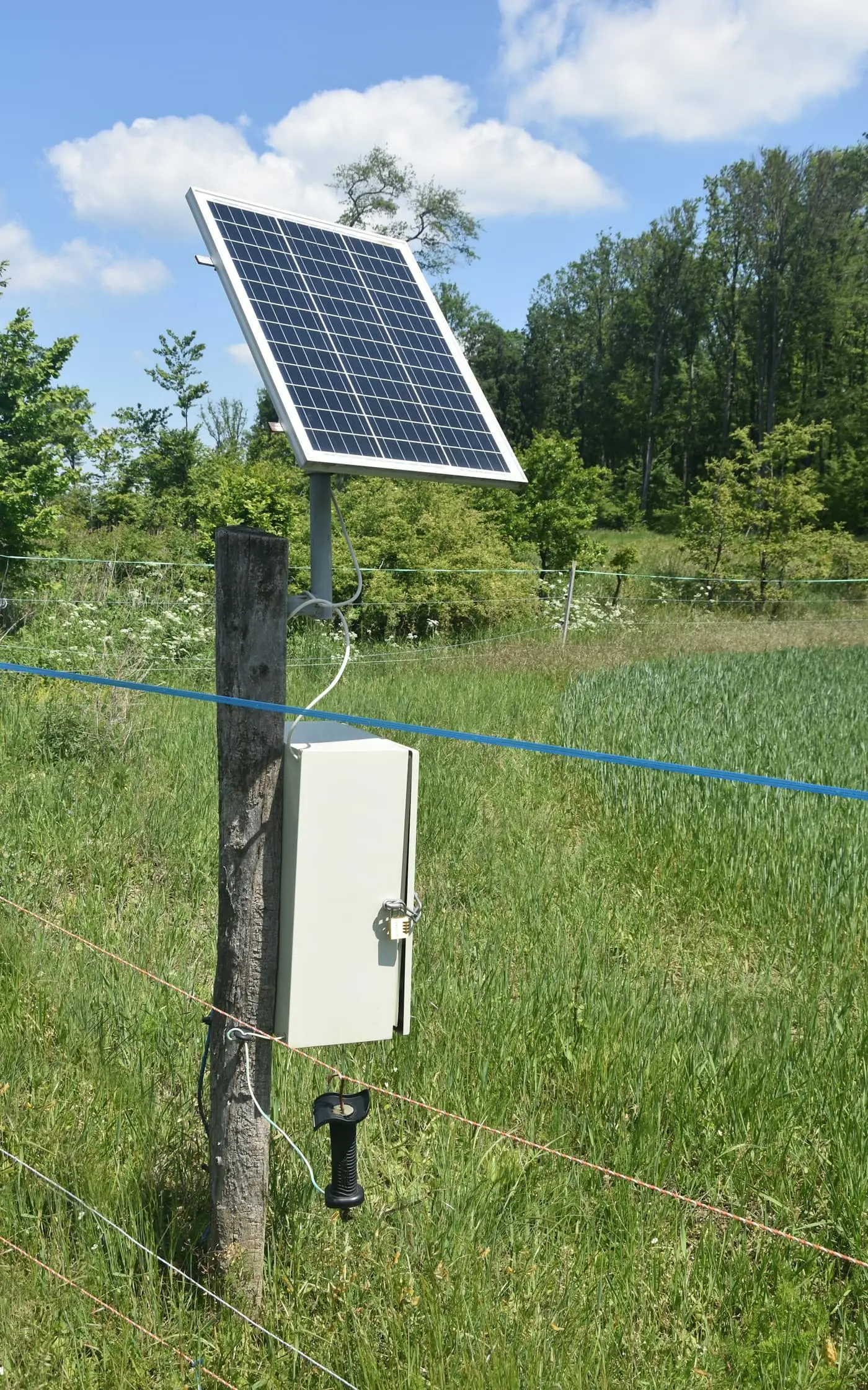
A diesel pump burns money every time the field needs water. A solar pump costs a lot upfront but runs on sunlight. Under PM-KUSUM, the government pays a large part of that upfront cost. This guide covers only the solar pump part for a farmer's own field, called Component B.
The facts come from the Ministry of New and Renewable Energy (MNRE) PM-KUSUM page and the PM-KUSUM FAQ published by the Press Information Bureau. The scheme runs through state agencies, and details differ by state, so use this as a map and not as a final answer. For the full scheme with all three components, see our PM-KUSUM scheme page. For how solar pumps work, see our solar pump technology page.
Gate 1: Is Component B meant for your field?
Answer these three questions honestly. If the answer to the first is "no", this scheme part is probably not for you.
| Question | What the official sources say |
|---|---|
| Does your land lack reliable grid power? | Component B is for standalone solar pumps up to 7.5 HP in off-grid areas, where grid supply is not available. The PIB FAQ describes it as replacing existing diesel pumps |
| Who can apply? | Individual farmers, water user associations, and community or cluster-based irrigation systems |
| Do you have a grid electricity connection for your pump already? | Then Component B is likely not your component. Component C is separate: it solarises an existing grid-connected pump of up to 7.5 HP, and the surplus power can be sold to the electricity distribution company |
If you have no electricity and run a diesel pump, you fit Component B best. If you have a grid pump and want to cut your electricity bill or sell power, ask about Component C instead.
Gate 2: What does the subsidy cover?
The shares below apply to the benchmark cost or the tender cost, whichever is lower. The benchmark cost is fixed by MNRE.
| Region | Central subsidy | State subsidy | Farmer pays |
|---|---|---|---|
| Most states | 30% | At least 30% | At most 40% |
| North-Eastern states, Sikkim, Jammu and Kashmir, Himachal Pradesh, Uttarakhand, Lakshadweep, Andaman and Nicobar | 50% | At least 30% | At most 20% |
Pump size. The scheme supports pumps up to 7.5 HP. A bigger pump is allowed, but the central subsidy stays at the amount for a 7.5 HP pump. So if you buy a bigger one, you pay the whole difference.
Capacity exception. Later PIB material reports that in the North-Eastern states, the union territories of Jammu and Kashmir and Ladakh, Uttarakhand, Himachal Pradesh and the island territories, subsidy is available up to 15 HP. Check whether this applies to you with your state agency.
What it looks like in rupees (an illustration only)
The numbers below are made up to show the arithmetic. They are not a price quote. Real prices depend on pump size, depth, and the rate your state agency has fixed with vendors.
Suppose the applicable cost is ₹3,00,000 in a normal state.
| Who pays | Share | Amount |
|---|---|---|
| Central government | 30% | ₹90,000 |
| State government (at least) | 30% | ₹90,000 |
| You (at most) | 40% | ₹1,20,000 |
If you use bank finance, MNRE says you can pay as little as 10% at the start (₹30,000 in this example) and take the next up to 30% (₹90,000) as a loan. You still repay the loan. Your total share does not shrink; you just spread it.
In a hilly or North-Eastern state with 50% central subsidy and 30% state subsidy, your share on the same ₹3,00,000 would be at most 20%, or ₹60,000.
Ask this: The percentages apply to the lower of benchmark and tender cost. If a vendor's price for your chosen system is higher than that, who pays the extra? Get the answer in writing before you sign.
Gate 3: Is your state taking applications?
This is the step many guides skip.
- The MNRE page lists the scheme period as till 31 March 2026. That date has passed.
- A Renewable Watch report of 31 March 2026 says MNRE then revised timelines, but only for projects where power purchase agreements or notices to proceed were issued on or before 31 December 2025. For individual pump solarisation (Components B and C), it says the commissioning deadline was set at 30 September 2026, which has also passed. It adds that any further extension will be considered only case by case.
- Another report (Energetica India, 30 March 2026) describes a 31 March 2027 deadline across all three components, again only for projects with those 2025 approvals. The two reports differ on individual pumps, and we could not open the MNRE order itself.
- The Energetica report adds that a successor, PM-KUSUM 2.0, is still being formulated. We found no official launch notice.
What this means for you: new Component B pump sanctions may not be open right now. Pumps already sanctioned by your state agency may still be installed, but a fresh application may have to wait for the successor scheme or for any extension your state has received. Do not assume your district's pump quota is open. The scheme is demand-based and the state agency decides how many pumps it has sanctioned. Phone or visit your state agency and ask: "Is Component B open for my district today? If not, when is the next round, and is there a waiting list?" The national portal pmkusum.mnre.gov.in lists the implementing agencies state by state.
Documents to keep ready
These are typical. Your state agency will give the exact list.
- Aadhaar card
- Land record (Khasra-Khatauni or equivalent) showing ownership or right to use the land or pump site
- Bank passbook or account details
- Mobile number linked for OTPs and tracking
An incomplete land or identity record is a common reason for delay. If your land record has a mistake, fix it first. See Understanding Indian Land Records.
How to apply: the usual order
- Find your state's implementing agency through the national portal or your district agriculture office.
- Ask if Component B is open for your district. Note the date and the person who told you.
- Register on the portal or apply to the agency as it directs. Some states use their own portal, some use the national one.
- Agency verifies your land and documents.
- Agree the system and the price. Ask for the pump capacity, panel capacity, brand, warranty and the final amount you must pay.
- Pay your share (or arrange a bank loan) only through the channel the agency names. Get a receipt in your name.
- Installation by the approved vendor, then check that the pump runs and that you get the warranty papers.
MNRE says projects under the scheme must be completed within 24 months of sanction. That deadline binds the implementing agency, not you, but it tells you that sanction-to-installation can take time.
Questions worth asking the vendor
- What is the pump capacity in HP and the solar panel capacity in watts?
- What is the pump depth rating, and does it match my borewell or water source depth?
- What is the warranty and who services it in my area?
- Is the price fixed by the state agency? Do I pay anything extra for cables, structure or installation?
- What happens in cloudy weather or at night?
If a vendor asks for money outside the agency channel, stop and report it to the district agriculture office or the state agency.
Is a solar pump right for you at all?
Subsidy makes sense only if the pump suits your field. A solar pump only runs while there is sunlight, so ask how you will manage irrigation on cloudy days. Check that your water source can supply what the pump will draw. If your plot is small or the water table is very deep, get a technical visit before paying anything. For the full picture of pump types and what each suits, read our solar pump technology page, and for how to save water once you have a pump, see drip irrigation subsidy under PMKSY.
Summary checklist
- My land has no reliable grid supply and I use or need a pump up to 7.5 HP
- I know my state's subsidy split and my own share in rupees
- My state agency has confirmed Component B is open for my district
- Aadhaar, land record, bank and mobile details are ready
- I have the final price, specifications and warranty in writing
- I pay only through the agency's named channel and keep receipts
Rules, rates and availability change by state and by year. This guide is general information, not official advice. Confirm with your state nodal agency and MNRE before paying anything.
Frequently asked questions
How much subsidy does PM-KUSUM give on a solar pump?
For most states, MNRE gives 30 percent central subsidy and the state at least 30 percent, so the farmer pays at most 40 percent. In the North-Eastern states, Sikkim, Jammu and Kashmir, Himachal Pradesh, Uttarakhand, Lakshadweep and Andaman and Nicobar, the central share is 50 percent and the farmer pays at most 20 percent. The percentages apply to the benchmark cost or the tender cost, whichever is lower.
Which pump size is covered?
Standalone solar pumps up to 7.5 HP in off-grid areas. A larger pump can be allowed, but the central subsidy is limited to what applies to a 7.5 HP pump.
Can I pay less upfront by taking a bank loan?
MNRE says bank finance can be used so that the farmer initially pays only 10 percent of the cost, with up to 30 percent of the cost taken as a loan.
Where do I apply?
The scheme runs through your state renewable energy or nodal agency. The national portal pmkusum.mnre.gov.in lists the state agencies. Ask whether your state has open pump quota for your district right now.
Is PM-KUSUM still running?
The MNRE page lists the scheme period as till 31 March 2026. Reports say MNRE revised timelines only for projects approved by 31 December 2025, with the individual-pump commissioning deadline reported as 30 September 2026, and that PM-KUSUM 2.0 is still being formulated. We found no official launch notice, so new pump sanctions may not be open. Ask your state agency.

Written by
Vaibhav Dhama
Founder, Technical Kisan
Vaibhav Dhama is the founder of Technical Kisan. He writes from Baghpat, Uttar Pradesh, and builds each guide on ICAR and state agricultural university guidance, official government scheme notifications, and live mandi-price data.
- Writes from Baghpat, Uttar Pradesh
- Software developer (BTech, 2021)
- Not a trained agronomist — confirm with your KVK
Discussion is coming soon
We are building a comments section where you can ask a question about this guide and see what other farmers in your district are doing.
For now, write to us at support@technicalkisan.com — we read every message.