Reduce Animal Feed Cost, Not Output
Feed is 65-70% of the cost of milk - so the fastest way to raise margin is a better ration, not a better breed. Six practical levers.
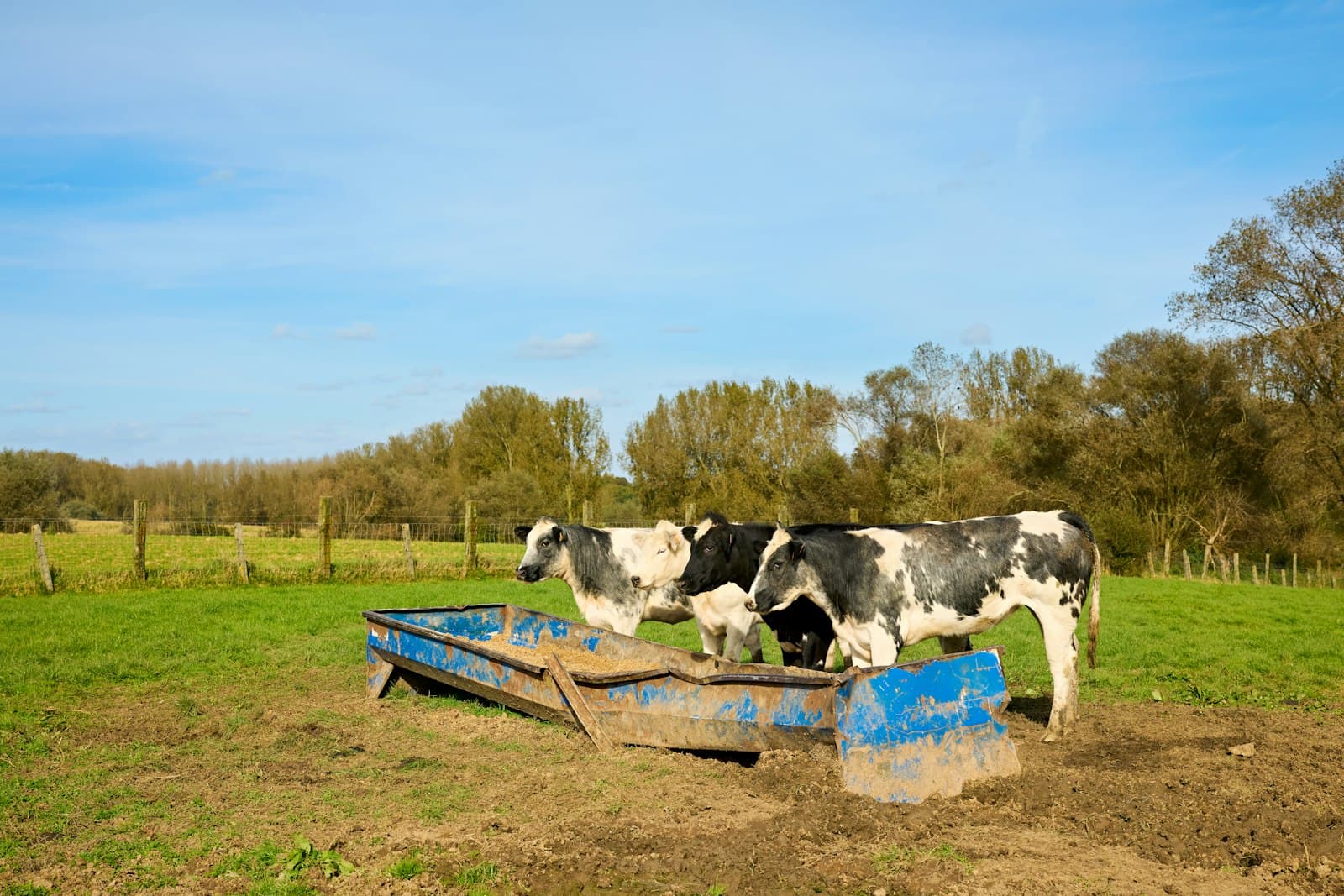
Feed runs 65–70% of the cost of producing milk on an Indian dairy farm, which means it is also the single biggest lever on margin — bigger than breed, bigger than most equipment. Cutting feed cost the wrong way (just feeding less) cuts production with it; the six levers below cut cost without cutting the milk, meat or eggs that pay the bills. See the feed & nutrition section on the livestock hub for the full six-topic breakdown.
1. Grow green fodder instead of buying it
Green fodder is the cheapest source of protein and energy in any ration, but only if it's grown, not bought — purchased green fodder in a lean season can cost several times what it costs to grow on 0.5–1 acre set aside per adult animal. This is the single highest-leverage decision on this list, and the reason most working dairies treat fodder land as non-negotiable, ahead of buying a better-yielding animal.
2. Bank the surplus as silage
A green fodder surplus in season is only useful if it survives to the lean months. Silage — fermented, airtight-stored green fodder, usually maize — keeps its feed value through the dry season, converting a summer glut into a winter feed bill you don't have to pay in cash.
3. Don't skip mineral mixture to save money
Mineral mixture looks like the easiest cost to cut because it's a small line item — but calcium, phosphorus and trace minerals aren't supplied by fodder alone, and skipping it shows up as poor fertility and weak bones months later, which costs far more than the mixture itself in lost calving intervals and vet bills.
4. Ration by weight and stage, not by habit
The single biggest feeding mistake is a flat ration fed to every animal regardless of body weight or production stage. A lactating animal needs roughly 3% of its body weight in dry matter a day; a dry animal needs closer to 2%. Feeding both the same ration either shortchanges the producer or wastes feed on the dry animal. The Feed Requirement Calculator works this out per animal in seconds — use it per animal, not once for the whole shed.
5. Use concentrate to close the gap, not to replace fodder
Concentrate feed is the most expensive component of any ration by weight, so it should top up what fodder cannot supply, not substitute for fodder that a farm could otherwise grow. A ration built concentrate-first is usually a ration built for convenience, not for cost.
6. Consider hydroponic fodder where land or water, not cash, is the constraint
Hydroponic fodder — barley or maize sprouted on trays without soil, ready in 7–8 days — rarely beats open-field green fodder on cash cost per kilogram. Its case is different: a fraction of the land and water of field-grown fodder, and a fixed short cycle regardless of season. It pays off specifically where land or water is scarce, not as a general-purpose cost-cutting measure.
Putting it together
None of these six levers work in isolation — a farm growing its own green fodder, silaging the surplus, rationing by animal and topping up with concentrate only where needed will see feed cost fall well below 65% of milk revenue, without the yield drop a blunt "feed less" approach causes. Work the numbers with the Milk Production Calculator alongside the feed calculator to see the net effect on income, not just on cost.
Frequently asked questions
How much feed does a cow require daily?
As a rule of thumb, dry matter intake runs about 2% of body weight for a dry (non-lactating) cow and up to 3% for a lactating one — a 400 kg lactating crossbred cow needs roughly 12 kg of dry matter a day, split across green fodder, dry fodder and concentrate. Use the Feed Requirement Calculator for the exact figures for your animal's weight and stage.
Is hydroponic fodder actually cheaper than buying green fodder?
It depends on your land and water constraints rather than on cash cost alone — hydroponic fodder's per-kg production cost is often close to or slightly above open-field green fodder, but it needs a fraction of the land and water, and grows in a 7–8 day cycle regardless of season. It pays off where land or water is the binding constraint, not where cash cost is.
What is the biggest single mistake in feeding dairy animals?
Feeding a flat ration to every animal regardless of its weight or production stage — a lactating animal and a dry one have very different dry-matter and concentrate needs, and a one-size ration either underfeeds the producer (cutting yield) or overfeeds the dry animal (wasting money). Rationing per animal, even approximately, fixes both problems at once.

Written by
Vaibhav Dhama
Founder, Technical Kisan
Vaibhav Dhama is the founder of Technical Kisan. He writes from Baghpat, Uttar Pradesh, and builds each guide on ICAR and state agricultural university guidance, official government scheme notifications, and live mandi-price data.
- Writes from Baghpat, Uttar Pradesh
- Software developer (BTech, 2021)
- Not a trained agronomist — confirm with your KVK
Discussion is coming soon
We are building a comments section where you can ask a question about this guide and see what other farmers in your district are doing.
For now, write to us at [email protected] — we read every message.