Drone Spraying: Hire It, Don't Buy It
A spray drone covers an acre in 8 minutes on a tenth of the water. At Rs 6-10 lakh, the maths only works past about 50 acres.
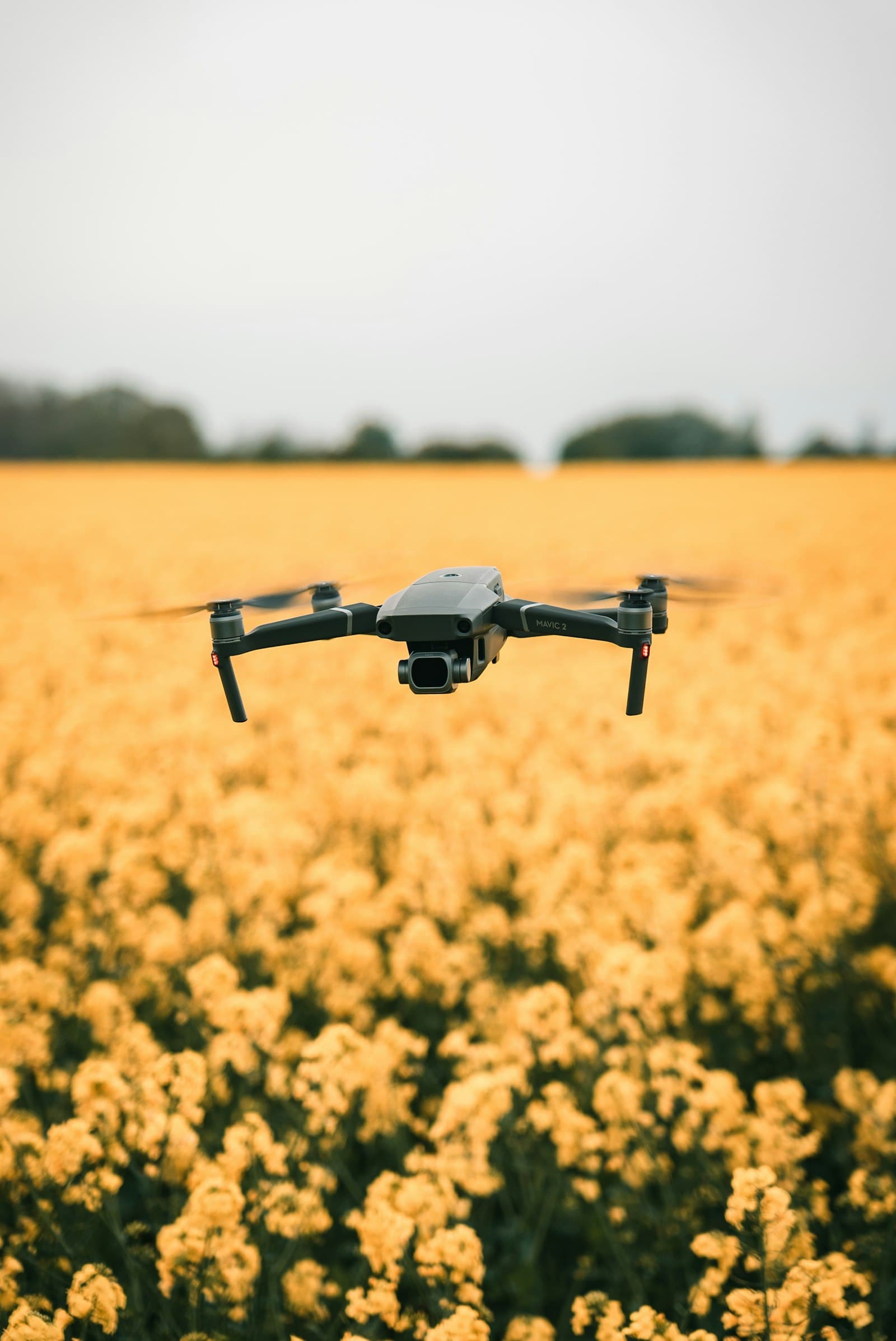
The pitch for drone spraying is genuinely impressive: a machine that sprays an acre in eight minutes, uses a tenth of the water, and keeps the operator well away from the chemical.
All three claims are true. The question is whether the machine should be yours.
What a spray drone actually does well
Speed. Seven to ten minutes an acre. A man with a knapsack takes four to five hours. In a pest outbreak, where the difference between spraying today and spraying on Thursday is the difference between a crop and a loss, that gap is the entire value proposition.
Water. Around 10 litres per acre, against 100–200 litres conventionally. On a field with no water source at the head, that alone changes what is possible — you are carrying ten litres to the edge of the field, not two hundred.
Safety. This is the one that does not show up in any cost sheet and matters most. Knapsack spraying in an Indian summer means a man walking through his own spray cloud for four hours, soaked to the shoulders, in whatever he happened to be wearing. Pesticide poisoning is a real and badly under-reported occupational injury. A drone operator stands at the edge of the field.
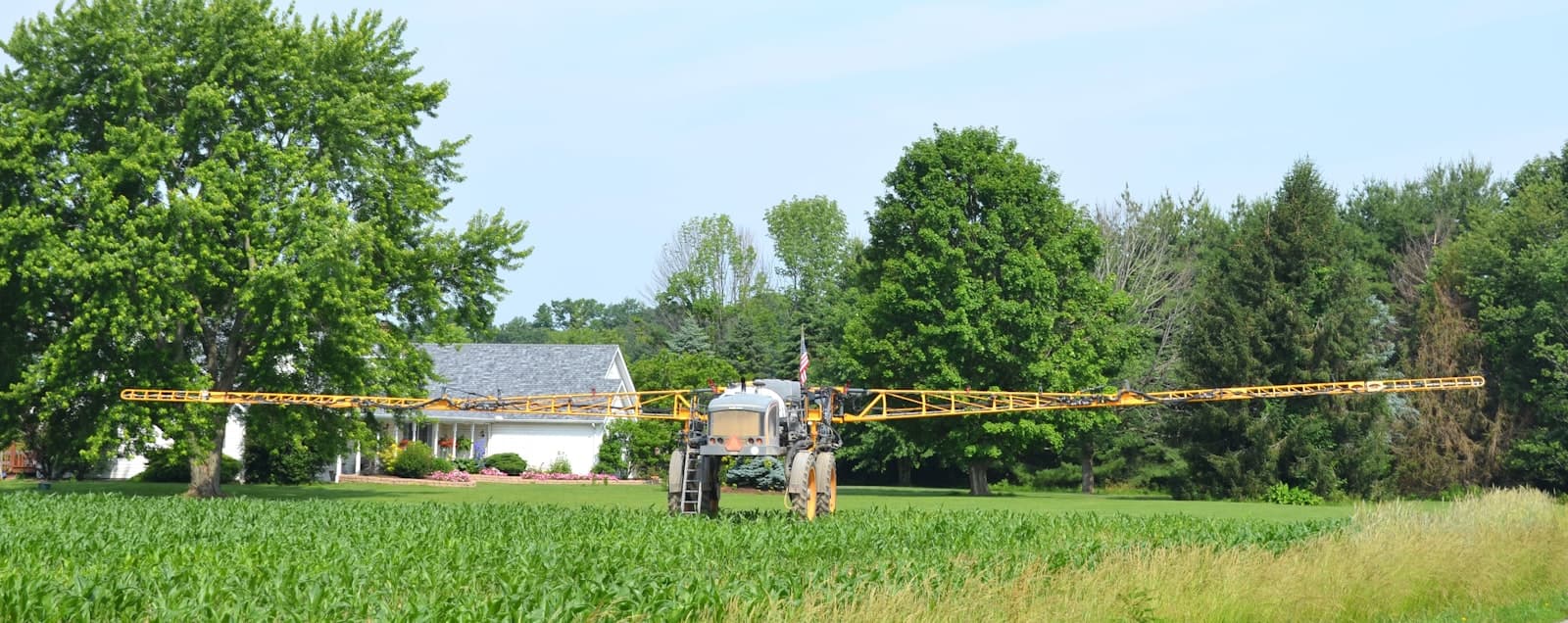
Standing crops. By the time sugarcane or late-stage maize is tall, you physically cannot get a tractor boom through it. A drone does not care how tall the crop is.
What it does badly
Undersides of lower leaves. Drone spray comes from above, pushed down by rotor wash. It hits the upper canopy beautifully. It does not reliably coat the underside of lower leaves — which is exactly where whitefly, mealybug and mite colonies sit.
If your target is on the underside of a lower leaf, a drone is the wrong machine. Use a knapsack with a good nozzle and hit it from below.
Wind. Above about 15 km/h, drift becomes a real problem — for your neighbour's crop and for your own efficacy. And a windy afternoon is not something you can schedule around when the pest is already there.
Small and irregular plots. The drone needs a defined boundary to fly a pattern. A half-acre plot with a mango tree in the middle and power lines along one edge is a poor candidate.
The economics, plainly
Hiring: ₹400 – ₹700 per acre, operator included.
Owning:
| Item | Cost |
|---|---|
| Drone (10 L agricultural) | ₹6,00,000 – ₹10,00,000 |
| DGCA Remote Pilot Certificate | ₹40,000 – ₹65,000 |
| Spare batteries (you need 3–4) | ₹1,00,000+ |
| Annual insurance and maintenance | ₹40,000 – ₹60,000 |
Subsidy runs up to 50% for FPOs, custom-hiring centres and cooperatives under schemes such as Namo Drone Didi, and there are grants for individual purchase in some states — but even at half price, a drone spraying your own 10 acres four times a season is doing 40 acres of work a year against a ₹4 lakh capital cost. That never closes.
The break-even for owning is roughly 50 acres of your own land — or a custom-hiring business. And the second one is the real opportunity. A drone doing 15–20 acres a day at ₹500 an acre grosses ₹7,500–₹10,000 a day in the spraying season. Across a village, that is a genuine enterprise, and it is exactly what the FPO and CHC subsidies are designed to fund.
Before you fly
You need a DGCA Remote Pilot Certificate — about a week at an authorised training organisation. The drone must be type-certified and registered on the Digital Sky portal. And you must respect the no-fly zones: airports, military areas, and anywhere else the map says no.
The certificate is not paperwork for its own sake. A 10-litre drone is a 25 kg object moving at speed with spinning blades, over other people's fields.
The honest recommendation
For most Indian farmers: hire it. Pay the ₹500 an acre, get the spray done in twenty minutes, and keep your capital in the ground where it earns.
For an FPO, a custom-hiring centre, or a farmer with 50-plus acres who is willing to also spray for the neighbours: buy it, take the subsidy, and treat it as a service business rather than as a farm implement. That is the configuration in which the maths actually works.
Everyone else is buying a very expensive way to do a ₹500 job.
Frequently asked questions
How much does drone spraying cost per acre in India?
Hiring a drone service typically costs ₹400–₹700 per acre including the operator, which is broadly comparable to hiring labour for a knapsack spray — but it takes minutes instead of hours.
Do I need a licence to fly an agricultural spray drone?
Yes. You need a DGCA Remote Pilot Certificate, obtained through an authorised training organisation. The course takes about a week. The drone itself must also be DGCA-type-certified and registered.
Is drone spraying as effective as a knapsack sprayer?
For foliar sprays on the upper canopy, yes — often better, because the rotor downwash pushes droplets into the canopy. It is weaker where you need thorough coverage of the undersides of lower leaves, such as for whitefly or mealybug. Use it for what it is good at.
Is buying a spray drone worth it?
Only above roughly 50 acres of your own land, or if you intend to run it as a custom-hiring service. At ₹6–10 lakh, a drone spraying only your own 10 acres a few times a season will never repay itself.

Written by
Vaibhav Dhama
Founder, Technical Kisan
Vaibhav Dhama is the founder of Technical Kisan. He writes from Baghpat, Uttar Pradesh, and builds each guide on ICAR and state agricultural university guidance, official government scheme notifications, and live mandi-price data.
- Writes from Baghpat, Uttar Pradesh
- Software developer (BTech, 2021)
- Not a trained agronomist — confirm with your KVK
Discussion is coming soon
We are building a comments section where you can ask a question about this guide and see what other farmers in your district are doing.
For now, write to us at [email protected] — we read every message.