Direct Seeded Rice (DSR): Sowing to Harvest, Day by Day
Grow paddy without puddling or transplanting. Soil check, tar-wattar sowing, weed control, first irrigation at 21 days and common DSR mistakes, per PAU.
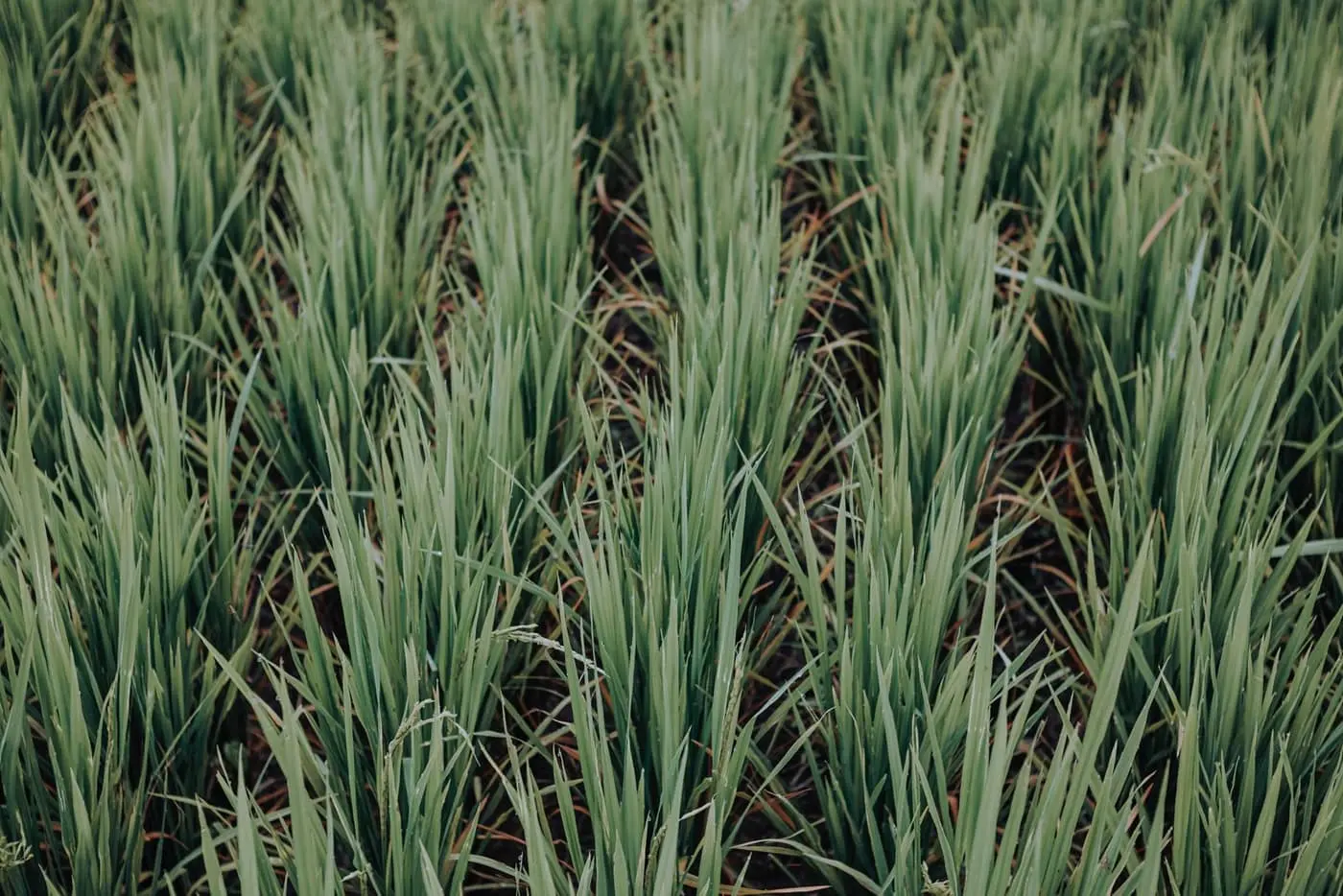
In ordinary paddy, you flood the field, churn it into mud, and transplant seedlings from a nursery. Direct seeded rice (DSR) skips both the puddling and the transplanting. The seed goes straight into the field with a drill, like wheat.
The idea sounds simple. The difficulty is that DSR is less forgiving. Weeds start with the crop, the first irrigation timing matters, and the wrong soil can ruin the crop. So this guide follows the crop through time, from the soil check before sowing to the last irrigation before harvest.
Most figures below come from the Punjab Agricultural University (PAU) Package of Practices for Kharif 2026, so they are written for Punjab. A section near the end shows where the ICAR-Central Rice Research Institute's national bulletin differs, for farmers in other states. Confirm dates and doses with your own KVK or state university. For general paddy information, see our paddy crop page.
Before you start: is DSR right for your field?
Run through this table first. A "No" in the first two rows means you should stay with transplanting.
| Question | Good for DSR | Not good for DSR |
|---|---|---|
| Soil type | Medium to heavy: sandy loam, loam, silt loam, clay loam | Light, sandy soils |
| Levelling | Field is laser levelled | Uneven field with high and low spots |
| Variety | Short or medium duration variety | Long duration variety |
| Labour and weed control | You can spray at the right time and follow up by hand | You cannot manage the spray timing |
PAU says tar-wattar DSR suits sandy loam to clay loam soils, which it estimates cover around 87% of Punjab's area. On light sandy soils, PAU warns of severe iron deficiency and lower yield. If you still see yellowing from iron deficiency in other fields of yours, read about iron deficiency before choosing DSR.
What you gain, according to PAU:
- 10 to 20% saving in irrigation water
- 10 to 12% higher groundwater recharge
- Saved labour (no nursery, no transplanting)
- Less sheath blight and foot rot
- About 100 kg per acre more wheat in the next crop compared to puddled transplanted rice
These are the university's figures for its trials and recommended practice. Your own result depends on following the steps below.
Off-season: laser levelling and field plan
Laser levelling helps water spread evenly, improves germination and makes irrigation more efficient. The PAU method is to plough with a disc harrow, cultivate, plank, and then laser level. If you have not levelled, do it before the next season. See our page on laser land levelling.
Day minus 1 to Day 0: seed treatment and sowing
Seed rate. PAU recommends 8 to 10 kg of seed per acre.
Seed treatment (as given by PAU):
- Soak the seed in a 2% potassium nitrate solution for 12 hours. For 8 kg of seed, dissolve 200 g of potassium nitrate in 10 litres of water.
- Dry the seed in shade.
- Treat with 3 g of Sprint 75 WS (mancozeb plus carbendazim) per kg of seed.
Sowing time. First fortnight of June (1 to 15 June) in Punjab. The earlier PAU advice also warned that very early sowing in May uses more irrigation water and brings more weeds.
Three ways to sow. PAU lists three methods:
| Method | How it works | Notes |
|---|---|---|
| Tar-wattar, flat | Divide field into kiyaras after laser levelling and give a pre-sowing irrigation (rauni). When soil is workable but moist, do shallow cultivation, plank 2 to 3 times and sow at once. Seed at 3 to 4 cm depth, rows 20 cm apart | Avoid field preparation and sowing in the noon hours. Best done with a Lucky Seed Drill that sows and sprays herbicide together |
| Tar-wattar, raised beds | Make 67.5 cm beds (37.5 cm flat top, 30 cm furrow), give rauni in the furrows only, then reshape and sow two rows per bed when the soil comes to tar-wattar | PAU says this saves more irrigation water than the other methods |
| Dry field | Place treated seed 2 to 3 cm deep in rows 20 cm apart in a dry field, then irrigate at once | Herbicide goes on when the field reaches wattar, usually within 1 to 2 days |
What is tar-wattar? It is the state when the soil has enough moisture to be workable but is not sticky mud. You can shape it, but it is not flooded. A pre-sowing irrigation gets the soil there; you then wait 2 to 3 days depending on soil type.
If rain falls right after sowing, a hard crust (krand) can form and block seedlings. PAU says the Lucky Seed Drill, which has press wheels, helps with this problem and conserves moisture.
Day 0 to 2: the first herbicide
Spray the pre-emergence herbicide immediately after sowing, on moist soil. PAU recommends 1 litre per acre of pendimethalin 30 EC (sold as Stomp or Bunker), or 1 litre per acre of PEPE 25 SE (penoxsulam plus pendimethalin), mixed in 200 litres of water. PAU suggests PEPE where the field has a mix of grasses, broadleaf weeds and sedges.
With an ordinary rice drill, spray right after sowing; a Lucky Seed Drill does both together. Use only registered products, follow the label and wear protective gear.
Day 15 to 25: the second herbicide
Weeds that survive the first spray need a second one at 15 to 25 days after sowing, when weeds are at the 1 to 4 leaf stage. Dissolve the herbicide in 150 litres of water per acre. PAU's examples:
- Bispyribac sodium (for example Nominee Gold 10 SC), 100 mL per acre. Target: swank (barnyard grass) and paddy mothas. Spray 15 to 25 days after sowing, when weeds are at 2 to 4 leaves.
- Fenoxaprop-p-ethyl (for example Ricestar 6.7 EC), 400 mL per acre. Target: madhana, chini gha, chiri gha, takri gha (grassy weeds). Spray 20 to 25 days after sowing.
PAU lists more options for different weed mixes, so match the product to the weeds in your field. For barnyard grass and other rice weeds, look at what is actually growing before choosing.
Three rules from PAU:
- Spray when the weeds are at the right leaf stage printed against each herbicide.
- Spray in a moist field and keep wattar (good moisture) for one week after spraying.
- Uproot leftover weeds by hand before they seed.
Day 21: the first irrigation (tar-wattar DSR)
This is the biggest change from ordinary paddy. In tar-wattar DSR the first irrigation is delayed to about 21 days after sowing. PAU says this gives higher water saving, better root growth, less iron deficiency and fewer weeds.
After that, irrigate every 5 to 7 days depending on your soil, and adjust for rain.
If you sowed on a dry field instead, irrigate immediately after sowing, give a second irrigation 4 to 5 days later, and then continue every 5 to 7 days.
Week 4 to Week 9: feeding the crop
PAU's advice on urea:
- No urea at sowing.
- Standard plan: 130 kg urea per acre in three equal parts, at 4, 6 and 9 weeks after sowing.
- Reduced doses: 90 kg per acre if you grew and ploughed in sunnhemp as green manure or applied 6 tonnes of FYM per acre; 110 kg per acre if summer moong residue was ploughed in after picking pods.
- Phosphorus and potash: apply based on a soil test.
- Zinc and iron: if deficient, follow PAU's recommendation for puddled transplanted rice.
Leaf colour chart option. To avoid wasting urea, PAU suggests 25 kg urea per acre at four weeks, then from six weeks comparing the top fully open leaf of 10 plants with the PAU leaf colour chart every 7 days. If 6 or more of the 10 leaves are lighter than shade 4, apply 30 kg urea per acre; if not, apply none. Stop at flowering. The chart is sold at the PAU Seed Shop, KVKs and Farm Advisory Service Centres. For more on timing nitrogen, see Urea and Nitrogen Management.
Harvest time: stop water early
Stop irrigation about 10 days before harvest. Counting every irrigation through the season, PAU says DSR saves around 10 to 20% water compared with puddled transplanted rice.
Common DSR problems and what to do
| What you see | Likely reason | What to do |
|---|---|---|
| Yellow, weak seedlings in patches | Iron deficiency, usually on light soil or after early irrigation | Check soil type. PAU says delayed first irrigation (21 days) reduces this. ICAR-CRRI suggests a foliar spray of 1% ferrous sulphate for quick correction |
| Poor or patchy germination | Hard crust after rain, seed too deep, uneven field | Use press wheels or Lucky Seed Drill; keep seed depth as recommended; level the field |
| Gaps where seedlings vanished | Rats, which damage DSR at germination | PAU: control weeds, rebuild bunds to destroy burrows, and bait burrows in the lean period (May to June) |
If you are outside Punjab: what ICAR-CRRI says
The ICAR-Central Rice Research Institute bulletin "Package and Practices for Direct Seeded Rice" (Technology Bulletin No. 250, 2025) is written around Uttarakhand's irrigated Terai belt but gives general ICAR guidance. Here is where it differs from PAU:
| Topic | PAU (Punjab, Kharif 2026) | ICAR-CRRI bulletin |
|---|---|---|
| Sowing time | 1 to 15 June | About 7 to 10 days before monsoon onset. Avoid very early and very late sowing |
| Seed rate | 8 to 10 kg per acre | 20 to 25 kg per hectare (roughly 8 to 10 kg per acre), rows 20 cm apart |
| Early irrigation | First irrigation delayed to about 21 days (tar-wattar) | Keep the root zone moist for the first 3 weeks; irrigate every 3 to 5 days in hot, dry weather |
| Weed spray | Pendimethalin right after sowing, second spray at 15 to 25 days | Pendimethalin within 2 to 3 days of sowing (same day if soil is moist), second spray at 15 to 25 days in 150 to 200 litres of water per acre |
| Nitrogen | Urea at 4, 6 and 9 weeks | Full phosphorus and potash at sowing; about one-third of nitrogen at 15 days, the rest at tillering and panicle initiation |
Other points from the bulletin worth knowing:
- DSR is not suggested on loamy sands and sands. Do not grow DSR in fields used for fodder crops or with a history of heavy weeds.
- Water tube (pani pipe): a 40 cm tube, 7 to 10 cm wide, sunk in the field. Re-irrigate when the water inside falls below 15 cm; keep about 5 cm of water at flowering.
- The bulletin quotes DSR saving 20 to 25% water, higher than PAU's 10 to 20%. Results differ by soil, state and management.
One caution on doses. The CRRI bulletin's own table and text disagree on the bispyribac dose (120 mL versus 80 mL per acre), and PAU gives 100 mL. Do not copy a dose from one state to another. Use the table of your own state university or KVK.
Quick checklist
- Medium to heavy soil, not light sandy
- Field laser levelled, short or medium duration variety, seed treated
- Sow at your state's recommended time, 8 to 10 kg seed per acre
- Weed spray right after sowing and again at 15 to 25 days
- Irrigation plan matched to your state's advice
- Urea in splits, rat baiting early, water stopped 10 days before harvest
Keep your sowing date, seed bill and spray dates; see Farm Record Keeping. Always follow the product label and your state university's current recommendation. This guide is general guidance, not a substitute for local advice.
Frequently asked questions
Which soils are suitable for DSR?
Medium to heavy textured soils (sandy loam, loam, silt loam, clay loam). PAU says DSR should not be done on light sandy soils because of severe iron deficiency and low yield.
When should DSR be sown in Punjab?
PAU recommends 1 to 15 June in its Kharif 2026 package of practices, using short and medium duration varieties. Other states have their own university advice, so check with your local KVK.
When is the first irrigation given in tar-wattar DSR?
Around 21 days after sowing. After that, irrigate every 5 to 7 days depending on soil type, adjusting for rain, and stop irrigation 10 days before harvest.
How much water does DSR save?
PAU states a saving of around 10 to 20 percent irrigation water compared with puddled transplanted rice, plus 10 to 12 percent higher groundwater recharge.
Is herbicide compulsory in DSR?
Weeds are the biggest risk in DSR, so PAU recommends a pre-emergence spray right after sowing and a post-emergence spray at 15 to 25 days. Always use registered products as per label and spray in moist soil.

Written by
Vaibhav Dhama
Founder, Technical Kisan
Vaibhav Dhama is the founder of Technical Kisan. He writes from Baghpat, Uttar Pradesh, and builds each guide on ICAR and state agricultural university guidance, official government scheme notifications, and live mandi-price data.
- Writes from Baghpat, Uttar Pradesh
- Software developer (BTech, 2021)
- Not a trained agronomist — confirm with your KVK
Discussion is coming soon
We are building a comments section where you can ask a question about this guide and see what other farmers in your district are doing.
For now, write to us at support@technicalkisan.com — we read every message.