Oyster Mushroom at Home: One Batch from Straw to Harvest
Start oyster (dhingri) mushroom farming in a spare room: straw treatment, bagging, spawn run, fruiting, picking and selling, with ICAR trial figures.
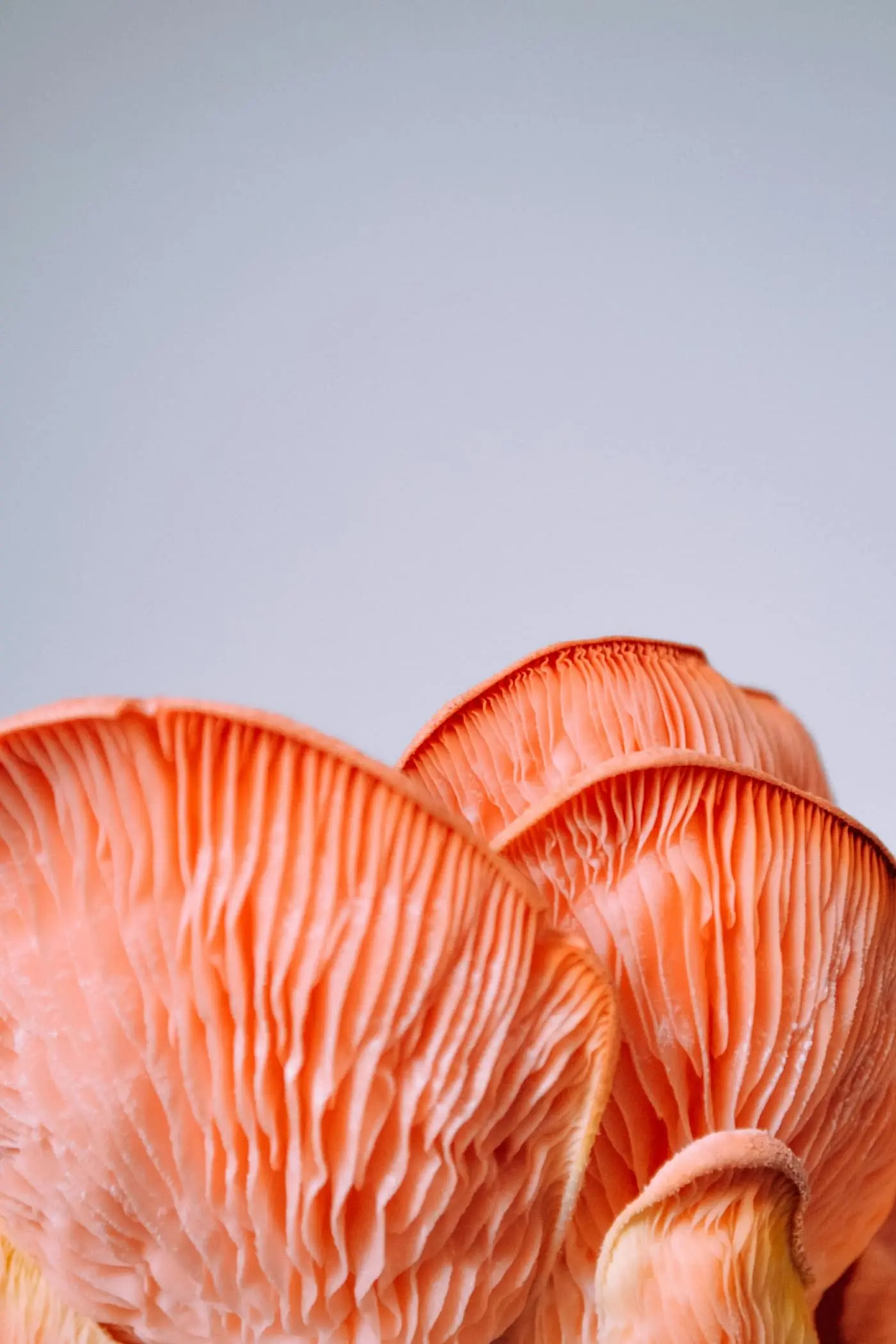
Mushrooms grow on straw, in a room, without any soil. That is why oyster mushroom (dhingri) is a popular first enterprise for land-short farmers, women and young people. But it is a living crop that goes bad quickly, so a clean routine matters more than the size of the room.
This guide follows one batch, from the day you treat the straw to the day you sell the mushrooms. The numbers come from ICAR sources: an ICAR-Indian Institute of Vegetable Research (IIVR) article in Indian Horticulture (2023) and a 2023 trial by ICAR-Directorate of Mushroom Research (DMR), Solan, published in Mushroom Research. Where official sources do not give a number, we have not made one up. For the crop overview, see our mushroom crop page.
Before day 0: space, straw and spawn
The room. ICAR-IIVR says mushroom is grown indoors in any mud or brick house or room, thatched shed, basement or garage. You need a room you can keep clean, shaded, ventilated and humid.
The temperature. Most oyster species grow between 20 and 30 degrees Celsius, with about 24 degrees (plus or minus 2) the best. The DMR Solan trial rooms were held at 24 plus or minus 2 degrees. If your room is hotter or colder for weeks, fruiting will suffer.
The substrate. Oyster grows on many farm wastes: wheat or paddy straw, dried banana leaves, groundnut shells, corn cobs, sugarcane bagasse, cotton waste and sawdust, according to ICAR-IIVR. Paddy or wheat straw is the usual beginner choice. Use dry, fresh, mould-free straw. Reject straw that is damp, black or smells musty.
The spawn. Spawn is the "seed" of the mushroom. Buy fresh spawn from a reliable source such as a state agricultural university, KVK or an established spawn unit. Ask the date it was made and use it quickly. NHB says spawn is best at 20 to 30 days old, and that spawn kept 3 to 6 months can form thick mats or pinheads inside the bottle. Old or contaminated spawn ruins a batch before it starts.
Day 0: treat the straw
Raw straw carries moulds and bacteria that will beat the mushroom to the food. The straw must be treated first. ICAR-IIVR lists two ways: heat (boiling or steaming) or chemical.
Heat treatment. ICAR-IIVR lists boiling or steaming as chemical-free options, and the ICAR-DMR trial used steam pasteurisation of wheat straw. For actual timings, a document from KVK Tindivanam (Tamil Nadu), which says it follows the standard Tamil Nadu Agricultural University (TNAU) protocol used for oyster and milky mushroom, gives this: chop paddy straw into 3 to 5 cm bits, soak in cold water for 4 hours, drain, then treat in hot water at about 80 degrees Celsius for 60 minutes (aerated steam at about 80 degrees for 60 minutes also works). After treatment, shade-dry the straw until it holds about 60 percent moisture, which you can test by squeezing: it should feel moist but no water should drip from your fist. Other sources give slightly different times, so confirm with your KVK.
Chemical treatment. ICAR-IIVR gives: soak the straw in carbendazim at 7 to 10 g per 100 litres of water plus formaldehyde (37%) at 100 mL per 100 litres, for 16 to 18 hours. Take care. Formaldehyde fumes are harmful, so wear gloves and a mask, work in open air, and keep children away. An ICAR journal has also studied how much carbendazim ends up in the harvested mushrooms, which is a reason to keep to the dose and not to overuse it. Many beginners prefer the heat method for this reason.
Wash your hands, tools, tubs and bags before you start. Clean surroundings are the best protection.
Day 1: fill the bags
- Bag: a strong polythene bag. ICAR-IIVR uses polypropylene bags; the DMR trial filled 5 kg of substrate per bag.
- Spawning: mix or layer spawn with the cooled straw at 2 to 2.5% of the wet straw weight (ICAR-IIVR). The DMR trial used 3% grain spawn on wet weight.
- Holes: ICAR-IIVR says to make small holes of 0.25 to 0.5 cm, 10 to 15 cm apart over the bag, so gases and heat can escape. The DMR trial made 12 to 14 holes per bag.
- Press the straw down gently and tie the bag.
Work fast, with clean hands, and spawn on the same day the straw cools.
Day 2 to about Day 12: spawn run
Hang or stack the bags in the room. Over the next days the white thread-like growth (mycelium) spreads through the straw until the bag looks white.
In the DMR Solan trial (steam-pasteurised wheat straw, grain spawn), the pink oyster P. djamor completed its spawn run in about 8 days and P. ostreatus var. Florida in about 12 days. Your room may run slower or faster, so watch the bags and not the calendar.
- Keep the room at about 24 degrees. ICAR-IIVR says to keep relative humidity at 85 to 90 percent during spawn run and production.
- Do not open the bags or touch them without need.
- Throw away bags with green, black or orange patches. These are contamination, and green mould spreads fast. Remove such bags from the room, well away from the others.
About Day 12 to 20: pinheads appear
When the bag is fully white, tiny pin-sized buds (pinheads) form at the holes. In the DMR trial (counted from spawning, grain spawn), the pink oyster P. djamor formed pinheads at about 13 days and was first picked at about 20 days. P. ostreatus var. Florida formed pinheads at about 20 days and was first picked at about 24 days.
Once pinheads show, keep the humidity high. In the DMR trial the humidity was held at 80 plus or minus 5 percent after the spawn run. Ask your KVK how often to mist the walls and floor in your type of room. Give fresh air as well, because closed, stale rooms are a common cause of poor fruiting.
First harvest and the flushes
Pick when the mushrooms are fully formed. ICAR-IIVR says to grip the mushroom by the stalk and gently twist it off. Pick clean, so no stalk stub is left to rot and invite contamination.
Mushrooms come in waves called flushes. The National Horticulture Board (NHB) advises picking the whole flush at once, so the next flush then appears together, and twisting each mushroom off so no stub is left. It also advises harvesting before the spores are released.
How many flushes? TNAU's oyster mushroom cropping guidance describes up to three harvests from a bed:
- Second harvest about 7 to 10 days after the first
- Third harvest about a week to 10 days after the second
- After each harvest, scrape off dried and rotten buds with a clean comb
- Spray water only after harvesting (2 to 3 sprays a day, depending on the bed), and never pour water on the beds, because that rots the young buds
- Dispose of the bed after the third harvest, since keeping it is uneconomical
Room conditions, per NHB: the best temperature for spawn run is 22 to 26 degrees Celsius. Fruiting humidity of 70 to 85 percent suits oyster; at 85 to 90 percent the mushrooms are larger with less dry matter, and at 65 to 70 percent they are smaller and drier. ICAR-IIVR's 85 to 90 percent therefore sits at the top of this range, so the sources agree that humidity should stay high. Keep carbon dioxide below 600 ppm with ventilation, which again shows why a shut, stuffy room fails.
How much to expect: ICAR-IIVR gives biological efficiency of 70 to 80 percent or more, depending on the substrate. This means about 700 to 800 g of fresh mushroom from every kg of dry straw, over the full life of the bag. In the DMR trials, grain spawn gave about 67 percent (P. djamor) and 73 percent (P. ostreatus var. Florida). NHB gives a more cautious figure: more than 500 kg of fresh mushroom per tonne of dry straw, from a crop of 45 to 60 days. Treat 50 to 70 percent as a realistic range for a beginner, not a promise. A first batch with imperfect hygiene may give much less.
Selling: arrange the buyer first
ICAR-IIVR says oyster mushrooms stay fresh for 3 to 6 days in a refrigerator or cool place. At room temperature, they spoil much faster. So the sale matters as much as the growing.
- Talk to a nearby vegetable seller, restaurant, hotel or hostel mess before your first harvest.
- Drying is another option. ICAR-IIVR reports growers who sell dried oyster mushroom as well as fresh. One of the examples in that article reported selling fresh at about ₹120 per kg and dried at about ₹700 per kg, with an annual income around ₹1.5 lakh from roughly 20 kg per day. This is a single reported example from 2023, from a grower running a regular unit, not an average.
- Start small. One or two dozen bags teach you the routine before you scale.
What usually goes wrong
| What you see | Likely cause | What to do |
|---|---|---|
| Green or black patches on bag | Contamination from untreated straw, old spawn or dirty hands | Remove the bag at once; treat straw properly; clean the room |
| White growth stalls and bag smells sour | Straw too wet, or too hot | Squeeze straw drier next time; check room temperature |
| Long thin stalks, tiny caps | Too little fresh air | Open ventilation; avoid stale, closed rooms |
| Few or no mushrooms | Weak spawn, wrong temperature, dry room | Use fresh spawn; hold the room near 24 degrees; raise humidity |
| Mushrooms spoil before sale | No buyer arranged | Line up buyers first; consider drying |
Where to learn properly
Reading helps, but a few days of hands-on training saves a lot of money. ICAR-DMR Solan and ICAR-IIVR Varanasi both run mushroom training, and many KVKs offer short courses on oyster mushroom. Ask your district KVK for the next batch.
Mushroom farming rewards cleanliness and quick selling more than size. Treat the straw properly, spawn with clean hands, keep the room near 24 degrees, and have a buyer ready. This guide is general information from ICAR sources; local conditions vary, so check with your KVK before investing.
Frequently asked questions
What temperature does oyster mushroom need?
ICAR-IIVR says most oyster (Pleurotus) species grow between 20 and 30 degrees Celsius, with about 24 degrees as the best. ICAR-DMR Solan kept its trial rooms at 24 plus or minus 2 degrees.
How much spawn is needed?
ICAR-IIVR gives 2 to 2.5 percent of the wet substrate weight. In its trial, ICAR-DMR used 3 percent of wet weight with grain spawn.
How much mushroom can I expect from straw?
ICAR-IIVR says biological efficiency (fresh mushroom weight divided by dry substrate weight) can range from 70 to 80 percent or more. ICAR-DMR trials gave about 67 to 73 percent with grain spawn. A first batch with imperfect hygiene will often give less.
How many times can I harvest from one bed?
TNAU describes up to three harvests. The second comes about 7 to 10 days after the first and the third about a week to 10 days after the second. After the third, the bed is thrown away as it is no longer economical. Spray water only after harvesting and never pour it on the beds.
How long does fresh oyster mushroom keep?
ICAR-IIVR says oyster mushrooms stay fresh for 3 to 6 days in a refrigerator or cool place. At room temperature they spoil much sooner, so line up a buyer before the first harvest.

Written by
Vaibhav Dhama
Founder, Technical Kisan
Vaibhav Dhama is the founder of Technical Kisan. He writes from Baghpat, Uttar Pradesh, and builds each guide on ICAR and state agricultural university guidance, official government scheme notifications, and live mandi-price data.
- Writes from Baghpat, Uttar Pradesh
- Software developer (BTech, 2021)
- Not a trained agronomist — confirm with your KVK
Discussion is coming soon
We are building a comments section where you can ask a question about this guide and see what other farmers in your district are doing.
For now, write to us at support@technicalkisan.com — we read every message.