Onion Storage: Stop Losing 40% in the Shed
Onion margins are made in the shed, not the field. Proper curing and ventilated storage is the difference between low and high-season prices.
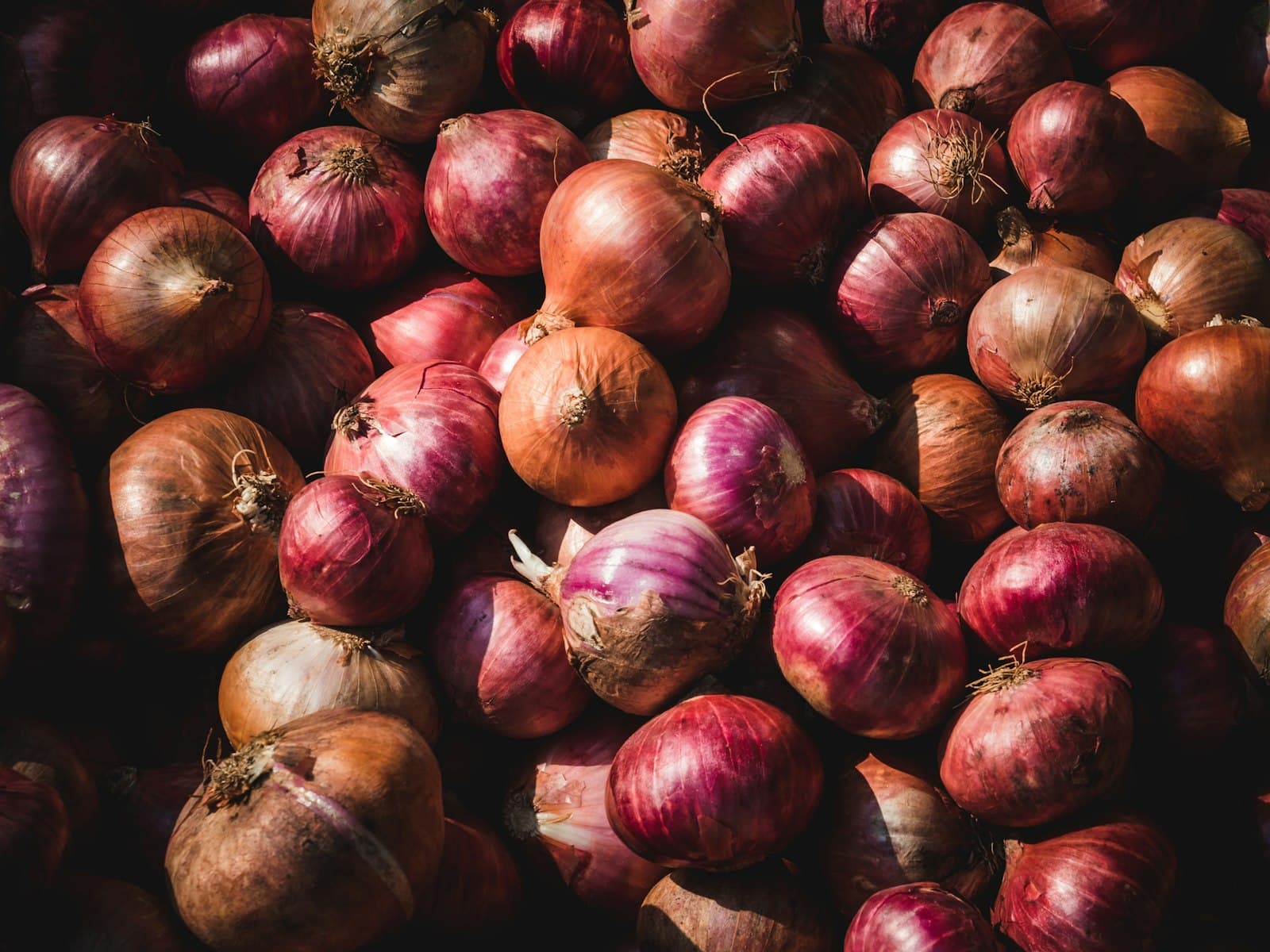
An onion grower's year has two harvests. The first is when you lift the bulbs. The second is when you open the shed three months later and find out how many of them are still onions.
For most growers the second harvest is a bad one. 25% to 40% of the crop is routinely lost in storage — to rot, to sprouting, to shrinkage. And nearly all of it is decided in the two weeks around lifting, not in the months afterwards.
This matters because onion prices at harvest are almost always at their worst. Everyone lifts at once, the mandi floods, and the rate collapses. The grower who can hold for three or four months sells into a thin market at a multiple of the harvest price. Storage is not a cost centre in onion. It is the business.
Storage begins in the field
Choose a variety that is meant to be stored
This sounds obvious and is routinely ignored. Kharif varieties are bred to come off early, not to hold — they have high moisture, soft necks and thin skins. They will not store, and no amount of shed management will make them.
For storage you want a rabi crop of a variety with a tight neck, thick skin and high dry matter: Bhima Kiran, Bhima Shakti, Agrifound Light Red are the ones most commonly used.
Stop irrigating 15–20 days before harvest
Late water gives you big, heavy, high-moisture bulbs with thick necks. They look magnificent on the day. They rot first.
Cutting the water three weeks out forces the plant to mature and the neck to tighten. You will lose a little weight. You will keep a much larger share of the crop.
Harvest at 50–70% neck fall
Not before, and not much after. When half to two-thirds of the tops have fallen over, the bulb has finished maturing and is ready to seal itself. Lift too early and the neck is still thick and open — that opening is a doorway for fungus. Lift too late and the bulbs start sprouting in the ground.
Curing is the step everyone rushes
Curing dries the neck and the outer scales so the bulb closes itself off. It is the single highest-leverage thing you will do to that crop, and it is the step people skip when the mandi rate is good and they want to load the trolley.
Field curing — 3 to 5 days. Leave the lifted onions in the field in windrows, arranged so the tops of one row cover the bulbs of the next. The tops shade the bulbs from direct sun. Onions left exposed to full sun get sunscald, and a sunscalded bulb is a rotten bulb waiting for a date.
Shade curing — 10 to 15 days. Move them under cover, in a shaded, well-ventilated space, in a layer no more than a foot or so deep. This is where the neck finishes drying.
Cut the tops at 2–2.5 cm. Not flush with the bulb. That last couple of centimetres of dried neck is the seal.
You will know curing is done when the outer skin rustles and the neck is dry and papery all the way through.
The shed
The traditional onion chawl is not a primitive substitute for a cold store. For onion, it is the correct technology.
- Bottom ventilation. A raised slatted floor so air moves up through the pile from underneath.
- Side ventilation. Slatted or mesh walls. The whole structure should breathe.
- Roof with an overhang. Keeps direct sun off and rain out.
- Orientation. The long axis running north–south, so the prevailing wind moves through the length of the stack.
- Stack depth under 1.5 m. Deeper than that and the middle of the pile heats up and sweats.
- Never on concrete. It traps moisture underneath the bottom layer.
Subsidy is available for chawl construction under state horticulture missions and MIDH — usually 40–50% of cost. Check with your district horticulture officer.
What still goes wrong
Sprouting. Caused by high humidity and temperature swings. This is a ventilation problem, not a variety problem.
Black mould. Aspergillus niger. Almost always traceable to inadequate curing — the neck never sealed.
Basal rot. Enters through a damaged base plate. Handle the bulbs like eggs at lifting: every bruise is a future rot.
Weight loss. You will lose 15–25% of the weight to moisture over four months, and that is normal and unavoidable. Price it into your calculation from the start rather than discovering it at the weighbridge.
The number that matters
A grower who loses 40% in storage and one who loses 20% are not in the same business. On a 200-quintal crop that is 40 quintals of difference, and at a held-back price of ₹2,000 a quintal, it is ₹80,000 — earned entirely in the fortnight around lifting, with no extra input cost at all.
Cure it properly. Ventilate the shed. Then wait.
Frequently asked questions
How long can onions be stored?
A properly cured rabi crop of a storage variety, held in a ventilated chawl, keeps for four to six months with 25–35% loss. A kharif crop keeps for weeks, not months — it has higher moisture and simply will not hold.
When should I stop irrigating an onion crop before harvest?
Fifteen to twenty days before harvest. Irrigating late produces bulbs with high moisture and thick necks, and those are the bulbs that rot first in storage.
What is curing and why does it matter?
Curing is drying the neck and the outer scales after harvest so the bulb seals itself against fungal entry. Field-cure in windrows for three to five days with the tops covering the bulbs, then shade-cure for another ten to fifteen days. Skipping it is the single biggest cause of storage loss.
Which onion varieties store best?
Rabi storage varieties with tight necks, thick skins and high dry matter — Bhima Kiran, Bhima Shakti and Agrifound Light Red among them. Kharif varieties are bred for early harvest, not for holding.

Written by
Vaibhav Dhama
Founder, Technical Kisan
Vaibhav Dhama is the founder of Technical Kisan. He writes from Baghpat, Uttar Pradesh, and builds each guide on ICAR and state agricultural university guidance, official government scheme notifications, and live mandi-price data.
- Writes from Baghpat, Uttar Pradesh
- Software developer (BTech, 2021)
- Not a trained agronomist — confirm with your KVK
Discussion is coming soon
We are building a comments section where you can ask a question about this guide and see what other farmers in your district are doing.
For now, write to us at [email protected] — we read every message.