
You're Losing a Third of Your Urea
Broadcast urea on dry soil and 30-40% of the nitrogen is gone within days. Splitting the dose on moist soil is the cheapest yield gain there is.
Vaibhav Dhama4 min readThe workhorse nitrogen fertiliser — cheap, concentrated and easy to lose. Used right, one bag can do the work of two.
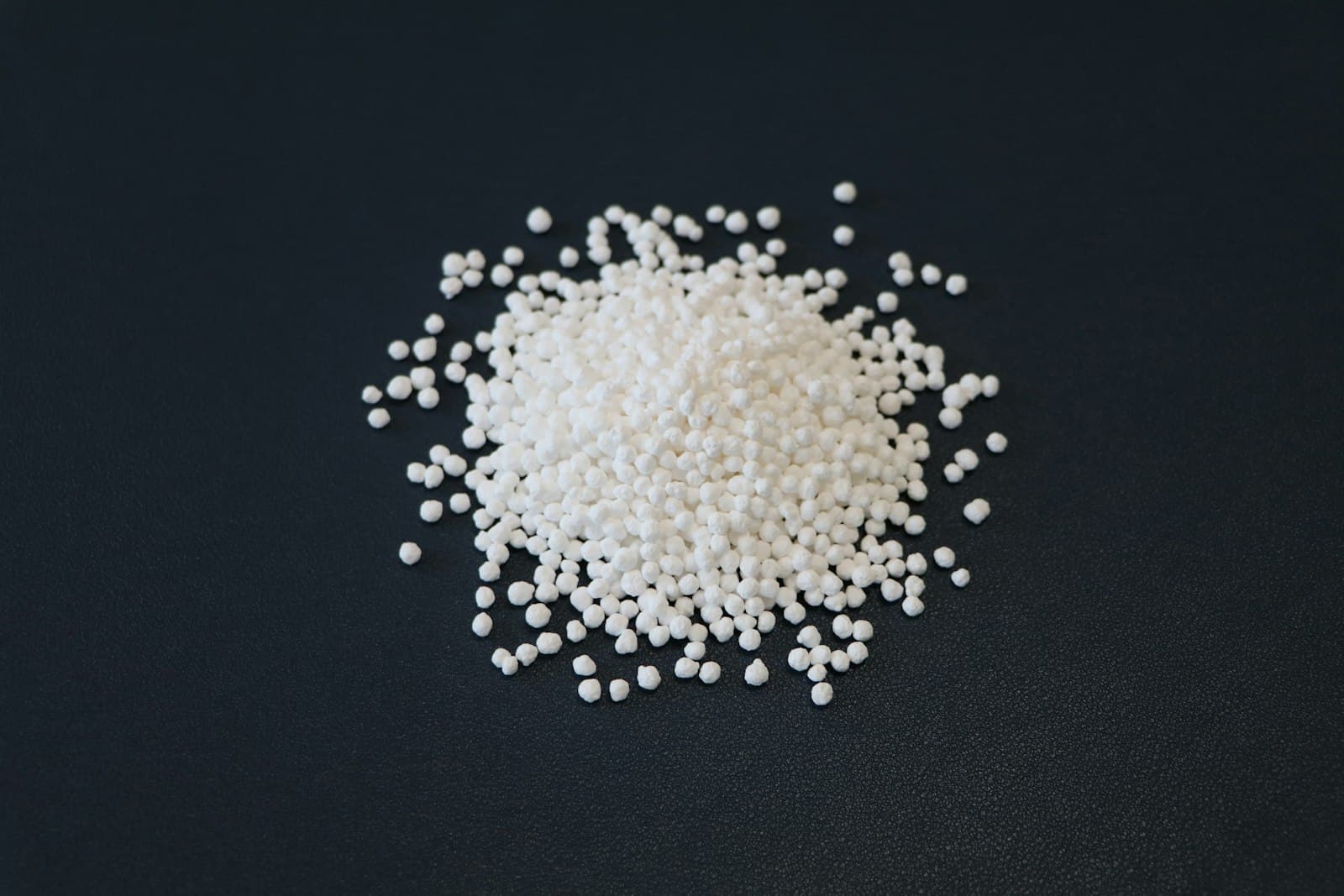
Urea is a straight nitrogen fertiliser: 46% N and nothing else, the highest nitrogen content of any solid fertiliser, which is why it is the cheapest way to buy nitrogen. It drives leafy, vegetative growth — tillering in cereals, branching in cotton and pulses — and a shortage shows as a pale, yellow crop.
Its weakness is loss. Broadcast onto a dry surface, urea converts to ammonia gas and drifts away — 30–40% gone in a few days. Almost everything about applying urea well is about beating that loss: apply to moist soil, incorporate or irrigate immediately, and never dump the whole dose at once.
General ICAR-aligned figures for one acre, before crediting the nitrogen your DAP already supplies. A Soil Health Card dose for your field is better still.
| Crop | Rate (per acre) | When |
|---|---|---|
| Wheat | ~85–90 kg/acre (≈2 bags) | Split: basal, CRI, tillering |
| Paddy (rice) | ~85–90 kg/acre | Split: basal, tillering, panicle |
| Maize | ~110–120 kg/acre | Split: basal, knee-high, tasselling |
| Cotton | ~75–90 kg/acre | Split: basal, squaring, flowering |
For a slow, microbe-fed nitrogen supply, a fermented cow-dung culture (jeevamrut) plus well-rotted FYM replaces part of the urea.
Open a crop for its full nutrient schedule.
Long-form guides on this fertiliser, with the rates and timings worked out.
Roughly two 45 kg bags (about 85–90 kg) per acre, but that is after DAP has already supplied some nitrogen — so the real urea figure is often a little lower. Split it into basal, crown-root initiation and tillering doses rather than applying it all at once, and use the Fertilizer Calculator for your exact area and soil test.
Because it was broadcast onto dry soil and not watered in. Urea turns to ammonia gas on a dry surface and 30–40% can be lost within days. Always apply to moist soil and irrigate or incorporate immediately.
The neem oil coating slows the release of nitrogen by about 10–15 days, so the crop gets more of it and less is lost. All subsidised urea in India is neem-coated. You apply it exactly the same way as ordinary urea.
Composition and doses follow ICAR / Soil Health Card guidance; prices are the notified subsidised rates for the season shown and are guidance, not a quote. A soil test for your field always beats a general rate. See our editorial policy.