
Best Fish Species for Biofloc Farming
Biofloc packs 3-5x more fish per pond by turning tank waste into feed - but only species that thrive in dense, active water. What works.
Vaibhav Dhama2 min readPond prep, water quality, stocking density, feeding, disease management, harvest planning and the schemes that actually fund a pond or biofloc unit.
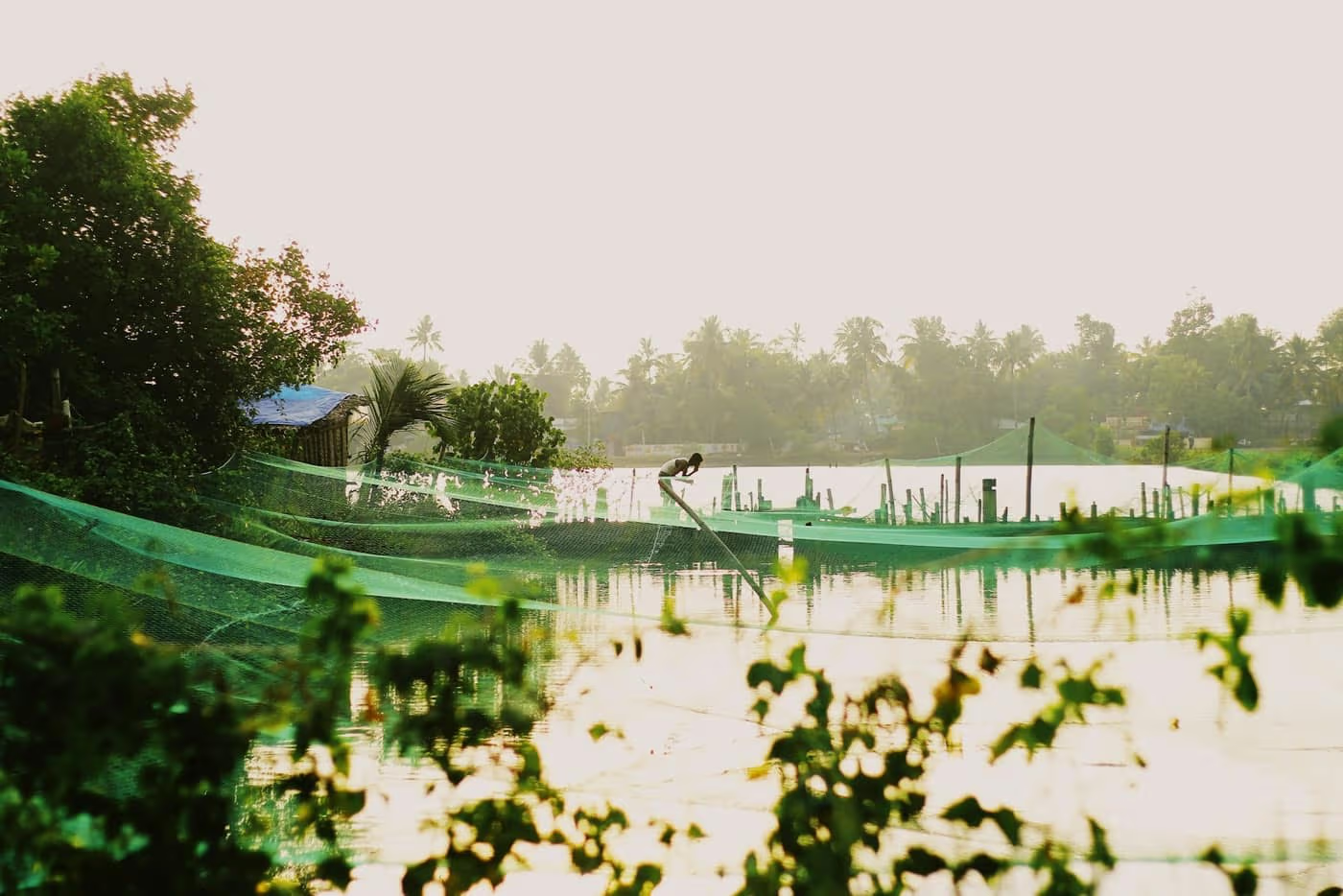
Species choice trades off growth speed, tolerance of crowding and poor water, and market price — a polyculture of complementary feeders is usually more productive per acre than any single species alone.
| Breed | Purpose | Typical yield | Climate suitability | Difficulty |
|---|---|---|---|---|
| Rohu | Table fish, column feeder | 8–10 months to 1–1.2 kg | Warm-water pond, moderate water-quality tolerance | Moderate |
| Catla | Table fish, surface feeder | 8–10 months to 1–1.5 kg, fast early growth | Warm-water pond, moderate water-quality tolerance | Moderate |
| Tilapia | Table fish, fast-growing | 5–6 months to 400–600 g | Very tolerant of crowding and poor water quality | Low |
| Pangasius (catfish) | Table fish, high-density tolerant | 6–8 months to 1–1.2 kg | Tolerates low dissolved oxygen well | Low–Moderate |
The four decisions that separate a productive pond or biofloc unit from a stagnant one.
Pond preparation
Draining and drying the pond bed, liming to correct acidity and kill pathogens, and fertilising with manure to grow the natural plankton bloom fry need to feed on — all before a single fingerling goes in. Skipping this step is the most common reason a first pond underperforms.
Water quality
Dissolved oxygen, pH and ammonia are the three numbers that matter — a crash in any one shows up as fish gasping at the surface or a sudden die-off. Biofloc and high-density systems need continuous aeration; an extensive pond can often get by on morning checks alone.
Stocking density
An earthen pond typically carries about 1 fish per sq ft; a biofloc tank, where the tank's own waste is converted into feed by beneficial bacteria, can run 3–5 fish per sq ft in the same footprint. The trade-off is a system with far less room for error if aeration or water quality slips.
Harvest planning
A partial, net-based harvest of market-size fish lets the pond keep growing the rest, while staggered stocking across two or three ponds gives a continuous supply to sell instead of one lump harvest that depresses the local price all at once.
Feed is staged by fish size, and moves from natural pond plankton to a manufactured pellet as the fish grow.
Fish are not vaccinated the way land animals are — water quality is both the main cause of disease and the main prevention.
Argulus (fish lice)
A short-duration potassium permanganate or salt bath treats an active infestation; keeping stocking density within range prevents most outbreaks.
Fungal infection (saprolegniasis)
Usually follows a skin injury or poor water quality — treat the water quality first; a salt bath or an approved antifungal dip addresses an active infection.
Ammonia stress / low dissolved oxygen
Not an infection but the most common cause of a sudden die-off — immediate aeration and a partial water exchange are the emergency response; regular water testing prevents it reaching crisis point.
The pond or tank is the housing here — its construction quality decides most of what follows.
Pond construction / liner
A well-compacted earthen pond or an HDPE-lined tank prevents seepage loss and makes water-level management possible.
Aerator
Essential for biofloc and high-density systems; keeps dissolved oxygen from crashing overnight when plankton respiration outpaces production.
₹15,000–40,000
Feed storage
Dry, pest-proof storage keeps pellet feed from spoiling — spoiled feed is a direct route to disease.
Harvesting net
A properly sized seine net allows a partial harvest without stressing the fish left behind.
Long-form guides on this, with the numbers and the timings included.
Yes — a well-managed pond typically nets ₹1–2 lakh per acre per cycle, among the highest per-acre returns of any livestock enterprise on this site, but it needs assured water access and closer water-quality attention than most other animals need daily care.
A viable pond starts around 0.5–1 acre with a reliable water source — a borewell, canal or perennial pond — since fish farming is really a water-management business as much as an animal one. Biofloc needs far less land but far more reliable electricity for aeration.
Biofloc stocks 3–5 times denser in the same footprint and suits a farmer short on land but with reliable power and the budget for aeration equipment. An earthen pond is cheaper to set up and more forgiving of an occasional lapse, but needs more land for the same output.
A crash in dissolved oxygen or a spike in ammonia — usually from overfeeding, overcrowding, or a sudden weather change — causes more sudden die-offs than any infectious disease. Regular water testing catches the problem before it reaches a crisis.
An earthen pond typically carries about 1 fish per sq ft; going much higher without aeration risks an oxygen crash. A biofloc tank, with continuous aeration and bacterial waste processing, can safely run 3–5 fish per sq ft.
Yes — the Pradhan Mantri Matsya Sampada Yojana (PMMSY) gives a capital subsidy of 40% for general category farmers and 60% for SC/ST and women, covering pond construction, biofloc units and related infrastructure. The Kisan Credit Card (KCC) has also covered fishers since 2018–19. See the schemes below for details.
The FAQs above cover the common questions. For advice tuned to your exact land, climate and market access, your nearest Krishi Vigyan Kendra or state veterinary/animal husbandry department is the authoritative next step.