Harvest and Storage: Timing and Handling
Harvest too early and grain never fills; too late and it shatters or lodges. The narrow window that decides if the season pays off.
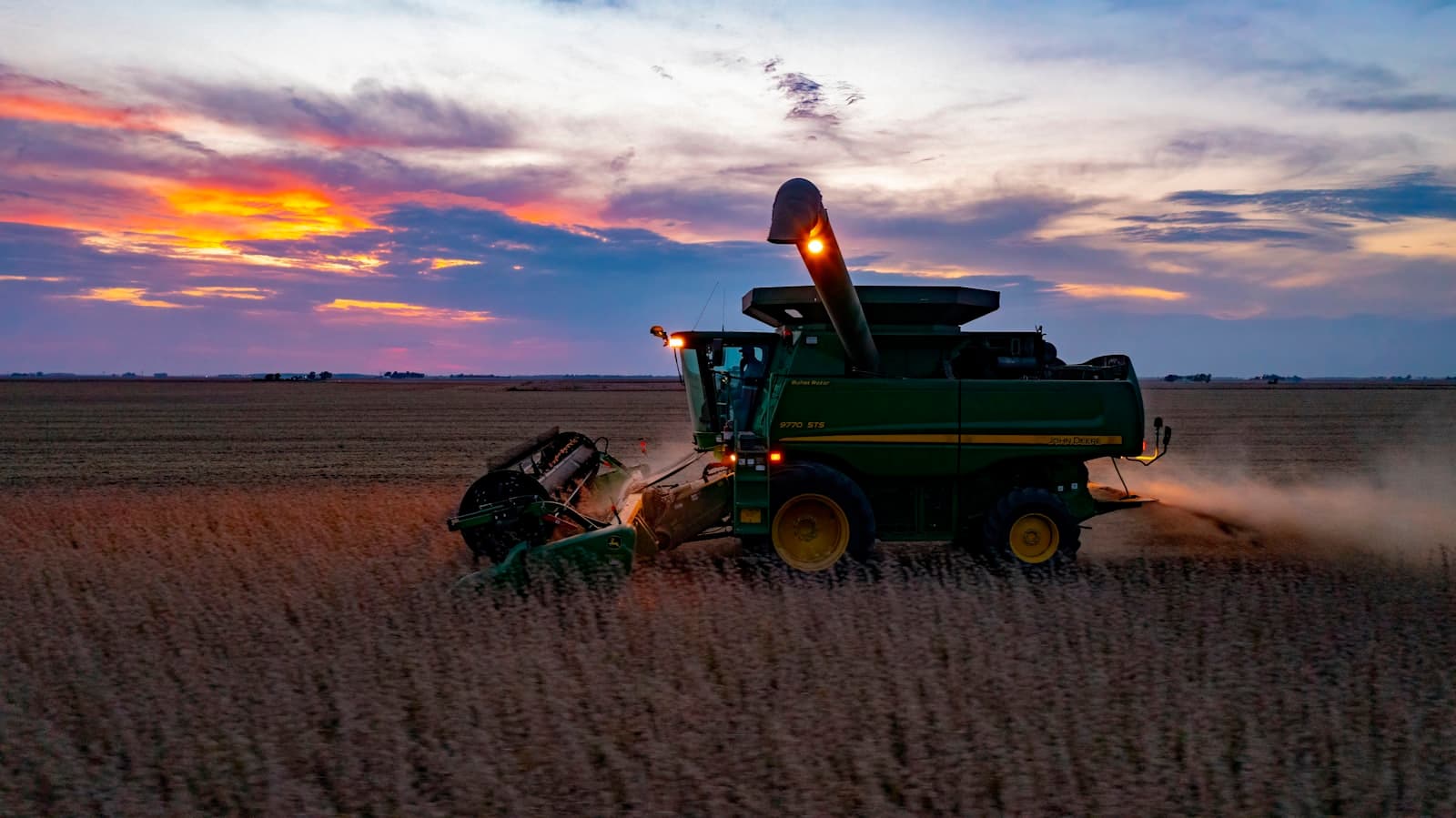
Two mistakes bracket every harvest decision — too early, and the crop has not finished converting the season's growth into usable yield; too late, and weather, shattering or lodging starts taking back what was already earned. Getting the window right, and handling the crop correctly in the hours after, is what actually locks in a season's result.
Reading maturity, not just the calendar
Sowing date plus a fixed number of days is a rough estimate at best — the season's actual weather shifts real maturity earlier or later than that calendar guess. The more reliable signals are visual and physical: grain colour change, the plant drying down and losing its green tinge, and, most precisely, a moisture meter reading against the crop's known harvest-moisture target. Harvesting on a moisture reading rather than a guess is the single biggest accuracy improvement available to most farms.
Choosing manual versus mechanical harvest
- Manual (sickle) harvest — slower and more labour-intensive, but handles lodged or unevenly matured crop better than a machine can, and causes less grain loss on a difficult field.
- Combine harvest — far faster and lower labour cost at scale, but only performs well when correctly calibrated to the crop's actual condition that day — ground speed and header settings tuned for a drier or wetter crop than what is actually standing in the field are a common, avoidable source of grain loss.
The hours right after cutting matter as much as the cut itself
Grain or produce left in the field too long after cutting is exposed to weather, pests and quality decline that a prompt move to drying or storage avoids. Minimising the gap between field and first processing — threshing, initial drying, or transport to a collection point — is a genuine yield-protection step, not just a logistics preference.
Threshing and initial cleaning
Threshing separates grain from straw or pod, and a first cleaning pass removes the bulk of chaff and foreign matter before the crop goes anywhere near long-term storage. Doing this promptly, rather than letting harvested material sit in a mixed, unthreshed pile, reduces the moisture-trapping and pest-attracting conditions that start working against the crop from the moment it is cut.
Where this hands off to storage
Everything from this point — drying to safe moisture, the choice of storage structure, pest prevention in store — is a distinct set of decisions covered in our post-harvest storage guide. Harvest and storage are often talked about as one step, but the difference between a well-harvested, poorly stored crop and the reverse is large enough that they are worth planning separately.
The one sentence version
The harvest window is won on a moisture reading rather than a calendar guess, protected by matching the harvesting method to the field's actual condition, and locked in by minimising the gap between cutting and the first drying or cleaning pass.
Frequently asked questions
How do I know when a grain crop is actually ready to harvest?
A combination of visual cues — grain colour change, the crop drying down and losing its green tinge — and a moisture check is more reliable than calendar counting from sowing date alone, since weather through the season shifts the actual maturity date. A moisture meter reading against the crop's known harvest-moisture target is the most precise check.
Why does a combine harvester sometimes lose more grain than manual harvesting?
A poorly calibrated combine — running too fast for the crop condition, or set for a different moisture level than what is actually in the field — can shatter grain out of the head or leave it in the straw, losses that a slower manual harvest with a sickle would not incur. Calibration matched to the specific field's condition on the day matters more than the machine itself.

Written by
Vaibhav Dhama
Founder, Technical Kisan
Vaibhav Dhama is the founder of Technical Kisan. He writes from Baghpat, Uttar Pradesh, and builds each guide on ICAR and state agricultural university guidance, official government scheme notifications, and live mandi-price data.
- Writes from Baghpat, Uttar Pradesh
- Software developer (BTech, 2021)
- Not a trained agronomist — confirm with your KVK
Discussion is coming soon
We are building a comments section where you can ask a question about this guide and see what other farmers in your district are doing.
For now, write to us at [email protected] — we read every message.