Tomato Leaf Curl: Stop Spraying, Prevent
There is no cure once a plant has leaf curl. Everything that works is prevention - whitefly control, barrier crops, and early roguing.
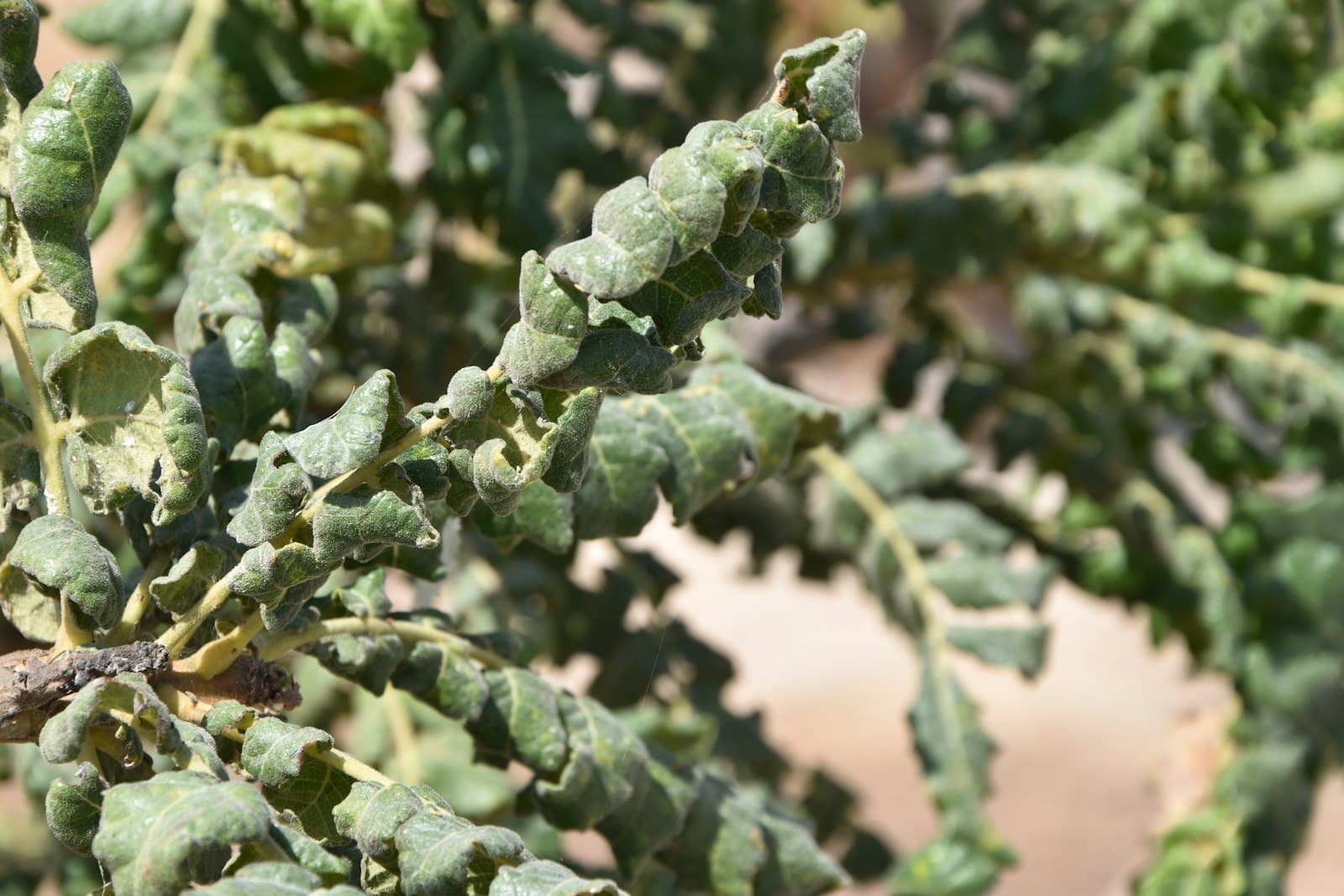
A tomato grower who has had leaf curl once recognises it instantly and dreads it correctly. The leaves curl upward and cup. The plant stops growing. The leaves go small, thick and leathery, yellow between the veins. The flowers drop. And if it happened early, the plant simply never makes a tomato.
Then the spraying starts — an insecticide, then a fungicide, then a micronutrient tonic, then something the shop recommended. None of it works, because none of it can.
There is no cure. Accept that first.
Tomato Leaf Curl Virus is a begomovirus. It lives inside the plant's cells. There is no chemical, biological or nutritional product that removes a virus from an infected plant — not in tomato, not in any crop.
Every rupee spent spraying an infected plant is wasted. Every rupee spent stopping the vector before infection is the highest-return spend in the entire crop.
So the whole game is the whitefly.
The whitefly is the disease
Bemisia tabaci — the whitefly — picks the virus up feeding on an infected plant and then carries it for the rest of its life. It only needs a few minutes of feeding to transmit it into a healthy plant.
Which means: control the whitefly, or you have already lost.
Start in the nursery
Most fields are infected before they are ever planted out. Seedlings sitting in an open nursery next to an infected field get colonised, and you transplant the virus straight into your own soil.
- Raise seedlings under a 40–50 mesh insect-proof net. Not shade net — insect net. The mesh size is the whole point.
- Never raise a nursery next to an old, infected tomato or cotton crop.
- Reject any seedling that looks even slightly off. One infected transplant is a source for the whole field.
Choose a tolerant hybrid
Hybrids carrying Ty resistance genes (Ty-1, Ty-2, Ty-3) are the single most effective tool available. They can still be infected, but they keep growing and keep yielding.
On a field with any history of leaf curl, a tolerant hybrid is not a preference. It is the entry requirement.
Barrier and trap crops
Two rows of maize or bajra around the tomato block acts as a physical and visual barrier — whiteflies arriving from a neighbouring field land on the tall border rather than in your crop.
Yellow sticky traps at 10–12 per acre do two jobs. They catch adults, and more importantly they tell you the population is rising before you can see damage. Put them in at transplanting, not when you notice a problem.
Spray the vector, on a rotation
Whitefly develops insecticide resistance quickly, and the fastest way to build it is to use the same molecule all season.
- Rotate the chemistry. Different mode-of-action groups, every spray. This is not optional.
- Spray in the early morning or the evening, when whiteflies are on the leaf and not in flight.
- Cover the undersides of leaves. Whiteflies live under the leaf. A spray that only wets the top surface has done nothing at all — this is the most common reason a spray "does not work".
- Start early. Once the population is visible as a cloud when you disturb the plants, you are already behind it.
Rogue, ruthlessly
Walk the field every few days for the first month. Pull out any plant showing symptoms — immediately, and carry it out of the field. Do not leave it lying between the rows; the whiteflies simply move off it onto the neighbours.
A plant infected in week two will never yield. It is not a plant any more. It is a virus reservoir with roots, and leaving it in the ground to "see how it goes" is how a five-plant problem becomes a five-hundred-plant problem.
Also: clean up
The virus and the vector both survive between crops on weeds and volunteers — Parthenium, Datura, Abutilon, and last season's self-sown tomatoes.
Keep the field bunds clean. Destroy the previous crop's residue rather than letting it stand. And take a genuine break between tomato crops if you can — a continuous tomato-after-tomato rotation on the same land keeps the vector fed all year and is asking for exactly this.
The window that decides the crop
Everything above is worth doing, but the first three weeks after transplanting are the ones that decide the outcome. A plant infected early is a total loss. A plant that gets to flowering uninfected will usually give you a crop even if it picks the virus up later.
Protect the first three weeks like the whole season depends on them, because it does.
Frequently asked questions
Can tomato leaf curl virus be cured?
No. There is no chemical, biological or nutritional treatment that cures an infected plant. Every effective measure is preventive — controlling the whitefly that transmits it, and removing infected plants before they become a source for the rest of the field.
What causes tomato leaf curl?
Tomato Leaf Curl Virus, a begomovirus transmitted almost exclusively by the whitefly Bemisia tabaci. The whitefly acquires it from an infected plant and stays infective for the rest of its life.
How do I identify tomato leaf curl virus?
Upward curling and cupping of the leaves, severe stunting, leaves that become small, thick and leathery, yellowing between the veins, and heavy flower drop. Plants infected in the first month often never set fruit at all.
Do resistant tomato varieties work?
Tolerant hybrids carrying Ty genes are the single most effective tool available. They can still be infected but they continue to yield. On a field with a history of leaf curl, a tolerant hybrid is not optional.

Written by
Vaibhav Dhama
Founder, Technical Kisan
Vaibhav Dhama is the founder of Technical Kisan. He writes from Baghpat, Uttar Pradesh, and builds each guide on ICAR and state agricultural university guidance, official government scheme notifications, and live mandi-price data.
- Writes from Baghpat, Uttar Pradesh
- Software developer (BTech, 2021)
- Not a trained agronomist — confirm with your KVK
Discussion is coming soon
We are building a comments section where you can ask a question about this guide and see what other farmers in your district are doing.
For now, write to us at [email protected] — we read every message.