
NADEP Compost: Brick Tank Method
NADEP makes large volumes of compost from crop residue and little dung, in a brick tank with air holes. How it's built, layered and filled.
Vaibhav Dhama2 min readRotted-down organic waste turned into soil food — modest in NPK, powerful for structure, water-holding and soil life.
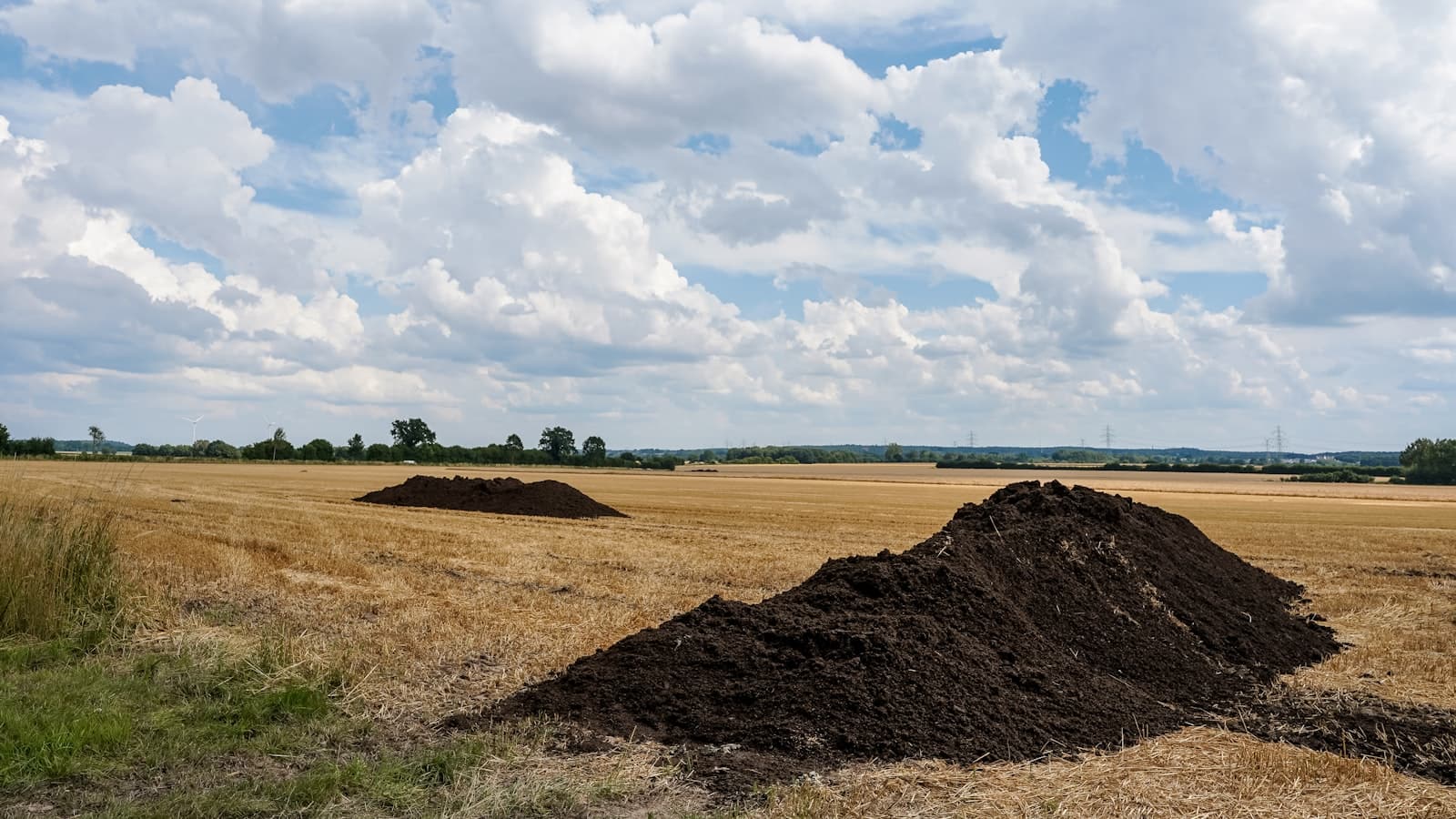
Compost is the stable, dark, crumbly material left when plant and farm waste — crop residue, leaves, kitchen and market waste, dung — is decomposed by microbes. Its NPK content is modest and variable (roughly 1% N, 0.5% phosphorus, 1% potassium) but, like FYM and vermicompost, its real value is what it does to the soil: organic matter, humus, better structure and water-holding, and a living soil that releases nutrients steadily.
It covers both farm compost (made on-farm from residues and dung) and city or municipal compost (processed from segregated urban waste, promoted under government programmes to recycle waste into farm inputs). Either is used to build soil and cut chemical-fertiliser dependence, applied before sowing — city compost should be from a certified source and tested to be free of contamination.
Open a crop for its full nutrient schedule.
Long-form guides on this fertiliser, with the rates and timings worked out.
NADEP makes large volumes of compost from crop residue and little dung, in a brick tank with air holes. How it's built, layered and filled.
Vaibhav Dhama2 min read
Going organic means giving up urea, not nitrogen. What replaces it: FYM, compost, vermicompost, oil cakes, biofertilisers, and green manure.
Vaibhav Dhama4 min readRoughly 2–5 tonnes of well-finished compost per acre, broadcast and mixed into the soil before sowing. Heavy-feeding and degraded soils are at the higher end. Being mild, it will not scorch the crop, so nurseries and vegetables can take more.
All three are organic manures that build soil health. FYM is decomposed dung and bedding; vermicompost is waste digested by earthworms into a finer, more nutrient- and microbe-rich product; general compost is plant and farm waste decomposed by microbes. Their nutrient levels are all modest — their shared value is soil organic matter and structure.
Yes, if it is from a certified source made from properly segregated waste and tested to be low in heavy metals and physical contamination like glass and plastic. Government programmes promote city compost to recycle urban waste into farm inputs; the key is quality certification, not the source of the waste alone.
Composition and doses follow ICAR / Soil Health Card guidance; prices are the notified subsidised rates for the season shown and are guidance, not a quote. A soil test for your field always beats a general rate. See our editorial policy.