Crop Protection During Heavy Rain
Waterlogged roots suffocate within a day or two, and fungal disease follows fast. What to do in the first 48 hours after a downpour.
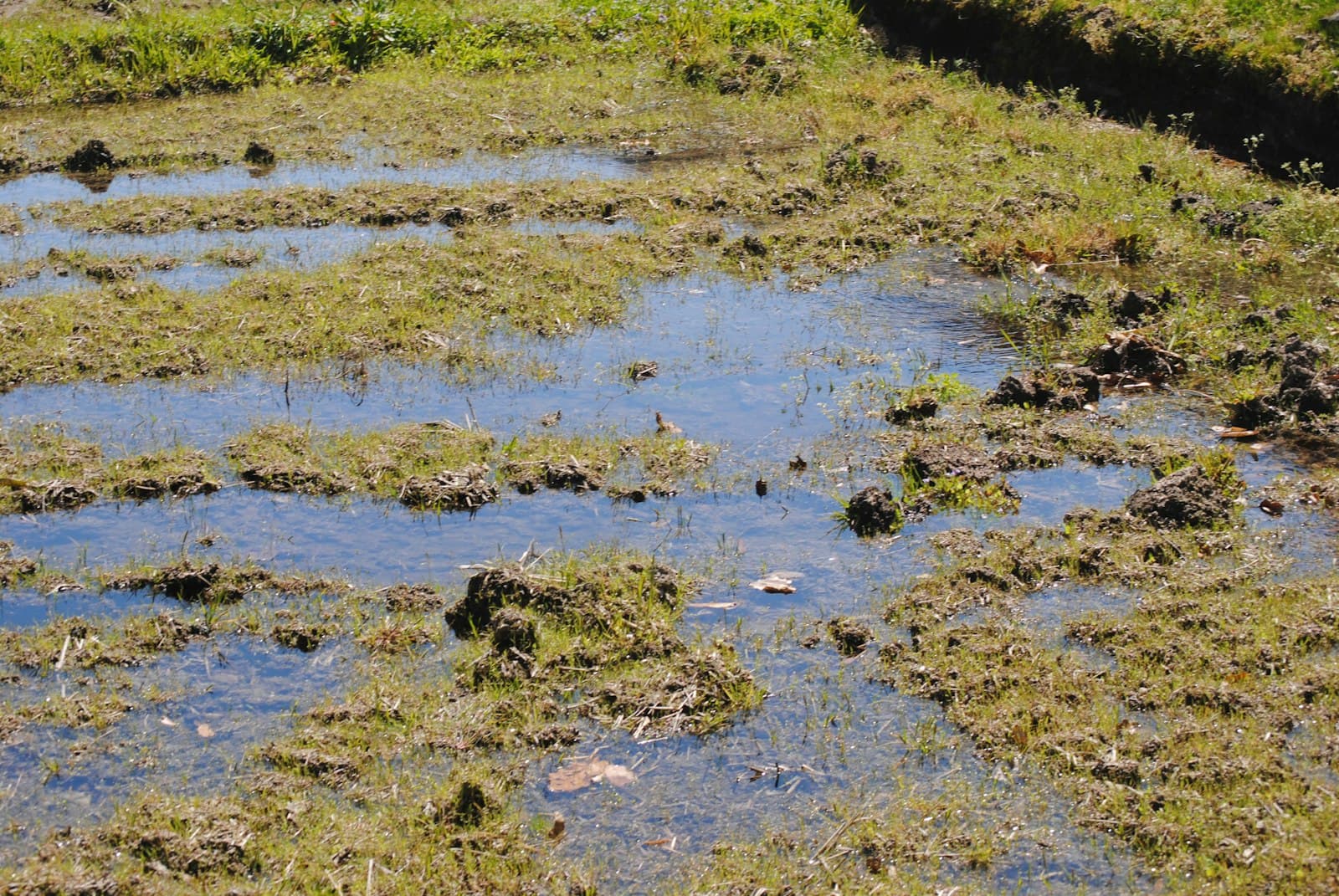
A crop rarely fails outright in a single storm. What actually happens is a chain reaction — waterlogged roots lose oxygen within a day or two, weakened plants become an easy target for fungal disease in the following humid week, and by the time visible damage shows up, the window to prevent most of it has already closed.
Hour one: get the water moving
Standing water suffocates roots by cutting off oxygen almost immediately, so the single highest-leverage action after a heavy downpour is clearing or opening drainage channels to let excess water leave the field within the first 24–48 hours. This is exactly why drainage planning before the monsoon pays off — a field with channels already cut sheds water in hours; one without them can stay flooded for days.
Watch for lodging, and know when it was set up earlier
Wind and rain together can flatten a standing cereal crop — lodging — and the risk is often set weeks before the storm, not during it. Crops carrying excess nitrogen tend to grow softer, taller stems that lodge more easily, which is one more reason correctly timed, not excessive, nitrogen application matters going into a monsoon-heavy season.
Fungal disease follows wet weather closely, not eventually
Warm, humid, wet conditions are close to ideal for fungal pathogens, and disease pressure can build within days of a heavy wet spell. Scout the field once conditions dry out enough to walk it, and if disease symptoms are present or humidity stays high, spray then — but only once the foliage has dried, since spraying onto wet leaves mostly washes the fungicide off before it can act.
Pest pressure shifts, it does not simply drop
Heavy rain knocks down some pest populations, but slugs, snails and certain soil-borne pests thrive in the same wet conditions that stress the crop — a field recovering from waterlogging is not automatically pest-free, and it is worth checking rather than assuming the rain did the work.
Recovery: drain first, feed second
Once the field has drained, a light foliar nutrient application can help a stressed crop recover faster than waiting for the next scheduled feed — but this comes after drainage, not instead of it. Gaps left by plants that did not survive are worth assessing for re-sowing quickly, since the growing season lost to a late decision does not come back.
The one sentence version
The crop that survives heavy rain is usually not the one sprayed the fastest — it is the one drained the fastest, because waterlogging damage starts within 48 hours and almost everything else downstream, from disease to recovery, follows from how quickly that water actually left the field.
Frequently asked questions
How long can a crop survive waterlogging before it is seriously damaged?
It varies by crop and growth stage, but real damage often starts within 24–48 hours because waterlogged soil cuts off oxygen to the roots almost immediately. This is why fast drainage in the first two days matters more than almost any other single response to heavy rain.
Should I spray fungicide immediately after heavy rain?
Not while it is still raining or the foliage is soaked — the spray will largely wash off before it can work. Wait for a dry window, then spray if disease symptoms or high humidity conditions warrant it, rather than spraying reflexively into wet leaves.

Written by
Vaibhav Dhama
Founder, Technical Kisan
Vaibhav Dhama is the founder of Technical Kisan. He writes from Baghpat, Uttar Pradesh, and builds each guide on ICAR and state agricultural university guidance, official government scheme notifications, and live mandi-price data.
- Writes from Baghpat, Uttar Pradesh
- Software developer (BTech, 2021)
- Not a trained agronomist — confirm with your KVK
Discussion is coming soon
We are building a comments section where you can ask a question about this guide and see what other farmers in your district are doing.
For now, write to us at [email protected] — we read every message.