Organic Weed Management Without Herbicide
No herbicide is allowed in organic farming, so weeds must be beaten by method, not chemistry: mulch, stale seedbeds, timely inter-culture.
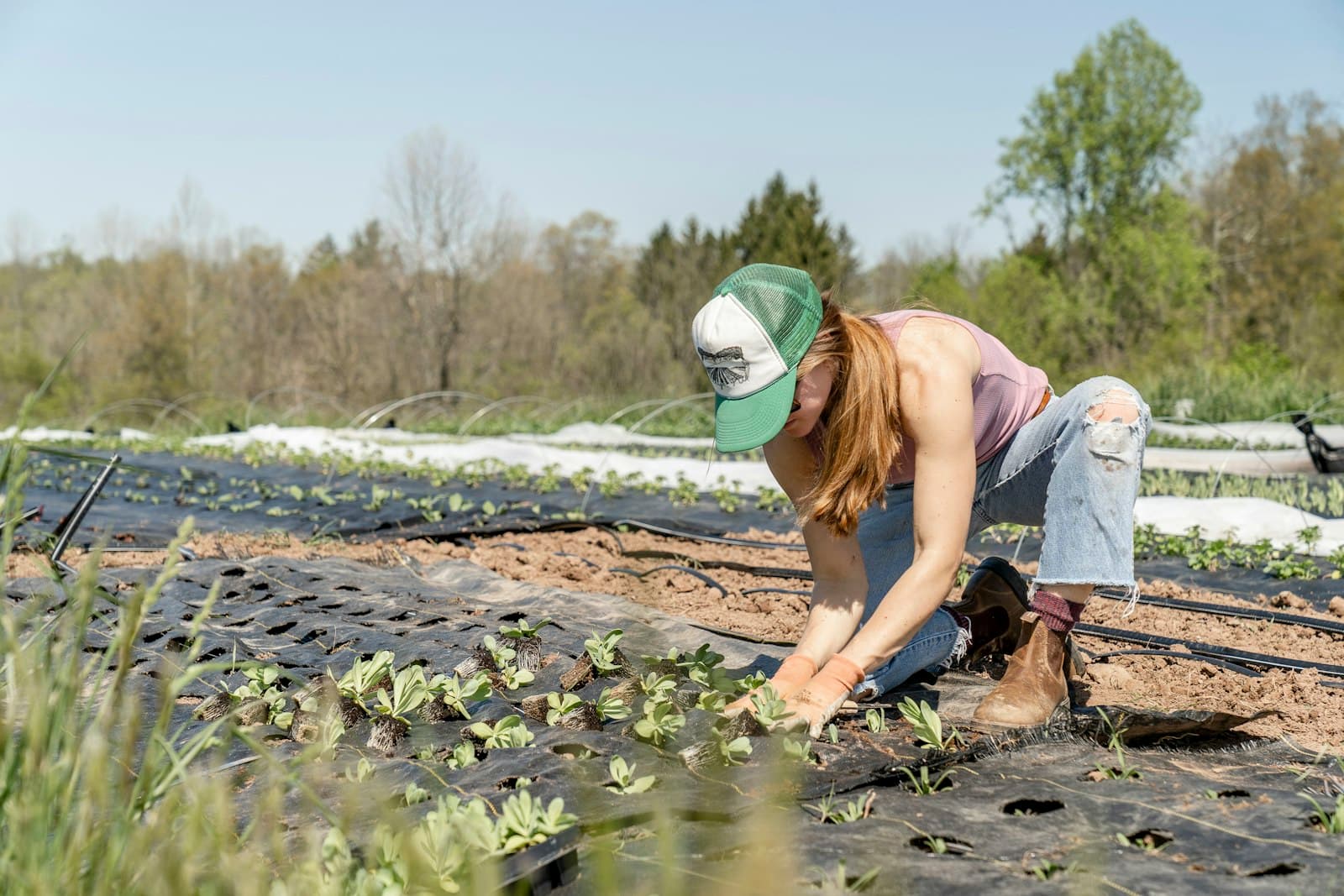
Weeds are the single biggest reason farmers hesitate to go organic. With no herbicide allowed, the fear is a field lost to weeds and a season of back-breaking hand-pulling. That fear is real if you treat weeding as one job done with one tool — and it mostly disappears once you treat it as a stack of methods, each taking a share of the pressure so no single one has to carry it all.
The goal is not a spotless field. It is keeping weeds below the level that competes with the crop, during the window when the crop is vulnerable.
The critical weed-free period
The most important idea in organic weed control: a crop only needs to be kept clean during its critical weed-free period — roughly the first third of its life, when it is small and easily out-competed. Keep the field clean through that window and the crop's own canopy shades out most later weeds for you.
That reframes the whole job. You are not fighting weeds all season; you are winning one early window. Concentrate labour there.
The stack
1. Stale seedbed — empty the seed bank first
Prepare the field, irrigate, and wait 1–2 weeks for the first flush of weeds to germinate. Then kill them with a shallow harrowing or hoeing — shallow, so you don't bring up fresh seed — before sowing your crop. The crop then germinates into a field whose top layer of weed seed has already been spent. This one step, done before sowing, cuts early weeding dramatically — though under reduced or zero tillage, where the soil is not disturbed the same way, the weed dynamics shift; see zero-till wheat sowing with the Happy Seeder for how that changes the picture.
2. Mulch — smother the rest
A thick organic mulch — paddy straw, crop residue, dry leaves, sugarcane trash — blocks the light weed seeds need to sprout. What little comes through pulls out of the loose, moist soil under mulch with almost no effort. Mulch also holds moisture and feeds the soil as it rots. For widely-spaced vegetables and orchards it is the highest-return weed tool there is.
3. Inter-culture — weed on time, mechanically
For row crops, timely mechanical weeding with a wheel hoe, cono-weeder or bullock/tractor-drawn cultivator between rows is fast and cheap. The key word is timely: two well-timed passes in the critical period beat five late ones. A cono-weeder in transplanted rice does double duty, weeding and stirring the soil.
4. Spacing and cover — shade the ground
Weeds need light. A crop at the right, slightly closer spacing closes its canopy sooner and shades the ground before weeds establish. Intercrops and cover crops do the same by covering bare soil the main crop leaves open.
5. Rotation — break the cycle
Weeds specialise. A grassy weed like Phalaris minor that thrives in continuous wheat, or one that builds up in continuous rice, struggles when a legume or a different-season crop breaks the pattern. A varied rotation stops any one weed from building up, and a green manure ploughed in before the main crop smothers a flush while it grows.
Putting it together
For a typical organic vegetable or row crop:
- Stale seedbed before sowing to spend the first weed flush.
- Mulch the beds or rows immediately after sowing/transplanting.
- One or two timely inter-culture passes through the critical period.
- Let the crop canopy and rotation handle the rest.
No single step here replaces a herbicide. Together they keep an organic field as clean as it needs to be — and unlike a herbicide, every one of them also builds soil, saves moisture or breaks a pest cycle while doing it. That is the quiet advantage: organic weed control is never only weed control.
Frequently asked questions
How are weeds controlled in organic farming without herbicide?
By stacking methods rather than relying on one: mulching to smother weeds, a stale seedbed to kill the first flush before sowing, timely hand and mechanical weeding at the crop’s critical stages, close spacing and cover crops to shade the ground, and rotation to break weed cycles.
What is a stale seedbed?
You prepare the field, irrigate, and wait 1–2 weeks for the first flush of weeds to germinate — then destroy them with a shallow harrowing or hoeing before sowing the crop. This empties the top layer of the soil’s weed-seed bank so the crop germinates into a much cleaner field.
Does mulching really control weeds?
Yes — a thick organic mulch of straw, crop residue or dry leaves blocks the light weed seeds need to germinate, and the few that come through pull out easily. Mulch also conserves moisture and adds organic matter as it breaks down, so it does three jobs at once.
When is weeding most important in a crop?
During the crop’s critical weed-free period — usually the first third of its life, when it is small and easily out-competed. Keeping the field clean through that window matters far more than late-season weeding, when the crop canopy already shades most weeds out.

Written by
Vaibhav Dhama
Founder, Technical Kisan
Vaibhav Dhama is the founder of Technical Kisan. He writes from Baghpat, Uttar Pradesh, and builds each guide on ICAR and state agricultural university guidance, official government scheme notifications, and live mandi-price data.
- Writes from Baghpat, Uttar Pradesh
- Software developer (BTech, 2021)
- Not a trained agronomist — confirm with your KVK
Discussion is coming soon
We are building a comments section where you can ask a question about this guide and see what other farmers in your district are doing.
For now, write to us at [email protected] — we read every message.