Organic Tomato: No Pesticide, No Problem
Tomato is high-value and heavily attacked by borer and leaf curl. Organically, it leans on staking, traps, neem and biological agents.
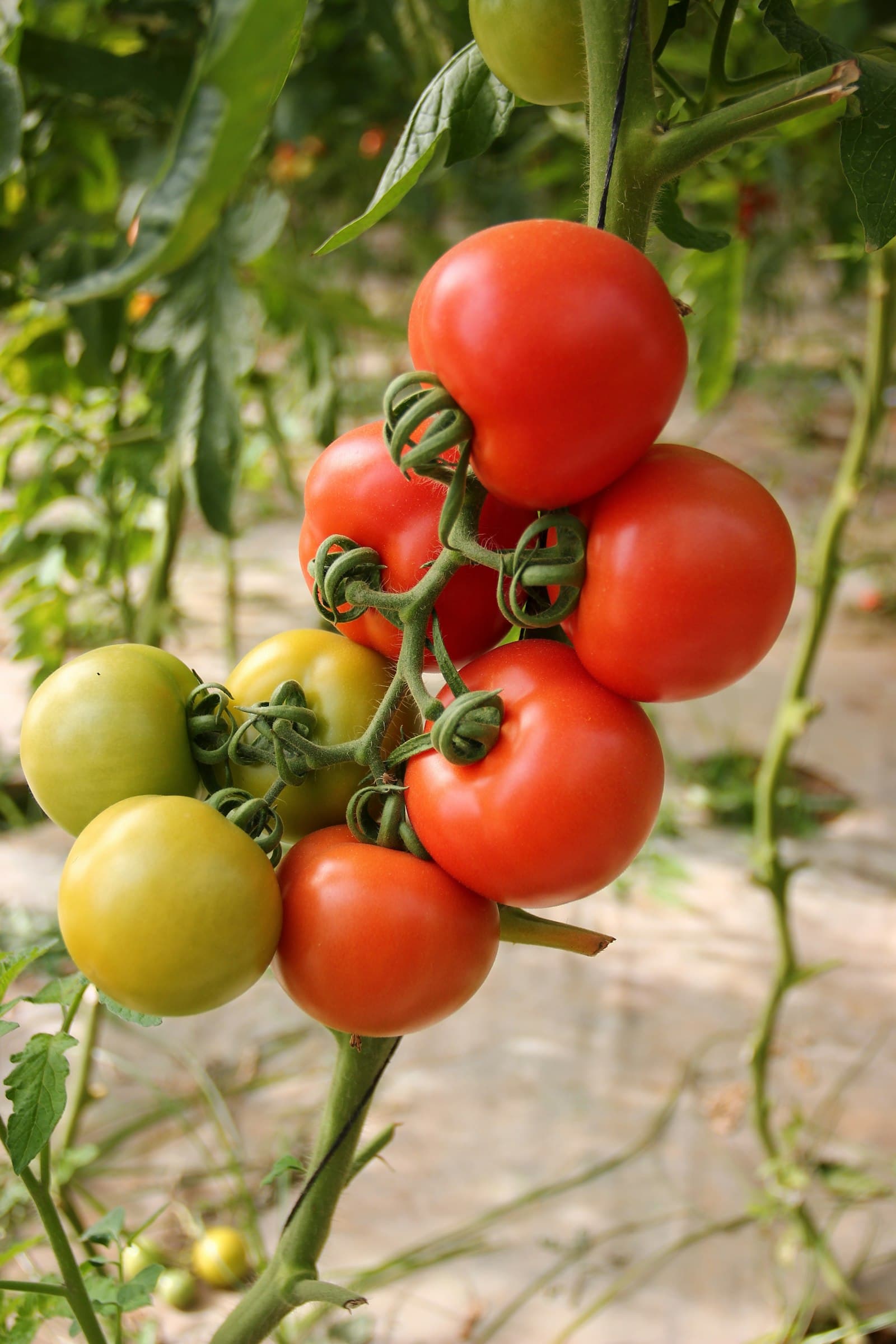
Tomato is the crop that most tests an organic grower's nerve. It is high-value and it is attacked from every direction — fruit borer eating into the fruit, whitefly spreading leaf curl virus, early and late blight in the foliage, and the country's most volatile market waiting at the end. Conventional growers meet all this with a heavy spray calendar. Organically, you replace that calendar with a system: physical management, monitoring, and biological and botanical controls stacked so no single pest gets away.
It can be done, and done well — organic tomato carries a clear premium. For the base agronomy see the tomato crop guide; this page is about carrying the pest and disease load without chemistry.
Start with staking, drip and mulch
Three physical practices do more for organic tomato than any spray:
- Staking lifts the canopy and fruit off the soil. A drier, more open canopy is far less prone to blight and fruit rot; the fruit stays clean; and — crucially for organics — you can actually see pests to scout and hand-pick them.
- Drip keeps water off the foliage (wet leaves invite blight) and delivers it to the root.
- Mulch suppresses weeds, holds moisture and stops soil splashing disease onto lower leaves.
Together they lift marketable yield by a third or more and cut the disease pressure before any pest tool is reached for. Do not treat them as optional.
Feeding a long-fruiting crop
Tomato fruits over many weeks, so it needs steady feeding rather than one hit:
- Green manure or legume before the crop.
- Basal: 6–8 tonnes per acre of well-rotted FYM or compost, with bone meal or rock phosphate for phosphorus.
- Through the season: regular jeevamrit or panchagavya foliar sprays across flowering and fruiting to keep vigour and fruit set up.
- Inoculation: Azotobacter, PSB and soil Trichoderma at planting.
Fruit borer: the borer stack
Helicoverpa fruit borer is the headline pest, and the organic answer is a stack, deployed early:
- Pheromone traps to monitor moth flights and mass-trap adults — they also tell you when to time the next step.
- Trichogramma egg-parasitoid releases to destroy borer eggs before they hatch.
- HaNPV (a borer-specific virus) or Bt sprays timed to young larvae, which are far more susceptible than grown ones.
- Neem sprays to repel egg-laying.
- Hand-picking of visible borers and damaged fruit — tedious, but on a small plot genuinely effective and it removes the next generation.
Timing beats volume: acting when traps show the first moth flight, and hitting larvae while young, is what makes the stack work.
Leaf curl virus: stop the whitefly
Tomato leaf curl virus is spread by whitefly and cannot be cured once a plant has it — so the whole effort goes into keeping whitefly off and removing sources:
- A leaf-curl-tolerant variety — the single most important choice, and free.
- Yellow sticky traps and neem to knock down whitefly.
- A tall barrier crop (maize, bajra) around the plot to intercept incoming whitefly.
- Prompt roguing — pull and remove infected plants early, before whitefly spread the virus from them to the rest.
Blight and other disease
Early and late blight are managed by the same logic as elsewhere in organics: an open, staked, drip-watered canopy that dries fast; wide spacing; Trichoderma and copper-based preventive sprays where the certification programme permits; and removing infected lower leaves promptly.
The payoff
Organic tomato is demanding — it rewards attention and punishes neglect faster than most crops. But it is high-value, the pest system genuinely works when run on time, and clean organic tomato earns a strong premium with the right buyer. Put the physical foundations in first — stake, drip, mulch, resistant variety — and the pest stack has far less to do. That is the order that makes organic tomato pay.
Frequently asked questions
How is fruit borer controlled in organic tomato?
With a stack: pheromone traps to monitor and mass-trap the moths, Trichogramma egg-parasitoid releases, an HaNPV bio-pesticide or Bt spray timed to young larvae, neem sprays, and hand-picking of visible borers and damaged fruit. No single one clears it; together they hold borer below damaging levels.
What controls leaf curl virus organically?
Leaf curl is spread by whitefly, so control targets the whitefly and the source: yellow sticky traps, neem sprays, a border of a tall barrier crop, prompt removal of infected plants, and above all a leaf-curl-tolerant variety. There is no cure for an infected plant — the whole effort is keeping whitefly off and pulling out early infections.
How is organic tomato fertilised?
A heavy basal of FYM or compost (6–8 tonnes per acre), a green manure or legume before the crop, bone meal or rock phosphate for phosphorus, and regular jeevamrit or panchagavya foliar sprays through flowering and fruiting. Steady feeding matters because tomato fruits over a long picking window.
Does staking matter for organic tomato?
Greatly. Staking lifts foliage and fruit off the ground, which dries the canopy and cuts fungal disease and fruit rot, keeps fruit clean, and makes scouting and hand-picking of pests far easier. Together with drip and mulch it is one of the biggest levers on marketable organic yield.

Written by
Vaibhav Dhama
Founder, Technical Kisan
Vaibhav Dhama is the founder of Technical Kisan. He writes from Baghpat, Uttar Pradesh, and builds each guide on ICAR and state agricultural university guidance, official government scheme notifications, and live mandi-price data.
- Writes from Baghpat, Uttar Pradesh
- Software developer (BTech, 2021)
- Not a trained agronomist — confirm with your KVK
Discussion is coming soon
We are building a comments section where you can ask a question about this guide and see what other farmers in your district are doing.
For now, write to us at [email protected] — we read every message.