
Skip to content
Technical Kisanखेती, तकनीक के साथ
IntercroppingMedium DifficultyLow InvestmentHigher Output

Intercropping — Complete Guide for Indian Farmers

Grow two crops together in fixed row ratios on the same land — usually a cereal or cotton with a legume — so you draw two harvests, two income streams and better light and nutrient use from one field.

Best for:
Arhar with soybean or cotton with a legume
6 min read
Updated:
3 August 2026
Compare Techniques
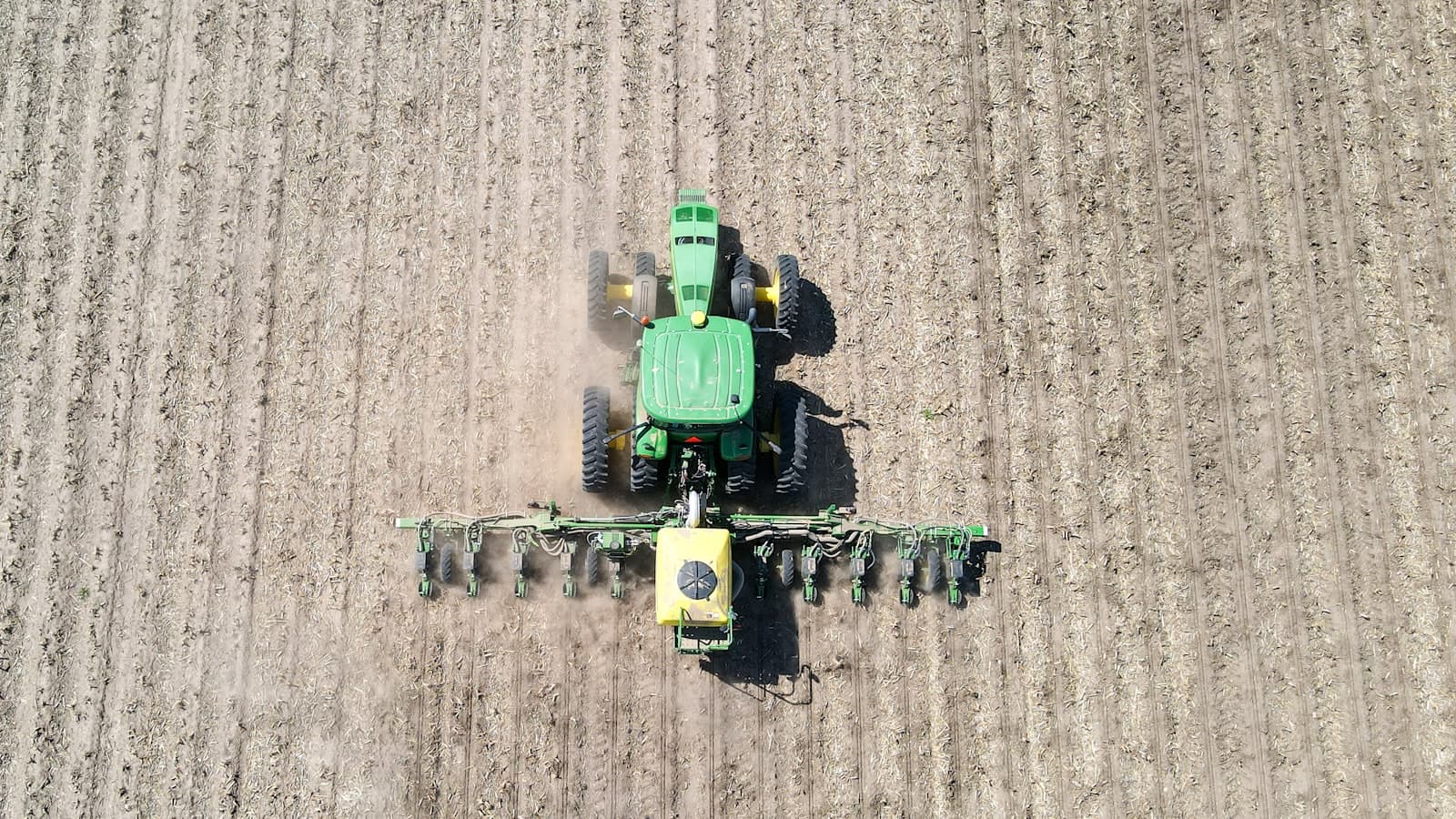
Long parallel rows of a young crop stretching towards the horizon

At a Glance

The quick decision panel — everything you need before reading a single paragraph further.

Difficulty
Medium — needs a planned row ratio
Investment
Low — extra seed only
Cost Savings
Shared land, water and labour cost
Yield Improvement
20–40% more output per acre
Water Saving
Better use of the same irrigation
Labour Saving
None — two crops need two harvests
Best Season
Kharif, at sowing
Suitable Crops
Arhar, soybean, cotton
Suitable States
Maharashtra, Karnataka, Andhra Pradesh
Equipment Required
None — standard sowing tools

Quick Benefits

What actually changes on your farm once this is in place.

  • Higher Yield

    Two complementary crops on the same land typically add 20–40% more combined output per acre.

  • Reduced Risk

    A price crash or crop failure in one crop is cushioned by the second crop's harvest.

  • Better Resource Utilization

    A tall and a short crop, or a deep and shallow rooter, share light and soil depth instead of competing for the same layer.

  • Lower Farming Cost

    Land preparation, irrigation infrastructure and often labour are shared across two crops instead of two separate fields.

  • Better Soil Health

    A legume component fixes nitrogen the companion crop draws on directly.

  • Sustainable Farming

    More total output from the same land, water and input base without expanding the cultivated area.

How It Works

The practice broken into the steps you will actually follow, in order.

  1. Choose a compatible crop pair

    Pick crops with different heights, root depths or durations — arhar and soybean, cotton and moong.

  2. Plan the row ratio

    A common pattern is 2 rows of the main crop to 1 row of the companion — the exact ratio depends on the pair.

  3. Stagger sowing where needed

    Sow both together if durations match, or offset by a few days if one crop establishes faster.

  4. Manage inputs for both crops

    Fertiliser and pest management need to suit both crops, not just the main one.

  5. Harvest sequentially

    The shorter-duration crop is usually harvested first, leaving the main crop standing.

Should You Use This Technique?

An honest read before you spend a rupee or an hour on it.

Recommended If

  • You want extra income from the same land without expanding acreage
  • You grow arhar, soybean or cotton and want a complementary second crop
  • You want a cushion against a single-crop price crash
  • You have the management capacity to handle two crops' input needs
  • Your land is on the smaller side and every acre needs to earn more

Not Recommended If

  • The two crops you are considering compete heavily for the same light or nutrient niche
  • You need full mechanisation for a single, uniform crop stand
  • You are under a monocrop contract-farming agreement
  • Your holding is too small to spare rows for a companion crop
  • You cannot manage two different harvest schedules and input needs

Cost & Profit Analysis

This technique against conventional practice, head to head, per acre.

  • Seed (both crops)

    Conventional total
    ₹3,000/ha
    This technique, total
    ₹3,800/ha
  • Land preparation

    Conventional total
    ₹3,500/ha
    This technique, total
    ₹3,500/ha
  • Fertiliser

    Conventional total
    ₹5,500/ha
    This technique, total
    ₹6,200/ha

Conventional total

₹12,000/ha (single crop)

This technique, total

₹13,500/ha (two crops)

Input cost rises modestly for the second crop, but combined revenue from two harvests typically runs 20–40% ahead of a single-crop field on the same land.

Expected Results

What farmers already using this technique typically measure.

  • +20–40% per acre

    Combined Output

  • 2 harvests, 2 markets

    Income Streams

  • From the legume component

    Nitrogen Contribution

  • One crop buffers a price crash in the other

    Risk Cushion

Suitable Crops

Where this technique earns its keep the fastest.

Suitable States

Where this is already common field practice, not a pilot.

  • Jammu and Kashmir
  • Himachal Pradesh
  • Punjab
  • Uttarakhand
  • Haryana
  • Delhi
  • Uttar Pradesh
  • Rajasthan
  • Bihar
  • Jharkhand
  • West Bengal
  • Sikkim
  • Assam
  • Arunachal Pradesh
  • Meghalaya
  • Nagaland
  • Manipur
  • Mizoram
  • Tripura
  • Gujarat
  • Madhya Pradesh
  • Chhattisgarh
  • Maharashtra
  • Odisha
  • Goa
  • Telangana
  • Andhra Pradesh
  • Karnataka
  • Kerala
  • Tamil Nadu
  • Puducherry
  • Ladakh
  • Chandigarh

Commonly practised here

Common Mistakes

What goes wrong most often, and the fix, before it costs you a season.

  • Pairing two crops that compete for the same niche

    Why it happens
    Both crops are chosen for their individual profitability without checking whether they compete for light or root depth.
    Possible impact
    Neither crop yields as well as it would alone, and the whole point of intercropping is lost.
    Fix
    Pair a tall crop with a short one, or a deep-rooted crop with a shallow-rooted one, so they use different layers of the field.
  • Using the wrong row ratio

    Why it happens
    A ratio is copied from a different soil or rainfall zone without local adjustment.
    Possible impact
    The companion crop either gets choked out by the main crop or crowds it too much.
    Fix
    Check the recommended row ratio for your specific crop pair with your nearest KVK before sowing.
  • Applying only the main crop's fertiliser dose

    Why it happens
    Farmers plan the fertiliser schedule as if only the main crop is in the field.
    Possible impact
    The companion crop is under-fed and underperforms, undercutting the combined yield gain.
    Fix
    Budget a fertiliser dose for both crops, even if the companion's share is smaller.
  • Harvesting the companion crop too late

    Why it happens
    Attention stays on the main crop, and the companion's harvest window is missed.
    Possible impact
    A late-harvested companion crop competes with the main crop for light and moisture right when the main crop needs them most.
    Fix
    Track the companion crop's maturity date separately and harvest it on time even while the main crop is still standing.

Seasonal Timeline

Where this technique sits in the crop cycle, start to harvest.

  1. Land Preparation

    Standard preparation for the field, planned for two crops from the start.

  2. Sowing

    Both crops go in together (or staggered by a few days) in the planned row ratio.

    This technique matters most here

  3. Vegetative Stage

    Both crops are managed together here — this is where the row-ratio decision either pays off or does not.

  4. Flowering

    The companion crop typically flowers and matures well before the main crop.

  5. Harvest

    The companion crop is harvested first, then the main crop, giving two separate harvest events.

Problems & Solutions

The field issues that come up most, and how to stay ahead of them.

One crop dominates and suppresses the other
Cause
A row ratio or spacing that favours one crop's light access over the other's.
Fix
Widen the row spacing of the suppressed crop next season, or switch to a ratio proven for that pair locally.
Prevention
Confirm the row ratio with your KVK before sowing rather than estimating it.
Pest control sprayed for one crop harms the other
Cause
A spray suited to the main crop's pest is applied without checking its effect on the companion crop.
Fix
Check label compatibility for both crops before spraying, or spot-treat only the affected rows.
Prevention
Choose crop pairs with broadly compatible pest-management needs at the planning stage.
Harvest of one crop damages the standing other
Cause
Manual or mechanical harvesting of the companion crop tramples or disturbs the main crop's rows.
Fix
Harvest the companion crop by hand in tight intercropped rows rather than machine harvesting between the main crop.
Prevention
Plan row spacing wide enough from the start to allow safe access for the companion crop's harvest.
Uneven soil moisture use between the two crops
Cause
The two crops have different water demand curves, and irrigation is scheduled for only one of them.
Fix
Irrigate on the more water-sensitive crop's schedule and monitor the other for stress.
Prevention
Pair crops with reasonably similar water needs to avoid this mismatch altogether.

Economics

The numbers that decide whether this pays for itself, and how soon.

  • Initial Investment

    ₹800–₹1,500/ha extra seed cost for the companion crop

  • Additional Income

    20–40% more combined revenue per acre

  • Estimated Savings

    Shared land preparation and irrigation infrastructure cost

  • ROI

    30–60% over a single-crop field on the same land

  • Payback Period

    Same season

Government Support

The schemes that fund the machinery and inputs behind this technique.

Related Farming Tools

Run the real numbers on your own field with these calculators.

Frequently Asked Questions

What is intercropping?

Intercropping grows two crops together on the same land in a planned row ratio, at the same time — commonly a cereal or cotton with a legume companion — instead of one crop occupying the whole field.

How much extra income does intercropping bring?

Combined output from two complementary crops typically runs 20–40% ahead of what a single crop would yield on the same land, though each individual crop's yield is usually somewhat lower than it would be grown alone.

Which crops are commonly intercropped in India?

Arhar with soybean, cotton with moong or urad, and sugarcane with a short-duration legume are among the most common pairs, chosen because they differ in height, root depth or duration.

What row ratio should I use for intercropping?

It depends on the specific crop pair — a common pattern is 2 rows of the main crop to 1 row of the companion, but your nearest Krishi Vigyan Kendra can confirm the ratio proven for your soil and crops.

Does intercropping need special machinery?

No — standard sowing tools handle it, since it is mainly a planning and spacing decision, not a mechanised process.

Is intercropping the same as mixed cropping?

No. Intercropping sows two crops in a planned, fixed row ratio for separate management and harvest. Mixed cropping scatters several crop seeds together without row structure, mainly as insurance against total crop failure.

Can intercropping reduce pest problems?

Often yes — a mixed crop stand is a less uniform target for a pest specific to one crop, and some companion crops (like legumes) attract beneficial insects that help both crops.

How do I manage fertiliser for two intercropped crops?

Budget a dose that covers both crops rather than only the main one — the companion crop, even in fewer rows, still draws nutrients and underperforms badly if it is left out of the fertiliser plan.

Still deciding?

The FAQs above cover the common questions. For a choice tuned to your exact soil, crop and holding size, your nearest Krishi Vigyan Kendra is the authoritative next step.