



 Farming Techniques
Zero Tillage: Sow Wheat Without Burning
A zero-till drill saves Rs 3,000/hectare, 50 litres of diesel and lets you sow 7-10 days earlier. The one thing it demands: stop ploughing.
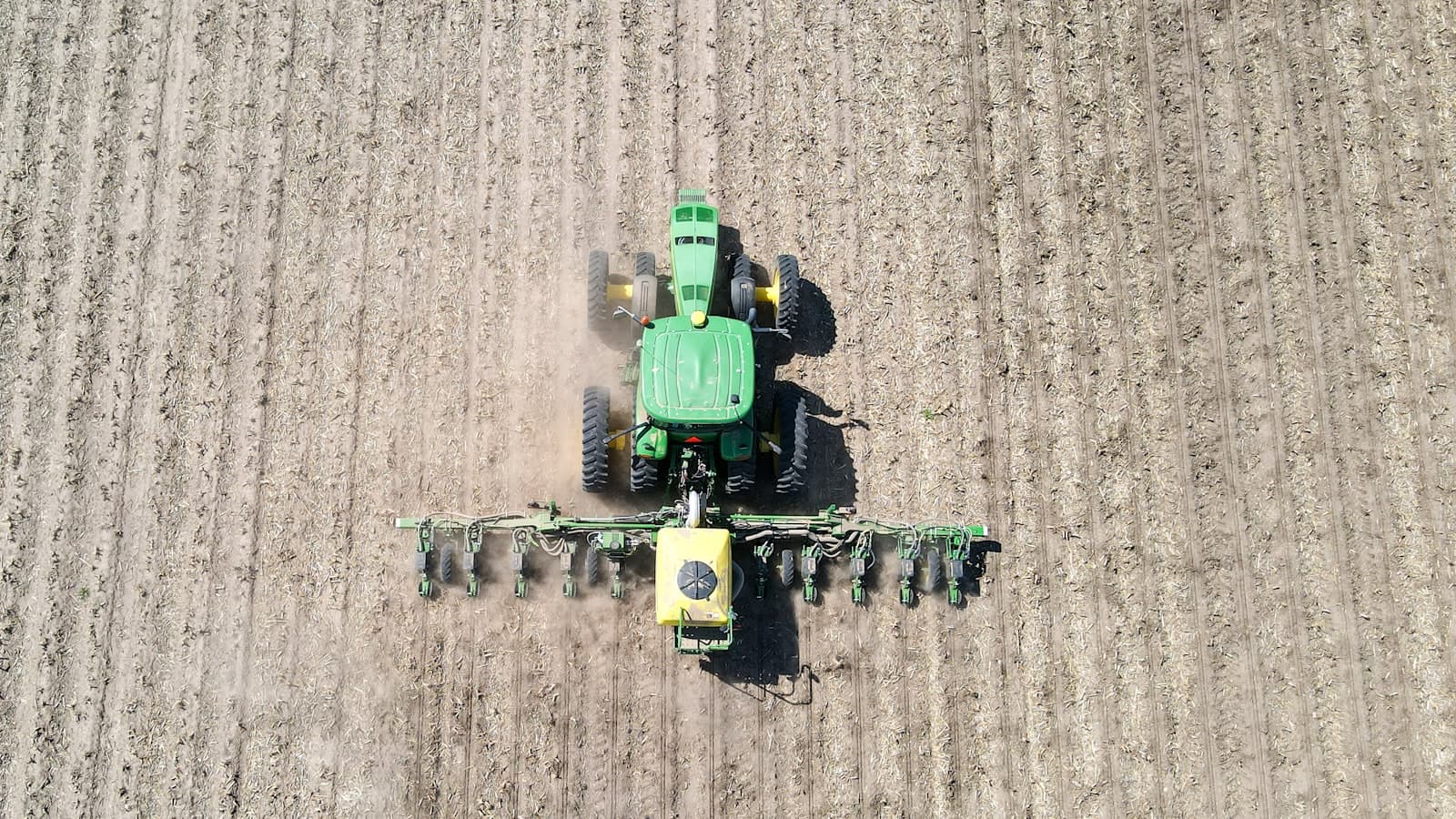
Vaibhav Dhama3 min readGPS-guided auto-steer holds a dead-straight, non-overlapping pass on every tillage, sowing and spray run — removing the overlap and skip a human driver inevitably leaves on a long day in the field.

The quick decision panel — everything you need before reading a single paragraph further.
What actually changes on your farm once this is in place.
Removing pass-to-pass overlap typically cuts seed, fuel and spray use 8–10%.
Every input goes exactly where it is needed once, not twice on an overlapped strip.
A dead-straight pass is the shortest path across the field, cutting diesel per hectare covered.
Removes operator fatigue as a source of drift and error on long, repetitive passes.
Enables night or low-visibility operation with the same accuracy as daylight passes.
Complements variable-rate and precision-farming technology, which depends on exact pass positioning to work.
The practice broken into the steps you will actually follow, in order.
A GPS receiver, steering controller and display are installed on a compatible tractor.
The field is mapped once, and the ideal pass pattern (straight, curved or pivot) is set for it.
The system holds the tractor on the set line automatically — the operator manages implements and headland turns.
The display shows real-time coverage, flagging any gap or double-covered strip as it happens.
Saved pass lines carry over to the next season's tillage, sowing and spray runs on the same field.
An honest read before you spend a rupee or an hour on it.
This technique against conventional practice, head to head, per acre.
GPS kit (amortised over 5 years)
Seed
Diesel (per pass set)
Spray input
Conventional total
₹13,200/ha
This technique, total
₹13,700/ha
The 8–10% saving on seed, diesel and spray from removing overlap roughly offsets the amortised kit cost on a large holding — the real payoff builds with the number of passes made each season.
What farmers already using this technique typically measure.
On every pass
Overlap Removed
8–10%
Seed, Fuel & Spray Saved
Markedly reduced
Operator Fatigue
Consistent day or night
Pass Accuracy
Where this technique earns its keep the fastest.
Where this is already common field practice, not a pilot.
Commonly practised here
What you need to run this — most is available on hire through a Custom Hiring Centre.
The GPS receiver, steering controller and display that hold the tractor on a set line automatically.
Approx. cost: ₹1.5–3 lakh (retrofit) or built into some new tractor models
Must be compatible with the guidance kit's steering-control retrofit.
What goes wrong most often, and the fix, before it costs you a season.
Where this technique sits in the crop cycle, start to harvest.
Auto-steer holds a straight, non-overlapping tillage pass across the field.
This technique matters most here
The same saved pass lines guide the seed drill for consistent row spacing without overlap.
Inter-culture and spray passes reuse the same lines, keeping wheel traffic consistent between rows.
Precise spray passes at this stage avoid both skipped and double-sprayed strips during a high-value application.
Harvester passes can also follow the saved lines, reducing grain loss at pass boundaries.
The field issues that come up most, and how to stay ahead of them.
The numbers that decide whether this pays for itself, and how soon.
Initial Investment
₹1.5–3 lakh for the GPS guidance kit
Additional Income
Indirect — via better input placement and reduced overlap loss
Estimated Savings
8–10% on seed, diesel and spray input across all passes
ROI
15–25% per season on a large, high-pass-count holding
Payback Period
3–5 seasons on 20+ ha with frequent passes
The schemes that fund the machinery and inputs behind this technique.
Run the real numbers on your own field with these calculators.
Confirm your tractor's specification before checking GPS-kit compatibility.
Read guideSee the seed saving overlap removal brings at your actual sowing rate.
Read guideGPS-guided passes vs manual steering, side by side.
Read guideWeigh the guidance-kit investment against the input savings over several seasons.
Read guideLong-form reading that goes deeper on this technique and what sits beside it.
GPS-based farming uses a GPS-guided auto-steer system fitted to a tractor to hold a dead-straight, non-overlapping pass on every tillage, sowing and spray run, removing the overlap and skip that a human driver inevitably leaves over a long day in the field.
Typically 8–10% less seed, fuel and spray input, since inputs are applied exactly once per strip instead of overlapping on adjoining passes — the saving accrues across every pass made in the season.
It suits large, mechanised holdings with multiple daily passes best — on a small plot with only one or two passes a season, the overlap savings are too small to justify the kit cost.
The tractor needs to be compatible with the guidance kit's steering-control retrofit — check compatibility with the dealer against your exact model before buying, since not every tractor supports every kit.
The yield effect is indirect — it comes from more precise seed placement and input application rather than a direct biological effect, and pairs well with variable-rate and precision-farming technology that depends on exact positioning.
Yes — this is one of its practical advantages, since the system holds the same straight-line accuracy regardless of visibility, letting large operations extend their working hours during a tight sowing or spray window.
Modern systems typically hold accuracy within a few centimetres pass to pass, precise enough to eliminate the overlap and skip a human operator would leave on a long, repetitive run.
Yes — GPS guidance is often the foundation precision farming builds on, since variable-rate seed, fertiliser and water application all depend on knowing exactly where the machine is in the field at every moment.
The FAQs above cover the common questions. For a choice tuned to your exact soil, crop and holding size, your nearest Krishi Vigyan Kendra is the authoritative next step.