बायोफ्लॉक के लिए बेहतरीन मछली प्रजातियां
बायोफ्लॉक टैंक के कचरे को चारे में बदलकर उसी जगह में 3-5 गुना मछली पालता है - पर सिर्फ उन्हीं प्रजातियों के लिए जो घनी, सक्रिय जल में पनपें।
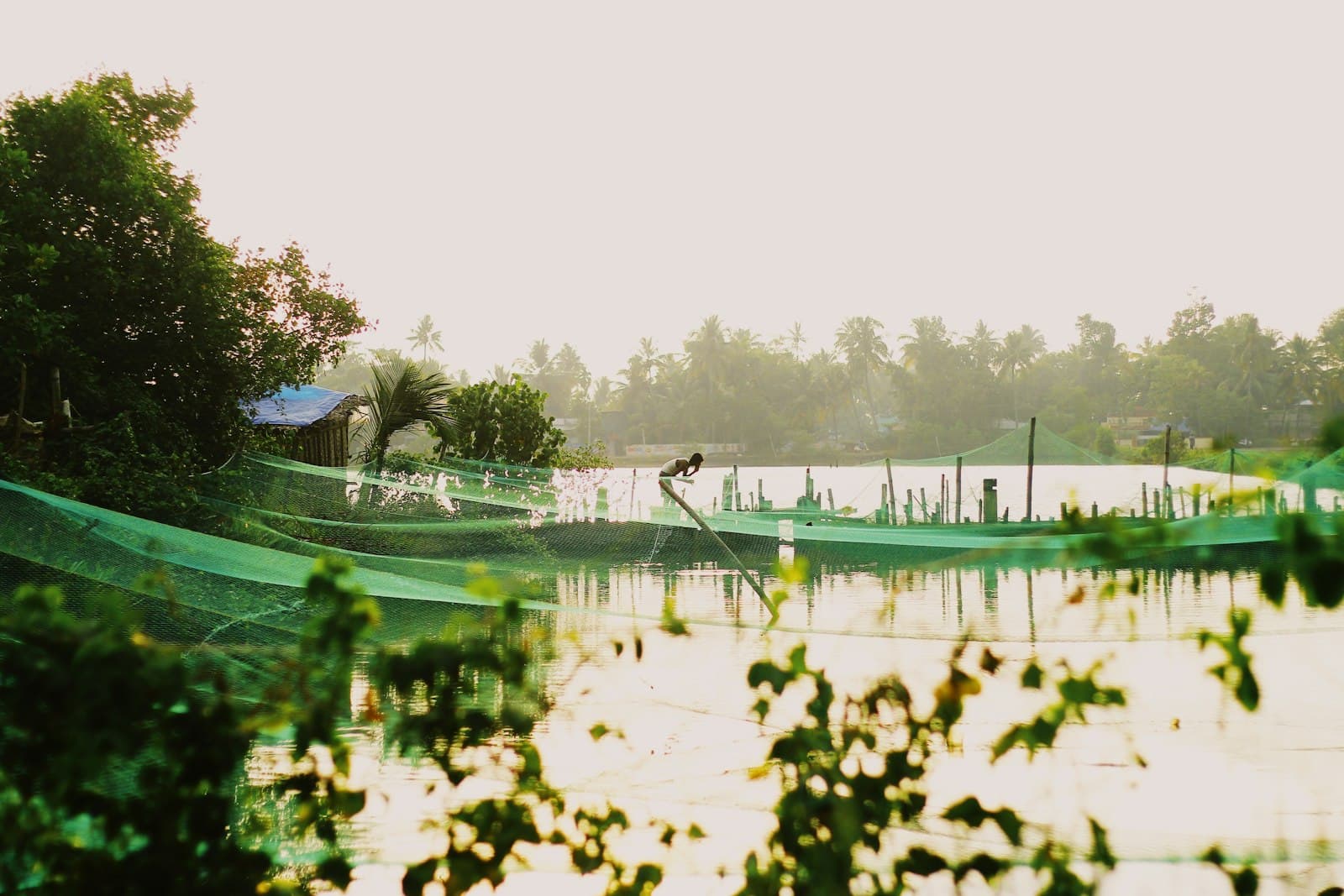
Biofloc's pitch is straightforward: three to five times the fish in the same footprint as an earthen pond, by turning the tank's own waste into feed. Whether that pitch pays off depends heavily on which species goes into the tank — see the fisheries topic page for the wider comparison against pond farming.
Why species choice matters more in biofloc than in a pond
An earthen pond's large water volume buffers a lot of biological variation — a species that would struggle with crowding or fluctuating ammonia in a small tank does fine spread across an acre of water. Biofloc removes that buffer: fish are packed at 3–5 per square foot against roughly 1 in a pond, and the tank's chemistry shifts constantly as the floc culture works. Species that cannot tolerate crowding, handling and variable water quality simply do not do well in the system, regardless of how good the floc management is.
Species that work well in biofloc
- Tilapia — the default choice worldwide, and increasingly in India. It tolerates high density, fluctuating oxygen and ammonia levels, and grows fast on a floc-supplemented diet, which is exactly the profile biofloc rewards.
- Pangasius — commonly raised in Indian biofloc units, similarly tolerant of crowding and fast-growing.
- Vannamei shrimp — biofloc is widely used for shrimp specifically because the system's water-quality control suits shrimp's greater sensitivity to ammonia spikes better than an open pond does, at the density shrimp farming requires to be profitable.
Species better left in a pond
Native carp — rohu and catla, the standard 8–10 month, 1–1.2 kg pond fish — are less commonly biofloc-raised. Their biology suits the lower-density, larger-water-body environment of an earthen pond better, and most of the economic case for switching them to biofloc doesn't hold up against the added equipment cost and fragility.
The trade-off biofloc doesn't advertise
Higher density cuts both ways. A biofloc tank's fish depend entirely on continuous aeration — a power failure that would be a minor inconvenience in a pond can crash oxygen levels and kill an entire tank within hours in biofloc. Budget for backup power (generator or inverter) as a non-negotiable line item, not an optional extra, before counting on biofloc's higher yield per acre.
Financing a unit
A biofloc unit or pond both qualify for PMMSY's capital subsidy — 40% of project cost for general beneficiaries, 60% for SC/ST and women beneficiaries — applied for through your District or State Fisheries Department with a project report. A fishery-pond preset is also built into the Loan EMI Calculator for working out the loan side of the investment.
Frequently asked questions
बायोफ्लॉक फार्मिंग क्या है?
एक उच्च-घनत्व मछली पालन विधि, जो वातन व कार्बन स्रोत (जैसे शीरा) से टैंक के पानी में लाभदायक बैक्टीरिया उगाती है, मछली के अपने अमोनिया अपशिष्ट को प्रोटीन-भरपूर "फ्लॉक" में बदलकर जिसे मछली फिर खाती है — चारा लागत घटाते हुए मिट्टी तालाब से कहीं ज़्यादा घनत्व की अनुमति देती है, आम तौर पर 3–5 मछली प्रति वर्ग फ़ुट, तालाब में लगभग 1 के मुक़ाबले।
बायोफ्लॉक के लिए कौन सी मछली प्रजातियाँ सबसे उपयुक्त हैं?
ऐसी प्रजातियाँ जो भीड़ और उतार-चढ़ाव वाली पानी गुणवत्ता अच्छी तरह सहें — तिलापिया इसी वजह से दुनिया भर में सबसे ज़्यादा इस्तेमाल होती है, और भारत में पंगेसियस व वन्नामेई झींगा भी आम तौर पर बायोफ्लॉक प्रणाली में पाले जाते हैं। देसी कार्प (रोहू, कतला) कम आम तौर पर बायोफ्लॉक में पाली जाती हैं और आमतौर पर मिट्टी तालाब में ही रहती हैं, जहाँ उनका जीव-विज्ञान कम-घनत्व, बड़े जल-निकाय प्रणाली के लिए बेहतर उपयुक्त है।
क्या बायोफ्लॉक तालाब मछली पालन से ज़्यादा जोखिम भरा है?
हाँ, एक ख़ास मायने में — बायोफ्लॉक के उच्च घनत्व का मतलब है कि एक उपकरण विफलता (जैसे वातन रोकने वाली बिजली कटौती) घंटों में ऑक्सीजन स्तर गिराकर पूरा टैंक मार सकती है, ऐसी विफलता जिससे मिट्टी तालाब का कहीं कम घनत्व व बड़ा जल आयतन बचाव करता है। बायोफ्लॉक उस नाज़ुकता के बदले प्रति इकाई क्षेत्र ज़्यादा उत्पादन देता है; बैकअप बिजली स्रोत वैकल्पिक नहीं है।

लेखक
Vaibhav Dhama
संस्थापक, टेक्निकल किसान
वैभव धामा टेक्निकल किसान के संस्थापक हैं। वे बागपत, उत्तर प्रदेश से लिखते हैं — आईसीएआर और राज्य कृषि विश्वविद्यालयों की सलाह, सरकारी योजना अधिसूचनाओं और लाइव मंडी भाव के आधार पर।
- बागपत, उत्तर प्रदेश से लिखते हैं
- पेशे से सॉफ़्टवेयर डेवलपर (BTech, 2021)
- कृषि विशेषज्ञ नहीं — अपने KVK से पुष्टि करें
Discussion is coming soon
We are building a comments section where you can ask a question about this guide and see what other farmers in your district are doing.
For now, write to us at [email protected] — we read every message.