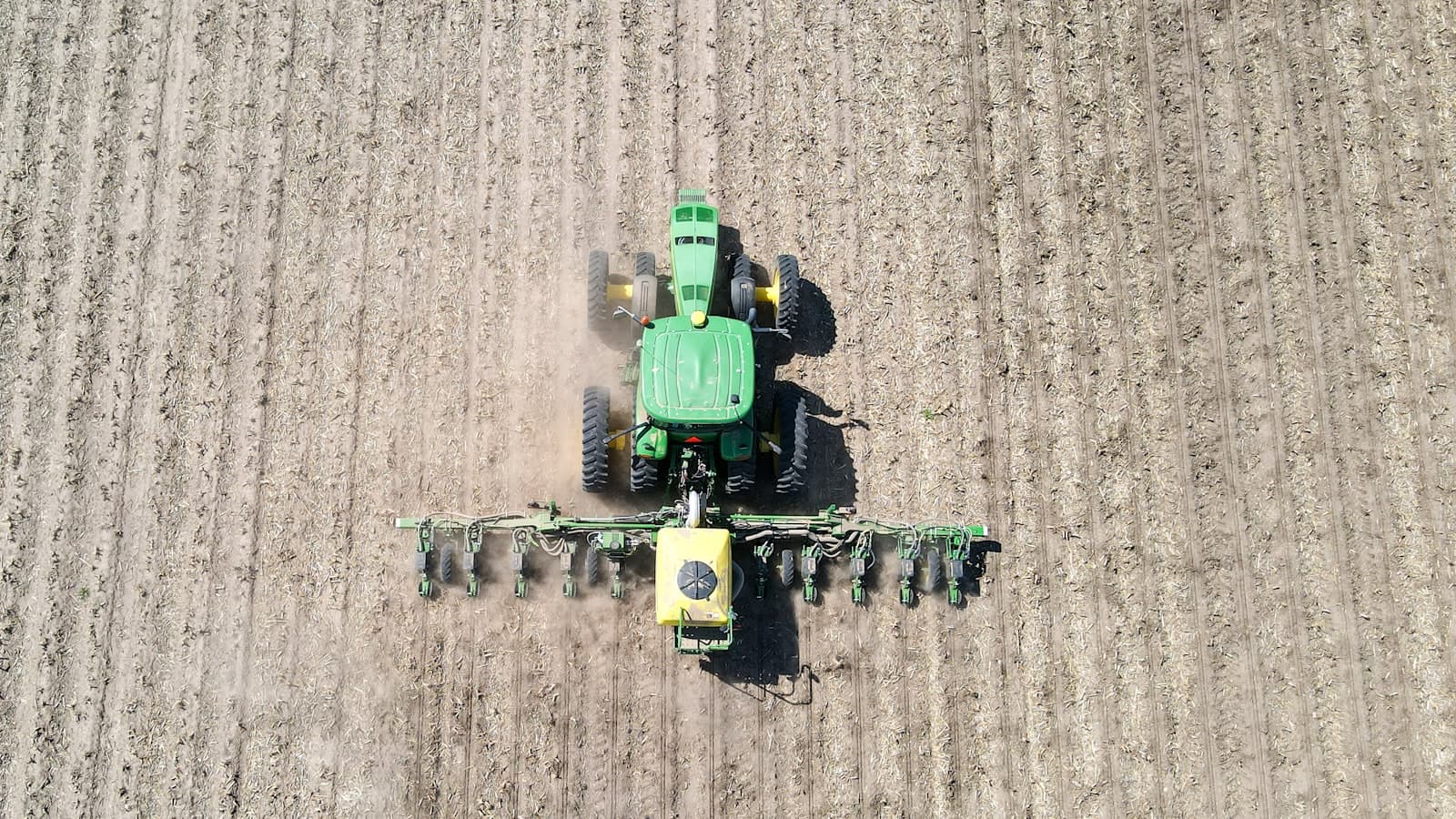
मिट्टी जाँच और सूक्ष्म पोषक तत्वों की कमी: किसान गाइड
भारत की आधी मिट्टी में जिंक की कमी है, 59% में सल्फर और 64% में नाइट्रोजन कम है। सॉइल हेल्थ कार्ड पढ़ना, कमी के लक्षण पहचानना और सही सुधार करना यहाँ सीखें।
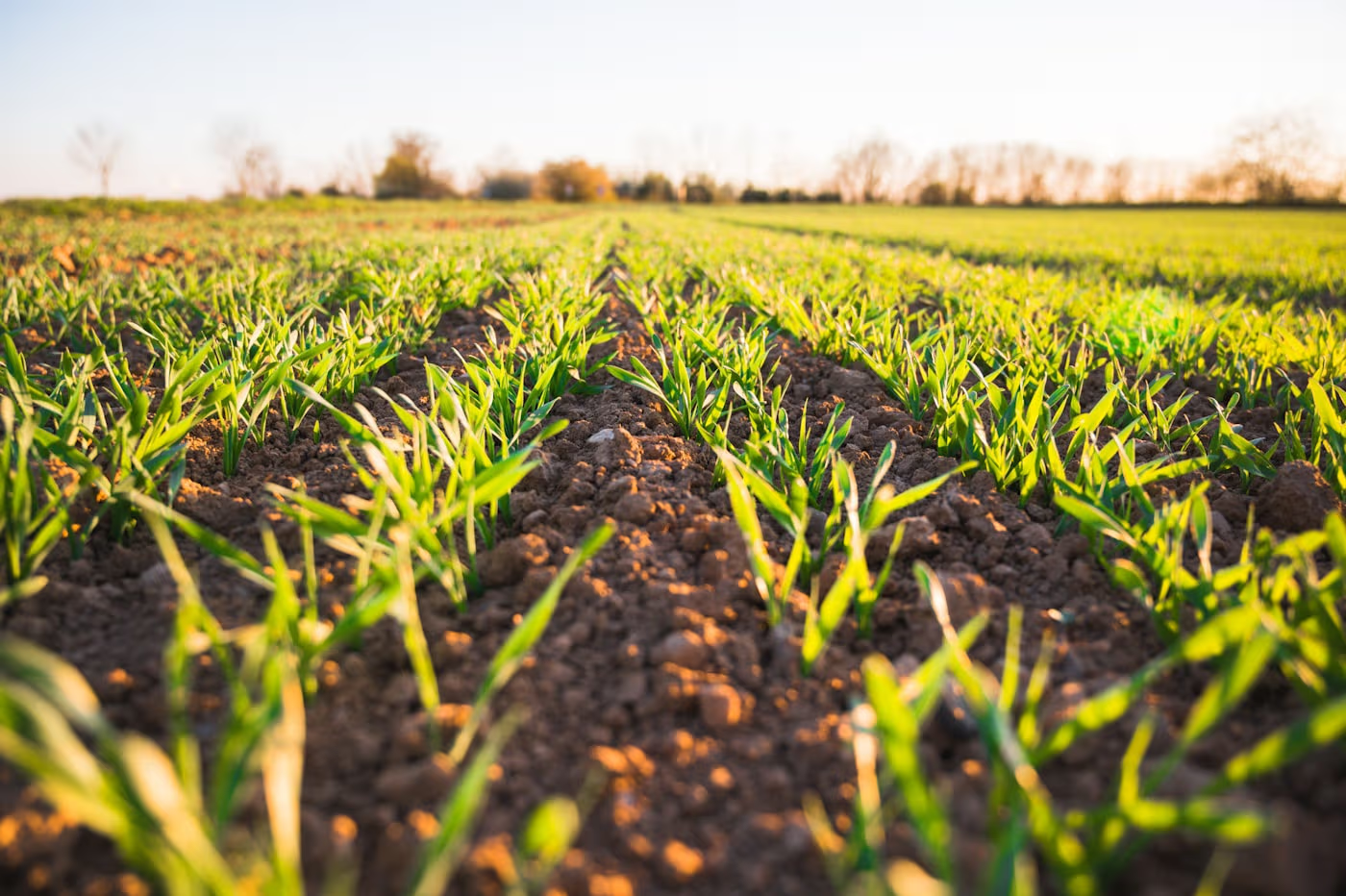
Your field is doing everything right — good seed, timely sowing, enough water — and still the wheat stays pale, the paddy tillers are thin, or the tomato flowers keep dropping. Before you add more urea, consider this: the problem may not be what you are adding. It may be what your soil is missing.
India has a data problem and a data solution on this. The problem: according to a nationwide study of 2,42,827 soil samples across 615 districts, more than half the country's farmland is deficient in at least one critical nutrient. The solution: the Soil Health Card scheme has tested over 1.3 crore samples — but only 1.1 crore of India's 14 crore farmer households have been covered, and many who received a card have never acted on its recommendations.
This guide connects the card to the field.
What the numbers actually mean
Your Soil Health Card reports 12 parameters across three groups. Here is what each group tells you and when to worry:
Physical parameters
pH (acidity/alkalinity) — ideal range is 6.5–7.5 for most crops. Below 6.0, nutrients like phosphorus and molybdenum become unavailable. Above 8.0, iron and zinc get locked up no matter how much you apply.
Electrical Conductivity (EC) — measures salt content. Above 4 dS/m, most crops suffer. Salty soils need gypsum and proper drainage, not more fertiliser.
Organic Carbon (OC) — this is the life of your soil. Below 0.5% is "low" and 48.5% of Indian soils fall in this category. Organic carbon determines how well soil holds water, supports microbes, and releases nutrients slowly. There is no chemical shortcut — only regular addition of FYM, compost, and green manure builds it back.
Macronutrients (N, P, K)
These are the big three that every farmer knows:
| Nutrient | "Low" threshold | Indian soils below it | What you see in the field |
|---|---|---|---|
| Nitrogen (N) | < 280 kg/ha | 64% | Older leaves turn uniformly pale yellow-green; stunted growth |
| Phosphorus (P) | < 10 kg/ha | ~42% | Purple-red tinting on stems and older leaves; delayed maturity |
| Potassium (K) | < 120 kg/ha | ~50% | Leaf-edge scorching ("firing") starting from older leaves; weak stalks |
The card rates each as Low, Medium, or High and gives a recommended dose in kg/ha. Follow it — blind application of DAP everywhere is one reason phosphorus is building up in some soils while nitrogen remains deficient.
Micronutrients — the hidden hunger
This is where most farmers go wrong. The card tests six micronutrients, and India's deficiency rates are alarming:
| Micronutrient | Deficient soils | Critical threshold |
|---|---|---|
| Sulphur (S) | 58.6% | < 10 mg/kg |
| Zinc (Zn) | 51.2% | < 0.6 mg/kg |
| Boron (B) | 44.7% | < 0.5 mg/kg |
| Iron (Fe) | 19.2% | < 4.5 mg/kg |
| Manganese (Mn) | 17.4% | < 2.0 mg/kg |
| Copper (Cu) | 11.4% | < 0.2 mg/kg |
131 districts have more than half their soils deficient in zinc. 101 districts are over 50% sulphur-deficient. These are not edge cases — they are the norm.
See it in the crop before the report arrives
Soil test results take weeks. But deficiency symptoms show up in the standing crop, and learning to read them helps you act fast — even if the lab report has not returned.
Zinc deficiency
The most common micronutrient problem in Indian farming.
What it looks like: New leaves are small and narrow. Internodes are shortened, giving the plant a "stunted rosette" look. Light yellow-white bands appear between the veins of young leaves. In paddy, it shows as reddish-brown spots on leaves (called "khaira disease") 2–4 weeks after transplanting.
Most affected crops: Paddy, maize, wheat, potato
Fix: Zinc sulphate (ZnSO4, 21% Zn) at 25 kg/ha in soil at sowing. For standing crops, foliar spray of 0.5% zinc sulphate solution (5 g/litre) twice at 7-day intervals.
Iron deficiency
What it looks like: Youngest leaves turn pale yellow to nearly white between the veins, while the veins themselves stay green — a sharp contrast. Severe cases make the entire leaf bleach white.
Most affected crops: Groundnut, paddy, soybean, sorghum on alkaline (high pH) soils
Fix: Foliar spray of 1% ferrous sulphate (FeSO4) solution, repeated 2–3 times at weekly intervals. Soil application is mostly ineffective in alkaline soils because iron gets locked up again immediately.
Boron deficiency
What it looks like: Growing points die or become distorted. Flowers drop without forming fruit. In cauliflower, the curd turns brown and hollow inside ("browning disorder"). In mustard, pods are hollow or poorly filled.
Most affected crops: Cauliflower, mustard, cotton, sunflower, groundnut
Fix: Borax at 5–10 kg/ha in soil at sowing, or foliar spray of 0.2% borax solution (2 g/litre). Warning: boron toxicity is easy to trigger — never exceed the recommended dose.
Sulphur deficiency
What it looks like: Similar to nitrogen deficiency, but the yellowing hits young leaves first (nitrogen shows in old leaves first). Plants are uniformly light green. Oilseed crops produce less oil per grain.
Most affected crops: Mustard, groundnut, onion, garlic, pulses
Fix: Single super phosphate (SSP) instead of DAP gives phosphorus and sulphur together (12% S). Or apply gypsum at 200 kg/ha, or elemental sulphur at 20–30 kg/ha.
Manganese deficiency
What it looks like: Interveinal chlorosis on younger leaves, sometimes with small necrotic (brown dead) spots scattered on the leaf blade. Can look very similar to iron deficiency.
Fix: Manganese sulphate at 5 g/litre as foliar spray, or 25 kg/ha in soil.
The 4R approach to nutrient correction
Government extension services now teach the 4R framework — a checklist that prevents both deficiency and waste:
- Right Source — match the fertiliser to the deficiency. DAP does not supply sulphur. Urea does not supply zinc. SSP supplies phosphorus AND sulphur.
- Right Rate — follow the Soil Health Card dose. More is not better — excess phosphorus blocks zinc uptake, excess boron is toxic.
- Right Time — apply basal doses at sowing, split nitrogen into 2–3 doses across the crop's life, and spray foliar micronutrients when symptoms first appear.
- Right Place — band placement near the root zone is more efficient than broadcasting across the entire field, especially for phosphorus and zinc which do not move much in soil.
Multi-nutrient deficiencies — the combo problem
Many Indian soils are deficient in more than one nutrient at a time. The nationwide study found these common combinations:
- Sulphur + Zinc together: 9.3% of all soils
- Zinc + Boron together: 8.7% of all soils
- Sulphur + Boron together: 7.0% of all soils
- Zinc + Iron together: 5.8% of all soils
When two or more deficiencies overlap, the crop shows mixed symptoms that are hard to diagnose visually. This is where the soil test becomes essential — it separates what the eye cannot.
If your card shows multiple deficiencies, address them together at sowing rather than one at a time across the season. A common integrated dose for multi-deficient soils:
- Zinc sulphate 25 kg/ha + borax 5 kg/ha + gypsum 200 kg/ha — applied as basal dose mixed with the last ploughing
- Follow up with foliar sprays of specific micronutrients if symptoms persist after 30 days
State-level hotspots
Deficiency patterns vary sharply by geography:
- Zinc: Most acute in Madhya Pradesh, Rajasthan, Goa, and parts of UP
- Sulphur: Worst in Kerala, Odisha, Rajasthan, and West Bengal
- Boron: 86 districts across India have more than 50% boron-deficient soils — concentrated in the eastern plains and red-soil regions
- Iron: 83 districts have more than 25% iron-deficient soils, primarily in the alkaline tracts of Haryana, Punjab, and western UP
If your district falls in these zones, budget for micronutrient correction every season.
The pH-nutrient lock
Your soil's pH controls which nutrients are actually available to the crop, regardless of what you apply.
Acidic soils (pH < 6.0): Phosphorus, molybdenum, and calcium become unavailable. Iron and manganese can become toxic at very low pH. Apply lime (2–4 quintals/ha) to raise pH gradually.
Alkaline soils (pH > 8.0): Iron, zinc, manganese, and copper get chemically locked into forms the plant cannot absorb. This is why farmers in the Indo-Gangetic plain often see iron and zinc deficiency despite adequate soil levels. The fix: foliar sprays bypass the soil entirely; long-term, apply gypsum and sulphur to reduce pH; and increase organic matter which creates micro-zones of lower pH around roots.
Neutral soils (pH 6.5–7.5): Maximum nutrient availability. If your soil is already in this range, maintenance is far cheaper than correction.
Common mistakes
Adding urea when the problem is zinc. Pale leaves do not always mean nitrogen deficiency. If older leaves are pale, it is probably nitrogen. If newer leaves are pale with green veins, it is iron or zinc. Get the diagnosis right before reaching for the urea bag.
Ignoring pH. If your soil pH is above 8.0, adding zinc or iron to the soil is nearly pointless — the alkalinity locks them up. Use foliar sprays instead, and apply gypsum or sulphur over time to bring pH down.
Skipping organic matter. No amount of chemical fertiliser fixes a soil with 0.3% organic carbon permanently. The carbon holds everything together — water, nutrients, microbes. Vermicompost, FYM, green manure, and crop residue retention are not optional extras — they are the foundation.
Testing once and assuming forever. Soil nutrient status changes with every crop cycle. Test every 2–3 years, or sooner if you change your cropping pattern.
How to collect a good soil sample
A bad sample gives a bad report. Follow this method:
- Walk a zigzag path across the field
- At 6–8 spots, dig a V-shaped cut to 15 cm depth
- Take a uniform slice from each cut
- Mix all slices together in a clean bucket
- Remove stones, roots, and debris
- Take about 500 g of the mixed sample into a clean cloth or poly bag
- Label it with your name, field location, and date
- Submit to the testing lab at your district agriculture office or KVK — the test is free under the Soil Health Card scheme
When to sample: After harvest and before the next sowing. Avoid sampling immediately after fertiliser application or heavy rain — the results will not represent the field''s true status.
Frequently asked questions
मिट्टी की जाँच कैसे कराएँ?
खेत के 6-8 अलग-अलग हिस्सों से 15 सेमी गहराई पर मिट्टी लें, सबको मिलाकर करीब 500 ग्राम का एक मिश्रित नमूना बनाएँ, और नज़दीकी मिट्टी परीक्षण प्रयोगशाला (आमतौर पर ज़िला कृषि कार्यालय या KVK) में जमा करें। सॉइल हेल्थ कार्ड योजना के तहत जाँच मुफ़्त है।
सॉइल हेल्थ कार्ड पर "नाइट्रोजन कम" का क्या मतलब है?
इसका मतलब है उपलब्ध नाइट्रोजन 280 किग्रा/हेक्टेयर से कम है। फसल में पुरानी पत्तियाँ पहले पीली-हरी दिखेंगी। मानक सिफ़ारिश से 25% ज़्यादा नाइट्रोजन दें, बँटी खुराकों में — आधी बुआई पर, बाकी कल्ले/फूल आने पर।
मिट्टी की जाँच कितने समय में कराएँ?
एक ही खेत की हर 2-3 साल में। अगर फसल चक्र में बड़ा बदलाव करें या अचानक फसल में समस्या दिखे, तो जल्दी करा लें। कटाई के बाद और अगली बुआई से पहले नमूने लें।
क्या जिंक और बोरोन एक साथ डाल सकते हैं?
हाँ, ज़िंक सल्फेट और बोरेक्स बुआई के समय एक साथ मिट्टी में डाल सकते हैं। पत्तियों पर छिड़काव के लिए ज़िंक सल्फेट (0.5%) और बोरेक्स (0.2%) एक ही टंकी में मिला सकते हैं। लेकिन बोरेक्स की मात्रा ज़्यादा न करें — ज़्यादा बोरोन फसल को जला सकता है।

लेखक
Vaibhav Dhama
संस्थापक, टेक्निकल किसान
वैभव धामा टेक्निकल किसान के संस्थापक हैं। वे बागपत, उत्तर प्रदेश से लिखते हैं — आईसीएआर और राज्य कृषि विश्वविद्यालयों की सलाह, सरकारी योजना अधिसूचनाओं और लाइव मंडी भाव के आधार पर।
- बागपत, उत्तर प्रदेश से लिखते हैं
- पेशे से सॉफ़्टवेयर डेवलपर (BTech, 2021)
- कृषि विशेषज्ञ नहीं — अपने KVK से पुष्टि करें
Discussion is coming soon
We are building a comments section where you can ask a question about this guide and see what other farmers in your district are doing.
For now, write to us at [email protected] — we read every message.