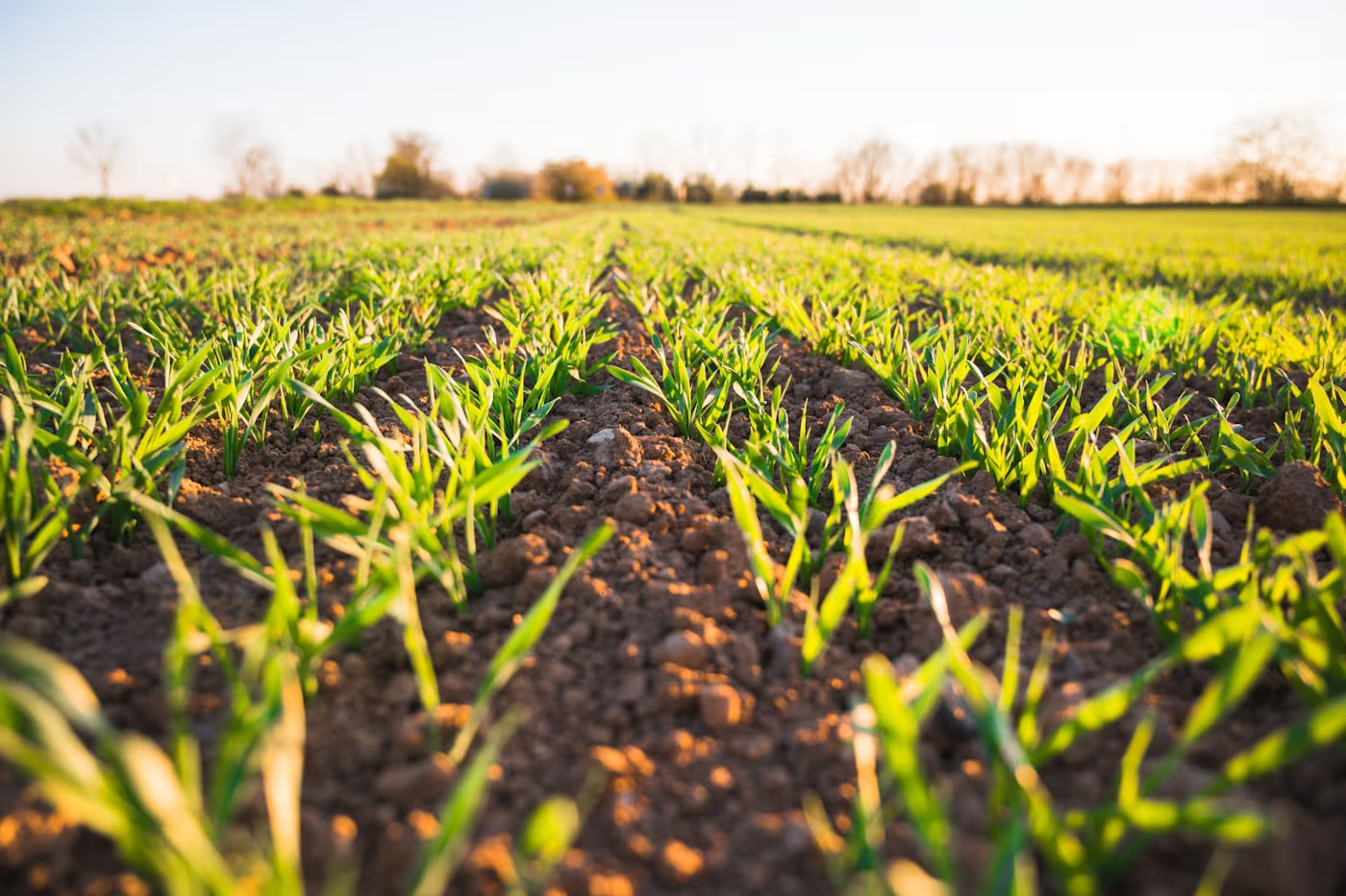
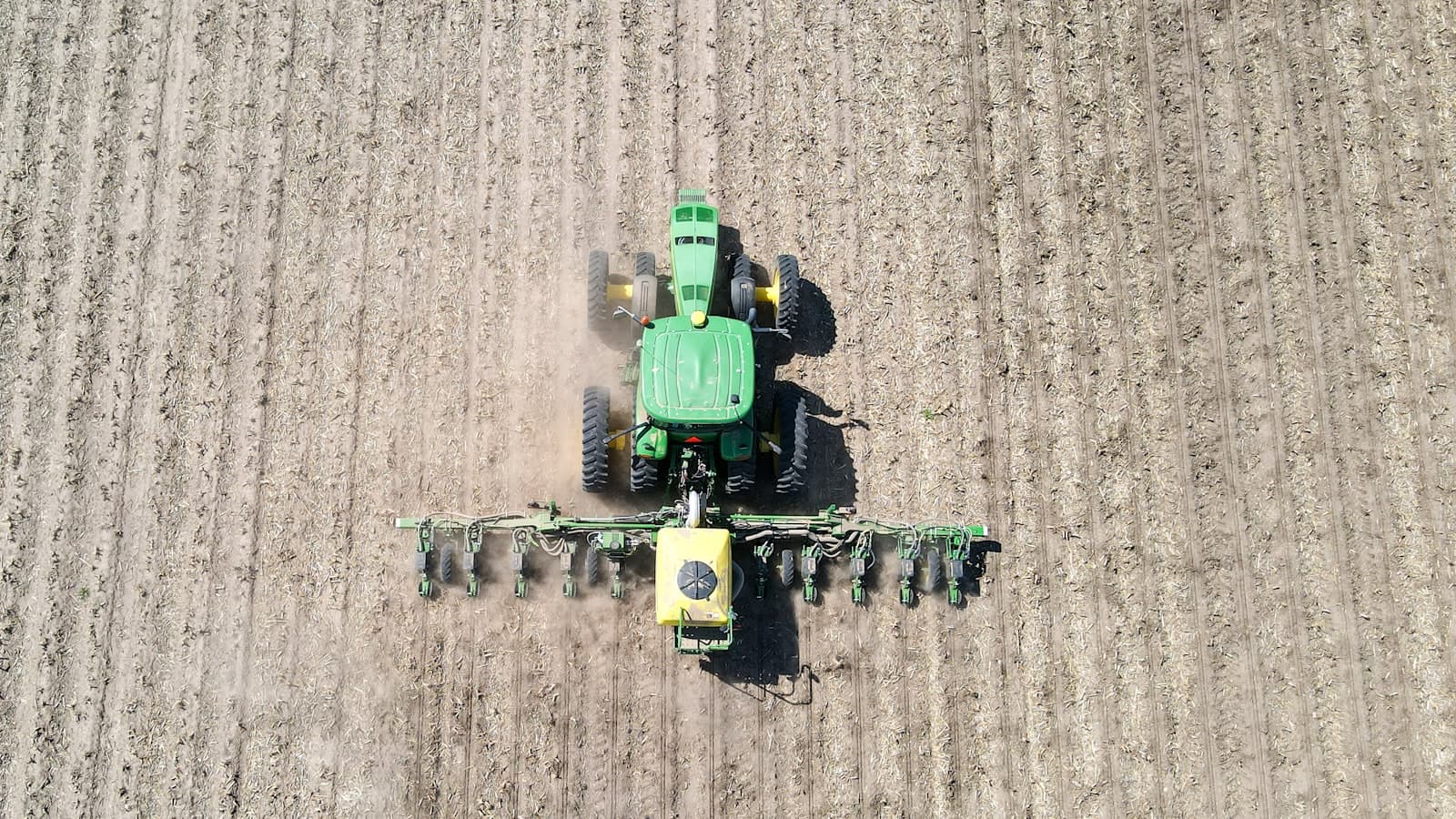
सूखे में खेती: कम पानी में फसल बचाने के आसान तरीके
जब मानसून कमज़ोर पड़े या बीच सीज़न बारिश रुक जाए, तो मल्चिंग, कम पानी में सिंचाई और फसल बदलाव जैसे व्यावहारिक उपाय आपकी फसल उपज बचा सकते हैं।
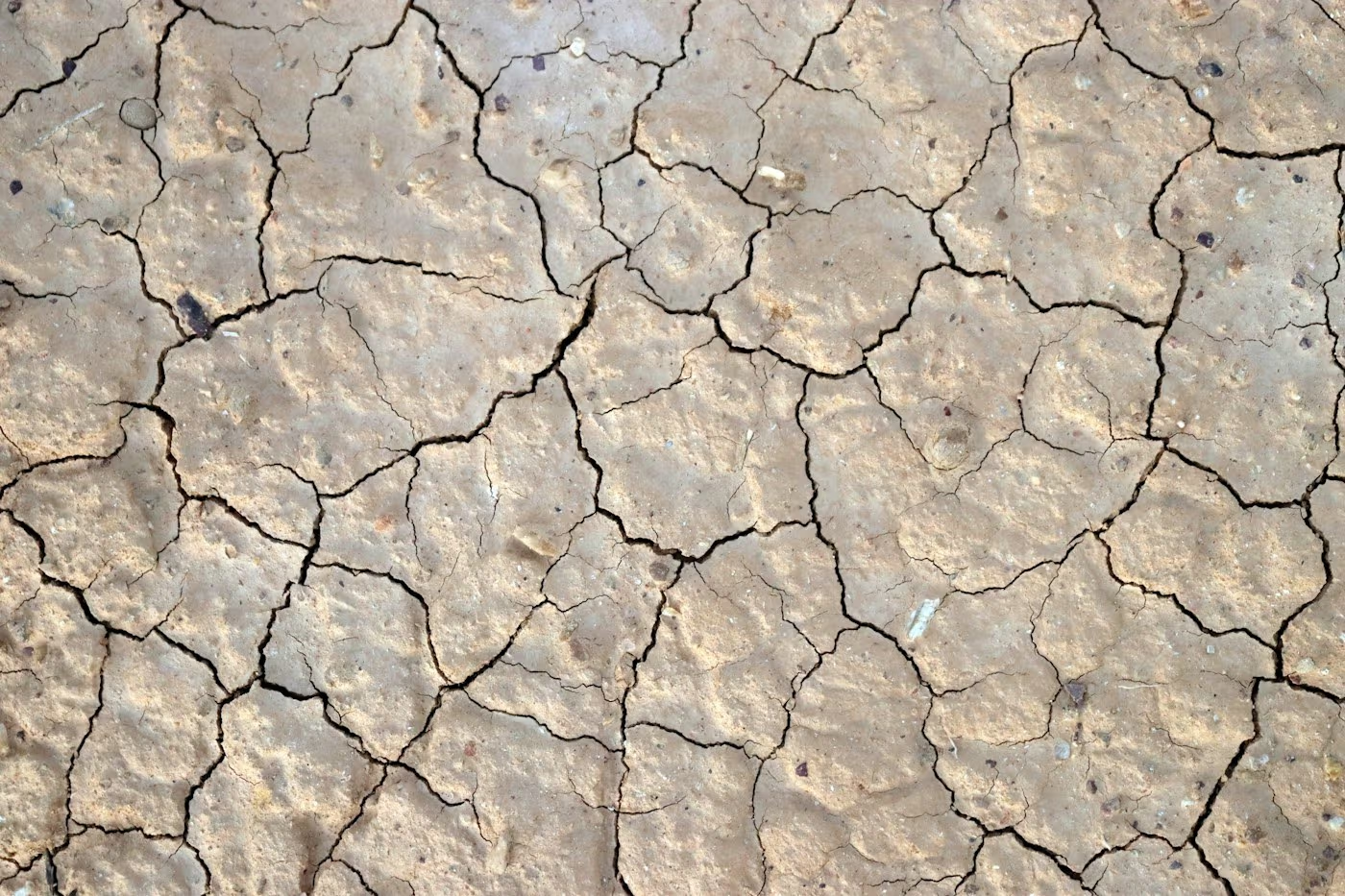
Rain stops. The forecast says no relief for another two weeks. The paddy field that should be standing in water is showing cracks. The maize leaves are rolling inward. The groundnut plants look wilted by noon.
This is not a rare event anymore. India's 2026 kharif season saw a 14% monsoon deficit — the sharpest in recent years — with El Nino cutting rainfall across northwest and central India. And even in normal monsoon years, mid-season dry spells of 2–3 weeks are now common enough that every farmer needs a plan for them.
This guide is that plan.
The first 48 hours: damage control
When rain stops unexpectedly mid-season, act fast. Every day of delay costs yield.
Stop all tillage immediately. Ploughing or hoeing in dry conditions breaks the soil surface crust, exposes moist underlayers to evaporation, and accelerates water loss. Leave the soil undisturbed.
Weed aggressively within the first week. Weeds compete for the same shrinking moisture. Remove them within 30–45 days of sowing or as soon as drought conditions begin — whichever comes first. Each weed left standing drinks water meant for your crop.
Apply mulch — spread whatever crop residue you have (straw, dried leaves, sugarcane trash) in a 5–8 cm layer between the rows. This single step cuts soil evaporation by 30–50% and keeps the root zone 3–5°C cooler. ICAR contingency trial data shows mulched fields yielding 15–40% more than bare fields during the same dry spell.
Water you have — use it at the right time
If you have a bore well, farm pond, or stored rainwater, do not spread it thin across the whole field on a schedule. Apply it only at the growth stages where the plant suffers the most from water stress:
| Growth stage | Why it matters |
|---|---|
| Germination / establishment | Seeds fail without initial moisture |
| Tillering / branching | Determines how many productive shoots form |
| Flowering | Pollen dies without moisture — no grain set |
| Grain filling | Shrivelled, light grains reduce both yield and quality |
Skip irrigation at other stages if you must — vegetative growth recovers, but flower-stage drought causes permanent yield loss.
Drip and sprinkler systems deliver water directly to the root zone or canopy and use 30–40% less water than flood irrigation. If you do not have drip yet, the PMKSY scheme subsidises 55% of installation cost for small and marginal farmers, and up to 60% in some states. Consider it for next season.
Crops that handle drought
Not all crops need the same water. If you are planning the next sowing or if the current crop is beyond saving, know which alternatives work:
Low water demand (under 300 mm): Bajra, jowar, finger millet, moth bean, horse gram
Moderate water demand (300–450 mm): Arhar, moong, groundnut, sesame, castor, guar
High water demand (500 mm+): Paddy, sugarcane, maize — these suffer most in drought
Within each crop, look for short-duration varieties that complete their cycle in 90–110 days instead of 120–140. These escape late-season drought entirely. Your KVK or state agriculture university website lists recommended short-duration varieties for your district.
Soil moisture conservation — the long game
Drought management is not just crisis response. The fields that survive dry spells best are the ones prepared before drought hits.
Build organic carbon
Soil with higher organic carbon holds more water — roughly 2 litres more per kilogram of soil for every 1% increase in organic carbon. India's average soil organic carbon is only 0.3–0.5%, down from about 1% seventy years ago.
What works: FYM/compost at 5–10 tonnes/ha every year, green manure crops like dhaincha or sunhemp ploughed in before sowing, and retaining crop residues instead of burning them.
Harvest rainwater
Build structures before the monsoon starts, not after it fails:
- Field bunds — simple earthen bunds along contour lines trap rainwater in the field
- Farm ponds — even a small 10m x 10m x 3m pond stores roughly 300,000 litres, enough for one protective irrigation across 1–2 acres
- Check dams and percolation pits — recharge groundwater that feeds your bore well months later
Zero tillage and ridge-furrow
Zero tillage farming — sowing directly into undisturbed soil from the previous crop — keeps the soil structure intact. Intact soil has better capillary action, pulling moisture up from deeper layers. The zero-tillage guide covers the method and economics in detail.
Ridge-and-furrow planting channels whatever rain does fall into the furrows, concentrating water at the root zone instead of spreading it thin across a flat surface.
Government support during drought
When a district officially declares drought, compensation and support systems activate:
- PM Fasal Bima Yojana — crop insurance covers yield loss from drought. The claim triggers automatically for notified crops in notified areas. If you are enrolled, your sum insured is based on threshold yield for your district.
- PMKSY — drip irrigation subsidy helps reduce water use permanently
- PM-KUSUM — solar pumps reduce dependence on diesel and grid electricity during power cuts that worsen in drought
- Input subsidy — state governments provide Rs 6,800/ha for rainfed crops and Rs 13,500/ha for irrigated crops in officially drought-affected areas (rates vary by state and year)
- IMD Agromet advisories — district-level weather and crop advice delivered via SMS and extension centres. Register your mobile number at the block agriculture office if you have not already.
Foliar sprays during drought stress
When roots cannot pull enough water and nutrients from dry soil, foliar feeding becomes the lifeline. Two sprays that Indian research stations recommend during drought stress:
Potassium nitrate (KNO3) at 1% solution (10 g/litre): Potassium helps the plant close its stomata (the tiny pores on leaves) more efficiently, reducing water loss. Spray at flowering or grain-filling stage when drought stress is visible.
Thiourea at 0.1% solution (1 g/litre): Acts as a drought-tolerance enhancer. Research from the Central Arid Zone Research Institute (CAZRI), Jodhpur, has shown 10–15% yield improvement in mustard and groundnut with a single thiourea spray during moisture stress.
2% urea spray can substitute for soil nitrogen application when the soil is too dry for urea to dissolve and reach roots. This is more efficient than spreading granular urea on dry soil surface.
Livestock and livelihood diversification
A single-crop farm is the most vulnerable to drought. Farms that combine crops with livestock, poultry, or agroforestry absorb the shock better. If your field crop fails, these continue generating income:
- Dairy — fodder needs are lower than field crop water demand per rupee of output. Even during drought, buying feed for 2–3 animals is cheaper than losing an entire crop. See our guide on choosing dairy breeds.
- Goat farming — goats graze on scrubland and dry fodder that cattle cannot utilise. They require much less water than cattle. See our goat farming guide.
- Agroforestry — trees like moringa, imli, and bamboo have deep root systems that access groundwater unavailable to field crops. They survive droughts that kill seasonal crops and provide income through leaves, pods, or timber.
- Backyard poultry — minimal water requirement, daily egg income. See broiler vs layer farming for economics.
ICAR contingency plans specifically recommend mixed farming systems as a drought-proofing strategy. A farm earning from 2–3 sources rarely faces total income loss.
What not to do
Do not over-pump groundwater. When the bore well yields less, the temptation is to run the pump longer. This drops the water table further and can collapse the bore — a Rs 50,000–2,00,000 loss on top of the crop loss.
Do not apply heavy nitrogen fertiliser during drought. Urea needs soil moisture to reach roots. Applied dry, it sits on the surface, burns foliage if leaves are wet, and is wasted. Wait for rain or irrigate first, then apply.
Do not burn crop residue. The stubble you burn is the mulch that could have saved soil moisture next season.
Seasonal planning checklist
- Check IMD long-range forecast before finalising crop choice
- Prefer short-duration varieties in low-rainfall districts
- Get farm pond or bunding work done before June
- Apply mulch to every standing crop when dry spells start
- Prioritise flowering-stage irrigation over vegetative watering
- Enrol in PM Fasal Bima before the cut-off date
- Register for Agromet SMS advisories at the block office
- Apply for PMKSY drip subsidy if not yet installed
Frequently asked questions
धान की जगह कौन-सी फसल सूखे में ज़्यादा टिकती है?
बाजरा, ज्वार, रागी, अरहर, मोठ और लोबिया — ये सब धान से बहुत कम पानी में पक जाती हैं और लंबे सूखे में भी टिक सकती हैं। अगर धान पहले से बोई है, तो अगले सीज़न में कम अवधि (100-110 दिन) की किस्मों पर जाएँ।
क्या मल्चिंग सच में पानी बचाती है?
हाँ। 5-8 सेमी मोटी फसल अवशेष की पलवार बिछाने से मिट्टी से भाप बनकर उड़ने वाला 30-50% पानी बच जाता है। ICAR के खेत परीक्षणों में सूखे दौर में मल्च किए गए खेतों ने बिना मल्च वाले खेतों से 15-40% ज़्यादा उपज दी।
डेफिसिट इरिगेशन (कम पानी सिंचाई) क्या है?
पूरे खेत को भरपूर पानी देने की बजाय, सबसे ज़रूरी अवस्थाओं — अंकुरण, कल्ले फूटना, फूल आना, और दाना भरना — में कम पानी दें। इससे 30-40% पानी बचता है और उपज ज़्यादातर सुरक्षित रहती है।
सूखे में कौन-सी सरकारी योजनाएँ मदद करती हैं?
PM फसल बीमा योजना सूखे से फसल नुकसान का मुआवज़ा देती है। PMKSY ड्रिप/स्प्रिंकलर सिंचाई पर 55-60% अनुदान देती है (छोटे/सीमांत किसानों को)। PM-KUSUM सोलर पंप देती है। सूखा घोषणा के बाद राहत मुआवज़े के लिए ज़िला कृषि कार्यालय से संपर्क करें।

लेखक
Vaibhav Dhama
संस्थापक, टेक्निकल किसान
वैभव धामा टेक्निकल किसान के संस्थापक हैं। वे बागपत, उत्तर प्रदेश से लिखते हैं — आईसीएआर और राज्य कृषि विश्वविद्यालयों की सलाह, सरकारी योजना अधिसूचनाओं और लाइव मंडी भाव के आधार पर।
- बागपत, उत्तर प्रदेश से लिखते हैं
- पेशे से सॉफ़्टवेयर डेवलपर (BTech, 2021)
- कृषि विशेषज्ञ नहीं — अपने KVK से पुष्टि करें
Discussion is coming soon
We are building a comments section where you can ask a question about this guide and see what other farmers in your district are doing.
For now, write to us at [email protected] — we read every message.